Are White Oak Cabinets Expensive? (2026 Cost Breakdown)
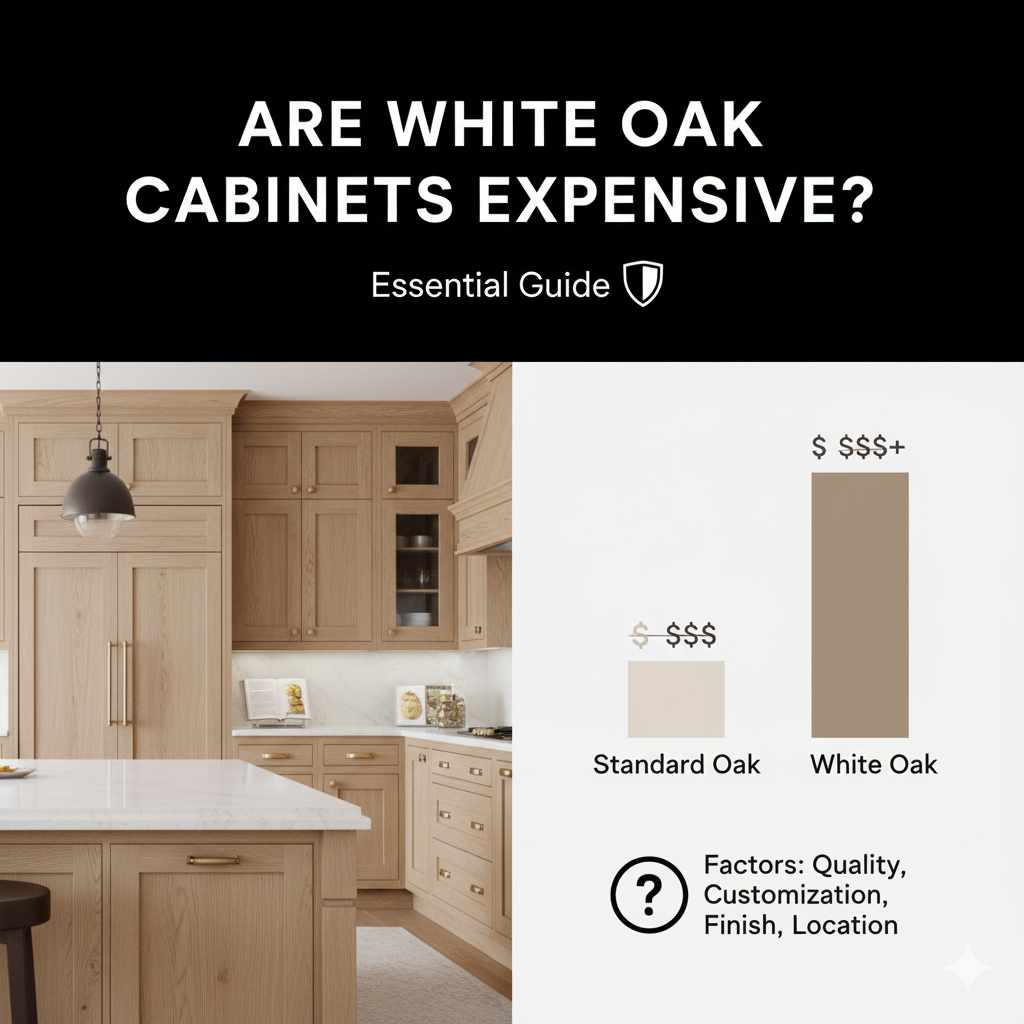
White oak cabinets run $100 to $1,200+ per linear foot — stock lines sit at the low end, custom solid-wood boxes at the high end — putting a full 10×10 kitchen anywhere from $4,500 to $16,000. That premium buys a Janka hardness of 1360 (tougher than red oak’s 1290) and a wood that resists moisture better than most hardwoods. This guide breaks down real per-linear-foot pricing, what drives the cost up, and how to cut it without dropping to particleboard.
Note: This post may contain affiliate links. As an Amazon Associate, we earn from qualifying purchases at no extra cost to you.
Quick Answer
Yes — white oak cabinets typically cost $100-$400/linear ft for stock lines, $450-$750/linear ft semi-custom, and $500-$1,200+/linear ft for solid custom work, a 20-35% premium over maple or red oak. Labor alone runs 40-60% of the total bill, so construction type and installation complexity matter as much as the wood itself.
How Much Do White Oak Cabinets Cost? Real Price Ranges
Best Cabinet Hardware Upgrade Pick
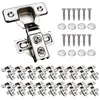
20-Pack Soft-Close Cabinet Hinges, 1/2″ Overlay
Stainless, nickel-plated hinges with an integrated dampening system — a budget-friendly way to add a soft-close feel without replacing whole cabinet boxes.
- Best for: upgrading an existing white oak cabinet run to soft-close without a full remodel
- Why we picked it: 6-way adjustability makes it forgiving for a first-time DIY hinge swap
- Main drawback: face-frame vs. frameless overlay sizing must match your cabinet exactly
Compare more cabinet hinge options
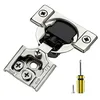 Option 1 Ravinte 50-Pack Soft Close Hinges
|
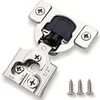 Option 2 Decobasics 50-Pack Soft Close Hinges
|
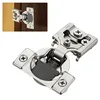 Option 3 Home Expert Satin Nickel 10-Pack
|
As an Amazon Associate we earn from qualifying purchases.
Pricing swings widely because “white oak cabinets” covers everything from a flat-pack RTA box to a fully custom rift-sawn build. Here’s what each tier actually runs, per linear foot and for a full kitchen.
| Cabinet Tier | Price Per Linear Foot | Typical 10×10 Kitchen Total |
|---|---|---|
| Stock / RTA | $100 – $400 | $2,000 – $6,500 |
| Semi-Custom | $450 – $750 | $6,500 – $12,000 |
| Full Custom (Solid White Oak) | $500 – $1,200+ | $10,000 – $25,000+ |
📊 Labor typically accounts for 40-60% of the total cabinet bill, at roughly $75-$125/hour for installation — material selection only tells half the pricing story. Source: cabinet industry cost guides, 2026.
White oak itself carries a 20-35% price premium over paint-grade maple or red oak, and roughly 30% more than red oak specifically — the tradeoff is a harder, more moisture-resistant board that holds up longer in a working kitchen.
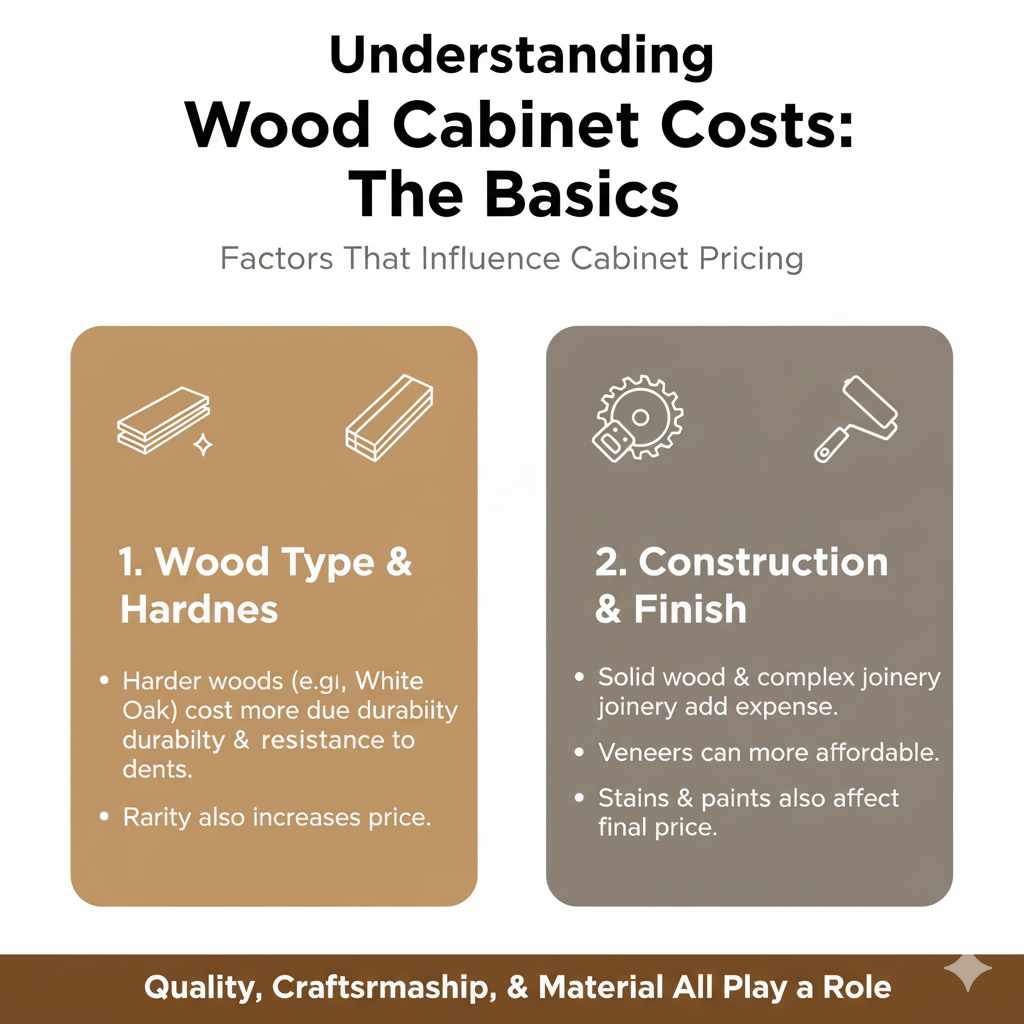
Understanding Wood Cabinet Costs: The Basics
Material is one of the biggest factors in cabinet pricing. The harder a wood, the more resistant it is to dents and dings, which generally means a higher cost — and scarcer woods cost more than abundant ones for the same reason any limited-supply material does.
Construction method matters just as much as species. Solid wood, veneered plywood, and joinery quality all add to the final price, and finishes like stains or paint shift it further — so “white oak cabinets” really means the wood plus how it’s built.
What Makes White Oak a Premium Choice?
White oak is a dense hardwood, which makes it durable and resistant to scratches, dents, and everyday wear — a real advantage in a busy kitchen.
📊 White oak scores 1360 on the Janka hardness scale, versus 1290 for red oak — a measurable, not just marketing, durability edge. Source: Janka hardness scale, wood density testing standards.
It also has a straight grain pattern with subtle figuring and takes stains exceptionally well, from light and airy to rich and deep. Its closed cellular structure gives it natural moisture and decay resistance — a genuine bonus in a humid kitchen environment, and together with its hardness and versatility, this is what pushes white oak into premium territory among oak cabinet options.
Are White Oak Cabinets Expensive? Breaking Down the Cost Factors
Compared to some other options, yes, white oak cabinets are often more expensive — but “expensive” is relative to what’s driving the price. Here’s the full breakdown.
1. Wood Grade and Quality
Higher grades of white oak have fewer knots and imperfections and a more consistent grain, which means paying for a cleaner, more uniform look. Lower grades carry more character (knots, mineral streaks) at a lower price, but most cabinet buyers opt for clearer grades for a smooth, refined finish.
How the Cut Affects Price: Rift-Sawn vs. Quarter-Sawn vs. Plain-Sawn
The angle a log is milled at changes both the grain look and the price, and this is a factor most cost guides skip entirely. Plain-sawn is the standard cut and the cheapest, with the classic cathedral grain pattern. Quarter-sawn boards are cut closer to 90 degrees to the growth rings, producing straighter grain with ray-fleck figuring, and cost more because more of each log is wasted in the process. Rift-sawn — the tight, perfectly linear grain increasingly used in modern kitchens — is usually the most expensive of the three, since it yields the least usable lumber per log of any cutting method. If a quote comes in higher than expected on an otherwise standard order, the sawing pattern is worth asking about before assuming it’s a construction-quality upcharge.
2. Cabinet Construction Type
This is a huge cost influencer. You’ll typically see three main types of cabinet construction in the market:
- Solid Wood: The most premium and often most expensive option. Every visible part of the cabinet box and doors is made from solid white oak, offering the best durability and natural beauty.
- Veneered Plywood: A common, more affordable method. The cabinet box is high-quality plywood with a thin white oak veneer on top, offering stability and warp resistance while keeping the look of solid oak.
- Particleboard/MDF with Veneer: Usually the most budget-friendly option. The core is particleboard or MDF with a white oak veneer applied — it looks similar but isn’t as durable or moisture-resistant as plywood or solid wood.
3. Style and Design
The style of the cabinet door also impacts cost. Simple Shaker-style doors are generally more straightforward to produce and less expensive than raised-panel or custom-molded designs — more complexity means more labor and precision, which drives up price.
4. Hardware and Finishes
Hardware — hinges, drawer pulls, slides — can add significantly to the total, especially with soft-close mechanisms or premium pulls. Finish matters too: a simple clear coat costs less than a multi-step stain or a custom paint color needing extensive prep. Some manufacturers charge extra for a wide range of stain colors and glazes.
“After hanging a lot of face-frame doors over the years, the 6-way adjustment on soft-close hinges is where most DIYers lose an afternoon — get the reveal even on one door before moving to the next, or the whole row ends up slightly crooked.”
5. Brand and Retailer
Cabinet brands span luxury, mid-range, and budget price points, and where you buy matters too — a custom cabinet maker will typically charge more than a big-box retailer’s semi-custom line.
White Oak vs. Other Popular Cabinet Woods: A Cost Comparison
To gauge if white oak is expensive, it helps to compare it to other common cabinet woods. Prices fluctuate based on availability, location, and the factors above.
| Wood Type | General Price Range (Relative) | Key Characteristics | Common Uses |
|---|---|---|---|
| White Oak | $$$ (Mid-to-High) | Durable, strong, beautiful grain, good moisture resistance, takes stains well. | Modern, transitional, traditional styles. Excellent for visible grain beauty. |
| Maple | $$ (Mid-Range) | Smooth, fine grain, very hard, consistent color, takes paint and stain well. | Versatile for almost any style, especially painted or light stains. |
| Cherry | $$$ (Mid-to-High) | Warm reddish-brown tones, smooth grain, deepens color with age, can be softer than oak. | Traditional, elegant styles. Natural aging is a key feature. |
| Hickory | $$ (Mid-Range) | Very hard and durable, distinctive grain with color variations (light to dark), can be rustic. | Rustic, farmhouse, or modern styles depending on the finish. |
| Pine | $ (Budget-Friendly) | Softwood, lighter color, more prone to dents and scratches, distinct knotty grain. | Rustic, farmhouse, or cottage styles. Best for less high-traffic areas or if a distressed look is desired. |
| Walnut | $$$$ (High-End) | Rich, dark color, beautiful grain patterns, luxurious feel, generally softer than oak. | High-end modern, contemporary, or sophisticated traditional styles. |
White oak sits comfortably in the mid-to-high range — generally more expensive than maple or hickory, but often less costly than exotic woods like walnut. Its price is justified by its balance of durability, aesthetic appeal, and versatility.
Pros and Cons of White Oak Cabinets
To help you decide if white oak is right for your kitchen, here’s the honest tradeoff.
The Upside: Why You’ll Love White Oak
- Exceptional Durability: One of the hardest, densest woods available (1360 Janka), highly resistant to dents and wear — crucial for kitchen cabinets that see daily use.
- Beautiful Grain and Aesthetics: A prominent, straight, often wavy grain that stains beautifully, from natural and light to dark and dramatic.
- Moisture Resistance: A closed cellular structure gives it better natural resistance to moisture and water damage than many hardwoods, especially red oak.
- Longevity: Strength and resistance mean white oak cabinets are built to last decades — a long-term investment for your home.
- Versatility: Complements modern, minimalist, rustic, and traditional kitchens alike, with color and grain adjustable through stain.
The Downside: What to Consider
- Cost: White oak is typically more expensive than softer woods or hardwoods like maple or hickory — its primary drawback for budget-conscious renovators.
- Weight: Its density makes it heavier, which can make installation slightly more challenging and affect shipping costs.
- Grain Visibility: Some minimalist designs prefer a smoother, less defined grain — woods like maple may fit better there, though a smoother finish on white oak is achievable.
- Color Variation: Natural wood has color variation — for uniform color you may need a painted finish or a specific grade, adding complexity and cost.
Tips for Buying White Oak Cabinets on a Budget
If you love white oak’s look and durability but are watching the budget, there are real ways to bring it into your kitchen for less.
- Opt for Veneer or Combination Construction: Use white oak veneer over plywood or MDF for the boxes, with solid oak or high-quality veneer doors and drawer fronts. This cuts cost while keeping the look where it matters most.
- Choose Simpler Door Styles: Shaker or flat-panel doors cost less to produce than raised-panel or molded designs, and pair well with white oak’s natural grain.
- Explore Semi-Custom or Stock Options: Fully custom cabinetry is always priciest. Semi-custom lines or stock cabinets in white oak offer real value with a more limited selection.
- Consider a Painted Finish: Paint hides the grain but gives you oak’s durability at a lower cost than natural wood finishes.
- DIY for Savings: Assembling pre-fabricated boxes or handling some finishing yourself can save money — with the right tools and skills to keep a professional look.
- Shop Around and Compare Quotes: Get multiple quotes from cabinet suppliers, custom builders, and online retailers, comparing price, lead time, and warranty.
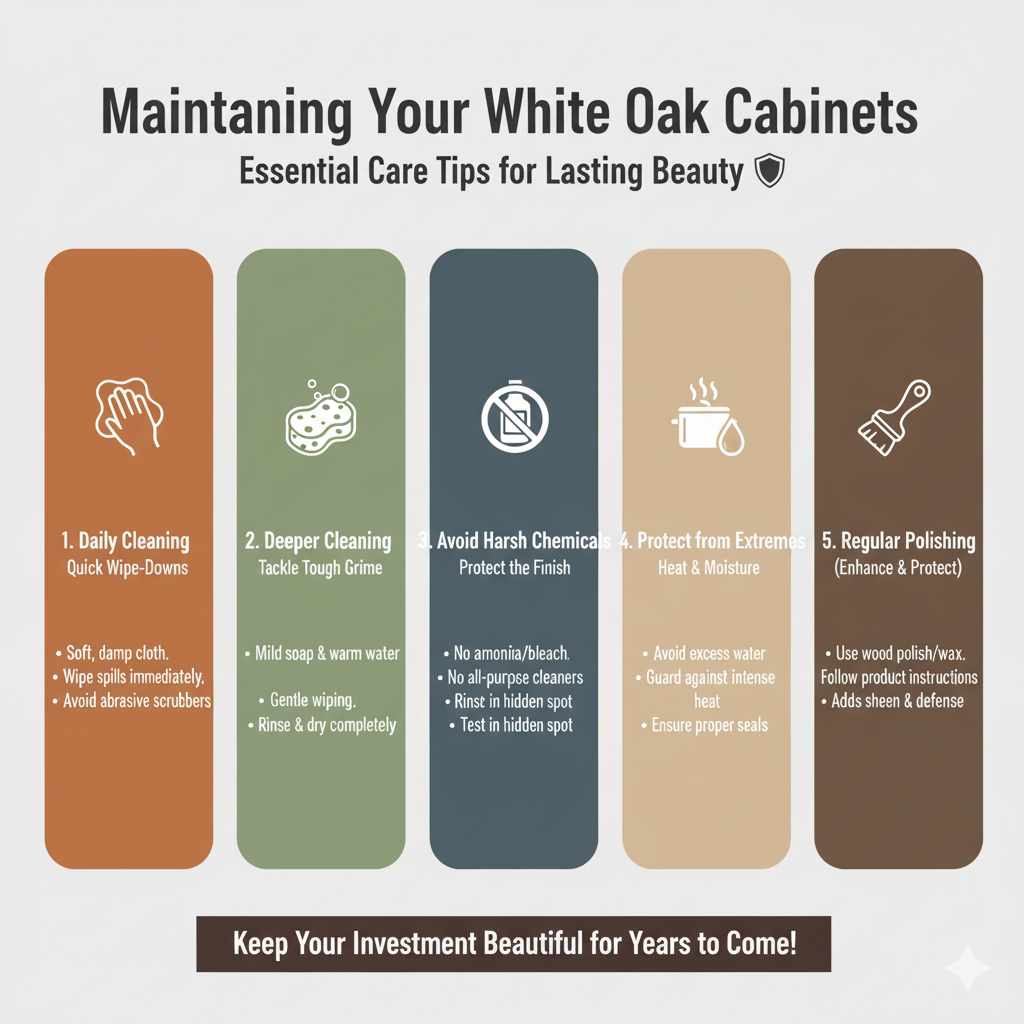
Maintaining Your White Oak Cabinets
White oak is resilient, but a little care keeps it looking its best for years.
Daily Cleaning: A soft, damp cloth handles everyday messes. Wipe up spills immediately, and avoid abrasive cleaners or scrub pads that can scratch the wood or finish.
Deeper Cleaning: For grease buildup, use mild dish soap diluted in warm water on a soft cloth, then rinse and dry thoroughly. Never let water sit on the cabinets.
Avoid Harsh Chemicals: Skip ammonia-based cleaners, bleach, or harsh all-purpose cleaners — they can strip the finish or discolor the wood. Test any new cleaner in an inconspicuous spot first.
Protect from Extreme Conditions: White oak is moisture-resistant, not waterproof. Avoid prolonged exposure to excess moisture or intense heat, and make sure your dishwasher seal isn’t leaking steam onto adjacent cabinets.
Regular Waxing/Polishing (Optional): A furniture wax or polish made for wood cabinets can add protection and sheen — follow product instructions carefully.
White Oak Cabinets: A Worthwhile Investment?
White oak cabinets can be expensive, but they’re better understood as an investment than a simple expense. Choosing white oak means opting for:
- Long-term Durability: Built to withstand decades of daily use, saving money on replacements or repairs down the line.
- Timeless Beauty: Grain and finish versatility keep a white oak kitchen looking current for years, not just a season or two.
- Increased Home Value: Quality materials like solid wood or well-done veneers read as a sign of a well-maintained, upgraded home to potential buyers.
The price reflects the quality, craftsmanship, and lasting value white oak brings to a kitchen — few budget-friendly alternatives match its combination of strength, beauty, and resistance.
Understanding what drives the cost, and using the budget strategies above, makes it possible to bring white oak into your kitchen without blowing the budget — solid wood, veneer, or a specific construction method, the beauty and resilience of white oak are hard to beat.
Frequently Asked Questions About White Oak Cabinets
Q1: Are white oak cabinets a good value for the money?
Yes, white oak cabinets are generally a good value because their durability and timeless beauty mean they last longer and stay in style, potentially saving money on future replacements or renovations. The initial cost is higher, but longevity makes it a smart long-term investment.
Q2: What’s the difference between white oak and red oak for cabinets?
White oak is denser (1360 Janka vs. red oak’s 1290) with a more closed pore structure, making it significantly more resistant to moisture and decay than red oak. White oak also has a straighter, more uniform grain and a lighter, warmer tone, while red oak has more open pores, a varied grain, and a pinkish hue. For kitchen cabinets, white oak is generally preferred for its superior moisture resistance.
Q3: Can white oak cabinets be painted?
Yes. White oak’s natural beauty is a major draw, but it can also be painted. Because it’s a hardwood with a prominent grain, proper prep — priming and potentially sanding between coats — is essential for a smooth finish. Many opt for a painted finish to get a specific look while keeping the underlying durability of oak.
Q4: How much do white oak cabinets cost for a full 10×10 kitchen?
A standard 10×10 kitchen in stock white oak cabinets runs roughly $2,000 to $6,500. Semi-custom pushes that to $6,500-$12,000, and a fully custom solid white oak build can run $10,000-$25,000 or more once labor, hardware, and finish are included.
Q5: Are white oak cabinets going out of style?
No — white oak has been one of the most consistently requested cabinet woods in kitchen design through 2026, and its neutral tone works across modern, transitional, and traditional styles, which is why designers treat it as a longer-term choice rather than a passing trend.
Sponsored / affiliate links. As an Amazon Associate I earn from qualifying purchases. I may earn additional commission from eligible campaigns.