White Oak Flooring in Kitchens: Janka Rating, Cost & Care
White oak flooring holds up in kitchens because tyloses, microscopic plugs in its pores, block water penetration, giving it a 1,360 Janka rating and a tighter grain than red oak’s 1,290. Skip humidity control, though, and even white oak can cup at the seams near a dishwasher or sink within a season. This guide compares real Janka and cost numbers against red oak and hickory, solid versus engineered options, and how to keep a kitchen floor stable long-term.
This guide focuses specifically on white oak in the kitchen. For the full species-by-species rundown of solid, engineered, laminate, and LVP flooring, see our wood flooring guide.
Why White Oak Handles Kitchen Spills Better Than Most Hardwoods
Best Kitchen Humidity Monitor Pick

ThermoPro TP49 Digital Hygrometer (2-Pack)
A simple indoor humidity and temperature monitor — place one near the kitchen floor to track whether you’re staying inside the 35–55% range white oak needs.
- Best for: Watching kitchen humidity near a dishwasher or sink where white oak is most exposed.
- Why we picked it: Two units for one price — run one in the kitchen and one in an adjoining room to compare.
- Main drawback: Basic display only, no app or data logging.
Compare more humidity monitor options
 Option 1 HuBDIC Hygrometer with Night Light
|
 Option 2 EDTM TH1900 Thermo-Hygrometer
|
 Option 3 Digital Wood Moisture Meter
|
As an Amazon Associate we earn from qualifying purchases.
Tyloses are microscopic, balloon-like structures that grow inside white oak’s pore structure and plug the wood’s vessels, the way a cork plugs a bottle. Red oak’s pores stay open, so spilled water travels straight into the plank; white oak’s tyloses block that path, which is the actual mechanical reason it holds up better in a kitchen. That protection is a matter of degree, not a waterproof seal — standing water left overnight will still damage a white oak floor. According to The Wood Database, white oak carries a Janka hardness rating of 1,360 lbf.
- Durability: A 1,360 Janka rating means white oak resists dents from dropped pans and daily foot traffic better than red oak (1,290), though it’s still softer than hickory (1,820).
- Water resistance: Tyloses give white oak a real, measurable edge over red oak against spills and mop water — but neither species is a substitute for tile or vinyl in a flood-prone kitchen.
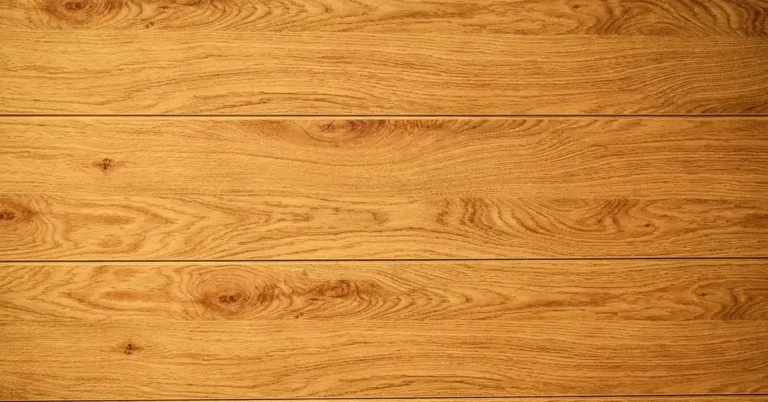
- Aesthetics: Light-to-medium tones and a tight, straight grain give white oak a neutral look that takes stain evenly and pairs with almost any cabinet color.

Disadvantages of White Oak Flooring in a Kitchen
- Janka rating: At 1,360, white oak is harder than red oak but softer than hickory (1,820) or hard maple (1,450) — a dropped cast-iron pan can still dent it.
- Visible staining: Its lighter color shows water rings and mineral streaks more visibly than a darker species, so spills need wiping sooner rather than later.
- Cost: Installed white oak typically runs $13–$17 per sq ft, more than red oak ($8–$14) and roughly in line with hickory ($9–$15).
White Oak vs. Red Oak vs. Hickory: Hardness and Cost Compared
Janka hardness measures the force needed to embed a steel ball halfway into a wood sample — a higher number means better dent resistance underfoot. Here’s how the three most common kitchen hardwood options stack up, using 2026 installed-cost ranges.
| Species | Janka Hardness | Water Resistance | Installed Cost (2026) | Best For |
|---|---|---|---|---|
| White Oak | 1,360 lbf | High — tyloses seal the pores | $13–$17/sq ft | Kitchens, high-traffic living areas |
| Red Oak | 1,290 lbf | Low — open pores absorb moisture | $8–$14/sq ft | Bedrooms, low-moisture rooms |
| Hickory | 1,820 lbf | Moderate — open pores, very hard surface | $9–$15/sq ft | Mudrooms, homes with large dogs |
Hickory wins on raw hardness, but its open pore structure means it doesn’t get the same water-resistance boost from tyloses that white oak does — hardness protects against dents, not moisture. For a kitchen specifically, white oak’s combination of moisture resistance and moderate cost is why it outsells both alternatives in that room.
Solid vs. Engineered White Oak for Kitchens
Solid white oak can be sanded and refinished roughly 4 to 7 times over a 50-plus-year lifespan, which makes it the longer-term option if the finish ever gets scuffed near a sink or stove. Engineered white oak swaps the solid core for a plywood or high-density fiberboard base under a real white oak wear layer — it typically lasts 20 to 30 years and can be refinished only once or twice, but the layered core resists the seasonal expansion and contraction that causes solid wood to gap or cup near a dishwasher, which matters more in a kitchen than almost any other room.
If a plank does get damaged near the sink or dishwasher, engineered flooring is also easier to spot-repair — see our guide on repairing engineered hardwood for the process. Plank width matters here too: wider boards (5 inches or more) show fewer seams for water to find, while wide-plank white oak has its own cost and stability tradeoffs worth checking before you commit to a width.
Because humidity swings are what actually damage a white oak kitchen floor — not the cooking or the foot traffic — a cheap hygrometer earns its cost quickly if your kitchen sits near a dishwasher, a sink, or an exterior door.
Design Ideas for White Oak Kitchen Floors
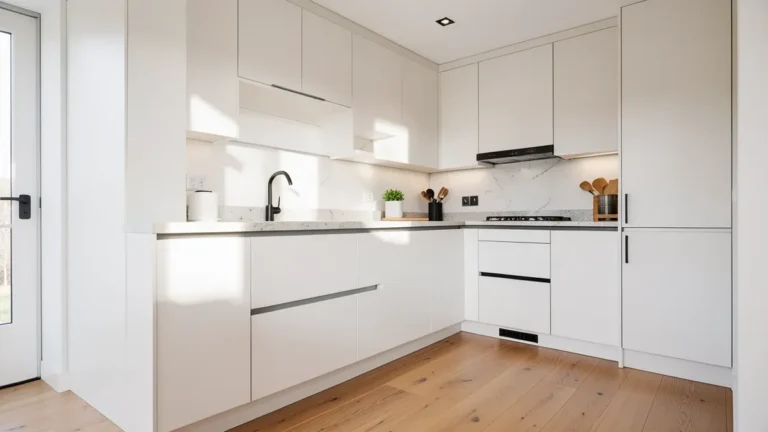
White oak’s neutral tone makes it flexible with cabinet color rather than dictating it. When selecting cabinet colors, neutral tones enhance white oak’s natural grain best: shades of white, cream, beige, or light gray create a balanced, timeless look, as seen in this modern white kitchen with oak flooring. For a bolder look, pair white oak with white cabinets and a contrasting island or countertop in a dark hardwood stain such as walnut or espresso — the contrast reads as intentional rather than mismatched.
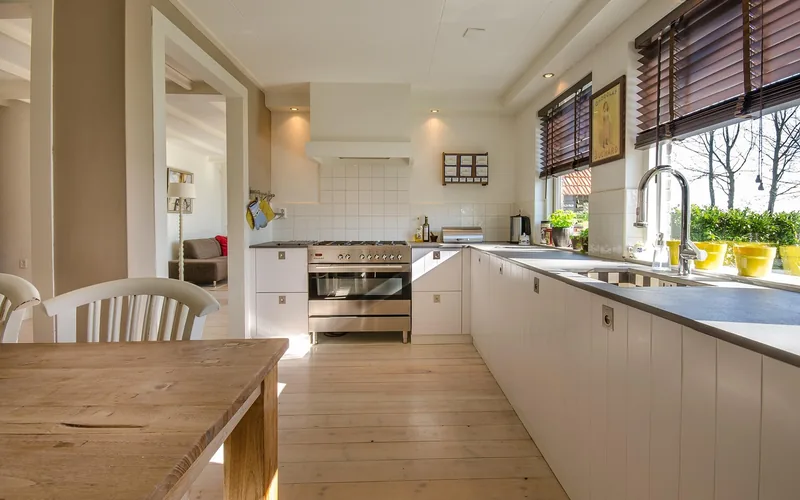
Choosing the Right Cabinet Colors
Neutral cabinet tones — white, cream, beige, or light gray — create a balanced, elegant look that lets the warmth and grain of white oak take center stage without competing for attention.
Maintaining and Refinishing White Oak Floors in the Kitchen
Keep indoor humidity between 35% and 55% year-round — the range most flooring manufacturers specify to keep solid white oak from gapping in winter or cupping in summer. In a kitchen, that means paying closer attention near the dishwasher, sink, and any exterior door than you would in a bedroom.
- Regular cleaning: Sweep or vacuum regularly, and use a damp (not wet) mop with a cleaner made for hardwood floors.
- Protect from scratches: Felt pads under furniture and stools, plus rugs in high-traffic spots, prevent most surface scratching.
- Wipe spills immediately: White oak’s tyloses slow water absorption, they don’t stop it — standing water left overnight can still stain or cup the wood.
- Trim pet nails: Regular trims reduce the fine scratch pattern pets leave on a lighter-colored floor.
- Limit direct sunlight: UV exposure ambers and fades white oak over time; blinds or UV-blocking film slow the color shift.
Solid white oak can be refinished roughly 4 to 7 times before the wear layer is gone, which is what makes it a 50-year floor rather than a 20-year one. Here’s the refinishing process itself:
- Sand: Remove the existing finish and surface imperfections with a drum sander for open floor and an edger for corners.
- Stain (optional): Apply a wood stain after sanding if you’re changing the floor’s color.
- Apply finish: Choose polyurethane, oil-based, or water-based finish based on kitchen traffic and sheen preference.
- Buff: Once dry, buff with fine-grit sandpaper for an even surface before the next coat.
- Add final coats: Apply additional coats with full drying time between each for lasting protection.
If you’re budgeting rather than doing it yourself, our full refinishing cost breakdown covers real per-square-foot pricing. Always consult a flooring professional if you’re unsure about sanding depth on an older floor.
“The two spots we watch closest on any white oak kitchen install are the dishwasher perimeter and the sink base cabinet — that’s where a missed bead of caulk or a slow leak shows up first as a darkened seam, long before it’s visible anywhere else in the room.”
Common Mistakes to Avoid With White Oak Kitchen Floors
- Skipping acclimation: White oak planks need 3–7 days in the room at normal humidity before installation, or they can gap or buckle later as they adjust.
- No felt pads on stools or chairs: Bare feet on wood or metal furniture legs are the single most common source of dents on a kitchen floor.
- Ignoring the dishwasher perimeter: A worn or missing caulk bead lets water wick under the floor slowly, invisibly, long before a stain appears on the surface.
- Choosing a high-gloss finish: Higher sheen shows scratches and dust more than a satin or matte finish, which hides daily wear better in a busy kitchen.
- No rug at the sink: A washable mat at the sink catches the splashes that matter most, without trapping moisture against the wood the way a rubber-backed mat can.
Weighing the same wood for a lower-traffic room instead? The calculus changes somewhat — see our breakdown of white oak flooring for living rooms for how the priorities shift.
Frequently Asked Questions About White Oak Flooring in Kitchens
Is white oak a good floor for kitchens?
Yes. White oak’s tyloses make it more water-resistant than red oak, and its 1,360 Janka rating handles daily foot traffic and dropped cookware better than softer species. It’s not waterproof, so spills still need to be wiped up rather than left to sit.
What are the disadvantages of white oak flooring in a kitchen?
Its main drawbacks are a lower Janka rating than hickory or hard maple (more prone to denting from dropped cookware), visible water spotting on its lighter color, and a higher installed cost than red oak.
What color cabinets go with white oak floors?
Neutral colors — white, cream, beige, or light gray — are the most common pairing because they let the wood’s natural grain stand out without competing with a bold cabinet tone.
What is the best wood floor for a white kitchen?
White oak is generally the best fit for a white kitchen: it’s water-resistant and durable enough for daily use, and its neutral tone works with white cabinetry without clashing. For a bolder look, pair it with a dark-stained accent such as walnut or espresso.
How long does white oak flooring last in a kitchen?
Solid white oak typically lasts 50 years or more and can be refinished roughly 4 to 7 times. Engineered white oak generally lasts 20 to 30 years and can usually only be refinished once or twice, since its real-wood wear layer is thinner.
Is white oak or red oak better for kitchens?
White oak is the better choice for a kitchen specifically. Its tyloses block water penetration that red oak’s open pores allow through, giving it a real moisture-resistance advantage where spills are routine — even though the two species are close in hardness (1,360 versus 1,290 Janka).
Conclusion
White oak earns its place in the kitchen through a real mechanical advantage — tyloses that block water where red oak’s open grain lets it through — not just marketing. Keep humidity between 35% and 55%, wipe spills promptly, and choose solid or engineered based on how much seasonal movement your kitchen sees, and a white oak floor should outlast most of the cabinetry around it.
Sponsored / affiliate links. As an Amazon Associate I earn from qualifying purchases. I may earn additional commission from eligible campaigns.