How Deep Can a 6.5 Circular Saw Cut? (2-1/4 In. at 90 Degrees)
A 6.5-inch circular saw cuts to a maximum depth of about 2-1/4 inches at 90 degrees, varying from 2-1/8 to 2-1/4 inches by model. That is not enough to cut through a 4×4 post (3.5 inches thick) or doubled 2x lumber in one pass without flipping the board. This guide compares real depth specs across four popular 6.5-inch saws and explains why the number is smaller than the blade radius.
6.5-Inch Circular Saw Cutting Depth: The Real Numbers
Best 6.5″ Circular Saw Pick
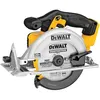
DEWALT DCS391B 20V MAX 6-1/2″ Circular Saw
Cordless sidewinder with the deepest published depth in this class (2-1/4 in at 90°) and a 0–50° bevel range.
- Best for: DIYers and pros who already run 20V MAX DEWALT batteries
- Why we picked it: Matches the deepest verified 90° spec of any 6.5-inch saw we compared, from a widely-stocked brand
- Main drawback: Sold bare — battery and charger are a separate purchase
Compare more 6.5″ circular saw options
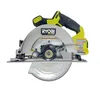 Option 1 RYOBI ONE+ HP 18V Brushless 6-1/2″
|
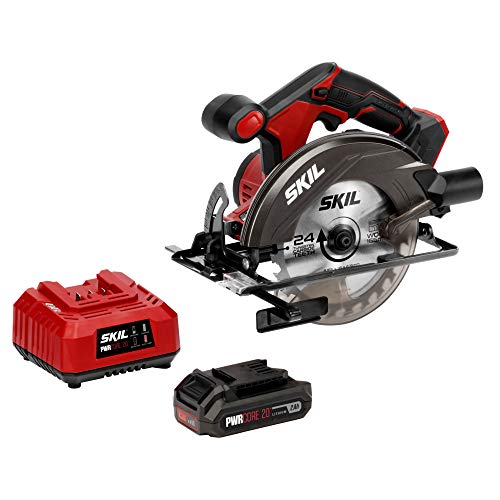
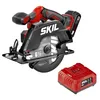 Option 2 SKIL PWR CORE 20 (CR6413)
|
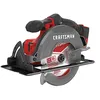 Option 3 CRAFTSMAN V20 (CMCS500B)
|
As an Amazon Associate we earn from qualifying purchases.
Cutting depth is the maximum thickness of material a saw’s blade can slice through in a single pass at a given angle, measured from the base of the shoe (baseplate) to the lowest point of the blade’s arc. For a circular saw with a 6.5-inch blade, that figure lands at approximately 2-1/8 to 2-1/4 inches at 90 degrees, depending on the exact saw. It’s plenty for standard 2x lumber, 3/4-inch plywood, and most subfloor and decking material — but not for anything thicker than about 2-1/4 inches in one cut.
Older spec sheets and some retailer listings round this number differently — you’ll see 2.44 inches, 2-3/8 inches, or 2-1/2 inches quoted for “a 6.5-inch saw,” but those figures actually describe larger 7-inch or 7-1/4-inch blades, not the 6.5-inch class. The manufacturer-published numbers for actual 6.5-inch models cluster tightly around 2-1/8 to 2-1/4 inches — see the model-by-model comparison below.
Why the Depth Is Less Than Half the Blade’s Diameter
A quick rule of thumb explains the number: maximum cutting depth ≈ (blade diameter ÷ 2) − 1 inch. For a 6.5-inch blade, that’s 3.25 inches of radius minus roughly 1 inch for the arbor hub and shoe clearance, landing at 2.25 inches — almost exactly what real 6.5-inch saws deliver. The blade can’t reach its full radius into the material because the arbor (the center shaft the blade mounts on) and the thickness of the base shoe both eat into the usable depth.
This is also why a thicker or heavier baseplate — common on entry-level corded saws — shaves a little more off the max depth than a slim magnesium shoe on a premium cordless model, even with an identical 6.5-inch blade.
6.5-Inch Circular Saw Depth by Model: DEWALT vs. Ryobi vs. SKIL vs. Craftsman
Published depth specs vary slightly by manufacturer even though every saw here uses the same 6.5-inch blade class. These are the maker’s own published numbers, not rounded estimates:
| Saw model | Depth at 90° | Depth at 45° | Typical price |
|---|---|---|---|
| DEWALT DCS391B (20V MAX) | 2-1/4 in | 1-5/8 in | ~$129 |
| RYOBI ONE+ HP 18V Brushless | 2-1/4 in | 1-9/16 in | ~$99–139 |
| SKIL PWR CORE 20 (CR6413) | 2-1/4 in | 1-5/8 in | ~$100 |
| CRAFTSMAN V20 (CMCS500B) | 2-1/8 in | 1-11/16 in | ~$79 |
Source: manufacturer spec sheets for each model, including DEWALT’s own DCS391B product page. Prices fluctuate and are bare-tool (no battery) unless noted. If you’re shopping by depth alone, all four land within an eighth of an inch of each other at 90 degrees — the bigger practical differences are weight, brushless motor efficiency, and battery-platform compatibility with tools you may already own.
Bevel Cuts Eat Into Your Depth Fast
Tilting the shoe to cut a 45-degree bevel costs roughly 0.5 to 0.65 inch of depth compared to a straight 90-degree cut, because the blade now enters the material at an angle instead of straight down — less of its edge is actually available to cut through the material’s thickness. On the models above, that drops a 2-1/4-inch straight-cut saw to about 1-9/16 to 1-5/8 inches at 45 degrees. Plan bevel cuts on material no thicker than roughly 1-5/8 inches if you’re using a 6.5-inch saw, and always test on a scrap piece first — the exact number varies enough between models that “close” isn’t good enough on a finished cut.
Cutting 4×4 Posts, Doubled 2x Stock, and Other Depth-Limited Jobs
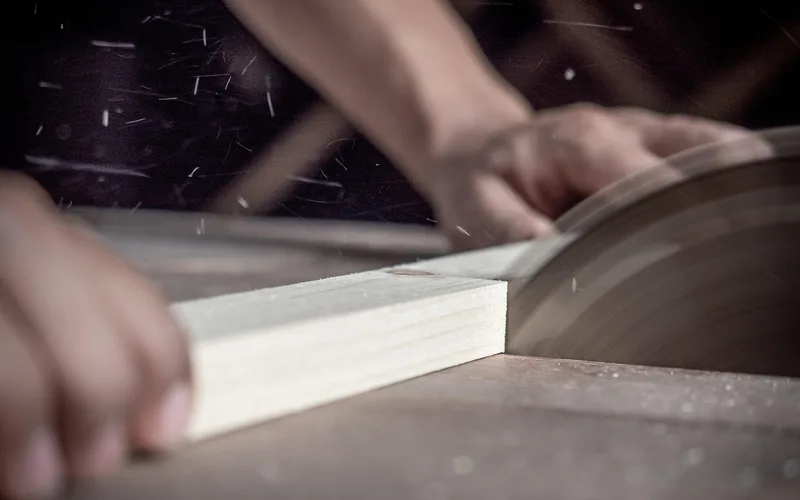
A dimensional 4×4 post is actually 3.5 inches thick, and doubled 2x lumber (two 2x boards face-nailed together, common in beams and headers) runs about 3 inches — both are beyond what any 6.5-inch saw can cut in one pass. The standard workaround: mark your cut line on all four faces of the post (or both faces of the doubled stock), cut as deep as the saw allows on one face, then rotate the material 180 degrees and cut through from the opposite face until the two kerfs meet. Keep the blade square to the face on both cuts or the two kerfs won’t line up cleanly.
Standard 2×4 and 2×6 lumber (1.5 inches actual thickness) and 3/4-inch plywood are well within a single pass on any 6.5-inch saw, with margin to spare.
6.5-Inch vs. 7-1/4-Inch Circular Saws: When the Extra Depth Matters
A 7-1/4-inch blade adds roughly 3/8 inch of straight-cut depth over a 6.5-inch blade — typically 2-1/2 to 2-5/8 inches versus 2-1/8 to 2-1/4 inches. That extra margin matters if you’re regularly cutting 4x lumber, doubled headers, or thick engineered beams in one pass; it’s mostly irrelevant if your work is 2x framing, plywood, and deck boards, where the lighter, cheaper 6.5-inch saw already has room to spare. See our full 6.5 vs. 7-1/4-inch circular saw comparison for weight, power, and price differences beyond just depth.
Getting Reliable Depth From Your Saw
- Check the blade for wobble: Spin it by hand with the saw unplugged — visible runout at the rim means a bent blade or worn arbor, and it will cut shallower and rougher than spec.
- Set the shoe to the material thickness plus about 1/8 inch: Setting it deeper than needed exposes more blade below the material, increasing kickback risk without adding any cutting benefit.
- Use a thin-kerf blade at maximum depth: A standard-kerf blade uses more of the motor’s torque to clear the wider cut, which can bog down a saw that’s already at its deepest setting.
- Never force a bevel cut past the saw’s rated 45-degree depth: Pushing the material through when the blade can’t fully clear it stalls the motor and can kick the saw back toward you.
- Re-check your depth setting after swapping blades: A dado-style or specialty blade changes the usable depth even though the shoe setting looks the same.
In practice, a fresh, sharp thin-kerf blade and a properly-set shoe get you the full published depth. A worn baseplate edge, a dull blade, or a blade with even slight runout will noticeably undercut the spec-sheet number — if you’re relying on every fraction of that 2-1/4 inches, don’t skip checking the blade first. For blade-swap steps specific to one common 6.5-inch model, see how to change the blade on a SKILSAW circular saw.
Common Depth Mistakes to Avoid
- Assuming all 6.5-inch saws cut the same depth: the spread between models (2-1/8 to 2-1/4 inches) is small but real — check your specific saw’s manual before planning a tight cut.
- Confusing 6.5-inch and 7-1/4-inch specs: the 2.44-inch and 2-1/2-inch figures floating around online belong to larger blades, not the 6.5-inch class.
- Cutting bevels at the saw’s rated straight-cut depth: a 45-degree cut needs roughly half an inch less material thickness than the 90-degree spec allows.
- Skipping the flip-and-cut technique on thick stock: trying to force a 4×4 or doubled 2x through in one pass with a 6.5-inch blade risks a stalled motor or kickback.
Frequently Asked Questions
What is the actual cutting depth of a 6.5-inch circular saw at 90 degrees?
Real 6.5-inch circular saws cut approximately 2-1/8 to 2-1/4 inches deep at 90 degrees, depending on the model. DEWALT’s DCS391B, Ryobi’s ONE+ HP, and SKIL’s PWR CORE 20 CR6413 all publish 2-1/4 inches; Craftsman’s CMCS500B publishes 2-1/8 inches. Figures like 2.44 or 2-1/2 inches you may see elsewhere describe larger 7 or 7-1/4-inch blades, not this size.
How deep can a 6.5-inch circular saw cut at a 45-degree bevel?
At a 45-degree bevel, a 6.5-inch saw cuts roughly 1-9/16 to 1-11/16 inches deep, about half an inch less than its 90-degree spec. The exact figure depends on the model — check your saw’s manual before cutting bevels on material near the maximum thickness.
Can a 6.5-inch circular saw cut through a 4×4 post in one pass?
No. A 4×4 post is 3.5 inches thick, well beyond any 6.5-inch saw’s roughly 2-1/4-inch maximum depth. Mark the cut line on all four faces, cut as deep as the saw allows, then rotate the post 180 degrees and finish the cut from the opposite side until the two kerfs meet.
Can a 6.5-inch circular saw cut a 2×4?
Yes, easily. A 2×4’s actual thickness is 1.5 inches, well within a 6.5-inch saw’s roughly 2-1/8 to 2-1/4-inch maximum depth at 90 degrees, with about 3/4 inch of margin to spare.
Is a 6.5-inch or 7-1/4-inch circular saw better for deep cuts?
A 7-1/4-inch saw cuts deeper — typically 2-1/2 to 2-5/8 inches versus a 6.5-inch saw’s 2-1/8 to 2-1/4 inches — so it’s the better choice for 4x lumber, doubled headers, or thick beams. For standard 2x framing and plywood, the lighter and usually cheaper 6.5-inch saw cuts deep enough with room to spare.
Whichever 6.5-inch saw you own, the real-world number is close to 2-1/8 to 2-1/4 inches at 90 degrees, not the 2.44 or 2-1/2-inch figures that circulate online — those belong to a larger blade class. Check your saw’s own spec sheet for the exact figure, keep the blade sharp and true, and use the flip-and-cut technique for anything thicker than that, such as 4×4 posts or doubled framing lumber.
Sponsored / affiliate links. As an Amazon Associate I earn from qualifying purchases. I may earn additional commission from eligible campaigns.