How to Adjust a Poulan Chainsaw Carburetor (1.5-Turn Baseline)
Adjust a Poulan chainsaw carburetor by turning the L (low) and H (high) screws to a 1.5-turn-out baseline from lightly seated, then fine-tuning idle with the T screw — but many Poulan Pro models hide these under limiter caps and need a 21-tooth splined tool, not a flathead. Adjusting too lean risks engine seizure. This guide covers the baseline setting, the splined-tool issue, and model-specific notes for the Wild Thing, 2150, 2350, and Poulan Pro lines.
Finding Your Poulan’s Carburetor Screws
Best Carburetor Adjustment Tool Pick

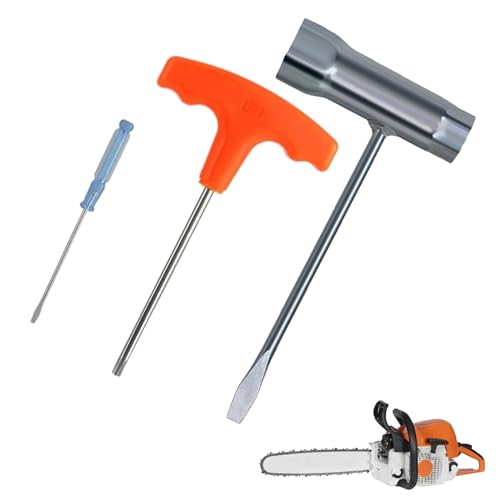
10-Piece Carburetor Adjustment Tool Kit – $10.97
Includes the splined and flathead tip sizes needed to reach both exposed H/L screws and the tamper-resistant needles found on newer Poulan Pro carburetors.
- Best for: covering both older exposed-screw and newer limiter-cap Poulan models with one kit
- Why we picked it: 10 tip sizes cover the common 2-stroke carburetor brands, not just Poulan/Zama
- Main drawback: generic tips, not a name-brand splined tool — fine for occasional use, less durable for daily shop use
As an Amazon Associate we earn from qualifying purchases.
Remove the air filter cover to expose the carburetor. Older and lower-cost Poulan models (Wild Thing, older 2-series saws) typically have two exposed flathead screws marked H (high speed) and L (low speed), plus a separate idle screw often marked T or LA.
If you can’t find a flathead slot to turn: many Poulan Pro and newer EPA-compliant models replace the H and L screws with tamper-resistant splined needles under plastic limiter caps. These require a specific 21-tooth splined adjustment tool — a standard screwdriver won’t grip them. This is the single most common reason people report “missing” adjustment screws on newer Poulan Pro saws.

Baseline Setting: 1.5 Turns Out
Poulan’s factory baseline for both the L and H screws is 1.5 turns out from lightly seated — this is the starting point for nearly every Poulan and Poulan Pro carburetor before fine-tuning. Never force a screw fully closed; “lightly seated” means turning it clockwise just until it stops resisting, not cranking it down hard.
Step-by-Step Adjustment
- Start with a warm engine: run the saw for 2-3 minutes so the carburetor adjustment reflects normal operating temperature.
- Set the baseline: turn L and H screws clockwise until lightly seated, then back each out exactly 1.5 turns.
- Adjust the idle (T/LA) screw: with the engine running, turn the idle screw until the chain does not move but the engine doesn’t stall — typically 2,700-3,200 RPM depending on model.
- Fine-tune the low-speed (L) screw: turn slowly clockwise (leaner) until the engine idles smoothly and accelerates cleanly without hesitation or bogging.
- Fine-tune the high-speed (H) screw: run the saw at full throttle briefly and check RPM with a tachometer. Most Poulan chainsaws target a specific max RPM range listed in the owner’s manual — exceeding it by running too lean can cause the engine to seize.
- Test under load: make a cut in real wood. If the engine bogs down or stalls under load, the L screw needs to be turned slightly counterclockwise (richer).
📊 Running the high-speed screw too lean is the single most common cause of chainsaw engine seizure from a DIY carburetor adjustment — a lean mixture runs hotter and starves the piston of lubrication carried in the fuel. Always verify high-speed RPM with a tachometer rather than by ear; guessing “by sound” is the most frequently cited mistake in small-engine repair forums. See our chainsaw tachometer guide for a model that clips on without wiring.

Model-Specific Notes
| Model / Line | Adjustment Notes |
|---|---|
| Wild Thing | Exposed flathead H/L screws; 3-screw layout common (H, L, and idle T) on the 1950/2050 variants |
| Poulan Pro (42cc, 46cc) | Often has limiter caps over splined needles — check before assuming screws are missing |
| 2150 / 2350 / 2550 | Older 2-series saws typically use exposed flathead H/L screws with the same 1.5-turn baseline |
| PP4018 / PP5020AV | Newer Poulan Pro numbering; verify limiter-cap presence before purchasing a tool |
Common Mistakes to Avoid
- Removing limiter caps unnecessarily. If the saw runs fine within the capped range, leave the caps in place — removing them can void a warranty and push the engine outside its EPA-compliant tune.
- Adjusting cold. A carburetor tuned on a cold engine will run wrong once warmed up. Always adjust after a short warm-up run.
- Guessing high-speed RPM by ear. Use a tachometer — an engine that sounds fine can still be running dangerously lean.
- Ignoring a dirty air filter first. A clogged air filter mimics carburetor problems (bogging, stalling, poor acceleration). Clean or replace it before touching the carburetor screws.
- Force-turning a seized screw. If a screw won’t turn, it may be corroded or the wrong tool size — forcing it can strip the head and require carburetor replacement.

Frequently Asked Questions
How do you adjust the H and L screws on a Poulan chainsaw?
Turn both the H and L screws clockwise until lightly seated, then back each out 1.5 turns as a baseline. From there, fine-tune the L screw for smooth idle and clean acceleration, then check the H screw’s high-speed RPM with a tachometer against your owner’s manual’s target range.
Why can’t I find the carburetor adjustment screws on my Poulan Pro?
Many Poulan Pro models use tamper-resistant splined needles under plastic limiter caps instead of exposed flathead screws, as part of EPA emissions compliance. You’ll need a 21-tooth splined carburetor adjustment tool to reach them — a standard screwdriver won’t fit.
Why does my Poulan chainsaw stall or hesitate when I give it gas?
Hesitation at increased speed usually points to the L screw being too lean — try richening it slightly (counterclockwise) in small increments. Also check for a clogged air filter or dirty fuel filter, both of which mimic carburetor problems.
How do you adjust a Poulan chainsaw with three carburetor screws?
A three-screw setup adds a separate idle (T or LA) screw alongside the H and L screws. Set H and L to the 1.5-turn baseline first, start the engine, then use the idle screw to set idle RPM just below the point where the chain begins to move.
What happens if you adjust a chainsaw carburetor too lean?
A too-lean mixture runs hotter and can starve the piston of the lubrication carried in the fuel, which risks engine seizure — a costly failure that often requires a full engine rebuild. Always verify high-speed adjustments with a tachometer rather than by sound alone.
Conclusion
Most Poulan carburetors start from the same 1.5-turns-out baseline on the L and H screws, but whether you can reach those screws with a flathead or need a splined tool depends on your specific model. Warm the engine before adjusting, verify high-speed RPM with a tachometer instead of guessing, and never force a limiter cap off a saw that’s already running fine.
Sponsored / affiliate links. As an Amazon Associate I earn from qualifying purchases. I may earn additional commission from eligible campaigns.