How to Calculate Wood in Square Feet
Wood square footage equals length in feet multiplied by width in feet — a 10-foot by 4-foot panel is 40 square feet, not board feet. Confusing the two units is the single most common overbuying mistake on flooring and paneling jobs. This guide covers the formula, a board-foot conversion chart by thickness, irregular shapes, and how much waste to add for straight versus angled cuts.
Quick Answer
Multiply length (ft) × width (ft) to get square footage — a 10×4-foot sheet is 40 sq ft. For irregular shapes, split the area into rectangles, calculate each, and add them together. Add 5-10% for straight cuts or 15-20% for diagonal patterns to cover waste.
What Is Square Footage of Wood?
Best Tape Measure Pick
CRAFTSMAN 25-Ft Tape Measure with Fraction Markings (CMHT37443S)
Fraction markings make it easy to read exact inch fractions before converting to decimal feet for a square-footage formula.
- Best for: quick, accurate length and width readings on boards and rooms
- Why we picked it: fraction markings remove the guesswork this article’s conversion math depends on
- Main drawback: manual lock only, no auto-lock feature
Compare more measuring tool options
 Option 1 Arrow 12-Inch Combination Square
|
 Option 2 Bosch GLM100-23 Laser Measure
|
 Option 3 Irwin Strait-Line Chalk Line Reel
|
As an Amazon Associate we earn from qualifying purchases.
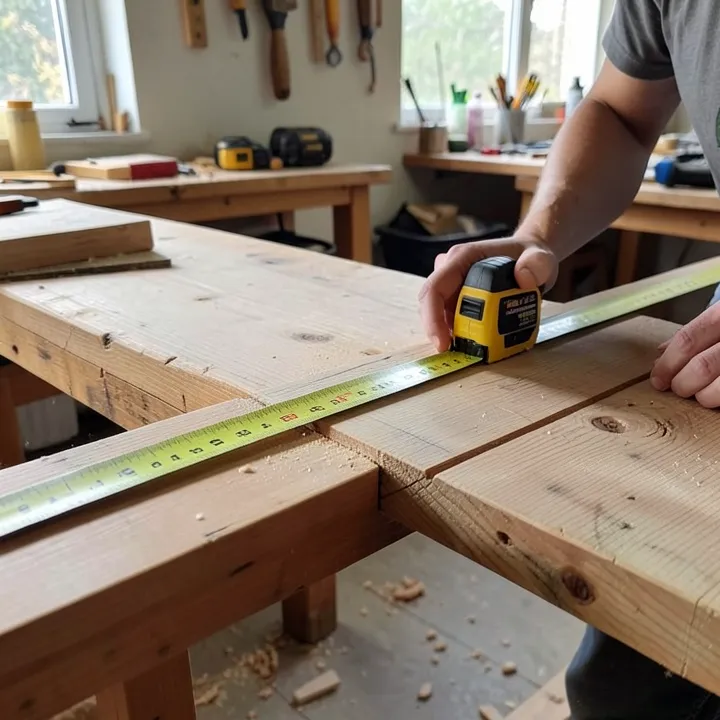
Square footage of wood is the flat surface area of a board, panel, or covered space, found by multiplying length by width in feet. It differs from board footage, which measures volume and factors in thickness, and from linear footage, which measures length alone with no width component. Use square feet for flooring, paneling, and siding; use board feet for pricing rough lumber.
How to Calculate Wood in Square Feet (Step by Step)
- Measure length and width in feet. If a dimension is in feet and inches, convert the inches to a decimal by dividing by 12 — 6 feet 3 inches becomes 6 + (3÷12) = 6.25 feet.
- Multiply length × width. A board 10 feet long and 4 feet wide is 10 × 4 = 40 square feet.
- Break irregular shapes into rectangles. Split an L-shaped area into two rectangles, calculate each separately, then add the totals — an 8×5-foot section plus a 3×2-foot section is 40 + 6 = 46 square feet.
- Add a waste allowance. Multiply the total by 1.05–1.10 for straight installations, or 1.15–1.20 for diagonal or herringbone patterns, before ordering material.
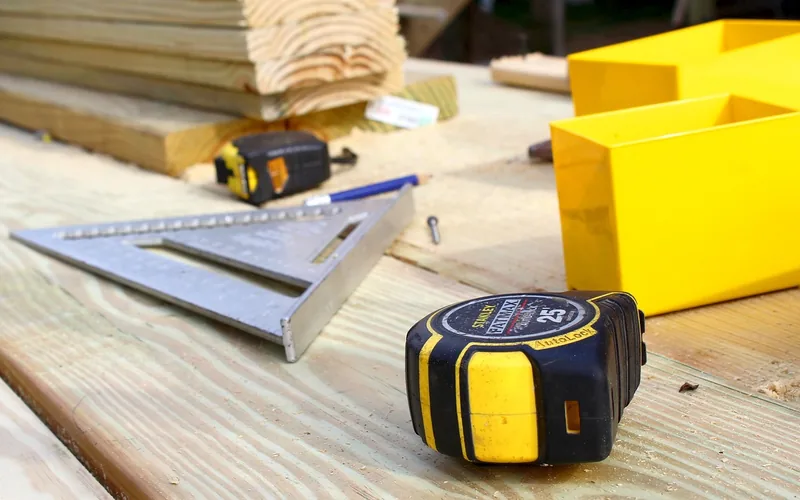
Square Feet vs. Board Feet vs. Linear Feet
These three units answer different questions, and mixing them up is the most common wood-buying error. Board feet and cubic feet both measure volume, while square feet measures only surface area.
| Unit | Measures | Formula | Best For |
|---|---|---|---|
| Square Feet | Surface area | Length (ft) × Width (ft) | Flooring, paneling, siding |
| Board Feet | Volume | Sq Ft × Thickness (in), or L(ft)×W(in)×T(in) ÷ 12 | Buying rough or hardwood lumber |
| Linear Feet | Length only | Length (ft), width ignored | Trim, molding, baseboard |
Board-Foot Conversion Chart by Thickness (Square Feet to Board Feet)
Once you have the square footage, converting to board feet is one multiplication: board feet = square feet × thickness in inches. This works because a single board foot is, by definition, one square foot of surface that is one inch thick — the math cancels out cleanly at any thickness. Most lumber yards price rough hardwood by the board foot, so this chart converts a known square-foot area straight to the number a yard will quote.
| Lumber Thickness | Board Feet per 1 Sq Ft | Board Feet for 50 Sq Ft |
|---|---|---|
| 1/2 in (0.5) | 0.5 bd ft | 25 bd ft |
| 3/4 in (0.75) | 0.75 bd ft | 37.5 bd ft |
| 1 in (1.0) | 1.0 bd ft | 50 bd ft |
| 1-1/4 in (1.25) | 1.25 bd ft | 62.5 bd ft |
| 1-1/2 in (1.5) | 1.5 bd ft | 75 bd ft |
| 2 in (2.0) | 2.0 bd ft | 100 bd ft |
Worked example: an 8-foot board, 10 inches wide and 1.25 inches thick, covers 8 × (10÷12) = 6.67 square feet. Multiply by the 1.25-inch thickness: 6.67 × 1.25 = 8.33 board feet — the same answer the standard board-foot formula (length × width in inches × thickness in inches ÷ 12) gives, just reached from the square footage you already measured.
“We round every board’s width up to the next 1/4 inch before calculating square footage — on a 12-board flooring order, a 1/8-inch measuring error on each piece adds up to almost a full square foot of shortfall by the last row.”
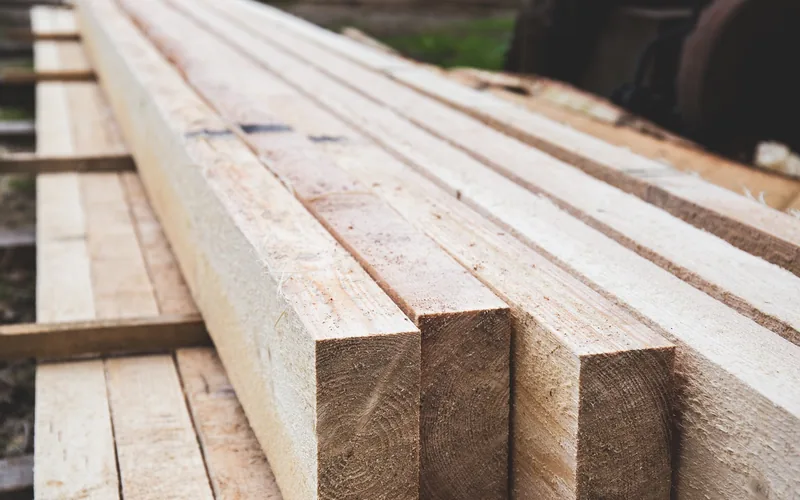
Get Your Measurements Right: Tape Measure & Layout Tools
Every square-footage calculation is only as accurate as the length and width you start with. A locking tape measure and a combination square keep those two numbers honest — especially on longer boards where a soft tape can sag and read short.
Common Mistakes to Avoid
- Ignoring thickness entirely. Square footage doesn’t need thickness, but if you plan to buy the same piece by the board foot too, skipping thickness gives you the wrong order quantity.
- Not rounding measurements consistently. Round every dimension up to the nearest 1/8 inch before converting to decimal feet — rounding down on multiple boards compounds into a real material shortfall.
- Forgetting the waste allowance. Ordering exactly the calculated square footage leaves nothing for cutting mistakes, defects, or pattern-matching offcuts.
- Mixing up square feet and board feet when getting a quote. A yard quoting “$4 a foot” for hardwood almost always means per board foot, not per square foot — confirm which unit before you order.
Frequently Asked Questions
How Do You Measure Wood Area in Square Feet?
Measure the length and width in feet and multiply them together for a rectangular piece. For an irregular shape, split it into smaller rectangles, calculate the area of each, and add the totals. Convert any inch measurements to decimal feet first by dividing by 12.
Is a Board Foot the Same as a Square Foot?
No. A square foot measures flat surface area (length × width). A board foot measures volume and includes thickness — one board foot equals one square foot of surface that is one inch thick. Convert between them by multiplying square feet by the thickness in inches.
What Tools Are Essential for Wood Measurement?
A locking tape measure, a combination square for checking true right angles, and a calculator or measuring app cover most projects. For large rooms or multiple boards, a laser distance measure removes the sag error a long tape can introduce.
How Much Extra Wood Should I Buy for Waste?
Add 5-10% to the calculated square footage for straight, simple layouts. Add 15-20% for diagonal, herringbone, or pattern-matched installations, since angled cuts create more unusable offcuts. On a 120-square-foot room, a 10% allowance means ordering 132 square feet.
Why Is Calculating Wood in Square Feet Important?
Accurate square footage keeps you from over-ordering (wasted budget) or under-ordering (a mid-project trip back to the lumber yard, often with a different batch that doesn’t color-match). It also gives you the number needed to price flooring, paneling, and siding, since those materials are almost always sold by the square foot.
Whatever the project, the same two-number formula holds: measure length and width in feet, multiply them, and add a waste allowance before you order. Need the volume instead of the area? Convert with the board footage calculator, or see square footage to linear footage if you’re pricing trim instead of panels. For a full project estimate, figuring out how much wood you need walks through material planning end to end — or browse the full woodworking calculators directory for weight, framing, and cost tools.
Sponsored / affiliate links. As an Amazon Associate I earn from qualifying purchases. I may earn additional commission from eligible campaigns.
 PATIKIL 12 x 10 Inch Wood Panel Board, 2 Pack Unfinished Wooden Canvas Boards Square Blank Deep Cradle Board for Painting Pouring DIY Art Use with Oils Acrylics
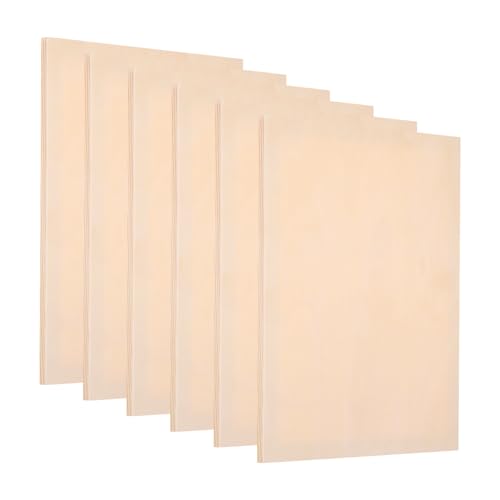 PATIKIL 12 x 10 Inch Wood Panel Board, 6 Pack Unfinished Wooden Canvas Boards Square Blank Deep Cradle Board for Painting Pouring DIY Art Use with Oils Acrylics