How to Clean Butcher Block Countertops Safely
Cleaning your butcher block countertops might seem tricky at first, especially if you’re new to wood care. You might worry about damaging the surface or using the wrong products. But don’t let that stop you. Learning how to clean butcher block countertops safely is much simpler than you think. We’ll walk you through easy steps to keep them looking great.
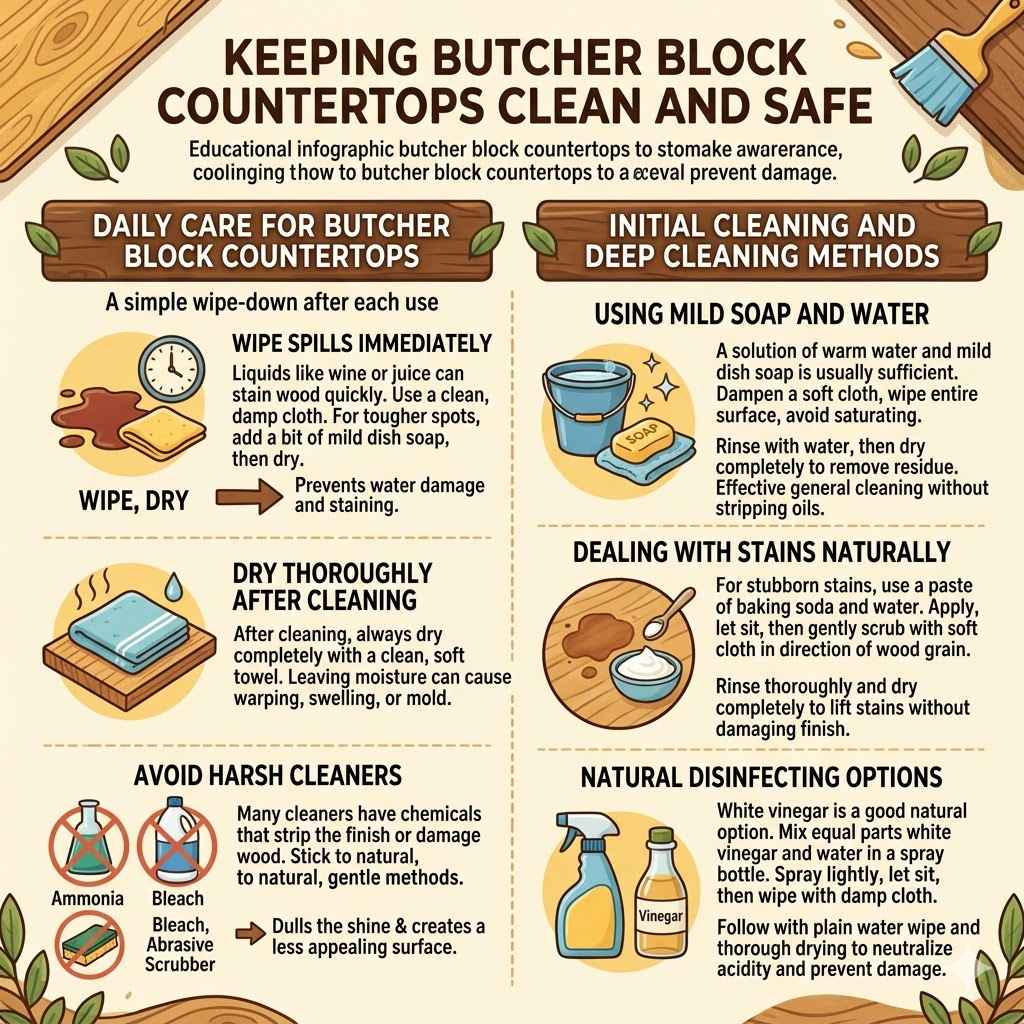
Keeping Butcher Block Countertops Clean and Safe
Cleaning butcher block countertops the right way is key to their longevity and appearance. These beautiful wooden surfaces add warmth and character to any kitchen. However, they require a bit of special care to avoid damage from moisture, stains, and harsh chemicals. Understanding the best practices ensures your countertops remain a functional and attractive centerpiece for years. This section will cover the daily upkeep and initial cleaning steps that set the foundation for safe maintenance.
Daily Care for Butcher Block Countertops
Your butcher block needs regular attention to prevent build-up and minor issues from becoming major problems. A simple wipe-down after each use can make a huge difference. This habit prevents food particles from drying on the surface or liquids from soaking in.
Wipe Spills Immediately
Liquids, especially colored ones like wine or juice, can stain wood quickly. Use a clean, damp cloth to wipe them up right away. For tougher spots, a bit of mild dish soap can help, but always follow with a dry cloth to remove all moisture.
This simple step prevents water damage and staining.
Dry Thoroughly After Cleaning
After wiping or cleaning any spills, always make sure to dry the countertop completely with a clean, soft towel. Leaving moisture on the wood can cause it to warp, swell, or develop mold. Proper drying is crucial for preventing damage over time.
Avoid Harsh Cleaners
Many common kitchen cleaners contain chemicals that can strip the finish from your butcher block or even damage the wood itself. Stick to natural, gentle methods. Ammonia, bleach, and abrasive scrubbers are big no-nos.
These can dull the shine and create a less appealing surface.
Initial Cleaning and Deep Cleaning Methods
Sometimes, your butcher block needs more than just a quick wipe. A deeper clean can tackle tougher grime and refresh the surface. This doesn’t mean using strong chemicals; it means using the right techniques.
Using Mild Soap and Water
For a more thorough cleaning, a solution of warm water and a small amount of mild dish soap is usually sufficient. Dampen a soft cloth with this solution and wipe down the entire countertop. Avoid saturating the wood with water.
After cleaning, rinse the cloth well and wipe the countertop again with just water to remove any soap residue. Finally, dry the surface completely with a clean, soft towel. This method is effective for general cleaning without stripping the wood’s natural oils.
Dealing with Stains Naturally
For stubborn stains, a paste made from baking soda and water can be a gentle yet effective solution. Apply the paste to the stained area and let it sit for a few minutes. Then, gently scrub with a soft cloth or sponge in the direction of the wood grain.
Rinse the area thoroughly with a damp cloth and dry it completely. This natural approach helps lift stains without damaging the wood finish.
Natural Disinfecting Options
If you need to disinfect your butcher block, white vinegar is a good natural option. Mix equal parts white vinegar and water in a spray bottle. Lightly spray the countertop and let it sit for a few minutes before wiping it down with a damp cloth.
Vinegar is a mild acid that can kill bacteria. However, always follow with a plain water wipe and thorough drying to neutralize the acidity and prevent any potential damage or lingering smell.
Essential Tools for Safe Butcher Block Cleaning
Having the right supplies makes cleaning your butcher block much easier and safer. You don’t need a lot of fancy products. Simple, everyday items can do the job effectively without harming your beautiful wood.
What You’ll Need
Gathering these items before you start will streamline the cleaning process.
Soft Cloths or Sponges
Microfiber cloths are excellent for wiping and drying because they are absorbent and won’t scratch the wood. Soft sponges are also good for gentle scrubbing when needed. Avoid abrasive scrubbers like steel wool or harsh brushes, as these can easily damage the wood’s surface and finish.
Mild Dish Soap
Choose a pH-neutral dish soap. These are gentle on the wood and effectively cut through grease and food residue without stripping protective finishes. A small amount is all that’s needed for most cleaning tasks.
White Vinegar
This is a natural disinfectant that can also help remove some tougher grime. Dilute it with water for a safer cleaning solution. Its mild acidic nature makes it useful for sanitizing without harsh chemicals.
Baking Soda
A fantastic natural abrasive for making cleaning pastes. It’s effective at lifting stains and grime without scratching the surface. It can also help neutralize odors.
Clean Towels (Cotton or Microfiber)
These are essential for drying the countertop thoroughly after cleaning. Ensuring the wood is completely dry prevents moisture-related damage like warping or mold growth. Have several on hand for complete drying.
Mineral Oil or Food-Grade Wax
While not for immediate cleaning, these are vital for maintaining the wood after cleaning. They help seal the wood and protect it from stains and moisture. Regular oiling is part of safe butcher block care.
When to Deep Clean and How Often
The frequency of deep cleaning depends on how you use your kitchen. A busy kitchen with a lot of cooking will need more frequent attention than a lightly used one.
Weekly Cleaning
A quick wipe-down with mild soap and water followed by thorough drying should be done at least once a week, or more often if needed. This keeps the surface hygienic and prevents minor issues from accumulating.
Monthly Oiling or Waxing
To maintain the finish and protect the wood, oiling or waxing your countertops once a month is a good practice. This step helps to prevent drying and cracking, and keeps the wood looking its best.
As Needed for Stains or Grime
If you notice a stubborn stain or significant grime build-up, address it as soon as possible. Spot cleaning with baking soda paste or vinegar solution can handle these issues without requiring a full deep clean.
A Step-by-Step Guide to How to Clean Butcher Block Countertops Safely
Following a clear process ensures you clean your butcher block effectively and safely. This guide breaks down the steps so you can achieve a clean and protected countertop.
Step-by-Step Cleaning Process
This routine is designed to be gentle yet thorough, preserving the beauty and integrity of your butcher block.
Clear the Countertop
Remove everything from the countertop surface. This includes appliances, decor items, and any food preparation tools. Having a clear space allows for a more effective and thorough cleaning.
Wipe Away Debris
Use a dry, soft cloth or a soft brush to sweep away any loose crumbs or debris. This prevents them from becoming part of the cleaning solution and causing scratches.
Prepare Your Cleaning Solution
For general cleaning, mix a few drops of mild dish soap with warm water in a bucket or bowl. For disinfecting, use a 1:1 solution of white vinegar and water. Ensure the solution is not too concentrated.
Dampen a Cloth
Dip a soft cloth or sponge into your chosen cleaning solution. Wring it out thoroughly so it is damp, not wet. Excess water is the enemy of butcher block.
Wipe Down the Surface
Gently wipe the entire countertop surface with the damp cloth, working in the direction of the wood grain. Cover all areas evenly.
Rinse with a Clean Damp Cloth
Use a separate, clean cloth dampened with plain water to wipe down the countertop. This removes any soap or vinegar residue. Again, ensure the cloth is only damp.
Dry Thoroughly
Immediately after rinsing, use a dry, soft towel to wipe the entire surface dry. Ensure no moisture remains on the wood. Pay special attention to edges and seams.
Address Stubborn Stains (If Necessary)
For tougher stains, make a paste of baking soda and water. Apply it to the stain, let it sit for a few minutes, then gently scrub with a soft cloth or sponge. Rinse thoroughly and dry completely.
Oiling or Waxing (Optional but Recommended)
Once the countertop is completely dry, apply a thin layer of food-grade mineral oil or butcher block wax. Buff it in with a clean cloth. This nourishes and protects the wood, preparing it for future use.
Allow the oil or wax to soak in completely before placing items back on the counter.
Common Mistakes to Avoid
Learning from others’ experiences can help you protect your butcher block. These common errors can cause irreversible damage.
Using Too Much Water
Soaking butcher block is a sure way to cause it to swell, warp, and even crack. Always use a damp cloth, never a soaking wet one, and dry immediately after cleaning.
Using Abrasive Cleaners or Tools
Steel wool, scouring pads, and harsh chemical cleaners can strip finishes, scratch the wood, and dull its appearance. Stick to soft cloths and mild, natural cleaners.
Letting Spills Sit
Liquids, especially acidic or colored ones, can penetrate the wood and leave stains if not wiped up promptly. Immediate cleanup is your first line of defense against permanent marks.
Skipping the Drying Step
This is critical. Even after wiping with a damp cloth, the wood needs to be completely dry. Residual moisture is what leads to damage like mildew or warping over time.
Maintaining Your Butcher Block for Lasting Beauty
Beyond just cleaning, proper maintenance is crucial for the long-term health and appearance of your butcher block countertops. Regular upkeep ensures they remain a beautiful and functional part of your kitchen.
The Importance of Oiling and Sealing
Wood is a natural material that needs protection from its environment. Oiling and sealing are not just about making the countertops shiny; they are about preserving the wood itself.
How Mineral Oil Works
Food-grade mineral oil is a popular choice for butcher block because it penetrates the wood pores. It helps to prevent moisture absorption, which can lead to swelling or cracking. It also brings out the natural beauty of the wood, giving it a rich, warm look.
Regular application keeps the wood from drying out and becoming brittle.
Why Butcher Block Wax is Beneficial
A good butcher block wax is often a blend of mineral oil and beeswax or carnauba wax. The wax adds an extra layer of protection on top of the oil. This creates a smoother surface that repels liquids better and provides a subtle sheen.
It also helps to fill in minor surface imperfections and gives the wood a lovely, smooth feel.
Frequency and Application Tips
Aim to oil or wax your butcher block countertops at least once a month, or more frequently if you notice the wood looking dry or feeling rough. To apply, pour a generous amount of mineral oil onto the surface and spread it evenly with a clean cloth, following the grain. Let it soak in for at least 15-20 minutes, or even overnight for a deep treatment.
Buff off any excess with a clean cloth. For wax, apply a thin layer and buff it in until you achieve a smooth, protective finish.
Protecting Against Heat and Scratches
Butcher block is a natural material and can be sensitive to extreme conditions. Taking precautions can prevent common types of damage.
Using Trivets and Hot Pads
Never place hot pots, pans, or dishes directly on your butcher block countertop. The sudden change in temperature can cause scorching or even cracking. Always use trivets or hot pads to create a barrier between the heat source and the wood surface.
Cutting on a Separate Board
While butcher block countertops are designed for some cutting, it’s best to use a separate cutting board for most food preparation. This protects the countertop from deep knife marks and stains. Using a dedicated board will help maintain the smooth surface and prevent excessive wear and tear.
Dealing with Minor Scratches
Minor scratches can often be buffed out with fine-grit sandpaper (around 220-grit). Sand gently in the direction of the wood grain. After sanding, clean the area thoroughly and reapply oil or wax to protect the freshly sanded wood.
For deeper scratches, you might need to consult a professional or consider more involved refinishing.
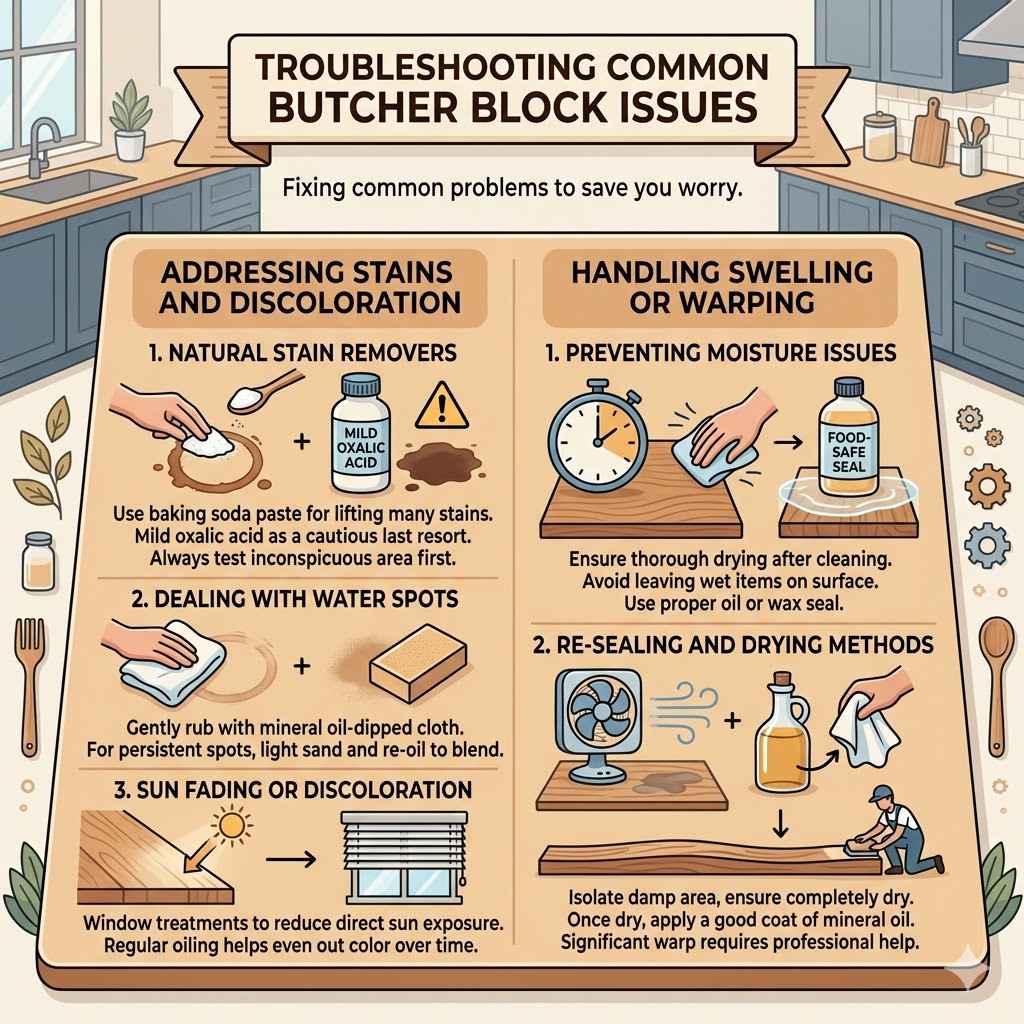
Troubleshooting Common Butcher Block Issues
Even with the best care, you might encounter some common problems with your butcher block. Knowing how to fix them will save you worry.
Addressing Stains and Discoloration
Stains happen, but they are usually fixable with the right approach.
Natural Stain Removers
As mentioned, baking soda paste is excellent for lifting many types of stains. For very dark or set-in stains, you might need to try a very mild oxalic acid solution, but this should be a last resort and used with extreme caution, followed by thorough rinsing and drying. Always test any stain remover on an inconspicuous area first.
Dealing with Water Spots
Water spots can sometimes be removed by gently rubbing the area with a soft cloth dipped in mineral oil. For more persistent spots, a very light sanding followed by re-oiling may be necessary. The key is to rehydrate the wood and blend the finish.
Sun Fading or Discoloration
Direct sunlight can cause wood to fade or change color over time. While you can’t reverse this effect easily, you can prevent further damage by using window treatments to reduce direct sun exposure on the countertops. Regular oiling can also help to even out the color over time.
Handling Swelling or Warping
Moisture is the primary culprit behind wood swelling and warping.
Preventing Moisture Issues
The best way to deal with swelling or warping is prevention. Always ensure thorough drying after cleaning and avoid leaving wet items on the surface. Proper sealing with oil or wax creates a barrier against excess humidity.
Re-Sealing and Drying Methods
If you notice slight swelling, try to isolate the area and ensure it is completely dry. Once dry, applying a good coat of mineral oil or wax can help the wood settle. In cases of significant warping, it might require professional intervention or a complete refinishing process to flatten the surface.
Frequently Asked Questions
Question: What is the best natural cleaner for butcher block countertops?
Answer: The best natural cleaners for butcher block are mild dish soap mixed with warm water, or a diluted solution of white vinegar and water for disinfecting. For stains, a paste of baking soda and water is very effective.
Question: How often should I oil my butcher block countertops?
Answer: You should aim to oil your butcher block countertops at least once a month. More frequent oiling may be needed if the wood looks dry or feels rough, especially in humid environments or with heavy use.
Question: Can I cut directly on my butcher block countertop?
Answer: While some butcher block countertops are designed for cutting, it’s best to use a separate cutting board for most food preparation. This helps to prevent deep knife marks and preserves the smooth surface of your countertop for longer.
Question: What should I do if I get a stubborn stain on my butcher block?
Answer: For stubborn stains, try making a paste of baking soda and water. Apply it to the stain, let it sit for a few minutes, then gently scrub with a soft cloth or sponge. Rinse thoroughly with a damp cloth and dry completely.
Question: Is it safe to use bleach on butcher block?
Answer: No, it is not safe to use bleach on butcher block. Bleach is a harsh chemical that can strip the finish, discolor the wood, and potentially damage the fibers. Always opt for gentle, natural cleaners.
Conclusion
Keeping your butcher block countertops clean and beautiful is a straightforward process. By using simple, natural cleaners and focusing on thorough drying and regular oiling, you protect your wood. Gentle care ensures your countertops remain a safe and attractive feature in your kitchen for years to come. Enjoy your beautifully maintained butcher block!