When to Apply a Second Coat of Stain (Minimum and Maximum Wait)
Apply the second coat once the first is dry to the touch and no longer tacky, but check both ends of the window. Sherwin-Williams SuperDeck semi-transparent stain says wait at least 4 hours and no more than 7 days, while TWP 100 says apply it within 30 minutes or not at all. This guide covers minimum waits, the maximum window most guides skip, and when to apply no second coat.
When to Apply a Second Coat of Stain: Wait Times by Product
Best Stain Brush Pick
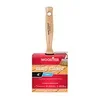 |
Wooster Bravo Stainer Bristle/Polyester Stain Brush, 4 Inch: $14.29 The application steps below ask for a thin coat, a wet leading edge and one board finished end to end. A wide stain brush makes that easier than a small trim brush, and Wooster lists this one for water-based and oil-based stains.
|
As an Amazon Associate we earn from qualifying purchases.
Most guides give one number, usually 24 hours. The data sheets do not. Across six manufacturer sources, we found three different policies: wait a minimum and then recoat within a limit, recoat wet-on-wet inside an hour, or do not recoat at all. The table lists each maker’s earliest and latest second-coat time in its own words. For the wider picture of stains, oils and sealers, see our wood finishing guide.
| Product (data sheet) | Earliest second coat | Latest second coat | What it says about coats |
|---|---|---|---|
| Sherwin-Williams SuperDeck Waterborne Semi-Transparent (114.31, 12/2019) | 4 hours | 7 days | Two coats are required for proper color development; the second must go on within 7 days |
| Sherwin-Williams SuperDeck Log Home & Deck Stain, Satin (114.80, 06/2020) | 4 hours | 3 days | Two coats may be necessary to reach the selected color |
| Sherwin-Williams SuperDeck Waterborne Clear Sealer (114.10, 7/2017) | Wet-on-wet | Before 2 hours | If a second coat is needed, apply it inside 2 hours; after that it will not penetrate and adhere properly |
| TWP 100 Pro Series (Feb 2020) | After 15 to 30 minutes of penetration | 30 minutes | Two coats are typical; skip the second if the first has not absorbed after 30 minutes |
| Restore-A-Deck Semi-Transparent (web instructions) | 20 minutes | 1 hour | Light second coat applied wet-on-wet |
| Cabot Australian Timber Oil 19400 Series | Not applicable | Not applicable | Apply 1 coat only; do not overapply |
Sherwin-Williams quotes its SuperDeck times at 77°F and 50% relative humidity and says recoat times depend on temperature, humidity and film thickness. Sources: SuperDeck 114.31, 114.80, 114.10, TWP 100 Pro Series, Cabot 19400 and Restore-A-Deck.
If this 2 hour window is exceeded, the second coat will not penetrate and adhere properly.
That is the opposite of the usual advice to wait a day. On a wet-on-wet product, waiting is the mistake: the first coat has already filled the wood, and a second coat has nothing to soak into. On a deck stain with a 7-day maximum, the risk runs the other way, so do not let a weather delay stretch past the limit without checking the sheet.
How Long To Wait, By Stain Type
Interior stains run on shorter clocks than the exterior deck stains above. In our data-sheet comparison of dry, recoat and topcoat times, second-coat times run from 1 hour for Varathane Premium Fast Dry and 1 to 2 hours for Behr exterior semi-transparent and Varathane Water Based, up to 6 to 8 hours for Minwax Gel Stain and 12 hours for Sherwin-Williams Wood Classics oil stain. Two products can differ by a factor of 12, so the “24 hours for oil, 2 hours for water” rule of thumb fails often.
Water-based is not automatically faster either. If you are choosing between the two, our oil-based vs water-based stain comparison puts the numbers side by side. The wait before a clear topcoat is a separate clock from the wait before a second coat of stain, and it is usually longer.
Signs Your First Coat Is Ready
Time on the can gets you to the right neighborhood. These checks tell you whether your wood agrees:
- Look for gloss. A wet-looking sheen on the surface means stain is sitting on top instead of soaking in. Sherwin-Williams warns that excess product left on the surface results in a tacky finish.
- Touch an out-of-the-way spot. It should feel dry and smooth, with no stickiness and no color on your fingertip. If it is tacky, do not recoat; our guide to why stain stays tacky covers the fix.
- Run the water-drop test on exterior wood. The SuperDeck Clear Sealer sheet says to sprinkle water on the wood: if it soaks in quickly the wood is ready to finish, and if it beads up the wood should weather 1 to 2 weeks and be tested again. The same sheet says that after a missed second-coat window the surface must weather until water no longer beads before another coat.
- Check the weather window, not just the clock. Cold or damp air stretches every figure above.
Ideal Conditions For Second Coat Application
Makers publish temperature and rain limits more consistently than they publish recoat times. These are the figures from the sheets we read:
| Condition | Limit | Source |
|---|---|---|
| Surface and air temperature | 50 to 90°F, applied in shade | SuperDeck Log Home & Deck Stain (114.80) |
| Cold after application | Not below 50°F for 24 hours | SuperDeck Semi-Transparent (114.31) |
| Cold after application | Not below 50°F for 48 hours | Cabot Australian Timber Oil 19400 |
| Rain after application | None expected for 24 hours | SuperDeck Log Home & Deck Stain (114.80) |
| Rain and cold after application | None for 2 to 3 days | TWP 100 Pro Series |
| Sun and hot surfaces | Avoid direct sun and hot surfaces | Cabot 19400 and Sherwin-Williams application tips |
TWP quotes its 24-hour minimum air-dry at 78°F and 50% humidity and lists 75°F at 50% humidity as ideal, with drying slower in colder, more humid air. Indoors you control all of this. Outdoors, check a three-day forecast before you open the can.
Applying The Second Coat Of Stain
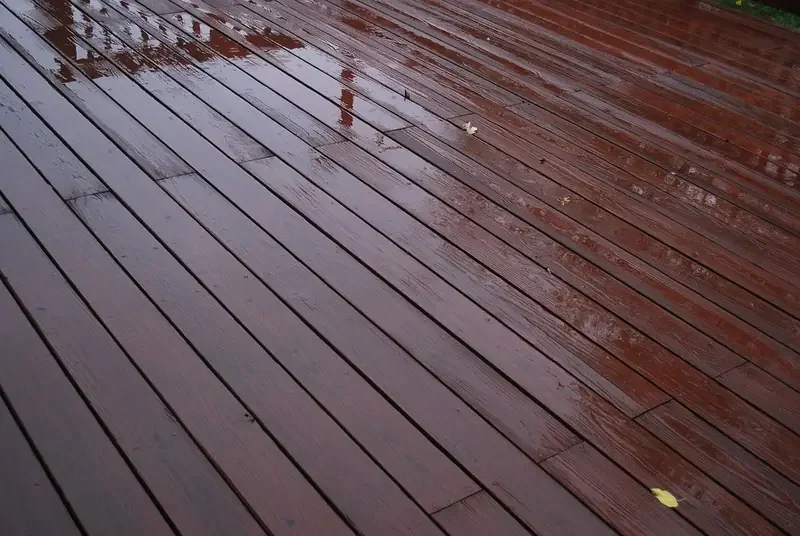
A second coat goes on differently from the first. The goal is a thin, even layer that the wood can absorb, not extra film on top.
- Confirm the window. You are past the minimum wait and inside the maximum, and the first coat passes the touch check above.
- Dust the surface lightly. Wipe off dust and lint with a dry or barely damp cloth so it does not get trapped under the new coat.
- Work a small area. Cabot says to apply to 1 to 3 boards at a time, starting at one edge and following through to the end of the boards to avoid lap marks.
- Keep a wet leading edge. Sherwin-Williams says to stain from a dry area into the adjoining wet area, keep the leading edge wet, and stain a board from end to end.
- Do not overapply. Cabot says not to overapply and TWP says stain that does not soak in forms a shiny film, stays tacky for an extended period and fails prematurely. Sherwin-Williams says to redistribute puddles to dry areas or wipe them up.
- Wipe excess promptly. TWP says to remove excess 30 to 60 minutes after the final coat with a dry cloth, brush, roller or applicator pad.
Fire safety for oily rags
The TWP data sheet warns that rags and other items wet with the stain may spontaneously ignite if improperly stored or discarded, and says to place them immediately in a sealed, water-filled metal container. Treat rags from any oil-based stain the same way.
Should You Apply A Second Coat At All?
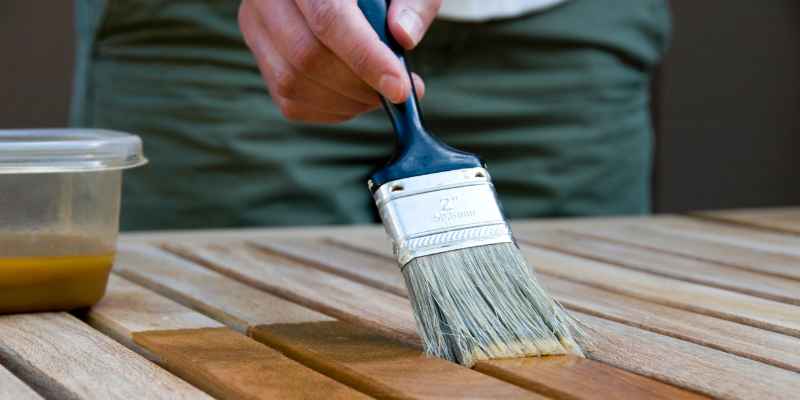
Not every stain wants one. Sherwin-Williams requires two coats on SuperDeck semi-transparent for proper color and recommends two on badly weathered or unfinished wood, while Cabot Australian Timber Oil is a one-coat product and TWP notes that exotic and hardwoods typically absorb only one coat. A hardwood tabletop and a weathered pine deck are different cases. If the first coat looks even and the color is right, you are done.
Two sibling guides take the question from other angles: whether a second coat is actually necessary, and whether it makes the wood darker. This page is only about timing; for what Minwax, Varathane, General Finishes and Cabot labels allow in total coats, see how many coats of stain you need.
Troubleshooting Common Issues
- Streaks or lap marks: usually a dry edge or too much stain. Work smaller sections and keep the leading edge wet, as above.
- Second coat sits on the surface: the wood is saturated or you missed a wet-on-wet window. Wipe off what has not soaked in right away.
- Still sticky after the label time: cold, damp air or excess stain. See why a stain is not drying for the full diagnosis.
- Missed the maximum window or ended up with a blotchy finish: check the data sheet first, then see how to fix wood stain mistakes or how to restain wood.
- Choosing an exterior product for the job: our best deck stain guide compares them.
Frequently Asked Questions
When Should I Apply A Second Coat Of Stain?
Apply it once the first coat is dry to the touch and no longer tacky, and inside the maker’s window. For Sherwin-Williams SuperDeck semi-transparent that means at least 4 hours and no more than 7 days at 77 degrees F and 50% humidity. For TWP 100 it means within 30 minutes, while the first coat is still absorbing.
How Long Should I Wait Between Stain Coats?
It depends on the product, not a fixed 24 hours. Sherwin-Williams SuperDeck sheets say a minimum of 4 hours, Varathane Fast Dry says 1 hour, Minwax Gel Stain says 6 to 8 hours and Sherwin-Williams Wood Classics oil stain says 12 hours. Cooler or more humid air means longer. Read the data sheet for your can.
Can I Apply A Second Coat Of Stain The Next Day?
Sometimes. Sherwin-Williams SuperDeck semi-transparent allows a second coat for up to 7 days and SuperDeck Log Home and Deck Stain for up to 3 days, so next day is inside the window. TWP 100 and SuperDeck Clear Sealer are wet-on-wet only, so a next-day coat falls outside their windows, and Cabot Australian Timber Oil calls for one coat only.
What Is The Maximum Time To Wait Before A Second Coat Of Stain?
Only some makers publish one. Sherwin-Williams lists 7 days for SuperDeck semi-transparent, 3 days for SuperDeck Log Home and Deck Stain and 2 hours for SuperDeck Clear Sealer. TWP 100 effectively sets 30 minutes. If your can has no maximum, apply the second coat the same day and keep it thin.
Does A Second Coat Darken The Stain?
It can on products designed for it, and not at all on products that only take one coat. Sherwin-Williams says two coats are required for proper color development on SuperDeck semi-transparent, while Cabot Australian Timber Oil says apply one coat only. For the color question on its own, see our guide on whether a second coat makes wood darker.
Should You Always Apply A Second Coat?
No. Apply one only if the label calls for it or the wood is still light, blotchy or thirsty after the first coat is absorbed. TWP notes that one coat is typically all exotic and hardwoods can absorb, and stain that does not soak in forms a shiny, tacky film. Our guide on whether a second coat is necessary covers when to stop.
Can I Stain When It’s Humid?
You can, but plan on longer waits. Sherwin-Williams says its recoat times depend on temperature, humidity and film thickness, and the figures above are quoted at 77 degrees F and 50% relative humidity. Cooler temperatures require longer drying, and some makers set their own humidity cutoff, so check the limit printed on your can before recoating.
Sponsored / affiliate links. As an Amazon Associate I earn from qualifying purchases. I may earn additional commission from eligible campaigns.