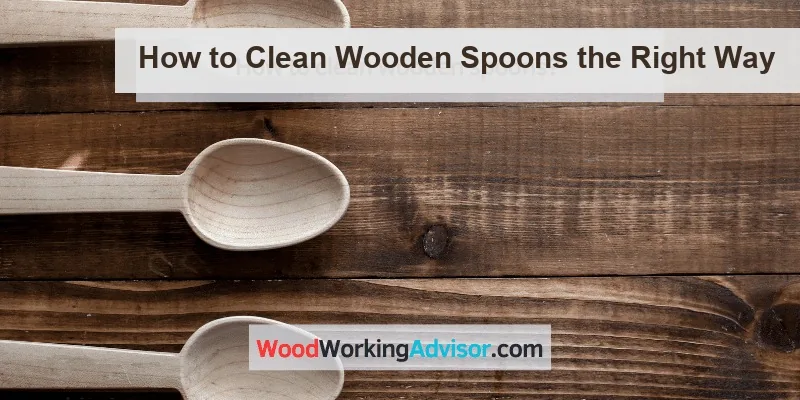
How to Clean Wooden Spoons the Right Way
Wooden spoons get clean with warm water, mild soap, and a soft sponge — not a trip through the dishwasher, whose heat and prolonged soak crack the wood and strip its natural oils. A hardwood spoon cared for this way typically lasts 5 to 10 years; run it through the dishwasher regularly and it can crack within months. This guide covers the hand-wash method, a baking soda fix for stains and odors, and how often to oil the wood.
Affiliate disclosure: This post contains Amazon affiliate links. As an Amazon Associate we earn from qualifying purchases, at no extra cost to you.
Quick Answer
Hand wash wooden spoons in warm, soapy water right after use, then dry immediately with a towel — never soak them or run them through the dishwasher. For stains or odors, scrub with a baking soda paste or rub with a cut lemon, then rinse and dry. Oil monthly with food-safe mineral oil.
What You Need to Clean Wooden Spoons
Best Wood Conditioner Pick
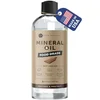
Kate Naturals Mineral Oil for Wood, Food Grade, 8oz
A USP food-grade mineral oil made for cutting boards, bowls, and utensils — the simplest way to keep a wooden spoon from drying out.
- Best for: monthly maintenance oiling of spoons, boards, and bowls
- Why we picked it: odorless, colorless, and absorbs without a greasy film
- Main drawback: pure oil only — no wax seal like a beeswax blend gives
Compare more wood conditioner options
 Option 1 Wood Wax for Spoons, Cutting Boards & Butcher Blocks
|
 Option 2 Howard Products Butcher Block Conditioner, 12oz
|
 Option 3 Thirteen Chefs Mineral Oil, 8oz
|
As an Amazon Associate we earn from qualifying purchases.
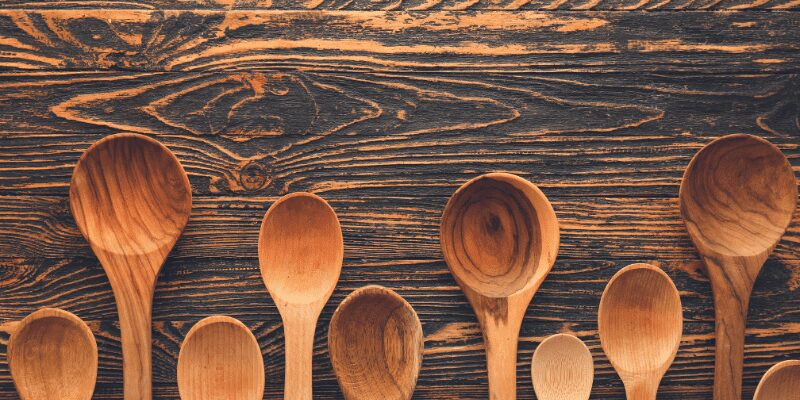
You do not need anything specialized — most of this is already in the kitchen. The type of wood a spoon is made from (maple, beech, olive, and bamboo are the most common woods spoons are made from) does not change the cleaning method, only how often you will need to condition it.
- Warm water
- Mild dish soap (unscented, without a heavy degreaser)
- A soft sponge or dish brush
- A clean towel
- Baking soda (for stains and odors)
- A lemon, halved (optional, for stains and odors)
- Food-safe mineral oil or a beeswax-mineral oil conditioner (for monthly maintenance)
How to Hand-Wash Wooden Spoons: Step-by-Step
- Rinse right after use: Rinse the spoon under warm water immediately after cooking, before food residue has a chance to dry and harden onto the wood.
- Wash with warm, soapy water: Add a drop of mild dish soap to a soft sponge or cloth and scrub the entire spoon, including the handle and the bowl.
- Rinse thoroughly: Run the spoon under warm water until every trace of soap is gone.
- Dry immediately with a towel: Pat the spoon dry with a clean towel rather than leaving it to air-dry in a wet dish rack.
- Store it somewhere dry: Keep the spoon where air can reach all sides, away from a damp sink or dishwasher steam.
How to Remove Stains and Odors from Wooden Spoons
Regular hand washing keeps most spoons looking fine, but turmeric, tomato sauce, garlic, and onion all leave a stain or a smell that soap alone will not fully lift. Two kitchen staples handle almost every case.
Lemon and salt scrub: Cut a lemon in half, sprinkle coarse salt on the cut side, and rub it over the stained area. The citric acid loosens the stain while the salt works as a mild abrasive. Rinse with warm water and dry.
Baking soda paste: Mix baking soda with a small amount of water until it forms a thick paste. Rub it into the spoon with a soft cloth or brush, let it sit for a minute or two, then rinse and dry thoroughly. Baking soda works as a natural deodorizer, so this is the better option for a spoon that smells like garlic or fish rather than one that is visibly stained.
How to Disinfect Wooden Spoons
For everyday use, soap and water is enough. After a spoon has touched raw meat, poultry, or egg, or if you simply want an occasional deeper clean, dip the spoon in a low-concentration hydrogen peroxide solution or plain white vinegar for about five minutes, then rinse well and dry immediately. Skip bleach — it is harder to rinse fully out of a porous surface and can leave a residue you would rather not scrape into your next meal.
Why You Should Never Boil or Dishwasher Wooden Spoons
Boiling water and dishwashers both fail for the same reason: wood is porous, and it absorbs the water it is sitting in. A quick rinse under hot tap water is fine, but submerging a spoon in boiling water, or running it through a dishwasher’s long hot-water-and-steam cycle, forces enough moisture into the wood fibers to make them swell. As the spoon dries back out afterward, that swelling reverses unevenly, and the result is warping, surface cracks, or a split straight down the handle. Dishwasher detergent adds a second problem on top of that — its degreasing chemicals strip the spoon’s natural and added oils, leaving the wood dry and more prone to splintering the next time it flexes under pressure.
None of this means boiling water is dangerous to use near a wooden spoon — stirring a pot of pasta water is completely fine. The risk is specifically in soaking or submerging the spoon itself for any length of time, whether that water is boiling or just sitting in a sink.
Are Wooden Spoons Naturally Antibacterial?
Wood has a genuine, researched antibacterial property that plastic utensils do not share, which is part of why hand washing (not high heat) is the method worth protecting. A widely cited 1994 study by Ak, Cliver, and Kaspar, published in the Journal of Food Protection, found that bacteria applied to wood surfaces were drawn into the wood’s capillary structure and died off rapidly, while the same bacteria survived and could multiply overnight on plastic.
📊 In that research, bacteria on wood surfaces died off rapidly, while the same bacteria survived and multiplied on plastic overnight. — Source: Ak, Cliver & Kaspar, Journal of Food Protection, 1994
Wood’s ability to wick moisture away from its surface and into its interior fibers is the likely mechanism — it pulls bacteria along with the moisture, out of reach of a food surface, where they eventually die. That is the same principle behind why wood cutting boards test as hygienic as plastic ones in repeated studies, despite looking more knife-scarred. It is also exactly why a dishwasher’s prolonged soak and a boiling-water bath work against a wooden spoon instead of for it — they force water in far past the surface, well beyond what a quick hand wash does.
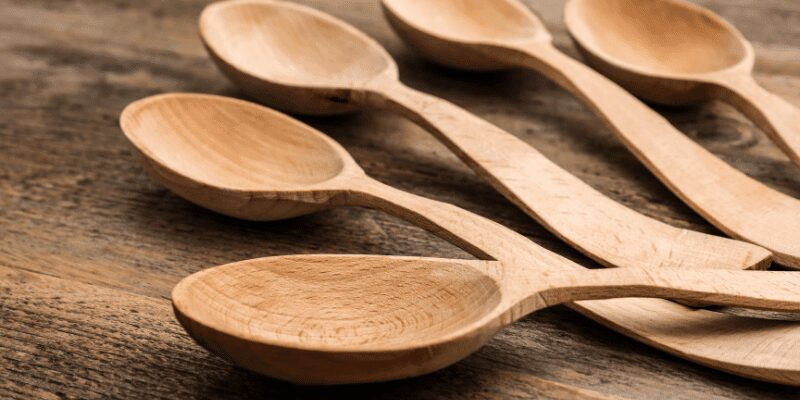
How to Dry and Store Wooden Spoons
Drying matters as much as washing. Air-drying in a closed dish rack traps moisture against the wood, which is exactly the condition that causes warping and mildew spotting. Towel-dry each spoon immediately after rinsing, then stand it upright in a crock or lay it flat somewhere with airflow on all sides — never stacked wet against other utensils. Keep spoons away from direct sunlight and away from the heat of a stovetop or radiator, both of which dry the wood too fast and encourage cracking.
How Often to Oil a Wooden Spoon
Oil replaces what hand washing gradually removes. Once a month for spoons in regular rotation (more often for one used almost daily) rub a small amount of food-safe mineral oil, walnut oil, or tung oil into the dry wood with a clean cloth. Let it soak in for a few hours, or overnight, then wipe off any excess before the next use. Skip vegetable, olive, or canola oil for this — they are food-safe to eat but go rancid inside the wood over time, unlike mineral, walnut, or tung oil, which stay stable.
How Long Do Wooden Spoons Last? Signs It’s Time to Replace
How long a spoon lasts depends mostly on the wood it is made from and how consistently it gets oiled.
| Wood Type | Typical Lifespan | Best For |
|---|---|---|
| Hardwood (maple, beech, olive, cherry) | 5-10 years | Everyday stirring and high-heat cooking |
| Softwood or bamboo laminate | 2-5 years | Light or occasional use |
Retire a spoon when you see any of these, regardless of its age:
- Cracks or splinters, especially near the bowl’s edge
- Deep grooves or gouges from years of scraping against pots
- Dark discoloration or a musty smell that oiling and cleaning do not fix
- Any fuzzy or colored spotting, which signals mold growing inside the wood, not just on the surface
A spoon with a few surface scratches is still fine — sand it lightly with fine-grit sandpaper along the grain and re-oil it. A spoon with a crack running into the bowl, or any mold that keeps coming back after cleaning, should be thrown out rather than reused.
Frequently Asked Questions
Are wooden spoons dishwasher safe?
No. The prolonged hot water and steam in a dishwasher cycle force moisture deep into the wood, and the detergent strips its natural oils. Together these cause swelling, warping, and eventually cracking. Hand wash wooden spoons with warm, soapy water instead.
Can you boil wooden spoons to clean them?
It is not recommended. Submerging a wooden spoon in boiling water forces moisture into the wood fibers, and the swelling and shrinking as it cools and dries can crack or warp it. A quick rinse under hot tap water is safe; a boiling-water soak is not.
How do you get rid of smells and stains on a wooden spoon?
Rub the spoon with a baking soda and water paste for odors, or with a lemon half sprinkled with salt for visible stains. Both work through a quick scrub followed by a thorough rinse and immediate drying.
How do you disinfect a wooden spoon?
After washing, dip the spoon in a low-concentration hydrogen peroxide solution or plain white vinegar for about five minutes, then rinse thoroughly and dry immediately. This is only needed occasionally, or after contact with raw meat, poultry, or egg — not after every use.
How often should you oil a wooden spoon?
About once a month for a spoon in regular use, more often if it is used almost daily. Use food-safe mineral, walnut, or tung oil — not vegetable or olive oil, which can turn rancid inside the wood over time.
How long do wooden spoons last?
A hardwood spoon (maple, beech, olive, or cherry) typically lasts 5 to 10 years with regular oiling. Softwood or bamboo-laminate spoons tend to last 2 to 5 years. Replace a spoon sooner if it cracks, develops deep grooves, or keeps growing mold after cleaning.
Conclusion
The short version: hand wash with warm water and mild soap, dry immediately, reach for baking soda or lemon on stains and odors, and oil about once a month. Skip the dishwasher and the boiling-water soak entirely — both push moisture past the wood’s surface in a way a quick hand wash never does, and that is what actually shortens a spoon’s life. Follow this and a good hardwood spoon will comfortably outlast most of the other tools in the drawer. For general upkeep of wood in the rest of the kitchen, see our full wood care and maintenance guide.
Sponsored / affiliate links. As an Amazon Associate I earn from qualifying purchases. I may earn additional commission from eligible campaigns.