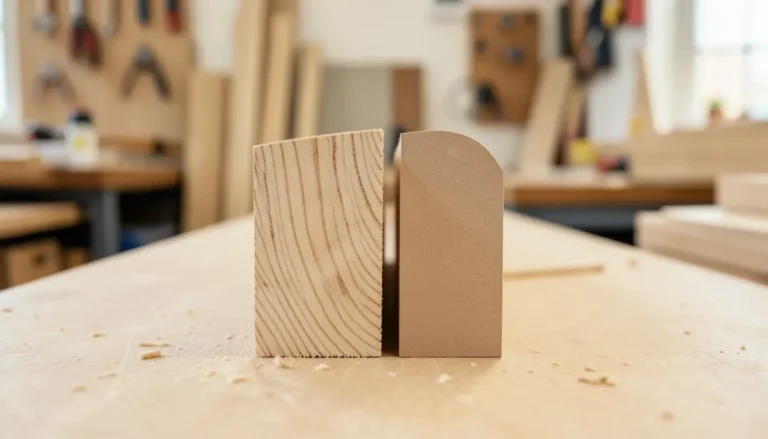
How to Cut MDF Without Power Tools
A fine-tooth handsaw (11 TPI or higher) or a sharp utility knife cuts MDF cleanly without power tools — but a utility knife only scores and snaps reliably on boards 3mm or thinner. The wrong tool for the thickness makes MDF’s dense fiber core chip and blow out along the edge. This guide covers which hand tool to use by thickness, the respirator rating MDF dust requires, and how to stop tear-out before it starts.
Which Hand Tool to Use by MDF Thickness
Best Hand Saw Pick for MDF
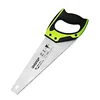
14 in. Pro Hand Saw, 11 TPI Fine-Cut Hardpoint Handsaw
A hardpoint 11 TPI blade — the minimum tooth count this guide recommends for a clean MDF edge without power tools.
- Best for: straight cuts on 6mm–18mm MDF sheet stock
- Why we picked it: 11 TPI matches the fine-tooth spec this guide calls for, at a low price point
- Main drawback: hardpoint blade isn’t resharpenable — it’s replaced, not sharpened, once it dulls
Compare more hand-cutting tool options
 Option 1 SUIZAN Japanese Flush-Cut Pull Saw
|
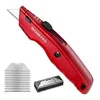 Option 2 WORKPRO Retractable Utility Knife
|
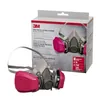 Option 3 3M OV/P100 Respirator
|
As an Amazon Associate we earn from qualifying purchases.
MDF is a manufactured board with a uniform fiber core and no wood grain to fight, so a hand tool cuts it just as cleanly in any direction — the deciding factor is thickness, not grain direction. Match the tool to the sheet you’re actually cutting:
| MDF Thickness | Best Hand Tool | Why It Works |
|---|---|---|
| 3mm or thinner | Utility knife, scored and snapped | Thin core snaps cleanly after 3–4 score passes; no sawing needed |
| 6mm–12mm | Fine-tooth handsaw (11+ TPI) or dozuki pull saw | Enough teeth per inch to shear fibers instead of tearing them |
| 15mm–18mm | Fine-tooth handsaw, slower pass, scored first | Still workable by hand, but scoring the line first cuts tear-out risk |
| 19mm and thicker | Power tool recommended | Hand-sawing is possible but slow enough that most people give up partway through |
For 19mm+ MDF, or if you’d rather skip the hand-tool approach altogether, most local hardware stores and lumber yards will cut MDF for you on the spot.
If you’re cutting MDF by hand specifically to save money on a budget build, it’s worth knowing where MDF’s cost advantage actually holds up versus plywood or solid wood before you commit a full sheet to hand tools.
How to Cut MDF with a Handsaw
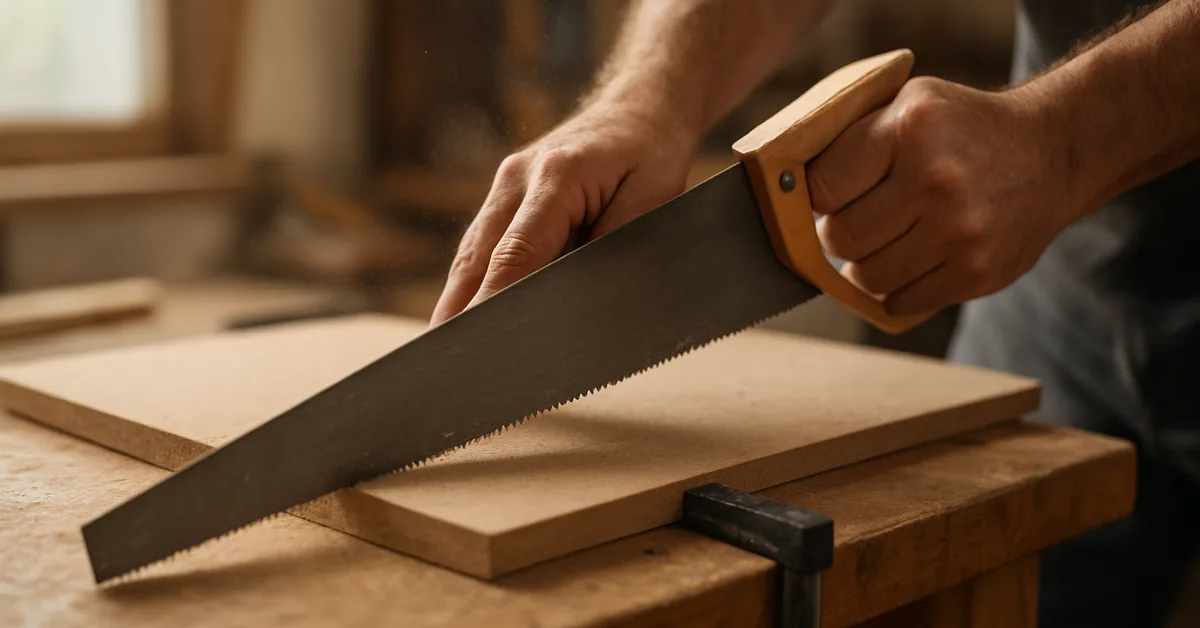
A handsaw is the right call for boards from 6mm up to about 18mm. Use a fine-tooth saw — at least 11 TPI, ideally 14 TPI or a Japanese-style dozuki pull saw — since anything coarser tears the fiber core instead of shearing it.
- Mark and tape the line: mark the cutting line with a straightedge and pencil, then run a strip of masking tape along both sides of the line — it holds surface fibers together and visibly cuts down on chipping.
- Clamp it down: secure the MDF firmly to a bench or sawhorses so it can’t shift mid-cut.
- Score before you saw: run a utility knife along the line 1–2 times to pre-cut the surface fibers ahead of the saw teeth.
- Start at a low angle: begin the cut with the saw close to flat against the board to establish a clean kerf before bringing it upright.
- Let the saw do the work: use full, steady strokes at a moderate pace — forcing the blade is what causes ragged edges, not a lack of effort.
- Sand the cut edge: finish with 150–220 grit sandpaper to knock down any remaining fuzz before sealing or painting.
How to Cut MDF with a Utility Knife (Boards 3mm or Thinner)
A utility knife only works reliably on thin MDF — 3mm or less. Anything thicker takes so many score passes that a handsaw is faster and cleaner.
- Mark the line: mark the cut clearly and set a straightedge along it.
- Score in passes: run the knife along the straightedge 3–4 times with firm, even pressure, deepening the groove each pass rather than trying to cut through in one.
- Position the snap: line the scored groove up with the edge of a table or workbench.
- Snap downward: apply steady pressure to the overhanging side until it breaks cleanly along the score line.
- Clean the edge: a few light sanding passes remove the slightly rougher texture a snapped edge leaves behind.
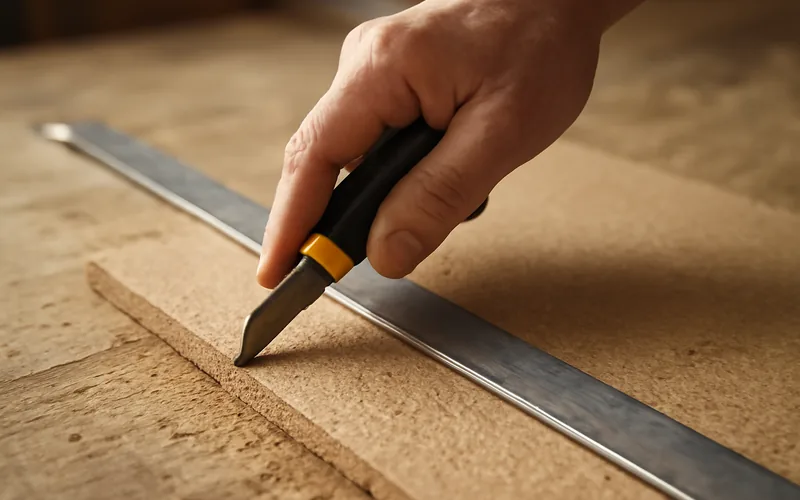
Cutting Curves with a Coping Saw
For curves and cutouts, a manual coping saw or fret saw is the hand-tool option — a jigsaw can also cut curves, but it’s a power tool, so it’s not covered here.
- Secure the board: clamp the MDF so it can’t shift as you follow the curve.
- Fit a fine blade: use a fine-tooth coping saw blade rated for board material, not just metal.
- Mark the curve: draw the full cutting line before you start.
- Cut in short strokes: follow the line gradually with short, controlled strokes rather than long sweeps — MDF’s fiber core doesn’t flex like solid wood, so forcing a tight curve too fast cracks it instead of curving it.
- Finish the edge: sand curved edges with a folded strip of sandpaper that can follow the curve.
If a curved cut chips out badly despite going slow, it’s usually repairable — see our guide to fixing chipped or damaged MDF before you write off the piece.
PPE and Dust Safety When Cutting MDF by Hand
MDF dust is a composite of wood fiber and the formaldehyde-based resin that binds it — cutting it by hand releases both, not just inert sawdust. Hand-sawing produces far less airborne dust than a power tool, but the dust it does produce still carries that resin content.
📊 According to OSHA, MDF, particleboard, and other composite wood products bonded with urea-formaldehyde resin call for a P100 particulate filter combined with an organic vapor cartridge — a standard paper dust mask filters wood particles but not the formaldehyde vapor released when the resin binder is cut. — Source: OSHA, Wood Dust
- Wear safety glasses and a P100/organic-vapor-rated respirator, not just a fabric mask.
- Cut in a well-ventilated space, or point a box fan out an open window behind your cutting station.
- Vacuum dust as you go rather than letting it accumulate — MDF dust is fine enough to stay airborne for a while after cutting stops.
- Wash any exposed skin after a cutting session; the resin content can be mildly irritating on prolonged contact.
Common Mistakes to Avoid When Cutting MDF Without Power Tools
Most rough edges and split cuts trace back to one of these, not a lack of skill:
- Using a coarse blade. Anything under 11 TPI tears MDF’s fiber core instead of shearing it — check the TPI stamped on the blade before you start.
- Skipping the score pass. A single utility-knife pass along the line before sawing pre-cuts the surface fibers and cuts chipping noticeably.
- Not supporting the offcut. An unsupported offcut snaps early and tears the last inch of the cut — support both sides of the line, not just the main piece.
- Rushing the last few strokes. Most blowout happens right at the end of a cut, where an unsupported edge is most likely to snap out early.
- Leaving cut edges unsealed. Raw MDF edges absorb moisture and swell — sealing every cut edge before painting or gluing prevents that.
“Scoring the line three or four times with a utility knife before snapping — instead of trying to power through in one pass — is the single change that took my break-off edges from ragged to clean. It costs maybe 30 extra seconds and saves a sanding session.”
If you’re gluing the cut pieces back together into an assembly, a lightly sanded edge holds glue better than a rough-sawn one — worth the extra minute of sanding either way.
Frequently Asked Questions About Cutting MDF Without Power Tools
How can I cut MDF without power tools?
Use a fine-tooth handsaw (11 TPI or higher) for boards 6mm to 18mm thick, or a utility knife to score and snap boards 3mm or thinner. Clamp the board, mark the line, score it first with a utility knife either way, then cut with steady, moderate-speed strokes. It takes longer than a power tool, but the result is just as clean when the blade matches the thickness.
What are the best hand tools for cutting MDF?
A fine-tooth handsaw with at least 11 TPI (14+ TPI or a Japanese dozuki pull saw for the cleanest cuts), a sharp retractable utility knife for thin sheet stock, and a coping saw for curves. Whichever tool you use, a fresh or sharp blade matters more than the specific brand — MDF dulls blades faster than solid wood.
Does cutting MDF release formaldehyde dust?
Yes. MDF is bonded with a urea-formaldehyde resin, and cutting it releases dust containing both wood fiber and that resin. OSHA guidance for composite wood products like MDF recommends a P100 filter combined with an organic vapor cartridge, not just a basic dust mask, when cutting it.
How thick can MDF be before you need power tools?
A fine-tooth handsaw can still manage MDF up to about 18mm thick if you score the line first and go slowly. Past 19mm, hand-sawing is technically possible but slow enough that most people switch to a circular saw or track saw for the remaining cuts.
Are there any safety precautions I should take when cutting MDF without power tools?
Yes — wear safety glasses, a P100/organic-vapor-rated respirator (not just a fabric mask), and cut in a ventilated space. Clamp the board securely, keep hands clear of the cutting line, and vacuum dust as you go rather than letting it accumulate on the work surface.
Conclusion
Cutting MDF without power tools comes down to matching the tool to the thickness: a utility knife for 3mm and under, a fine-tooth handsaw (11+ TPI) for 6mm to 18mm, and a coping saw for curves. Score the line first, keep the blade moving at a steady pace, and wear a respirator rated for both dust and formaldehyde vapor — not just a paper mask.
Sponsored / affiliate links. As an Amazon Associate I earn from qualifying purchases. I may earn additional commission from eligible campaigns.