How to Fix a Hole in a Door (Hollow-Core, Solid-Core, Steel)
The right fix for a hole in a door depends on two things: how big the hole is and what the door is made of. Spackle handles nail holes, a backed filler patch handles hollow-core holes up to roughly 3 to 4 inches, epoxy or a wood plug suits solid wood, and steel needs a metal filler. Below: a size-by-door-type table, the steps for each case, and the point where replacing the door costs less.
Which Repair Fits Your Hole? Size and Door Type Table
Best Patch Compound for Small Door Holes
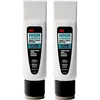 |
3M High Strength Small Hole Repair, All-in-One Applicator Tool, $13.74 A lightweight, primer-enhanced spackle with a built-in putty knife and sanding pad, sold for holes up to 3 inches across. On a door it works as the fill or skim coat once the hole has backing behind it.
|
As an Amazon Associate we earn from qualifying purchases.
Start by working out what the door is. A hollow-core door is a thin skin over a cardboard honeycomb, and a tap on it sounds like a drum. A solid-core or solid wood door sounds dense. A magnet sticks to a steel door but not to fiberglass or wood. The repair that works on one fails on another, which is why one generic fill-and-sand answer so often cracks or falls through.
| Hole size | Hollow-core door | Solid wood or solid-core | Steel or fiberglass |
|---|---|---|---|
| Nail or screw hole (under 1/2 in.) | Spackle or wood filler, sand, prime | Wood filler or spackle, sand, prime | Light filler, sand, prime for metal |
| Up to about 3 in. | Backing, low-expansion foam, filler, sand | Epoxy filler, or glued wood plug | Metal or fiberglass-reinforced filler |
| 3 to 4 in. | Same, with a larger backing; near the limit for repair | Dowel or shaped wood patch plus epoxy | Reinforced filler over a backing |
| Over 4 in. or on the edge | Replacement usually makes more sense | Wood patch (Dutchman) or replacement | Professional repair or replacement |
The size breakpoints are our grouping of the limits stated in the sources: 3M sells its small hole repair for holes up to 3 inches, and the repair guides we read treat roughly 3 to 4 inches as the practical limit before replacement. They are not a building-code figure. A hole in a labeled fire-rated door is a separate case, covered below.

Before You Sand: Lead and Dust Safety
If the house was built before 1978, the paint on that door may contain lead. Sanding a patch is exactly the kind of work that turns old paint into dust.
EPA advice: if you cannot tell how old the home is, assume the area you are renovating has lead-based paint. Its DIY guidance points to wet-dry sandpaper, spray misters and a HEPA vacuum, plus a disposable N-100 respirator, washing hands and face whenever you stop, and wet-wiping surfaces during cleanup. Source: EPA, Lead-Safe Renovations for DIYers
EPA says its lead-safe renovation rule generally does not cover homeowners working on their own pre-1978 home, but it does apply if you rent out all or part of the property, run a childcare business there, or renovate to sell. EPA recommends hiring a certified lead-safe contractor. If testing is in doubt, have it done before you sand, and work the repair in a way that keeps dust down.
Small Holes: Nail, Screw and Pinholes
Small holes behave the same on every door type. Clear loose debris, press paintable wood filler or spackle in with a putty knife, and overfill slightly because most products shrink as they cure. Sand flush, working from 120-grit to 220-grit as one repair guide advises, then prime and paint. Spackle sold for holes like this lists a hold on nails and screws after repair, which matters if you plan to redrive a hinge or hook screw into the spot.
If the hole is a stripped hinge screw hole or damage to the jamb rather than the door slab, that is a frame problem. See our guide to repairing the door frame with wood filler instead of filling the slab.
Medium Holes (1 to 4 Inches) in a Hollow-Core Door
This is where most patches fail. Behind the skin there is air, so filler pressed into the hole has nothing to bond to and falls into the cavity. The repair guides we read agree on the fix: build a backing, then fill over it.
- Trim the edges. Cut away loose splinters and torn veneer with a utility knife so the opening has a clean, slightly beveled edge.
- Add a backing. Push a piece of cardboard or wire mesh into the hole and pull it flat against the inside of the skin with a bent wire or small stick.
- Fill the void with low-expansion foam. Under-fill. High-expansion foam keeps growing and can bow the door skin, and one guide notes that window-and-door foam is not structural filler.
- Let the foam firm up, then trim it. Slice it flush, cutting about 1/8 inch below the door surface so there is room for filler.
- Apply filler. Press wood filler or an auto-body filler such as Bondo into the recess. The guide we read says auto-body filler dries harder and resists cracking better than soft wood filler.
- Sand and finish. Sand with 100-grit and then 220-grit, prime the whole patch and paint the door.
For holes at the small end of this range, a self-adhesive mesh patch skimmed with compound is a common alternative to foam. Feather the compound well past the edge of the patch and build it up in thin coats rather than one thick one, because a thick coat is more likely to crack as it dries.
Large Holes and Holes on the Edge of a Hollow-Core Door
Past about 3 to 4 inches, the repair guides we read steer toward replacing the door. A replacement hollow-core door is inexpensive compared with the labor of a repair that can still flex, and a hole on the lock edge puts the weakest repair in the spot that takes the most stress from the latch.
If you still want to patch it, the usual approach mirrors a drywall cut-out patch: square the opening, glue strips of scrap behind the skin along every side for the patch to rest on, glue in a piece cut from a spare hollow-core door skin or thin hardboard so it sits flush, then skim with joint compound or filler, sand, prime and paint. Treat it as a cosmetic repair for a door that will not carry heavy use.
| Option | Typical cost (one repair guide’s estimate) | When it wins |
|---|---|---|
| DIY patch materials | $30 to $50 | Hollow-core hole under about 3 to 4 inches |
| Handyman repair | $100 to $300 | You want it done but the door is worth keeping |
| New hollow-core door, installed | $100 to $300 | Big hole, lock-edge damage, or a door you dislike anyway |
| New solid-core door, installed | $250 to $600 | Exterior or heavy interior doors beyond repair |
Those figures come from a single third-party repair guide and vary by region, so treat them as a rough comparison, not a quote. The takeaway holds in most markets: a hollow-core replacement can cost about the same as paying someone to patch a large hole.
Holes in Solid Wood and Solid-Core Doors
Solid doors are more forgiving because there is real material to fill against. For a round hole, glue in a wood dowel cut slightly longer than the door is thick, trim it flush, then skim with filler. For a square or oversized hole, shape a block of scrap hardwood (a Dutchman patch), glue it in and trim it flush. For irregular damage, pack in an epoxy wood filler, leave it slightly proud, and sand it flush once cured.
Epoxy earns its cost on exterior doors and load-bearing spots. Bondo describes its extra-strength wood repair epoxy as the choice for wood repairs that need resistance to water, shrinkage, sagging and load, and notes that its epoxy products need longer cure times, about 24 hours versus roughly 30 minutes for its non-epoxy home repair kits (per the Bondo Home Solutions repair guide). Wait for the full cure before you sand or redrill near a strike plate or hinge.
Wood filler rarely matches the original grain, so if the door was stained rather than painted, plan to refinish the whole panel or paint the door.
Holes in Steel and Fiberglass Doors
Spackle does not belong on a metal or fiberglass skin. Use a two-part filler made for the material. Bondo lists garage and entry doors among the metal jobs its metal repair kit covers, and its fiberglass-reinforced fillers are sold for use on fiberglass, metal and wood.
The instructions on Bondo’s fiberglass-reinforced filler show the level of detail this repair needs: clean with soap and water and then a low-VOC cleaner, sand the damage with 80-grit and roughen about 1 inch beyond the repair, and mix the filler with hardener at a 3-inch strip of hardener per 3-inch puddle of filler. Once mixed, working time is only 3 to 4 minutes, so mix small batches. Follow the directions on your own can, since formulas differ.
After the filler cures, sand it smooth, prime and paint. If the door is fiberglass and you want to change its finish, see our notes on painting a fiberglass door or whether you can stain a fiberglass door.
Fire-Rated Doors Are the Exception
If the door carries a fire-rating label, do not patch it as a cosmetic repair. One guide we read says a hole in a labeled fire door calls for a manufacturer-approved, lab-listed repair or full replacement, and another notes that cosmetic patches do not restore structural or fire-rated performance. Check the label on the hinge edge before you start.
Finishing the Patch So It Disappears
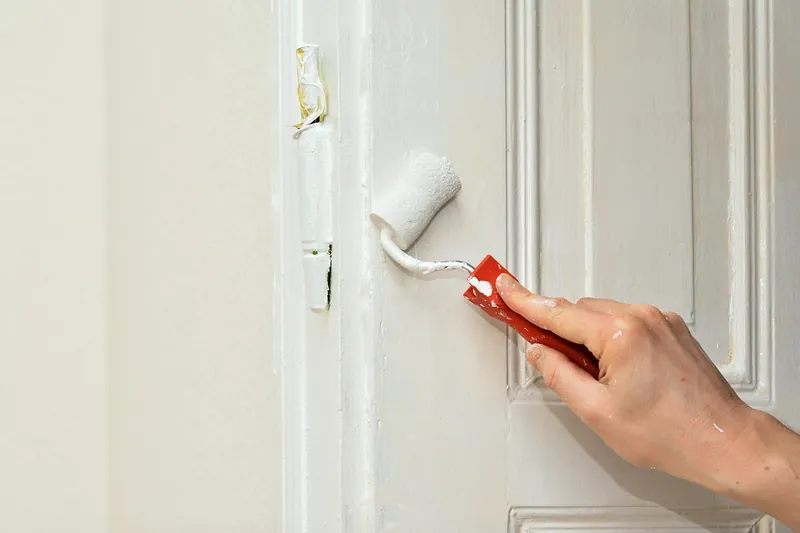
Most visible patches fail at the paint stage, not the filler stage. Sand until the edge of the patch cannot be felt with your fingertips, then prime the entire patched area, not just the filler, because filler and old paint absorb finish differently and the patch shows through as a different sheen. a bonding primer or wood primer makes that step simple. Primer-enhanced spackles are built to resist this flashing, but a primed patch is still the safer route.
For the final coats, paint the whole door panel from edge to edge rather than dabbing at the repair, which keeps lap marks out of the middle of a panel. For more on matching an existing finish, see how to touch up paint without a visible patch.
Common Mistakes When Patching a Door
- Using high-expansion foam behind a hollow-core patch, which can bow the skin outward.
- Filling a large hollow-core hole with no backing, so the filler sinks into the cavity.
- Applying one thick coat of compound instead of thin layers, which invites cracking.
- Skipping primer over the patch, so it shows through the final coat.
- Sanding old paint in a pre-1978 home without dust controls or testing.
- Treating a fire-rated door like any other door.
Frequently Asked Questions
Can you use spackle to fix a hole in a door?
Yes for small holes. Lightweight spackle fills nail and screw holes and works as the top coat over a patch on a larger hole. It is not structural, so a hole in a hollow-core door needs backing behind it first, and a hole in a spot that must hold a screw needs a harder filler or epoxy.
What is the best way to fix a large hole in a hollow-core door?
Give the filler something to sit on. Push cardboard or wire mesh behind the hole, fill the void with low-expansion foam, trim the foam about 1/8 inch below the surface, then apply filler, sand, prime and paint. The repair guides we read recommend this for holes under roughly 3 to 4 inches and suggest replacing the door beyond that.
Is it cheaper to fix or replace a door with a hole in it?
For small and medium holes, repair. One repair guide estimates DIY materials at $30 to $50, against $100 to $300 installed for a new hollow-core door and $250 to $600 for a solid-core door. Replacement wins when the hole is much larger than 4 inches or sits where the door must carry hardware.
How do you fix a hole in a steel or fiberglass door?
Use a filler made for metal or fiberglass, not spackle. Clean the area, sand it to roughen the surface, mix the two-part filler per the can, press in a thin first layer, build up, sand, prime and paint. Bondo lists garage and entry doors among the metal jobs its metal repair kit covers.
Sponsored / affiliate links. As an Amazon Associate I earn from qualifying purchases. I may earn additional commission from eligible campaigns.