How to Fix a Wooden Door: Quick DIY Repair Tips
Match the fix to the actual damage: wood filler or epoxy paste for scratches, dents, and small holes; a wood spline or epoxy for real cracks and splits; loose hinge screws for a door that rubs or won’t latch. Most wooden door problems fall into one of these categories, and misdiagnosing which one you have is the most common reason a repair doesn’t hold.
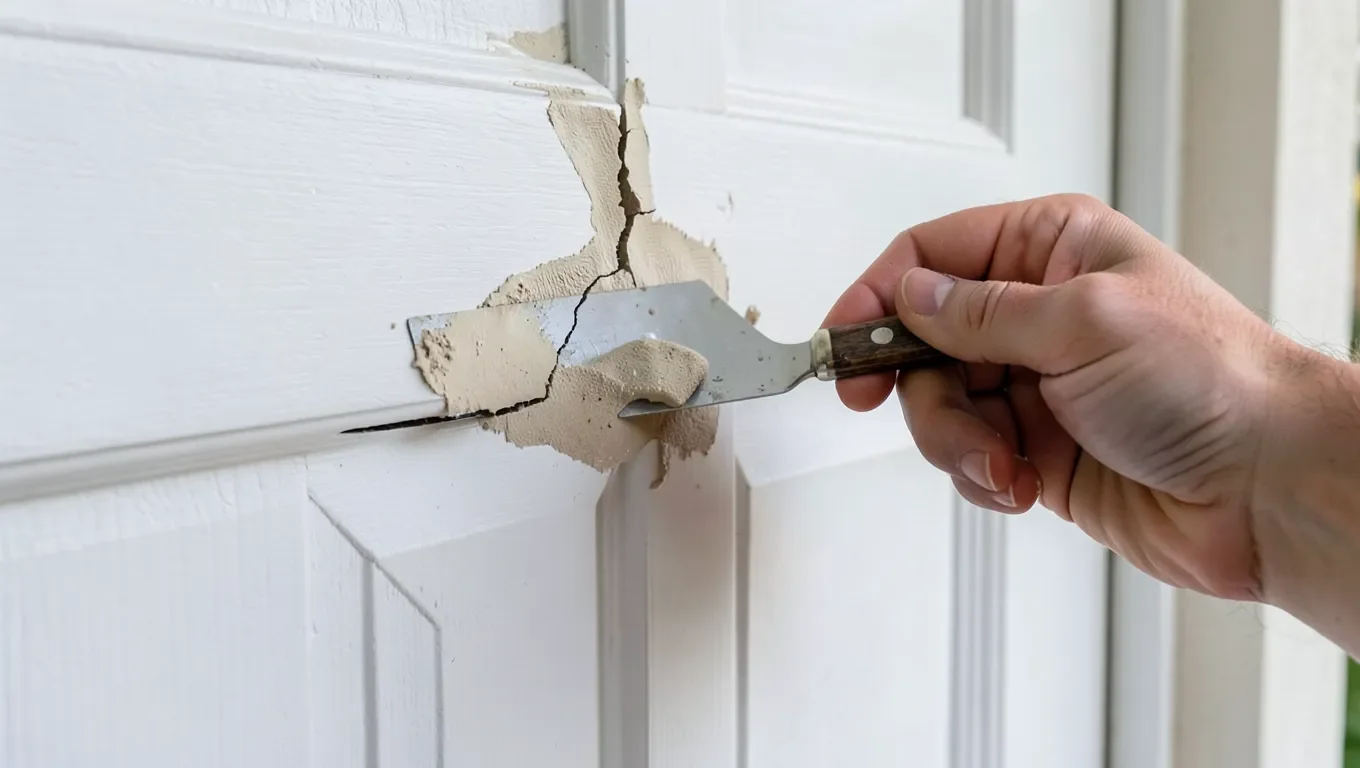
Assessing The Damage First
Best For Cracks, Splits, And Rot
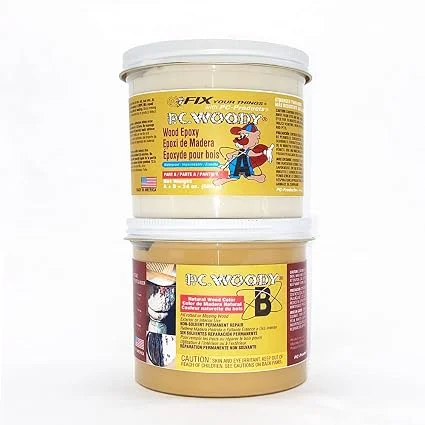 |
PC-Woody Wood Repair Epoxy Paste, 24 oz – $25.95 A two-part epoxy that cures rock-hard and can be sanded, drilled, and painted — stronger than standard wood filler for real structural cracks or a rotted spot.
|
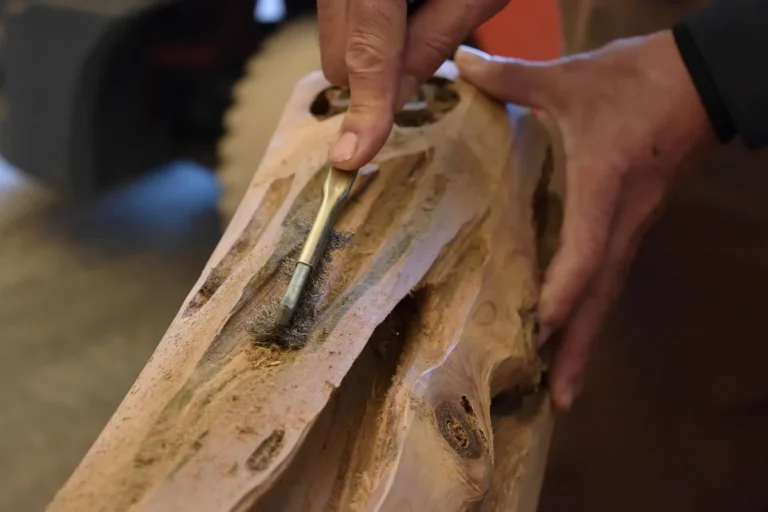
Look for scratches, dents, cracks, or soft/discolored wood that signals rot before picking a repair method — each needs a different approach, and treating a structural crack like a cosmetic scratch (or vice versa) either wastes effort or leaves a weak repair. You’ll typically need wood filler or epoxy, sandpaper, a putty knife, wood glue, a screwdriver, and matching paint or stain; a chisel helps for more extensive rot or split removal.
Fixing Minor Scratches And Dents
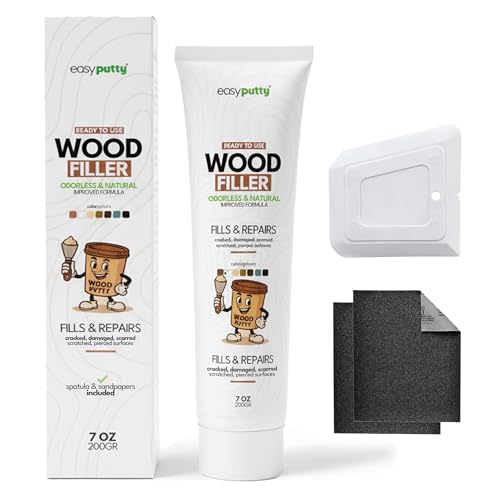
Clean the damaged area first, then spread a wood filler that matches your door’s color and type over the scratch or dent with a putty knife. Let it dry fully per the label — rushing this step is the most common reason a filled scratch shows through paint later — then sand gently until it’s flush and smooth with the surrounding surface.
Repairing Cracks And Splits
A hairline crack in solid wood can often be closed with wood glue worked into the split, then clamped perpendicular to the crack until fully dry — this pulls the wood back together rather than just filling a gap. A wider split that won’t close needs epoxy or a wood filler packed into the gap instead, since glue alone can’t bridge a real gap. Clean and sand the surface before applying either, and always let the manufacturer’s full cure time pass before sanding or painting — sanding too early drags out a soft, uncured center and leaves a dimple.
Dealing With Holes And Punctures
Hollow-core doors need a different approach than solid wood for a punch-through hole: expanding foam insulation dispensed into the void gives the patch something to bond to, since there’s no solid wood behind the hole to fill against directly. Let it cure fully (usually overnight), trim the excess flush with a saw or sander, then finish with wood filler or spackle over the top and sand smooth. Solid wood doors with a puncture skip the foam step entirely — just pack the hole directly with wood filler or epoxy, since there’s solid material behind it to fill against.
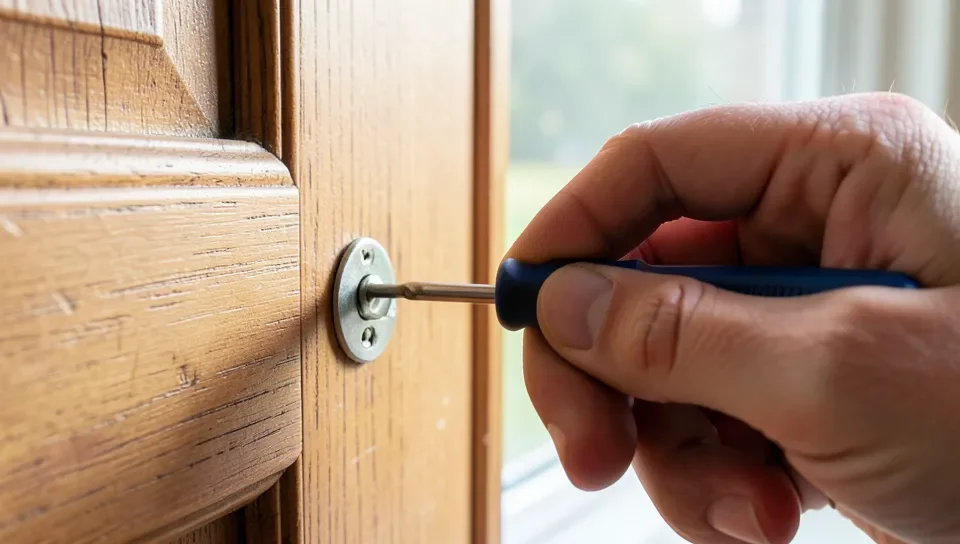
Restoring A Swollen Door
Swelling usually traces back to moisture exposure — find and address that source first (a leak, high humidity, missing weatherstripping), then let the door dry out fully before doing anything else. Sand down the swollen areas once dry, apply a wood conditioner or sealer to reduce future moisture absorption, and refinish to match. Skipping the root-cause step means the door swells again even after a perfect sanding job.
Doors That Won’t Open Or Close Properly
Before assuming the door itself is warped, check the simplest cause first: loose hinge screws let the door sag and rub against the frame. Tighten every hinge screw, and if a screw hole has stripped out, replace it with a longer screw that reaches fresh wood in the frame behind the hinge — this alone fixes a surprising number of “warped door” complaints. Only after confirming the hinges are solid should you sand or plane the edge that’s actually rubbing, and remove only a little material at a time, checking fit as you go.
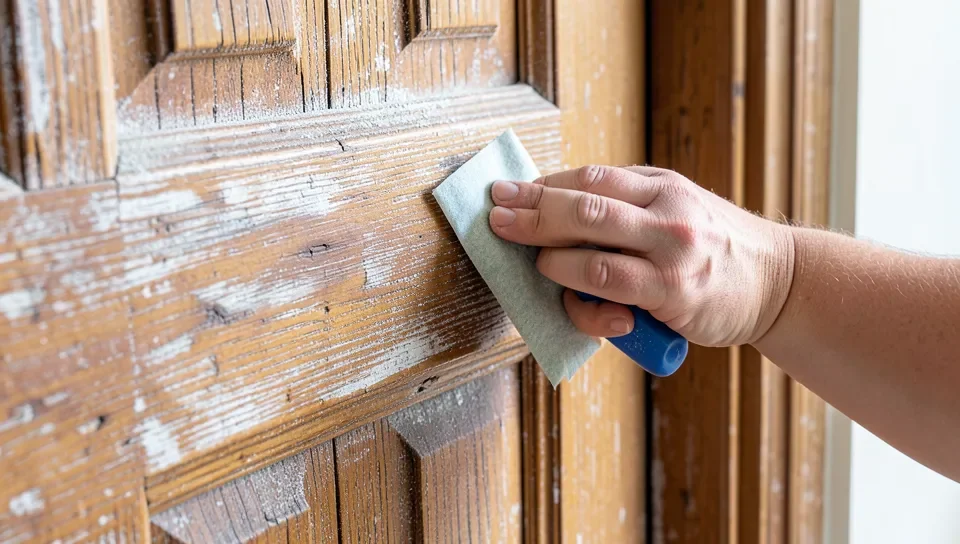
Refinishing After The Repair
Sand the whole surface once repairs are cured, starting with a coarser grit if you’re stripping old paint or varnish, then moving to fine grit for a smooth base. Pick a primer and paint (or stain and sealer) rated for the door’s actual exposure — exterior doors need exterior-rated products regardless of how sheltered the porch looks, since UV and moisture cycling are harder on a door than most people expect.
Preventing The Next Repair
- Inspect doors periodically for early cracks, peeling paint, or soft spots — catching damage early keeps the fix small.
- Reapply exterior-rated sealant every few years on exterior doors; interior doors rarely need this.
- Replace worn weatherstripping promptly — it’s cheap and is often what’s actually letting moisture reach the door edge.
- Check hinge screws annually on frequently-used doors; tightening early prevents the sag that eventually causes rubbing and edge wear.
Frequently Asked Questions
How Do You Repair A Damaged Wooden Door?
Match the method to the damage: wood filler for scratches and dents, epoxy or a wood spline for cracks and splits, expanding foam for a punch-through hole in a hollow-core door. Sand smooth after full cure and repaint or refinish to match.
How Do You Fix A Hole Or Patch On A Wooden Door?
For a hollow-core door, fill the void with expanding foam first, let it cure, then trim flush and finish with wood filler over the top. For a solid wood door, skip the foam and pack the hole directly with wood filler or epoxy, since there’s solid material behind it to bond against.
How Do You Fix A Split Wood Door?
A hairline split often closes with wood glue and a clamp held perpendicular to the crack until dry. A wider split that won’t close needs epoxy or wood filler packed into the gap instead. Sand flush once fully cured, then repaint or refinish to match.
How Do You Fix A Wooden Door That Won’t Open Or Close?
Check and tighten every hinge screw first — a loose hinge is the most common cause, and replacing a stripped screw with a longer one that reaches fresh wood often fixes it immediately. Only sand or plane the rubbing edge if the hinges are already solid.
Conclusion
Most wooden door problems break down into three categories — cosmetic damage, structural cracks or holes, and hardware/fit issues — and the fix for one won’t properly solve another. Diagnose which category you’re actually dealing with first, then match the filler, epoxy, or hinge adjustment to it, and a wooden door repair holds for years instead of needing a redo within a season.
Sponsored / affiliate links. As an Amazon Associate I earn from qualifying purchases. I may earn additional commission from eligible campaigns.