How to Get Marker Out of Wood Floor (By Finish Type)
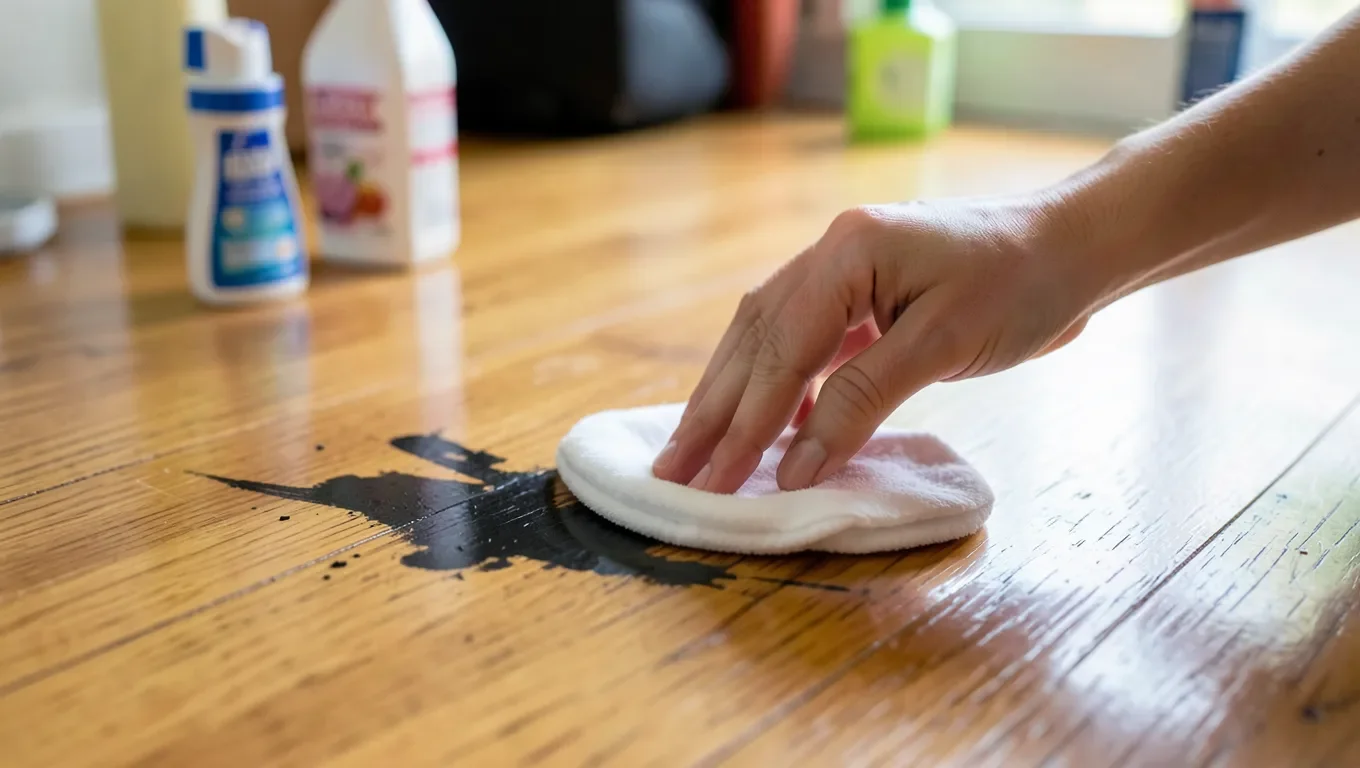
To get marker out of a wood floor, blot (don’t rub) with rubbing alcohol on a cotton pad, working from the outside of the stain inward. If the floor has a wax or oiled finish rather than polyurethane, test alcohol on a hidden spot first – it can strip those softer finishes. Toothpaste, baking soda paste, and a Magic Eraser are gentler backup options for finishes that can’t handle alcohol.
Which method to reach for first depends less on the marker and more on what’s actually on your floor: a hard, cured polyurethane finish, a softer wax or oil finish, or unfinished/reclaimed wood. Here’s how to tell the difference and remove the stain without damaging what’s underneath it.
Check Your Floor’s Finish Before You Start
If The Spot Looks Dull After Cleaning
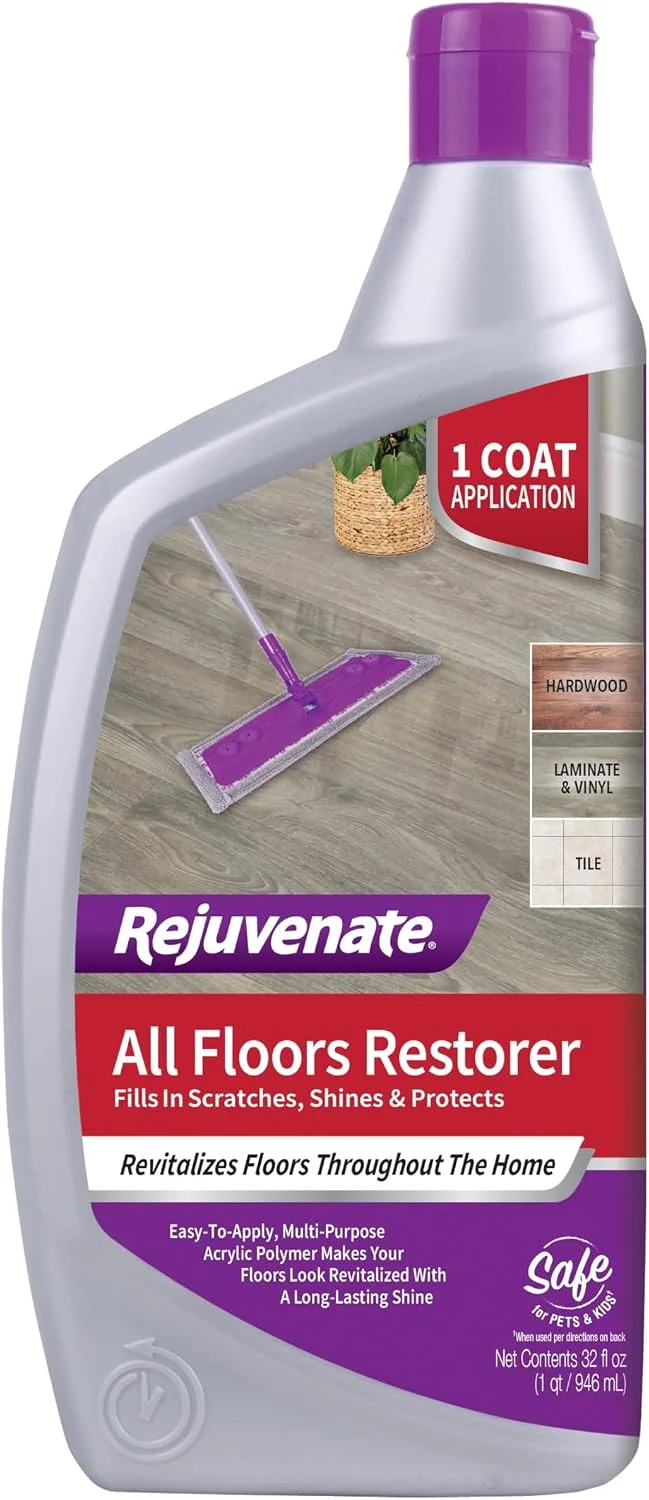 |
Rejuvenate All Floors Restorer, 32 oz Cleaning solvents can leave a dull patch even after the stain is gone – this 1-coat restorer blends the spot back in and adds shine, safe on sealed hardwood, laminate, vinyl, and tile.
|
Most modern hardwood floors are sealed with polyurethane, a hard plastic-like topcoat that alcohol and acetone won’t damage. Older floors, and some rustic or reclaimed-wood floors, use wax or penetrating oil finishes instead – both are softer and can dull, cloud, or strip under solvents.
A quick way to check: rub a small amount of mineral spirits or alcohol on an inconspicuous spot, like inside a closet or under a rug. If it leaves a dull or sticky residue, you likely have a wax or oil finish and should stick to the gentler methods below. If the spot stays clear and unaffected, alcohol-based methods are safe to use on the stain itself.
Rubbing Alcohol: The Most Reliable Method for Sealed Floors
For floors with a hard polyurethane finish, rubbing alcohol is the go-to fix for permanent marker.
- Wet a cotton pad or ball with isopropyl (rubbing) alcohol.
- Blot the stain – don’t rub – working from the outer edge toward the center so you’re not spreading the ink outward.
- Switch to a clean section of the pad often; a saturated pad just smears ink around instead of lifting it.
- Once the stain is gone, wipe the area with a barely damp cloth to remove any leftover alcohol residue.
Hand sanitizer works the same way in a pinch, since most contain 60%+ alcohol – useful if you don’t have a bottle of rubbing alcohol on hand.
Gentler Options: Toothpaste, Baking Soda, and Magic Erasers
If you’re not sure about your floor’s finish, or the alcohol test above showed it’s sensitive, start here instead. These methods are milder and safer to try first, even though they may take a couple of extra passes on a stubborn stain.
Toothpaste: Use plain white toothpaste, not a gel or whitening formula. Rub a small amount onto the stain with a soft cloth or old toothbrush, let it sit for a minute, then wipe clean with a damp cloth.
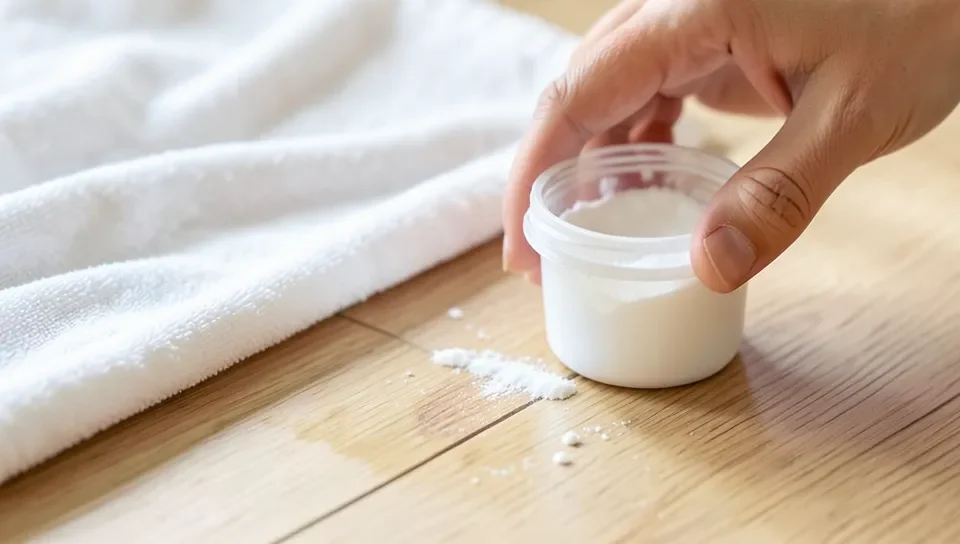
Baking soda paste: Mix baking soda with a few drops of water until it forms a thick paste. Rub gently in the direction of the wood grain, then wipe away with a damp cloth. This also works well on lighter scuff marks, not just marker.
Magic Eraser: Dampen the melamine foam pad and rub gently over the stain. These are mildly abrasive, which makes them effective on scuffs and light marker but also means they can dull a glossy finish with heavy pressure – use light, even strokes.
For Stubborn Stains: Acetone or Nail Polish Remover
If alcohol and the gentler methods above don’t fully lift the stain, acetone-based nail polish remover is the next step up – but only on floors you’ve already confirmed have a polyurethane finish. Acetone is a stronger solvent that will strip wax, oil finishes, and some paints, and it can also affect certain plastics and vinyl inlays nearby.
Apply it the same way as alcohol: a small amount on a cotton pad, blotted rather than scrubbed, on a small test spot first. Wipe the area with a clean, damp cloth immediately afterward.
Fresh Marker vs. Set-In Stains
How long the marker has been sitting changes how much effort it takes to remove. Ink that’s still wet will often lift with nothing more than a damp microfiber cloth and a little dish soap, since it hasn’t had time to soak into the pores of the wood or the finish’s surface texture. Once it dries, usually within a few minutes, the pigment sets into those tiny surface irregularities and needs a real solvent – alcohol, acetone, or one of the paste methods above – to break it back down.
Stains that have been there for weeks or months behave differently again. UV light and foot traffic can partially bond the pigment to the finish, so don’t expect a single pass to fully clear an old stain. Work in short attempts – a minute or two of blotting, check your progress, repeat – rather than saturating the area and scrubbing continuously, which is far more likely to damage the finish than to speed up the result.
What Not to Do
- Don’t scrub hard or use abrasive scouring pads – this can scratch through the finish, which often looks worse than the original stain.
- Don’t use bleach or ammonia-based cleaners – they can discolor wood and damage certain finishes.
- Don’t skip the finish test on wax or oiled floors – alcohol and acetone can leave a permanent dull patch that’s harder to fix than the original mark.
- Don’t let any liquid pool on the floor – wood floors are sensitive to standing moisture even during cleanup; wipe as you go.
Preventing the Next Marker Mishap
If marker-happy kids or pets are a recurring issue, keeping washable or dry-erase markers on hand for drawing time cuts down on permanent-ink accidents. In play areas, a rug with a good pad underneath both protects the finish from scuffs and gives you one less bare floor surface to worry about.
Frequently Asked Questions
What removes marker from hardwood floors?
Rubbing alcohol is the most reliable method on a sealed polyurethane finish – blot with an alcohol-soaked cotton pad rather than rubbing. Toothpaste, baking soda paste, and a dampened Magic Eraser are gentler alternatives for wax or oil-finished floors, or for a first attempt before reaching for a stronger solvent.
Does vinegar remove Sharpie from wood?
A mixture of equal parts white vinegar and olive oil can help lift Sharpie stains, especially on unfinished or lightly finished wood. It’s gentler than alcohol or acetone, so it’s worth trying first on wood you’re unsure about, though it works more slowly on set-in stains.
Is it safe to use alcohol on all wood floor finishes?
No. Alcohol is safe on hard, cured polyurethane finishes but can dull or strip wax and penetrating oil finishes. Test on a hidden spot, like inside a closet, before applying it to a visible stain.
Will a Magic Eraser damage my floor’s finish?
It can, if you press hard or use it repeatedly in the same spot. Magic Erasers are made of mildly abrasive melamine foam, so use light pressure and check your progress often rather than scrubbing continuously.
What if the marker stain leaves a dull spot after it’s removed?
This happens when a solvent slightly affects the finish around the stain. A one-coat floor restorer product can blend the dulled area back into the surrounding shine without a full refinish, as long as the wood itself isn’t gouged or discolored.
Conclusion
Marker on a wood floor looks worse than it is. Identify your floor’s finish first, start with the gentlest method that fits it, and only move up to a stronger solvent like acetone if you need to – testing on a hidden spot each time. With the right order of operations, most marker stains come out without leaving any trace behind.
Sponsored / affiliate links. As an Amazon Associate I earn from qualifying purchases. I may earn additional commission from eligible campaigns.