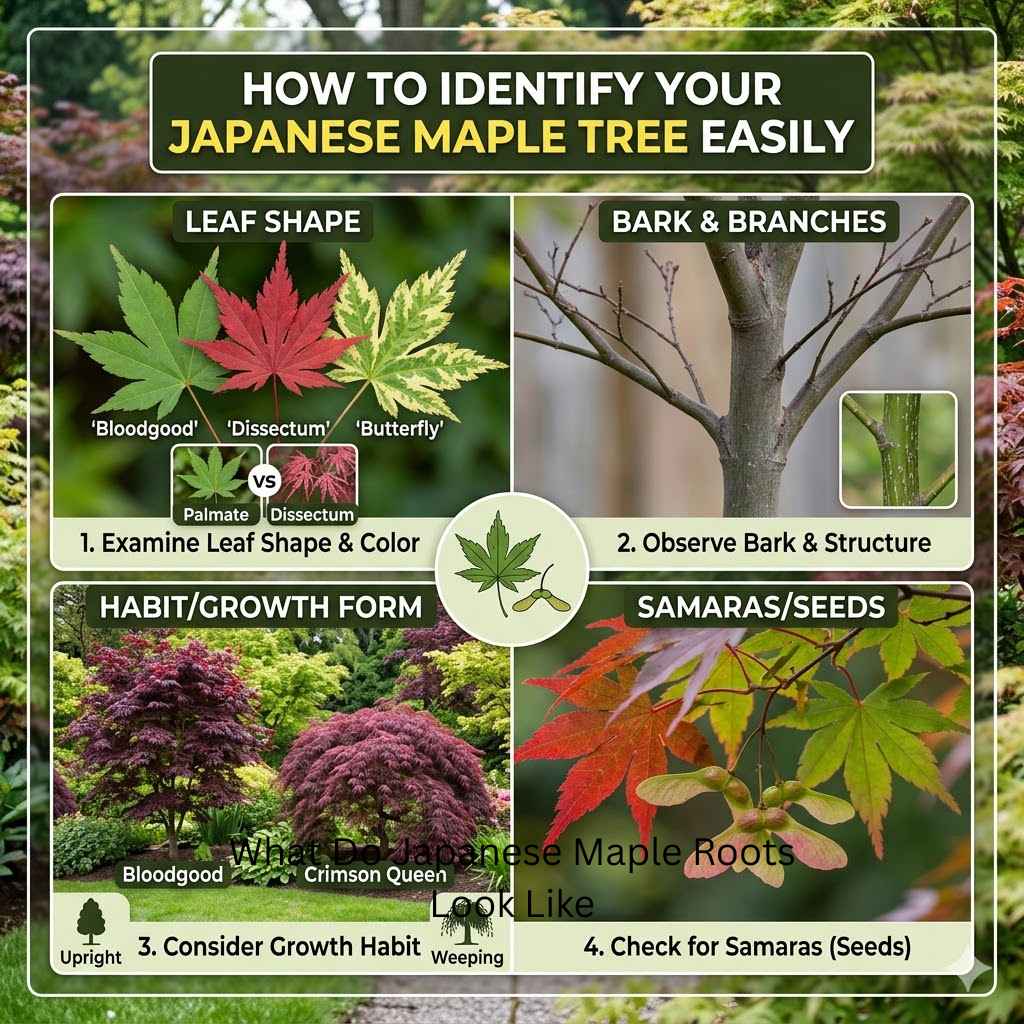
How to Identify Your Japanese Maple Tree Easily
Are you trying to figure out if that beautiful tree in your yard is a Japanese maple? Many people find it tricky to tell them apart from other trees, especially when they’re young. Don’t worry!
We’ll make it simple. This guide will walk you through easy steps, showing you exactly what to look for so you can confidently identify your Japanese maple tree. Let’s get started!
Understanding Japanese Maple Tree Identification
Identifying a Japanese maple tree might seem a bit confusing at first. These trees come in many shapes, sizes, and leaf colors. This variety can make it hard for beginners to know what makes a Japanese maple unique.
However, by focusing on a few key features, you can easily distinguish them. We’ll cover everything from their leaves to their bark and growth habits. This knowledge will help you spot a Japanese maple anywhere.
The Unique Leaves of Japanese Maples
The most obvious clue to identifying a Japanese maple is its leaves. These leaves are truly special and set them apart from many other trees. Their shape and how they grow are very distinctive.
Japanese maple leaves are typically palmately lobed. This means the lobes, or sections of the leaf, spread out from a central point, much like fingers from the palm of your hand. Most commonly, you’ll see five lobes, but some varieties might have seven or even more.
The edges of these lobes are often serrated, meaning they have small, tooth-like edges. This toothed edge is another key characteristic.
The size of the leaves can vary a lot depending on the specific type of Japanese maple. Some have very delicate, small leaves, while others have larger ones. The color is also a big giveaway.
While many are known for their vibrant reds and oranges in the fall, many Japanese maples also have stunning foliage in the spring and summer. You might find leaves that are deep burgundy, bright green, or even variegated with pink and white.
Consider Acer palmatum ‘Bloodgood’. This popular variety has deep red, five-lobed leaves that stay red throughout the growing season. Another example is Acer palmatum ‘Sango-kaku’, or the Coral Bark Japanese Maple.
Its leaves are bright green in summer and turn a lovely yellow in fall, but its most striking feature is its bright coral-red bark in winter, which we’ll discuss more later.
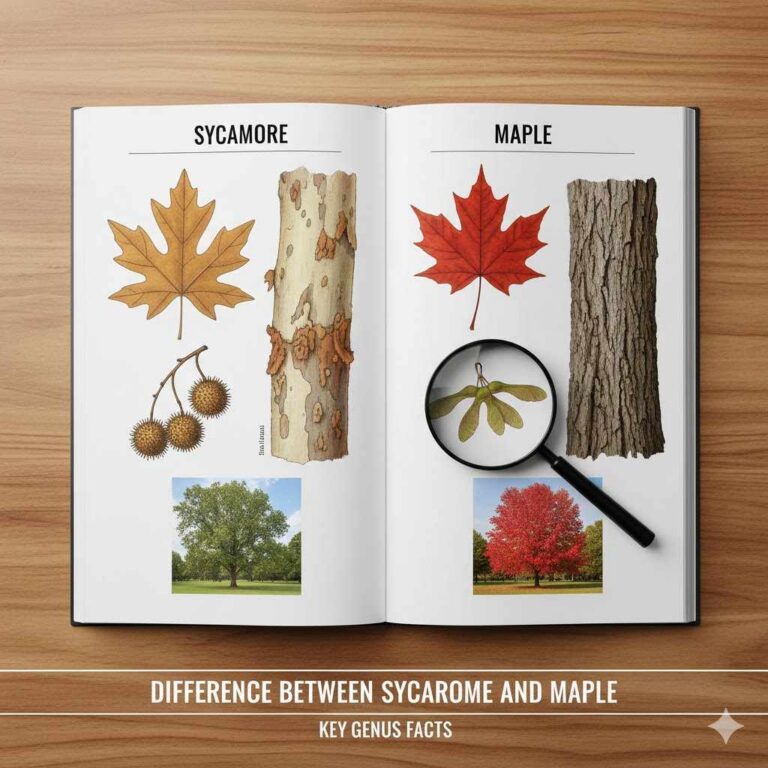
A common mistake people make is confusing them with other maple species. For instance, the Sugar Maple has very different leaf shapes, with deeper sinuses (the spaces between the lobes) and usually five lobes that are more pointed. Red Maples also have lobed leaves, but they are generally larger and the sinuses are not as deep.
By looking closely at the leaf’s shape and the way the lobes are arranged, you can make a good initial identification.
Here are some specific leaf characteristics to look for:
- Number of Lobes Japanese maple leaves usually have 3 to 9 lobes. The most common count is five.
This consistent number of lobes, radiating from a single point, is a strong indicator. It’s a clear departure from leaves that might be compound (made of multiple smaller leaflets) or have a different arrangement of lobes.
- Lobe Shape and Depth The lobes are typically pointed at the tips. The cuts between the lobes, called sinuses, are usually quite deep, extending more than halfway to the leaf’s center.
This deep division creates the delicate, often lacy appearance that is so characteristic of Japanese maples. It’s a feature that helps them stand out in a crowded garden or landscape.
- Leaf Margin (Edge) The edges of the lobes are usually serrated or toothed. This means they have small, sharp points along the edge, though the sharpness can vary.
Some varieties have very finely toothed edges, almost appearing smooth from a distance, while others have more pronounced serrations. This detail adds to the overall texture and fine appearance of the foliage.
- Leaf Texture The leaves themselves are often quite thin and delicate, especially compared to many native North American maples.
This delicate nature contributes to their graceful appearance. When the wind rustles through Japanese maple leaves, they often create a soft, whispering sound.
Bark and Twig Characteristics
While leaves are the most visible trait, the bark and twigs offer more clues, especially when the tree is bare in winter. These subtle features can confirm your identification.
The bark of mature Japanese maples is often smooth and gray. However, as the tree ages, it can develop some texture, becoming slightly fissured or plated. The color can vary, but a smooth gray is common.
What’s truly remarkable is the bark of certain varieties, like the aforementioned ‘Sango-kaku’. Its winter bark is a vivid coral-red or orange, making it a standout feature when the leaves are gone. This bright coloration is a strong indicator for specific cultivars.
Twigs are also helpful. They are usually slender and have a smooth surface. The buds, which are small and pointed, are often reddish-brown.
When you look at the points where leaves attach to the twig (leaf scars), they are typically U-shaped. This detail, while small, is consistent across many Japanese maple types.
One way to differentiate from other trees is by observing twig growth. Japanese maples tend to have an upright, somewhat spreading habit with a tendency to grow in layers. The branches often arch gracefully.
This layering effect is quite beautiful and a good visual cue.
For instance, imagine a young tree with smooth, reddish-brown twigs. If you see small, pointed buds and a U-shaped leaf scar, and the overall branching pattern is elegant and layered, it’s likely a Japanese maple. Compare this to a young oak tree, which might have rougher twigs and more bristly buds.
Here’s what to note about bark and twigs:
- Bark Texture and Color Mature bark is often smooth and gray. Some varieties, like ‘Sango-kaku’, have strikingly colored bark (coral-red, orange) in winter.
This winter interest is a unique selling point for many Japanese maples. The contrast of vibrant bark against a snowy landscape is unforgettable.
- Twig Appearance Twigs are generally slender and smooth. They may have a reddish or greenish hue.
The smoothness of the twigs is important. If you find twigs that are very rough, thorny, or fuzzy, it’s less likely to be a Japanese maple.
- Buds Small, pointed buds are typical, often colored red or brown.
These buds are essential for the tree’s growth in the spring. Their size and shape are consistent within the species and cultivars.
- Leaf Scars The marks left on the twig where the leaf stem was attached are usually U-shaped.
This is a detail you might need to look closely for, perhaps on a fallen twig, but it’s a reliable identifier for many woody plants.
Growth Habit and Form
The way a Japanese maple grows, its overall shape and structure, is another important factor in identification. These trees are known for their graceful and often artistic forms.
Japanese maples typically have a smaller to medium size, rarely growing as large as common native maples. They often form a rounded or vase-shaped crown. Many cultivars are specifically bred for their unique shapes, such as weeping or cascading forms.
You’ll often see a distinct layering of branches, creating an open and airy appearance.
This layered growth is a key visual characteristic. The branches don’t usually grow in a dense, upright fashion like a typical evergreen. Instead, they spread outwards and often downwards, creating an elegant silhouette.
This makes them popular as specimen trees in gardens, where their form can be fully appreciated.
Consider the difference between a Japanese maple and a Norway maple. A Norway maple, even when young, tends to grow much larger and has a denser, more upright branching structure. Its branches are thicker and less graceful.
In contrast, a Japanese maple maintains a delicate, refined structure even as it matures.
Let’s look at some typical growth patterns:
- Overall Size Most Japanese maples are relatively small trees, usually reaching heights of 15 to 25 feet, though some can grow larger.
This manageable size makes them ideal for residential landscapes where space might be limited. They won’t outgrow their surroundings too quickly.
- Branching Pattern They often display a graceful, layered branching habit. Branches can arch outwards and downwards.
This creates a beautiful, naturalistic form that adds significant aesthetic value to any garden design.
-
- Crown Shape The crown is typically rounded, vase-shaped, or weeping, depending on the cultivar.
The diversity in crown shapes allows for a wide range of uses, from focal points to understory planting.
- Trunk and Branch Structure The trunk can be single or multi-stemmed. The branches are usually slender and somewhat delicate.
This slender structure contributes to the tree’s refined appearance, making it look less imposing and more artistic.
Comparing with Similar Trees
It’s helpful to know which trees might be mistaken for Japanese maples and how to tell them apart. Understanding these differences can prevent misidentification.
One common confusion is with other ornamental maples, such as the Paperbark Maple (Acer griseum). While both have attractive bark, the Paperbark Maple’s bark peels in thin, papery strips, revealing shades of cinnamon and copper. Its leaves are also typically trifoliate (three leaflets), unlike the palmately lobed leaves of most Japanese maples.
Another tree that can be mistaken is the Norway Maple (Acer platanoides). As mentioned, Norway Maples are generally larger, with denser foliage and less delicate branching. Their leaves are also typically larger and have deeper, more pointed lobes.
Also, Norway maples often produce a milky sap when a leaf stem is broken, something Japanese maples do not.
Amur Maples (Acer ginnala) are smaller trees and can have lobed leaves, but their leaves are usually smaller and have three distinct lobes, with the central lobe being much larger than the side lobes. The overall form of an Amur Maple is often more shrub-like or multi-stemmed with a less refined structure than many Japanese maples.
Here is a comparison table to highlight key differences:
| Feature | Japanese Maple (Acer palmatum) | Norway Maple (Acer platanoides) | Amur Maple (Acer ginnala) | Paperbark Maple (Acer griseum) |
|---|---|---|---|---|
| Leaf Lobes | Typically 5, deeply cut, often toothed | Usually 5, deeper sinuses, more pointed | Usually 3, central lobe prominent | Trifoliate (3 leaflets) |
| Leaf Size | Small to medium | Large | Small | Medium |
| Bark | Smooth gray, some varieties colored in winter | Gray-brown, ridged with age | Gray-brown, smooth | Peeling, papery strips (cinnamon/copper) |
| Growth Habit | Graceful, layered, rounded or weeping | Dense, upright, large | Shrub-like to small tree, upright | Small to medium, often with peeling bark |
| Sap from Broken Stem | Clear sap | Milky sap | Clear sap | Clear sap |
For example, if you find a small tree with delicate, deeply lobed leaves and smooth gray bark, it’s a strong contender for a Japanese maple. If you break a leaf stem and get a clear sap, that’s consistent. If the stem produced milky sap, you’d look elsewhere, perhaps towards a Norway maple.
Statistics show that Acer palmatum, the species that encompasses most Japanese maples, is one of the most popular ornamental trees in North America. A survey by the Horticultural Research Institute found that Acer palmatum cultivars consistently rank among the top-selling landscape trees, valued for their aesthetic appeal and variety.
Another key identifier is the fruit. While not always present or easily seen, Japanese maples produce samaras, which are winged seeds, typical of maples. However, these are generally smaller and less prominent than those of larger maple species.
The samaras typically form in pairs and have a distinct “helicopter” shape when they spin down from the tree.
One scenario to consider is when identifying a tree in late autumn or winter. The leaves have fallen. You’ll rely heavily on the bark, twig structure, and overall form.
If you see slender, smooth twigs with pointed buds and a gracefully layered branching pattern, even without leaves, it strongly suggests a Japanese maple. The color of the bark, especially if it’s a vibrant red or orange on a variety like ‘Sango-kaku’, becomes a critical diagnostic feature during these months.
A second scenario might involve inspecting a young tree that has only been planted a year or two. Its form might not be fully developed. In this case, the leaf shape during the growing season is paramount.
Look for those distinct, deeply cut lobes and delicate texture. The small size of the tree also points away from larger maple species that grow rapidly.
Cultivars and Variations
It’s important to remember that “Japanese Maple” isn’t just one tree; it’s a broad category encompassing many different cultivars of Acer palmatum and related species like Acer japonicum. Each cultivar has unique characteristics, which can sometimes make identification more challenging but also more interesting.
These variations can affect leaf color, leaf shape, growth habit, and bark color. For example, the popular ‘Crimson Queen’ is a dissected Japanese maple, meaning its leaves are finely cut into thin, ribbon-like segments, giving it a very delicate, fern-like appearance. It typically has a weeping growth habit.
In contrast, ‘Shaina’ is an upright cultivar with deeply lobed, red leaves that form a dense, compact shape.
The diversity is truly astounding. Some cultivars have variegated leaves, featuring shades of pink, white, and green. Others are prized for their vibrant spring and fall colors.
Understanding that these variations exist is key to not being confused by them.
For instance, if you see a tree with deeply divided, lace-like leaves that cascade downwards, it’s likely a weeping dissected Japanese maple cultivar. If you see a tree with large, deep red, star-shaped leaves that holds its color all season, it might be a popular upright red cultivar. The general family characteristics (lobed leaves, smooth bark, graceful form) still hold true across these many types.
Here are some common types of variations you might encounter:
- Dissectum Varieties These cultivars have leaves that are deeply cut, giving them a lacy or fern-like appearance. They often have a weeping or cascading growth habit.
Examples include ‘Crimson Queen’, ‘Tamukeyama’, and ‘Garnet’. Their delicate foliage is a major attraction.
- Upright Varieties These are more typical in shape, with a vase-like or rounded form. Their leaves can range from green to red and have varying degrees of lobing.
Popular uprights include ‘Bloodgood’ (red leaves), ‘Emperor I’ (red leaves), and ‘Sango-kaku’ (green leaves, red bark).
- Variegated Varieties Some cultivars feature leaves with multiple colors, such as white, pink, or cream patterns mixed with green.
Examples like ‘Beni Schichi-henge’ or ‘Kiyomizu-dera’ showcase this striking coloration.
- Leaf Color Variations While red and green are common, some cultivars display unique shades of orange, yellow, or even purple throughout the growing season.
These color changes add dynamic interest to the landscape.
A study published in the Journal of Arboriculture highlighted the significant market share of Japanese maple cultivars, noting that over 300 distinct cultivars have been developed and are commercially available. This extensive breeding effort accounts for the wide range of appearances.
Knowing these variations helps you appreciate the full spectrum of Japanese maples. Instead of being puzzled by a deeply dissected leaf, you can recognize it as a specific type of Japanese maple. The core identification features remain the foundation.
Frequently Asked Questions
Question: What is the easiest way to tell a Japanese maple from a regular maple?
Answer: The easiest way is to look at the leaves. Japanese maples have leaves that are typically more delicate, with deeper cuts between the lobes and often a more finely toothed edge. Their overall shape is usually more refined and graceful than the larger, coarser leaves of common maples like the Sugar Maple or Norway Maple.
Question: Are all Japanese maples red?
Answer: No, not all Japanese maples are red. While many popular varieties are known for their red foliage, especially in fall, there are also many cultivars with green, orange, yellow, and even variegated leaves. The color depends on the specific cultivar.
Question: Can I identify a Japanese maple in winter when it has no leaves?
Answer: Yes, you can. In winter, focus on the bark and twig structure. Japanese maples often have smooth, gray bark, though some varieties have striking red or orange bark.
The twigs are usually slender and smooth, with small, pointed buds. The overall graceful, layered branching pattern is also a good indicator.
Question: How big do Japanese maples get?
Answer: Japanese maples are generally small to medium-sized trees. Most varieties typically reach a height of 15 to 25 feet, although some can grow a bit larger or smaller depending on the cultivar and growing conditions. They are much smaller than many native North American maples.
Question: Are Japanese maples hard to grow?
Answer: While they require specific conditions, they are not overly difficult to grow. They prefer well-drained soil, protection from strong winds, and partial shade, especially in hotter climates. Once established, they are quite resilient and rewarding trees to have.
Conclusion
Identifying your Japanese maple tree is straightforward when you know what to look for. Focus on the distinctive, palmately lobed leaves, their often delicate texture, and the fine toothing along the edges. Observe the tree’s graceful, layered growth habit and its slender twigs.
Even in winter, the smooth bark and bud shape offer clues. By checking these key features, you can confidently recognize these beautiful trees.