What Is Ambrosia Maple Wood? Stains, Hardness & Uses
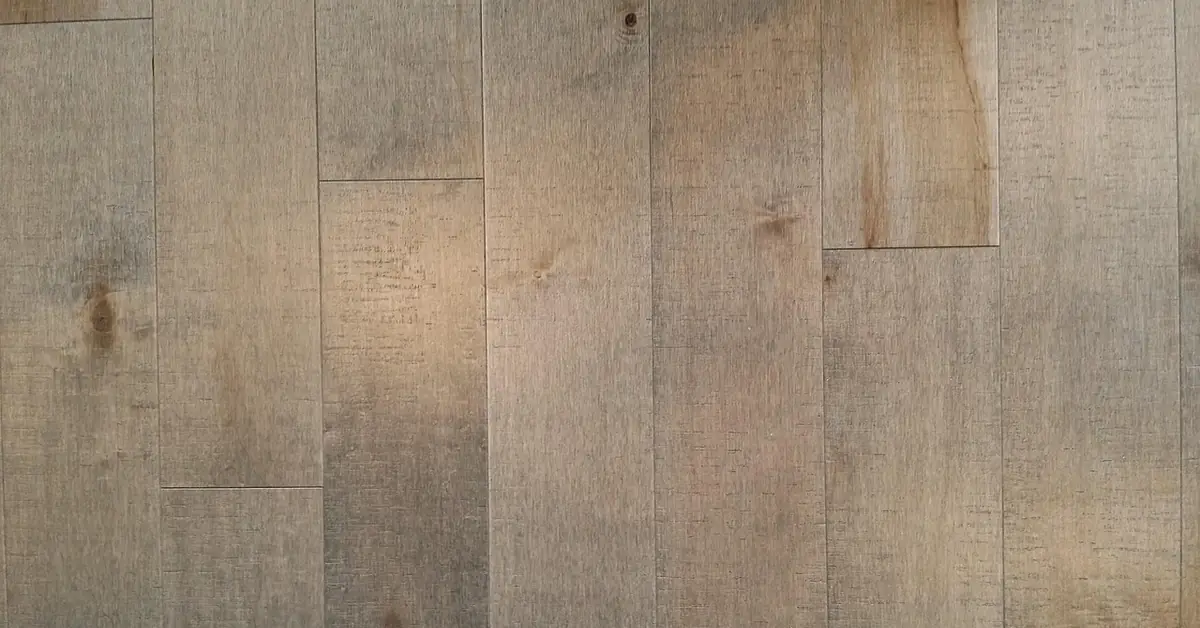
Ambrosia maple is ordinary soft maple — usually red maple or silver maple — marked with gray, brown, and blue-gray streaks left by ambrosia beetles boring tunnels and introducing fungal spores. The wood keeps standard soft maple’s 700–950 lbf Janka hardness underneath the figure. Skip the streaks and you lose the price premium; ignore the pinhole entrance marks and your finish will telegraph every one of them. This guide covers what actually causes the coloring, real hardness and cost numbers, how it compares to spalted maple, and how to fill and finish it without hiding the figure.
Insert your Affiliate Disclosure reusable block here
What Is Ambrosia Maple Wood?
Best Ambrosia Maple Finish Pick
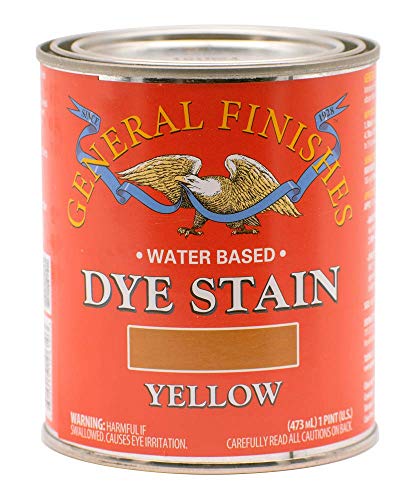
Watco Danish Oil Wood Finish, Natural (Pint)
A penetrating oil/varnish blend that soaks into the pores instead of sitting on top, so the gray-brown streaks stay sharp instead of getting buried under a film finish.
- Best for: highlighting figure on turned bowls, boxes, and accent furniture
- Why we picked it: penetrating oil finishes are what the top ambrosia maple guides recommend to preserve contrast, and this is a widely stocked, inexpensive option
- Main drawback: oil finishes offer less water/heat resistance than a film finish, so it is not the right pick for a daily-use cutting board surface
Compare more ambrosia maple finishing supplies
 Option 1 Mohawk Burn-In Stick, Natural Maple
|
 Option 2 Thin CA Glue for Wood
|
 Option 3 Pure Carnauba Wax Bar
|
As an Amazon Associate we earn from qualifying purchases.
Ambrosia maple is soft maple lumber — typically red maple (Acer rubrum) or silver maple (Acer saccharinum) — that has been bored by ambrosia beetles and stained along the tunnel paths by the fungal spores those beetles carry in specialized mouth pockets called mycangia. It is not its own species; any soft maple tree can turn into “ambrosia maple” once beetles move in. The name comes from the beetles’ habit of farming “ambrosia fungus” inside their tunnels as a food source, not from any sweetness in the wood itself.
For decades this figure was treated as a lumber defect. Boards with beetle streaks were graded down and sold cheap, often ending up as hidden framing inside upholstered furniture where no one would see the marks. That changed as woodturners and furniture makers started specifically seeking out the streaked boards, and today demand — and price — for well-figured ambrosia maple has climbed well above plain soft maple.
What Actually Causes the Streaks: Beetle, Fungus, or the Tree Itself?
Most retailer copy repeats the same shorthand: “the fungus stains the wood.” That is the mainstream explanation, and The Wood Database backs it — ambrosia fungi, carried in by the beetle, discolor the wood immediately around the tunnels. But it is not the whole story. Ohio State University Extension’s factsheet on the subject takes a more precise position: the coloration is largely the maple tree’s own defense response — phenolic compounds the tree produces at the wound site to stop fungal and bacterial infection from spreading — rather than a dye produced by the fungus itself. In red maple the color runs green-to-brown; in boxelder maple it comes out pink-to-red (sold as “flame” boxelder), and that reddish tone fades with UV exposure while red maple’s coloring does not.
Either way, the practical takeaway is the same one both sources agree on: the discoloration is purely cosmetic. It does not weaken the board. Ohio State’s data states plainly that ambrosia maple and non-ambrosia maple test similarly for mechanical strength once you account for species and grade.
📊 The beetle entrance holes are usually about 1mm across and run in tight clusters along the grain — small enough that filling a few dozen per board face is standard practice before finishing. Source: The Wood Database, wood-database.com
Real Numbers: Hardness, Weight, and Cost
Because ambrosia maple is a figure, not a species, its mechanical numbers track whichever soft maple grew the board:
- Janka hardness: 700–950 lbf, depending on the source species (red maple runs toward the harder end, silver maple softer)
- Average dried weight: 30.2–38.0 lbs/ft³ (485–610 kg/m³)
- Price: generally inexpensive and close to standard soft maple pricing at the low end, rising toward premium hardwood territory (cherry, walnut) for wide, heavily-figured boards sold specifically for their streaks
- Workability: softer and easier to hand-carve than hard (sugar) maple, but that same softness is a real durability tradeoff for high-wear surfaces
For comparison, hard (sugar) maple sits around 1,450 lbf on the same scale — ambrosia maple is meaningfully softer, which matters more for a cutting board or flooring decision than the figure itself does.
Ambrosia Maple vs. Spalted Maple vs. Plain Maple
| Wood | What Causes the Look | Structural Effect | Best For |
|---|---|---|---|
| Ambrosia maple | Beetle tunnels + fungal/defense staining, gray-brown streaks around pinholes | None — cosmetic only | Cutting boards, turned bowls, accent furniture |
| Spalted maple | Wood-decay fungi spreading through the whole board, producing black zone lines | Can weaken the board if decay progresses too far — needs to be caught early and stabilized | Decorative turning, small stabilized blanks |
| Plain soft maple | No beetle or fungal activity, uniform pale color | Full strength, most predictable machining | Cabinetry, painted furniture, general shop projects |
Related reading: see Ambrosia Maple vs. Spalted Maple for a deeper side-by-side, and What Causes Spalted Maple for how the decay-fungus process actually works.
Best Uses for Ambrosia Maple
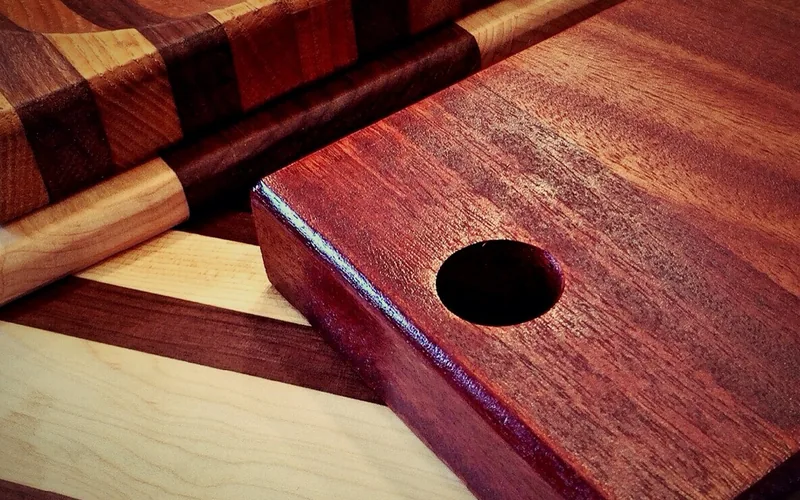
Ambrosia maple’s softness and visible bore holes rule out the highest-wear jobs, but that leaves plenty of strong applications. It shows up most often in cutting boards and charcuterie boards, turned bowls and pens, boxes, jewelry cases, dulcimer and instrument tops, shelving, and furniture accents like tabletops, drawer fronts, and cabinet door panels. Compare it against a harder species before committing to structural furniture — see Is Maple a Hardwood or Softwood? for where soft maple sits relative to sugar maple. Woodturners in particular seek it out; if turning is the plan, Best Wood for Turning ranks it against other popular turning blanks by cost and figure.
Kitchen cabinet makers sometimes use ambrosia maple as an accent door or island panel rather than running it throughout a full kitchen, since heavily figured boards are pricier and harder to match consistently — see Maple Wood Kitchen Cabinets for how maple performs in that setting generally.
How to Finish Ambrosia Maple Without Losing the Figure
The beetle entrance holes need to be dealt with before a final finish goes on, or they will trap dust and look unfinished. Here is the sequence that keeps the streaks visible instead of muddying them under heavy stain:
- Sand progressively: work up through 120, 180, then 220 grit. Dull tools and skipped grits are the most common cause of tear-out around the softer streaked areas.
- Fill the entrance holes: use a color-matched burn-in stick or a thin CA (cyanoacrylate) glue worked into each pinhole, then sand flush once cured.
- Stabilize hairline cracks: thin CA glue wicked into any small checks near the streaks prevents them from spreading during seasonal movement.
- Choose a clear or lightly ambering finish: a penetrating oil (Danish oil or a similar oil/varnish blend) or a clear wipe-on finish shows off the contrast between the pale background and the gray-brown streaks. Heavy dark stain flattens that contrast and is the most common mistake beginners make with this wood.
- Buff and protect: once the finish has cured, a carnauba wax pass on turned pieces adds sheen and a light protective layer without darkening the wood further.
Care Tips for Ambrosia Maple
Clean with a soft, damp cloth and avoid harsh chemicals or abrasive cleaners — the streaked areas are slightly softer than the surrounding wood and mark more easily. Use coasters and trivets to prevent water rings and heat marks, keep pieces out of direct sunlight to limit fading, and use felt pads under anything set on a finished surface. On a cutting board specifically, hand wash and dry immediately; never run it through a dishwasher, since the softer soft-maple base swells and checks faster than hard maple when soaked.
Frequently Asked Questions
What is ambrosia maple wood?
Ambrosia maple is soft maple lumber marked with gray-brown streaks left by ambrosia beetle tunnels and the fungal spores those beetles carry. It is a figure, not a separate species — any soft maple board can develop it.
Does ambrosia maple have worms in it?
No. The nickname “wormy maple” refers to the thin, worm-like streaks left by ambrosia beetle tunnels, not actual worms. The beetles themselves are long gone from the harvested lumber — only their tunnels and the associated staining remain.
Is ambrosia maple structurally weaker than plain maple?
No. Ohio State University Extension’s research on ambrosia coloration in maple found it does not reduce the wood’s physical properties — ambrosia and non-ambrosia maple test similarly for strength. The visible bore holes and softer soft-maple base are the real durability factors to plan around, not the coloring itself.
Is ambrosia maple the same as spalted maple?
No. Ambrosia maple’s streaks form around individual beetle tunnels. Spalted maple’s black zone lines come from wood-decay fungi spreading through the whole board, which can weaken it if left unchecked. Both are prized for their appearance, but spalted maple carries a real structural risk that ambrosia maple does not.
How rare is ambrosia maple, and is it expensive?
It is not rare in the sense of scarce supply, but well-figured, wide boards are harder to find consistently than plain maple, and demand has pushed prices up from its old status as a cheap, defect-graded lumber. Expect pricing between standard soft maple and premium hardwoods like cherry or walnut.
Conclusion
Ambrosia maple is standard soft maple carrying real 700–950 lbf hardness underneath a cosmetic, beetle-driven figure that does not weaken the board. Fill the entrance holes, keep the finish clear or lightly ambering, and it holds up well for cutting boards, turned pieces, and accent furniture — just don’t expect hard maple durability from a soft maple base.
Sponsored / affiliate links. As an Amazon Associate I earn from qualifying purchases. I may earn additional commission from eligible campaigns.