How to Restore a Table Saw Top: Flatten, Resurface & Cost
A table saw top that stops feeding wood in a straight line usually is not a rust problem — it is a flatness problem, and no amount of Rust Converter fixes a warped casting. Ignoring a pitted or bowed top for years can throw crosscuts off by 1/16 inch or more over a 24 inch span, enough to bind a blade. This guide covers how to tell which repair you actually need, how to flatten and resurface the top yourself, and what a machine shop charges ($60–$122 per 0.001 inch out of flat) if the damage is beyond a hand-sanding fix.
Insert your Affiliate Disclosure reusable block here.
Quick Answer
Light surface rust and pitting can usually be hand-sanded flat with 150 to 400-grit paper and a flat sanding block. A top that is actually warped or has deep pitting (more than about 0.005 inch) needs a straightedge check first, then either a belt sander flattening pass or professional Blanchard grinding — DIY sanding alone will not correct true warp.
Does Your Table Saw Top Need Full Restoration or Just a Quick Clean?
Best Flatness-Check Pick
Taytools 24″ Rigid Machinist Straightedge
A 24 inch hardened-steel straightedge is the tool that actually tells you whether you have a rust problem or a warp problem — skip it and you are guessing.
- Best for: Diagnosing true warp vs. surface pitting before you sand
- Why we picked it: Rigid spring steel holds true across a full 24 inch span, long enough to span most contractor and cabinet saw tops
- Main drawback: Needs a light source or feeler gauge behind it to read small gaps accurately
Compare more table saw restoration options
 Option 1 Milescraft Sand-It Multi-Surface Sanding Block
|
 Option 2 Corroseal Water-Based Rust Converter
|
 Option 3 Minwax Paste Finishing Wax
|
As an Amazon Associate we earn from qualifying purchases.
Before sanding anything, figure out which problem you actually have — treating surface rust like a flatness problem (or vice versa) wastes hours. There are three distinct issues that all get lumped together as “table saw restoration”:
- Surface rust only — orange discoloration that wipes or scrapes off, no pitting underneath. This is a cleaning job, not a restoration. See our full rust removal walkthrough for the step-by-step process.
- Rust with pitting — small craters remain after the rust is gone. This needs sanding and flattening, covered below.
- True warp — the casting itself has bowed, usually from heat, age, or being stored on an uneven stand. No amount of sanding by hand fixes this reliably; it needs a straightedge diagnosis and likely machining.
Lay a 24 inch precision straightedge diagonally across the table and along both the front-to-back and side-to-side axes, then hold it up to a light source. Any gap you can slide a 0.003 to 0.005 inch feeler gauge under means the top has genuine warp, not just surface damage — and that changes which of the fixes below actually applies.
Removing Surface Rust Before You Flatten Anything
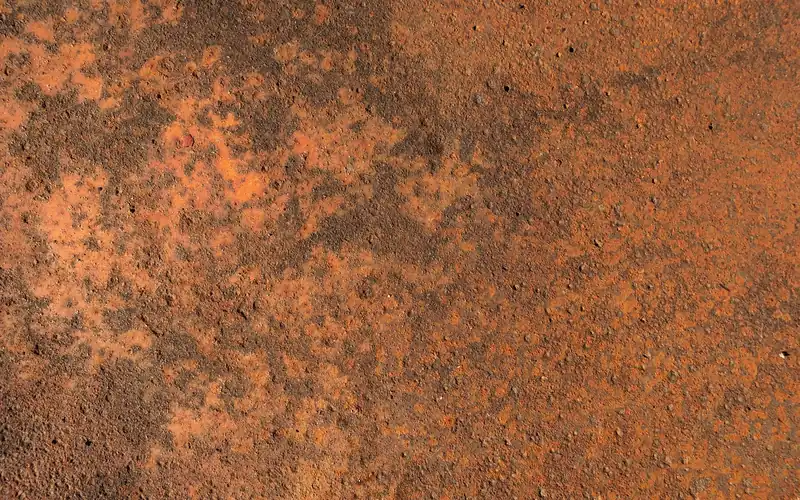
Rust has to come off before you can accurately judge how much pitting or warp is underneath it. For light to moderate surface rust, a green Scotch-Brite pad with a light machine oil, followed by 220-grit sandpaper on a flat block, clears most cast iron tops in under 30 minutes. For heavier rust, an Evapo-Rust soak (saturate paper towels, press into the surface, wrap in plastic for a few hours) lifts rust chemically without removing sound metal. We cover both methods, plus rust prevention between uses, in detail in our dedicated table saw rust removal guide — this article picks up from there, once the rust is off and you can see what condition the metal underneath is actually in.
Flattening and Resurfacing a Warped or Pitted Cast Iron Top
Flattening is the process of removing metal, evenly, until a warped or pitted table saw top reads flat against a precision straightedge across its full length and width. It is not the same as polishing or coating — it changes the actual geometry of the casting, and it is the step that gets skipped when people jump straight from rust removal to wax.
- Confirm the top is clean and dry: Finish rust removal first (see the section above) so you are sanding bare metal, not sanding rust particles into the surface.
- Map the high and low spots: Use the 24 inch straightedge across multiple axes and mark high spots with a grease pencil where light shows through or a feeler gauge catches.
- Sand the high spots first: Work a flat sanding block or random-orbit sander at 150-grit only on the marked high areas until they read level with the straightedge, checking every few minutes — over-sanding one spot creates a new low spot.
- Blend the whole surface: Once high spots are down, sand the entire top evenly at 220-grit, then 320-grit, moving in a figure-eight pattern to avoid grooving in one direction.
- Re-check flatness: Lay the straightedge back across the top in all directions. If gaps are still greater than 0.005 inch, the pitting or warp is deeper than hand-sanding can safely correct.
- Decide DIY vs. professional machining: If step 5 shows the top is still out of flat by more than a few thousandths, stop sanding by hand and get a machine shop quote (see cost comparison below) rather than removing more metal freehand.
DIY Sanding vs. Professional Machining: What It Actually Costs
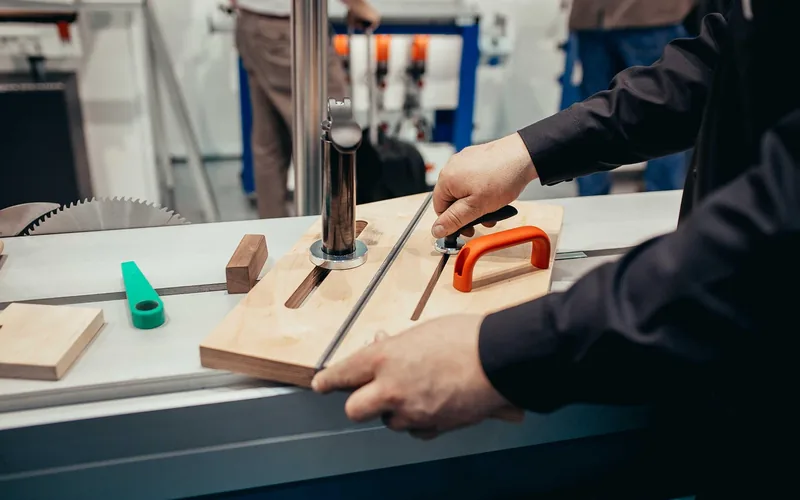
Most hobby-shop table saws do not justify professional resurfacing — but for a top with more than about 0.01 inch of true warp, or a benchtop saw where accuracy matters for repeat cuts, it is worth knowing the real numbers before deciding.
| Method | Cost | Best For |
|---|---|---|
| DIY hand sanding (150–320 grit) | $10–$25 in sandpaper and blocks | Surface rust and pitting under about 0.005 inch out of flat |
| DIY belt sander flattening | $0 if you own one, about $60 rental | Moderate pitting, patient DIYers comfortable checking with a straightedge often |
| Local machine shop (surface grinding) | About $60–$100 flat rate, or about $122 per 0.001 inch out of flat on some pricing models | True warp beyond about 0.01 inch, cast iron tops on saws worth keeping long-term |
| Blanchard grinding | Similar to surface grinding, often faster turnaround | Larger or more severely warped tops; water-cooled process keeps the casting flat during machining |
One experienced restorer’s rule of thumb from a machine-shop forum thread sums up the honest tradeoff well: most contractor and hobby-grade table saws are “not worth enough to warrant a great deal of effort or expense” on professional resurfacing — the better move for most home shops is to make the saw a reliable user with a careful hand-sanding pass, and reserve machine-shop resurfacing for saws you plan to keep for decades or that need tight repeat-cut accuracy for a specific trade.
Protecting Your Restored Table Saw Top
A newly flattened top is bare metal, which means it starts rusting again the moment humidity rises unless it is sealed. Paste wax (buffed thin, in thin coats) is the simplest option and doubles as a low-friction surface that helps stock feed smoothly. For shops that want a longer-lasting barrier — especially humid climates or infrequently-used saws — a dedicated cast-iron coating outlasts wax between reapplications. We compare wax, oil, and sprayed coatings by cost and reapplication interval in our table saw top coating guide, including which options are safe for cast iron versus which can gum up a miter slot.
Common Mistakes When Restoring a Table Saw Top
- Coating over unflattened rust pitting. Wax or paint hides pitting temporarily but does not fill it — the low spots are still there and will still catch stock.
- Sanding in one direction only. Straight-line sanding in a single direction tends to dig a shallow trough rather than leveling the surface; a figure-eight or crosshatch pattern spreads material removal evenly.
- Skipping the straightedge check. A top can look flat and still be off by 0.01 to 0.02 inch — enough to affect precision joinery cuts even though it looks fine to the eye.
- Over-sanding a high spot. Chasing one high spot with a sander often removes too much metal there, creating a new low spot that is harder to fix than the original problem.
Can you resurface a cast iron table saw top yourself?
Yes, for pitting and moderate warp under about 0.01 inch out of flat. Clean the top, use a straightedge to map high spots, sand those spots down at 150-grit, then blend the whole surface at 220 and 320-grit, checking flatness with the straightedge after each pass.
How much does it cost to have a table saw top resurfaced professionally?
Local machine shops typically charge $60 to $100 for a flat-rate surface grinding pass, though some price by the thousandth of an inch out of flat, around $122 per 0.001 inch. Get quotes from at least two shops, since rates and what is included vary by region and by whether Blanchard grinding equipment is available.
Can you use a belt sander to flatten a table saw top?
Yes, a belt sander starting at 120 to 150-grit can flatten moderate pitting and shallow warp, but it removes metal fast and can create new low spots if held in one place too long. Check the surface with a straightedge frequently and keep the sander moving in overlapping passes rather than dwelling on any one area.
Is it worth restoring an old table saw top, or should I just replace the saw?
For most contractor and cabinet saws with sound motors and trunnions, restoring the top costs a fraction of a replacement saw and takes an afternoon. Professional machining only makes sense if the saw is one you plan to keep long-term or need for repeat-accuracy work — for a saw you are likely to replace within a few years anyway, a careful DIY sanding pass is the better return on effort.
Getting a table saw top flat again is mostly a diagnosis problem, not a sanding problem — a straightedge tells you in five minutes whether you are dealing with surface rust, pitting, or true warp, and that answer determines whether the fix is a $15 sanding block or a $100 trip to a machine shop. Clean and check flatness first, sand only what the straightedge says is high, and seal the finished surface before it has a chance to flash-rust again.
Sponsored / affiliate links. As an Amazon Associate I earn from qualifying purchases. I may earn additional commission from eligible campaigns.