Is Valspar Good Paint for Wood Furniture and Cabinets?
Valspar is a genuinely solid paint for wood furniture and cabinets, but its self-priming marketing oversells what it can do straight out of the can on bare wood. If you paint a dresser, a set of kitchen cabinets, or a run of trim without a dedicated primer first, the paint itself usually is not what fails – the wood underneath is. Knots bleed through, old stains telegraph back, and a softer sheen wears through at handles and drawer edges within a year. None of that is really a Valspar problem specifically, but it is the part most is-Valspar-good-paint reviews skip because they are written for walls, not furniture.
Is Valspar a Good Paint for Wood Furniture and Cabinets?
Best Primer Before Painting Bare Wood
 |
Zinsser B-I-N Shellac Primer-Sealer – $29.77 Valspar’s own “self-priming” claim does not stop knots or tannins from bleeding through on bare pine, oak, or cedar – a shellac-based primer like this one seals that in before you ever open the paint can.
|
Short answer: yes, for the price bracket it sits in. Valspar’s acrylic-latex formulas lay down smoothly, self-level better than most budget interior paints, and hold color well once cured. The catch is that good-on-walls and good-on-furniture are different tests. Walls do not get gripped, bumped, or scrubbed with a sponge the way a cabinet door or a dresser top does. On wood, Valspar performs closer to its reputation when you treat the surface like woodworking prep – sand, prime, then paint – instead of treating it like a wall touch-up.
Which Valspar Line Actually Fits a Woodworking Project
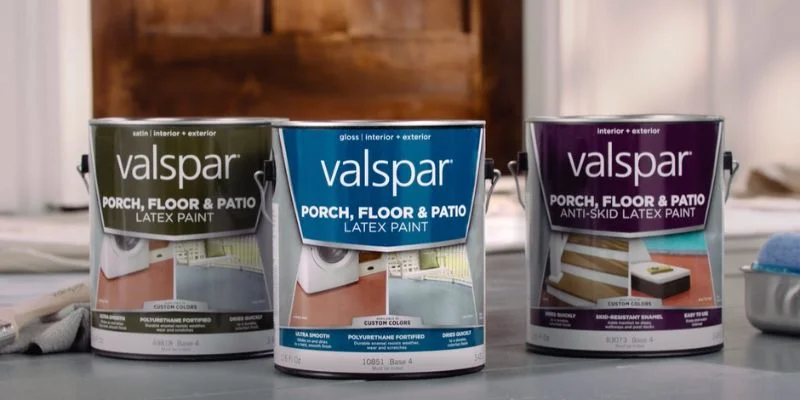
Valspar sells several interior lines and they are not interchangeable once wood, not drywall, is the substrate:
- Valspar Signature – built for walls and ceilings. It is soft-curing and looks great on drywall, but it scuffs and dents more easily than the enamels, so it is a weak choice for a coffee table or a cabinet front that gets touched every day.
- Valspar Ultra – a step up in hardness and block resistance, reasonable for trim and doors that see moderate handling. If you want the deeper dive on this specific line, we cover it separately in our Valspar Ultra review for trim, doors, and cabinets.
- Valspar Cabinet Enamel – the one actually engineered for cabinets and furniture. It cures harder, self-levels better to hide brush marks, and resists the print-through you get when a drawer front sits closed against a frame for months.
If the project is a wall, Signature is fine. If it is anything you will open, close, sit on, or set a coffee mug on, spend the extra few dollars a gallon on Cabinet Enamel.
Why Bare Wood Still Needs a Primer, Self-Priming Claims Aside
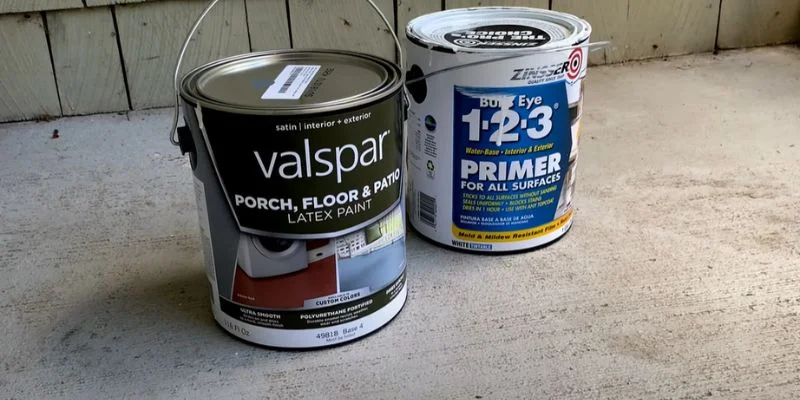
Self-priming on a paint can label means the paint has enough adhesion and build to skip a separate primer coat on a previously painted, sound surface. It does not mean the paint blocks stains. Pine, oak, cedar, and most construction lumber contain natural tannins and resins that migrate through latex paint over weeks, showing up as yellow-brown blotches even under white paint. Knots do the same thing worse. Skipping primer on bare or knotty wood is the single most common reason a good paint job looks stained again within a season.
A shellac-based primer (see the pick above) seals tannins and knots in one coat and dries fast enough to topcoat the same day. A water-based stain-blocking primer works for lighter cases, but on real knots or old oil-based stain, shellac is the more reliable fix. Prime, let it cure per the can’s directions, then apply Valspar on top – not the other way around.
Pick the Right Sheen for Furniture, Not for Walls
Matte and eggshell look great on a wall and show every fingerprint and scuff on a cabinet door. For furniture, trim, and cabinets, satin is the practical minimum and semi-gloss is better if the piece gets handled daily – a kitchen island, a kids’ dresser, or a set of interior doors. The higher sheens cure harder and wipe clean without burnishing the way a flat finish does when you scrub off a fingerprint.
How Valspar’s Durability Holds Up on High-Touch Wood Surfaces
Valspar’s cured film is comparable to Behr and mid-tier Sherwin-Williams lines on hardness, but cured is the key word. Latex and acrylic paints reach touch-dry in a couple of hours and recoat-ready in about four, but full cure – the point where the film reaches its final hardness and resists blocking, meaning two painted surfaces sticking together – typically takes two to four weeks. Close a freshly painted cabinet door against its frame, or stack a drawer back in, before that cure window is up, and you risk a tacky spot or a paint transfer mark that has nothing to do with the paint’s actual quality.
Getting a Smooth, Brush-Mark-Free Finish on Wood
- Sand bare wood to 180-220 grit and wipe it with a tack cloth – Valspar’s self-leveling only hides so much texture.
- Spot-prime knots and any old stain with a shellac-based primer, then prime the whole piece if it is raw wood.
- Thin the first coat slightly per the can’s guidance if brushing, or use a foam roller or mini sprayer for flat panels – this is where Cabinet Enamel’s self-leveling actually earns its price over Signature.
- Let each coat hit recoat time before the next pass, and give the final coat its full cure window before hanging doors or reinstalling drawers.
Frequently Asked Questions
Is Valspar good enough for kitchen cabinets?
Yes, if you use Valspar Cabinet Enamel or Valspar Ultra rather than the Signature wall line, prime any bare wood or old stain first, and finish in satin or semi-gloss. Skipping primer on cabinet doors is the most common reason the finish looks stained or peels early.
Do I need to prime raw wood before using Valspar, even though it says self-priming?
Yes on bare wood with knots, tannins, or old oil-based stain. Self-priming refers to adhesion on a sound, previously painted surface, not stain-blocking on raw wood. A shellac-based primer prevents tannins and knots from bleeding through the topcoat.
What sheen of Valspar should I use for furniture?
Satin at minimum, semi-gloss for pieces that get handled daily like drawer fronts, coffee tables, or kids’ furniture. Matte and eggshell show fingerprints and scuffs faster on wood than they do on walls.
Is Valspar Cabinet Enamel worth the extra cost over Valspar Ultra?
For cabinets and furniture that close against a frame or get handled often, yes – Cabinet Enamel cures harder and resists blocking better. For trim and doors with lighter handling, Valspar Ultra is a reasonable middle ground; see our full Valspar Ultra review for the specifics.
Valspar is not the weak link in most furniture and cabinet repaints that go wrong – skipped prep is. Pick Cabinet Enamel or Ultra over Signature, prime bare or knotty wood with a shellac-based primer, go satin or semi-gloss, and give the final coat its full cure before the piece goes back into daily use.
Sponsored / affiliate links. As an Amazon Associate I earn from qualifying purchases. I may earn additional commission from eligible campaigns.