Metal File Set Guide: Shapes, Cuts & Coarseness Explained
A metal file set needs at least a flat, half-round, round, and triangular file to handle most shop work — anything fewer leaves gaps in corner, curve, and flat-surface filing. Buying a set with mismatched cuts is the most common mistake: a double-cut file removes stock fast but leaves a rougher finish than a single-cut file wants for. This guide covers file shapes and what each does, single-cut versus double-cut coarseness, and how to file metal without ruining the edge.
Quick Answer
A basic metal file set should include flat, half-round, round, and triangular files at minimum, with needle files added for detail or jewelry work. Look for high-carbon or T12 steel with double-cut teeth for general stock removal, and pick single-cut files separately for finishing passes.
Metal File Shapes and What Each One Is For
Best Metal File Set Pick
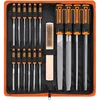
REXBETI 25-Piece Metal File Set
A full shape lineup — flat, half-round, round, triangular, plus needle files — in one carrying case, covering both shaping and detail work.
- Best for: shops that need every common shape without buying separate sets
- Why we picked it: covers all four core shapes plus needle files at a mid-range price
- Main drawback: handles are basic plastic, not the ergonomic grip on pricier sets
Compare more metal file set options
 Option 1 Nicholson 5-Piece General Purpose Set
|
 Option 2 GEARWRENCH 4-Piece Bastard File Set
|
 Option 3 TARIST 17-Piece Set with Tool Bag
|
As an Amazon Associate we earn from qualifying purchases.
Each file shape in a set exists to reach a specific surface. Using the wrong shape doesn’t just take longer — it can round over an edge that needs to stay square, or leave a curved cut where a flat one belongs.
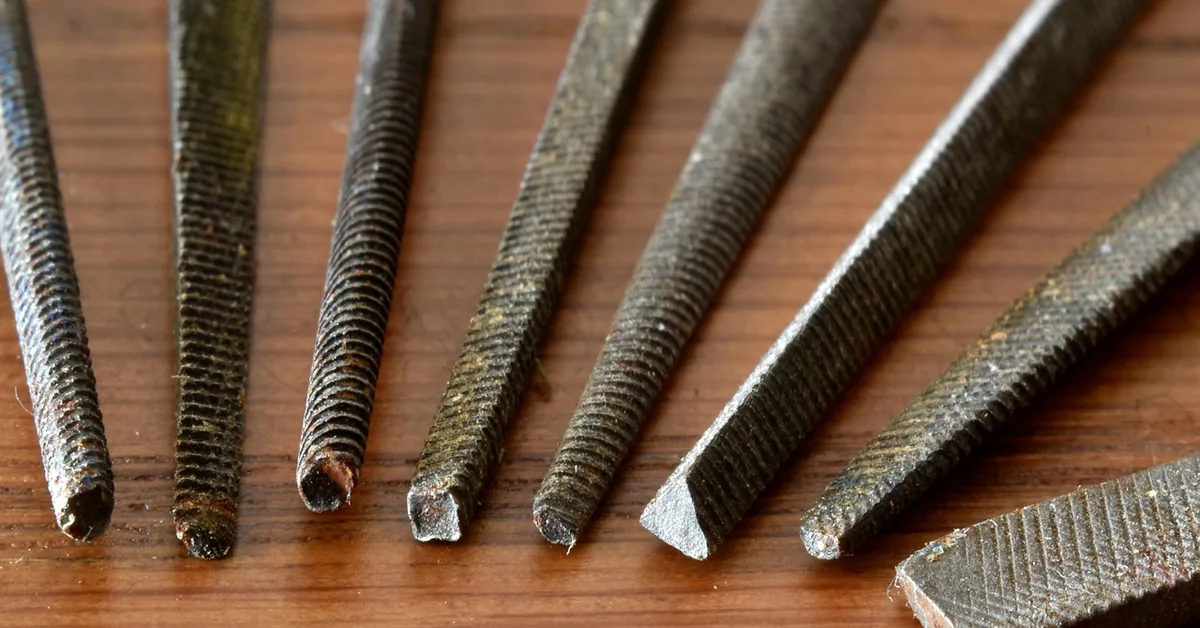
- Flat file — the workhorse of the set. Two flat faces for straightening edges, truing surfaces, and general stock removal on wide, open areas.
- Half-round file — one flat side, one curved side. Handles both flat spots and concave curves without swapping tools.
- Round file — for enlarging holes, cleaning up drilled openings, and shaping tight concave curves like the inside of a bracket.
- Triangular file — three sharp edges for corners under 90 degrees, sharpening saw teeth, and cutting V-shaped notches.
- Square file — for squaring up internal 90-degree corners and cutting or cleaning square holes.
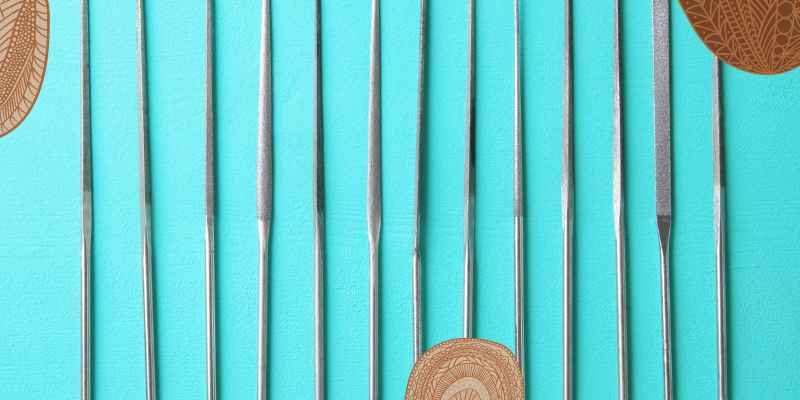
- Needle files — miniature versions of the above shapes, typically 4–6 inches, used for jewelry, model work, and fine detail a full-size file can’t reach.
File Cut and Coarseness: The Detail Most Sets Don’t Explain
Shape gets most of the attention, but cut — the pattern of the teeth — determines how a file actually behaves on metal, and it’s the detail most product listings skip. A single-cut file has one row of parallel teeth angled across the face; it removes metal slowly and leaves a smoother finish, which is why machinists reach for it on the final pass or when sharpening an edge. A double-cut file has two intersecting rows that form a crosshatch pattern; it removes stock fast but leaves a rougher surface, so it’s the right choice for shaping and heavy material removal, not finishing.
Coarseness is graded separately from cut, and this is the piece almost no buying guide spells out with an actual scale: bastard cut is the coarsest common grade, second-cut is medium, and smooth-cut is the finest. A typical multi-piece set includes one or two grades — usually bastard or second-cut — so if a project needs a mirror-smooth finish, a dedicated smooth-cut file is worth adding separately.
| Cut / Coarseness | Removes Material | Best For |
|---|---|---|
| Double-cut, bastard | Fast | Rough shaping, heavy stock removal |
| Double-cut, second-cut | Moderate | General-purpose shop use |
| Single-cut, smooth | Slow | Finishing passes, sharpening edges |
| Needle files (any cut) | Slow, precise | Jewelry, models, tight detail work |
Material matters as much as cut. High-carbon steel holds an edge longer than basic tool steel, and a titanium nitride coating adds wear resistance on files that see heavy daily use — worth the extra cost on a shop’s primary set, less necessary on an occasional-use kit.
How to File Metal Correctly
Technique matters more than the tool. A good file used wrong wears out fast and leaves a poor finish; the right motion protects both the file and the workpiece.
- Secure the workpiece: clamp it in a vise at roughly elbow height so it can’t shift mid-stroke.
- Choose the right shape and cut: match the file to the surface and pick double-cut for shaping, single-cut for finishing, per the table above.
- Push, don’t drag: a file only cuts on the forward push — apply steady pressure moving away from your body, then lift slightly on the return stroke instead of dragging it back across the metal.
- Keep the stroke flat: rocking the file at the start or end of the stroke rounds over an edge that should stay square.
- Clear the teeth often: metal filings pack between the teeth and scratch the surface — brush them out with a file card every 10–15 strokes.
- Finish with a lighter cut: switch to a single-cut or smooth file for the last few passes once the shape is roughed in.

Maintenance and Storage
A file’s teeth are its only working surface, and they dull fast if metal shavings and moisture are left to sit. Brush the teeth with a wire file card after every use to clear packed filings, then wipe the file down with a cloth dampened in mineral spirits to lift any remaining residue. A thin coat of mineral or silicone oil on the surface afterward prevents rust between uses.
Store files separately, not loose in a drawer — files knocking against each other or against other tools dulls the teeth faster than normal use does. A slotted tool roll, a dedicated rack, or individual sleeves all work. In a humid shop, a silica gel pack in the storage case cuts down on rust between uses.
Safety When Filing Metal
Filing throws off fine metal particles and, on a file with no handle, exposes a sharp tang that can puncture a palm under pressure. Always fit a handle before use — a handle-less file (a “bare tang”) is a common cause of hand injuries in home shops.
- Safety glasses: filing throws metal particles up and back toward your face.
- Gloves: protect against the sharp teeth and any burrs on the workpiece — but remove them if using power tools alongside hand filing, since loose gloves can catch in rotating equipment.
- Dust mask: fine metal dust from extended filing sessions is not something to breathe regularly.
- Secure the tang: never use a file without a handle fitted — the exposed tang can drive into your palm if the file binds.
For sharpening tasks like lawnmower or garden blades, a metal file set does double duty — see our guide on sharpening mower blades for the specific technique. For a closer look at how metal files differ from the files made for wood, see metal file vs. wood file, and if you only need one shape explained in depth, our guide to the flat file covers that single type in detail. For the rest of your hand-tool kit, our woodworking tools and saws guide breaks down blade types and TPI charts alongside filing tools.
Frequently Asked Questions
What is a metal file set used for?
A metal file set is used for shaping and smoothing metal surfaces by hand. It removes burrs, sharp edges, and excess material, and it’s the standard tool for deburring cut metal, truing an edge, or enlarging a hole. DIY enthusiasts, metalworkers, and hobbyists use it wherever a power tool would remove too much material too fast.
How many files are included in a metal file set?
Most general-purpose sets include 4 to 10 files covering flat, round, half-round, and triangular shapes. Larger sets (17 to 25 pieces) add multiple needle files for detail work, while compact 3-piece sets cover only the core shapes for occasional use.
What’s the difference between single-cut and double-cut files?
Single-cut files have one row of angled teeth and remove metal slowly while leaving a smoother finish, making them the choice for a final pass or edge sharpening. Double-cut files have two intersecting rows of teeth that remove material much faster but leave a rougher surface, so they’re used for shaping and heavy stock removal, not finishing.
Can a metal file set be used on other materials?
Yes — metal files can also be used on wood, plastic, and fiberglass, but doing so wears them out faster and dulls them for metal work sooner. If you regularly file both wood and metal, it’s worth keeping a dedicated set for each material rather than sharing one set between them.
How do you know when a metal file needs to be replaced?
A worn file slides across the metal without biting instead of cutting, or it leaves a shiny, polished streak rather than a scratch pattern. If cleaning the teeth with a file card doesn’t restore the cut, the teeth themselves are worn down and the file needs to be replaced — filing steel dulls even a quality file after months of regular use.
A metal file set earns its place in a shop by covering shape, cut, and coarseness together — not just the four common shapes. Match double-cut to shaping work, single-cut to finishing, and keep the teeth clean and lightly oiled, and one quality set will outlast several cheap ones bought to replace it.
Sponsored / affiliate links. As an Amazon Associate I earn from qualifying purchases. I may earn additional commission from eligible campaigns.