Bean Bag Toss Board Plans: Official Dimensions & Build Steps
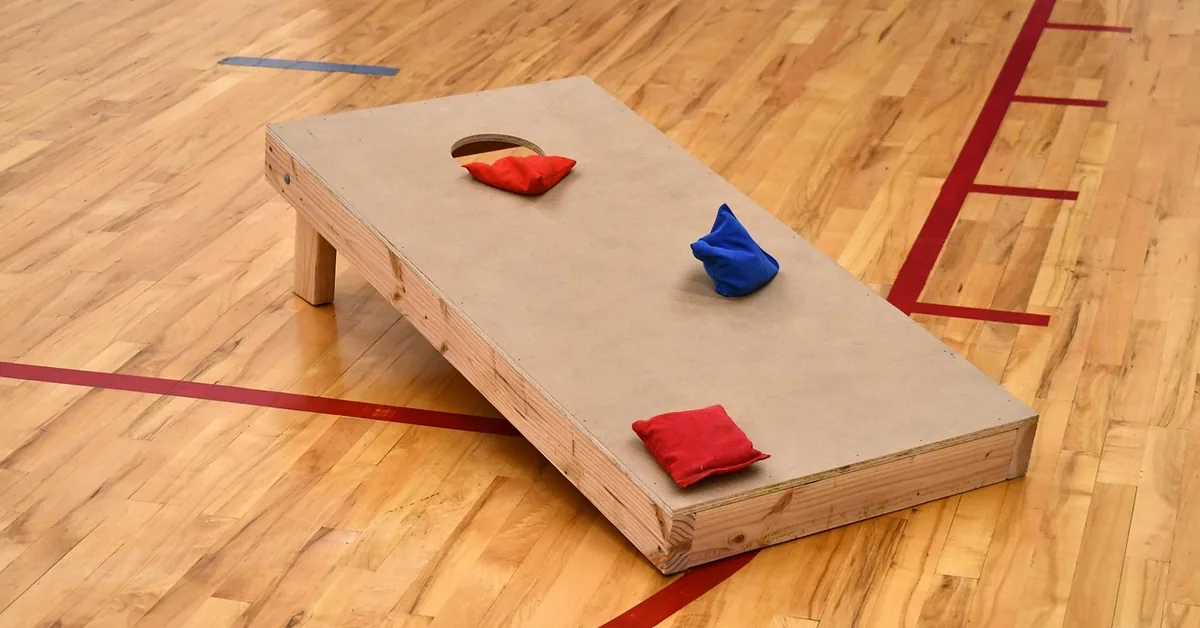
A regulation bean bag toss board is a 24 x 48 in. plywood deck with a 6 in. hole centered 9 in. from the top edge, raised 3 to 4 in. at the front and 12 in. at the back. The two main rule sets disagree on bag weight and deck thickness, though. This guide gives both sets of numbers, a cut list for a 2×4 and 1/2 in. plywood design of our own, and step-by-step cutting instructions.
Official Bean Bag Toss Board Specifications
Best Hole Saw Pick | |
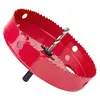 |
GoSports 6 Inch Hole Saw for Cornhole Boards – $16.98 Cuts the 6 in. hole this plan marks 9 in. from the top edge. The listed 7/8 in. blade depth is deeper than the 1/2 in. deck, so one pass goes straight through.
|
As an Amazon Associate we earn from qualifying purchases.
Bean bag toss and cornhole are the same game, so the same numbers apply under either name. The table compares the American Cornhole Organization (ACO) rules with the specs published by the American Cornhole Association (ACA). Where they differ, build to the one your league uses. For a deeper tolerance breakdown, see our cornhole board dimensions guide.
| Spec | ACO rules | ACA published specs |
|---|---|---|
| Deck size | 47.5 to 48 in. x 23.5 to 24 in. | 2 ft x 4 ft (23.5 to 24 in. x 47.5 to 48 in.) |
| Deck thickness | 1/2 in. minimum with cross-section backing, or 3/4 in. with or without backing | 1/2 to 5/8 in. |
| Hole | 6 in. diameter, centered 9 in. from the top and centered side to side | 6 in. (plus or minus 1/4 in.), 9 in. from the top, 12 in. from each side |
| Front / back height | Front 3 to 4 in., back 12 in. (ground to top of deck) | Front 3 to 4 in., back 12 in. |
| Bag weight and fill | 15.75 to 16.25 oz, plastic resin or beads | 14 to 16 oz |
| Bag size | Width 5.75 to 8.25 in., flat thickness 1.125 to 1.5 in. | 6 x 6 in. |
| Surface | Sanded smooth; gloss latex paint or varnish allowed | Smooth surface |
| Pitching distance | 27 ft. front edge to front edge | 27 ft. (12 to 15 ft. casual or junior) |
Source note: ACO figures are from the American Cornhole Organization rules page; ACA figures are from the ACA rules page and its regulation boards page, read for this update.
Two details trip up most builders. First, the ACO thickness rule links the deck to the frame: 1/2 in. plywood is only legal with cross-section backing, which is why the plan below includes a center brace. Second, the bag weights do not overlap cleanly (a 14.5 oz bag is legal under the ACA numbers and illegal under the ACO numbers), so decide on a rule set before you sew or buy bags. Our guide to the regulation bag build covers the fill choices.
Cut List and Materials for Our 1/2 In. Deck Design
The cut list below is our own design, not an official plan. It is built to land inside the ACO ranges using 1/2 in. plywood and a 2×4 frame set on edge, and every number is worked out so you can check it before cutting. Nominal 2x4s measure 1-1/2 x 3-1/2 in., and plywood sold as 1/2 in. often runs a hair thin, so measure your actual stock.
| Part | Qty per board | Size | Material |
|---|---|---|---|
| Deck | 1 | 24 x 48 in. | 1/2 in. exterior or sanded plywood |
| Long rails | 2 | 48 in. | 2×4 (1-1/2 x 3-1/2 in.) |
| End rails | 2 | 21 in. | 2×4 |
| Center brace | 1 | 21 in. | 2×4 |
| Legs | 2 | 11-1/2 in., one end rounded | 2×4 |
| Pivot bolts | 2 | 1/4 in. x 4 in. carriage bolt with washers and wing nut | Zinc or stainless |
| Frame screws | 12 | 2-1/2 in. exterior wood screws (2 per joint, 6 joints) | Pilot-drill each |
| Deck screws | About 24 | 1-1/4 in. exterior screws, roughly 8 in. apart | Countersink |
The arithmetic behind the numbers
- Frame width: 1-1/2 + 21 + 1-1/2 = 24 in., so the 21 in. end rails fit exactly between the 48 in. long rails and the frame matches the deck.
- Front height: 1/2 in. deck + 3-1/2 in. rail on edge = 4 in., the top of the ACO 3 to 4 in. front range. A 3/4 in. deck on the same frame gives 4-1/4 in., which is over the limit.
- Back height: the leg pivot sits 1/2 + 1-3/4 = 2-1/4 in. below the deck top (centered in the rail). The leg hangs 1-3/4 in. past its pivot at the rounded top, so 12 – 2-1/4 + 1-3/4 = 11-1/2 in. leg length puts the back at exactly 12 in.
- Hole clearance: the hole spans 6 to 12 in. from the top end and 9 to 15 in. from the sides. The end rail occupies the first 1-1/2 in. and the center brace, centered 30 in. from the top end, spans 29-1/4 to 30-3/4 in., so nothing sits under the hole.
- Square check: a perfectly square 24 x 48 in. frame measures about 53.7 in. corner to corner on both diagonals (the square root of 24 squared plus 48 squared).
Lumber yield: one board needs 182 in. of 2×4. Cut the first 8 ft. stud into 48 + 21 + 21 (90 in. plus kerf) and the second into 48 + 21 + 11-1/2 + 11-1/2 (92 in. plus kerf), leaving a few inches of scrap on each. Buy true 96 in. lengths; precut studs are shorter and cannot yield a 48 in. rail plus the other parts. A 4 x 8 ft. sheet of plywood cuts into four 24 x 48 in. decks, which is two full sets, and a saw kerf of about 1/8 in. still leaves each deck inside the ACO 23.5 to 24 in. width range.
The ACO measures height from the ground to the top of the deck, not to the bottom of the frame, which is why the frame depth matters in the math above.
How to Build a Bean Bag Toss Board Step by Step
Wear eye and hearing protection for every cut, and clamp the work before using the circular saw, drill or jigsaw. Two boards means doing each step twice.
- Cut the deck: mark 24 x 48 in. on the plywood and cut with a circular saw and a straightedge guide, supporting both sides of the cut so the offcut does not pinch the blade.
- Cut the 2x4s: cut the long rails, end rails, center brace and legs from the cut list. Check that all three 21 in. pieces match.
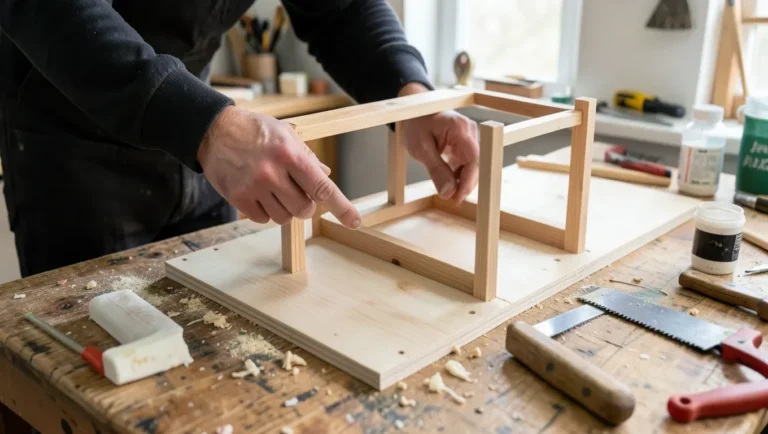
- Assemble the frame: on a flat floor, set the end rails flush with the ends of the long rails on edge, and the center brace centered 30 in. from the top end. Pilot-drill and drive two 2-1/2 in. screws through each long rail into each cross piece. Confirm both diagonals measure about 53.7 in.
- Mark the hole: on the deck, measure 9 in. down from the top end and 12 in. in from each side. The cross of those two lines is the hole center.
- Cut the hole: with the deck clamped to a workbench and overhanging the edge, cut with a 6 in. hole saw at low speed, or use the jigsaw method below. Sand the cut edge until the bag slides over it without catching.
- Attach the deck: square the deck to the frame, then pilot-drill and countersink 1-1/4 in. screws about 8 in. apart, including along the center brace.
- Sand: sand the deck smooth and ease every edge and corner, since the ACO calls for a sanded, finished surface.
- Make the legs: round one end of each leg with a 1-3/4 in. radius, drill a 1/4 in. hole at the center of that radius, and bolt each leg inside a long rail 4 in. from the top end, with the bolt 2-1/4 in. below the deck top. Tighten the wing nut to hold the leg open and loosen it to fold it flat.
- Finish: seal and paint the board; see the finishing section below.
Cutting the hole with a jigsaw instead
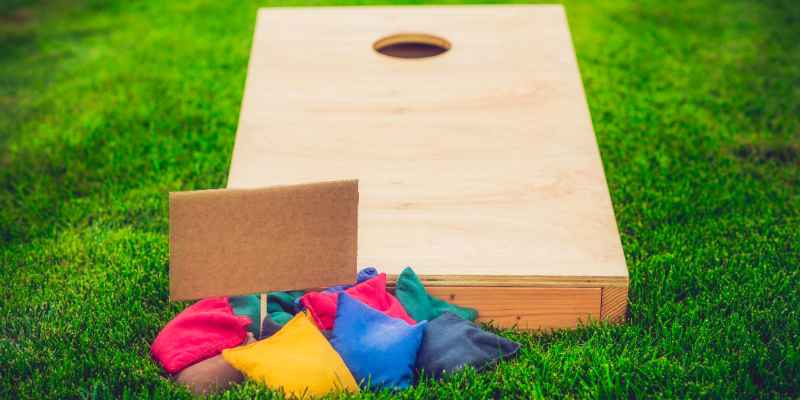
Set a compass to a 3 in. radius, centered on the marked point, and scribe the circle. Drill a 1/2 in. starter hole just inside the line, insert a fine-tooth wood blade, and cut slowly along the line with the shoe pressed flat on the deck. Cut on the waste side, then sand to the line. This is slower than a hole saw and the edge is less round, but it needs no extra tool.
Safety: a 6 in. hole saw is a large-diameter cutter that can grab and spin the workpiece or twist the drill if the deck is not clamped. Use a drill with a side handle if you have one, keep both hands on the tool, and let the saw cut at low speed.
Finishing the Board So Bags Slide
The ACO allows a gloss latex paint or varnish over a smooth, sanded surface, so the finish decision comes down to paint choice and number of coats. Our guides cover which paint to use on cornhole boards, how to seal cornhole boards, and how to make the surface slicker if a finished board feels grabby. Sand lightly between coats, and let each coat dry fully before the next so the bags do not stick.
Setting Up, Legs and Storage
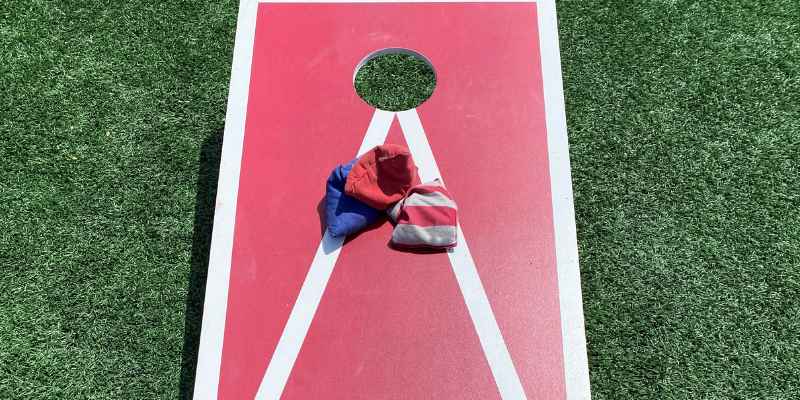
Place the boards 27 ft. apart, measured front edge to front edge, for adult play; the ACA lists 12 to 15 ft. for casual or junior games. For a full breakdown of leg angles and hinge options, read our cornhole board legs guide. If you want a second take on the same build with a different layout, see our regulation cornhole board plans and cut list. Stored folded in a dry spot, the boards stay flat; our storage tips cover garages and off-season.
Common Mistakes When Building Bean Bag Toss Boards
- Measuring the hole from the wrong end: the 9 in. is from the top (raised) edge, so the hole sits closer to the back of the board.
- Using a 3/4 in. deck on a 2×4-on-edge frame: the 4-1/4 in. front height exceeds the 4 in. maximum.
- Buying precut studs: they are shorter than 96 in., so a full-length rail will not fit.
- Skipping the center brace on a 1/2 in. deck: the ACO ties that thickness to cross-section backing.
- Leaving a rough hole edge: bags snag on splintered plywood even when the dimensions are perfect.
Frequently Asked Questions
How big is a regulation bean bag toss board?
A regulation board is 24 in. wide by 48 in. long, with the American Cornhole Organization allowing 23.5 to 24 in. by 47.5 to 48 in. The hole is 6 in. across, centered 9 in. from the top edge and centered between the sides. The front edge sits 3 to 4 in. off the ground and the back edge 12 in.
Where does the hole go on a bean bag toss board?
The hole center sits 9 in. down from the top (back) edge and 12 in. in from each side on a 24 in. board. That puts the hole edge 6 in. from the top end and 9 in. from each side, so it never touches a 1-1/2 in. thick frame rail.
How much should a bean bag toss bag weigh?
It depends on the rule set. The American Cornhole Organization specifies 15.75 to 16.25 oz with plastic resin fill, while the American Cornhole Association site lists 14 to 16 oz. Both use a 6 x 6 in. bag, so pick the rule set your league follows and weigh a finished bag on a kitchen scale.
Can I cut the bean bag toss hole with a jigsaw?
Yes. Drill a 1/2 in. starter hole just inside a 6 in. circle drawn with a compass, then follow the line with a fine-tooth jigsaw blade and sand the edge smooth. A 6 in. hole saw is faster and rounder, but it needs a clamped deck and a drill you can hold with both hands.
Is bean bag toss the same game as cornhole?
Yes. Bean bag toss, cornhole, baggo and corn toss are regional names for the same game, played on the same 24 x 48 in. boards with 6 x 6 in. bags, 27 ft. apart front edge to front edge in adult play.
A regulation board comes down to a few measurable numbers: 24 x 48 in., a 6 in. hole 9 in. from the top, and a 3 to 4 in. front and 12 in. back height. Work the arithmetic before you cut, pick one rule set for the bags, and the rest is careful sawing and sanding.
Sponsored / affiliate links. As an Amazon Associate I earn from qualifying purchases. I may earn additional commission from eligible campaigns.