Plywood vs Solid Wood: Which Should You Use?
Plywood costs less to cover an area — about $50–$90 for a 4×8 cabinet-grade sheet versus $96–$168 in solid red oak for the same 32 square feet — and resists warping, but solid wood is stronger along its grain and refinishes for decades. Pick wrong and a cabinet side bows, or a scratched tabletop can’t be saved. This guide compares real pricing, strength by grain direction, and which material fits cabinets, shelves, and furniture.
What’s the Real Difference Between Plywood and Solid Wood?
Best Edge Banding Pick
Edge Supply Birch Wood Veneer Edge Banding, 3/4″ x 50′
Pre-glued real birch veneer tape that irons on and hides plywood’s layered edge — matches the most common cabinet-grade plywood face.
- Best for: Birch or paint-grade plywood cabinet edges and shelves
- Why we picked it: Matches the most common plywood face veneer sold at U.S. home centers
- Main drawback: Needs a household iron and a steady hand for a clean, bubble-free bond
Compare more edge banding options
 Option 1 Edge Supply White Oak Edge Banding, 3/4″ x 50′
|
 Option 2 Edge Supply Walnut Edge Banding, 3/4″ x 50′
|
 Option 3 Edge Supply Maple Edge Banding, 3/4″ x 50′
|
As an Amazon Associate we earn from qualifying purchases.
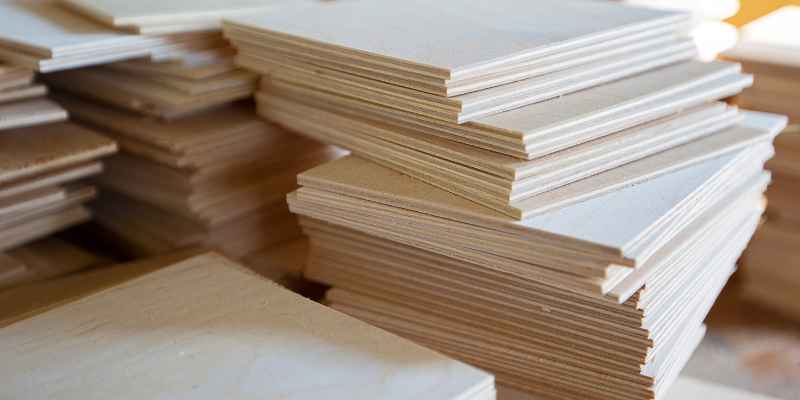
Plywood is an engineered wood panel made by gluing thin layers of wood veneer together with each layer’s grain rotated roughly 90 degrees from the one below it. That cross-lamination is what makes a sheet resist warping and splitting — it’s also why a cut edge shows visible stripes instead of solid grain. Cabinet-grade sheets typically use a birch or maple face over an internal core of five to thirteen plies, depending on thickness — see our full plywood guide hub for sizes, thickness, and pricing by grade.
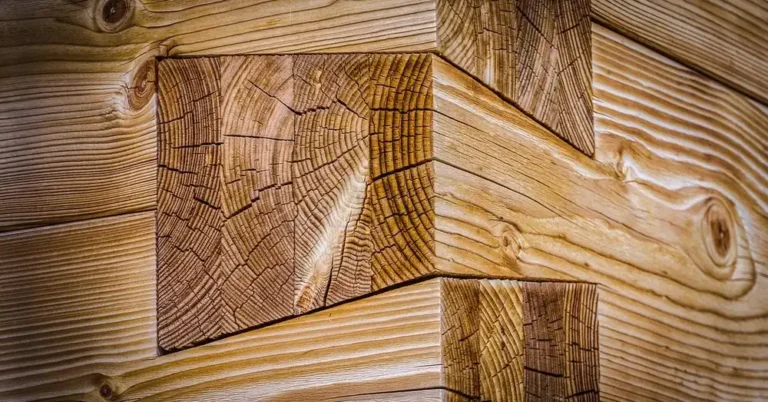
Solid wood is a single piece of lumber milled straight from a log, with no layering or veneer — what you see on the surface is what runs all the way through the board. It moves with humidity, can be shaped into curves and joinery that plywood can’t hold, and can be sanded down and refinished repeatedly because there’s no thin face veneer to sand through.
Plywood vs Solid Wood at a Glance
The numbers below compare a standard 4×8 cabinet-grade plywood sheet (32 sq ft) against enough solid red oak boards to cover the same area at 3/4-inch thickness, before accounting for the extra waste solid lumber loses to milling and defects.
| Factor | Plywood | Solid Wood |
|---|---|---|
| Cost for 32 sq ft | $50–$90 (cabinet-grade birch/maple sheet) | $96–$168+ in red oak boards (before milling waste) |
| Seasonal movement | Under 0.5mm across an 18mm birch panel | 3–5mm across a 12-inch oak board |
| Strength | High strength-to-weight; resists cross-grain splitting | Stronger in straight tension/compression along its own grain |
| Refinishing | Limited — face veneer is often only 1/32″ to 1/16″ thick | Can be sanded and refinished many times over decades |
| Best for | Cabinet boxes, shelving, tabletops, humid rooms | Face frames, legs, heirloom furniture, exposed edges |
How to Make Plywood Edges Look Like Solid Wood
The stripes on a cut plywood edge are the single biggest giveaway that a piece isn’t solid lumber. Plywood can pass for solid wood almost anywhere once that edge is covered — the fix is iron-on edge banding cut from the same species as the plywood face, applied with a household iron and trimmed flush with a utility knife.
Match the banding species to the veneer face — birch banding on birch plywood, oak on red or white oak plywood, walnut or maple where those are the face species. A stain applied after banding will not fully hide a mismatched species; the grain pattern still reads differently under a clear coat.
“In our shop, an unsealed plywood edge is where a project fails first — the raw veneer layers wick moisture faster than the finished faces do, even on a piece that’s been sealed everywhere else. Edge banding isn’t optional on anything headed for a kitchen or bath.”
Is Plywood or Solid Wood Actually Stronger?
Neither — it depends on direction. Solid wood is stronger in straight tension and compression along its own grain, which is why a solid oak leg holds weight better than a plywood one of the same dimensions. Plywood wins across the grain: because each veneer layer is rotated roughly 90 degrees from the next, a plywood panel resists splitting and cracking in directions where a solid board would fail along its grain lines.
That’s also why plywood stays flatter. How plywood is made — cross-laminating thin veneers under heat and pressure — is what the APA – The Engineered Wood Association credits for plywood’s dimensional stability and strength-to-weight ratio. Solid wood has no such cross-bracing, so it’s the better performer under steady, single-direction load — think a workbench top or a stair tread — but the worse performer against seasonal humidity swings.
Which Material Fits Your Project?
Cabinets and cabinet boxes: plywood. It won’t warp behind a dishwasher or under a sink, and a 4×8 sheet at a home center covers far more area per dollar than milling boards into a panel. Save solid wood for face frames and doors where the grain shows.
Shelving: plywood, provided it’s supported at reasonable intervals — a 3/4″ plywood shelf sags less over a long unsupported span than a solid board of the same thickness, because the cross-grain layers resist the slow bending set that solid lumber develops under sustained weight.
Furniture that gets refinished: solid wood. A dining table gets scratched, spilled on, and eventually needs sanding — something you can do to a solid oak or walnut top many times, but not to a plywood top with a face veneer that’s often thinner than a credit card.
Subfloors and structural panels: plywood, always. See our guide on how plywood compares to solid and engineered wood for the full breakdown across every wood category, not just these two.
When plywood is the wrong call: anywhere the edge grain will be cut, shaped, or exposed without banding — turned legs, carved details, and curved rail-and-stile joinery all need solid stock because plywood’s layers show as stripes the moment you cut into them at an angle.
Frequently Asked Questions About Plywood vs Solid Wood
What is stronger, solid wood or plywood?
It depends on the direction of the load. Solid wood is stronger along its own grain, which is why solid legs and beams outperform plywood ones. Plywood is stronger across the grain and resists splitting because each layer’s grain is rotated 90 degrees from the next, which is also why it stays flatter than solid wood in humid conditions.
Is plywood considered real wood?
Yes. Plywood is made entirely from real wood veneer — thin sheets peeled or sliced from actual logs — glued together in cross-laminated layers. It’s an engineered wood product, not a synthetic one, which puts it in a different category from particleboard or MDF, both of which use wood fibers or chips bonded with resin rather than intact veneer sheets.
Is plywood cheaper than solid wood?
Yes, usually by a wide margin for panel-sized projects. A 4×8 cabinet-grade plywood sheet runs about $50 to $90 at U.S. home centers, while covering that same 32 square feet in solid red oak boards costs roughly $96 to $168 before milling waste — and premium species like walnut can run two to four times higher still.
Is plywood better than solid wood for shelves?
For most shelving, yes. Plywood’s cross-laminated layers resist the slow sag solid boards develop under sustained weight over a long span, it costs less per square foot, and it won’t cup or bow the way an unsupported solid board can in a humid room.
Can you stain plywood to look like solid wood?
The face can take stain almost like solid wood since it’s a real wood veneer, but the cut edges won’t match until they’re covered — iron-on edge banding in the same species hides the layered stripe pattern so the piece reads as solid wood once stained and finished.
Which lasts longer, plywood or solid wood?
In stable, climate-controlled conditions, well-built furniture from either material can last decades. Solid wood has the edge long-term because it can be refinished repeatedly as it ages; plywood’s finish life is capped by its thin face veneer, though its resistance to warping gives it the advantage in humid or fluctuating environments like kitchens and bathrooms.
Plywood and solid wood aren’t competing for the same job — plywood wins on cost, moisture stability, and flat panels; solid wood wins on refinishing, exposed edges, and load along the grain. Most real projects use both: plywood for the boxes and panels, solid wood for the parts you touch, see, and eventually sand down again.
Sponsored / affiliate links. As an Amazon Associate I earn from qualifying purchases. I may earn additional commission from eligible campaigns.