How to Build a Solid Wood Door: Step-by-Step Guide
A solid wood door is built from a frame of stiles and rails that hold floating panels, and a standard 36 x 80 inch door takes about 35 to 40 board feet of rough lumber and 2 to 3 days of work once you count glue cure time. The part most guides skip is the lumber math: the frame alone is only about 20 board feet, but the panels and milling waste push the real shopping list well past that. This guide gives you a full cut list, the joinery sizes that keep the door from racking, and the finishing and hanging rules that stop it swelling shut.
To build a solid wood door: mill 8/4 lumber of a stable species (white oak, mahogany, or Douglas fir) to 1-3/4 in thick, cut two 80 in stiles, two rails, and a center muntin, cut mortise-and-tenon joints (tenon about 1/3 of the stock thickness), dry fit, glue the frame with floating panels left unglued, sand to 180-220 grit, and finish all six sides before hanging on three hinges. Budget about 35 to 40 board feet of rough lumber for a 36 x 80 in two-panel door.
What Is a Solid Wood Door?
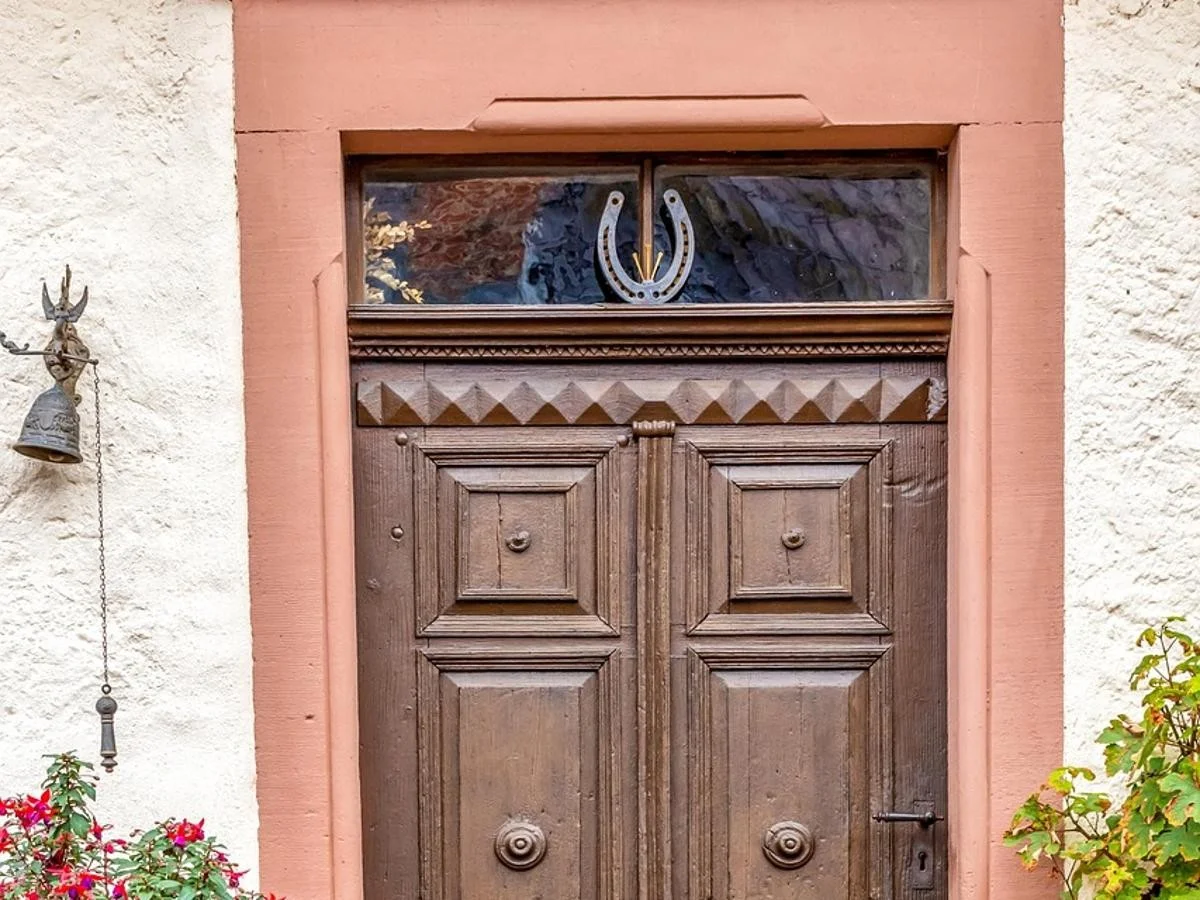
A solid wood door is built from real wood through its whole thickness: vertical stiles, horizontal rails, and raised or flat panels, joined with mortise-and-tenon or dowel joints. A hollow-core door is a cardboard honeycomb inside a thin veneer skin, and a solid-core door has an MDF or particleboard core. A true solid wood door is heavier, blocks more sound, and can be planed, repaired, and refinished for decades.
Best Door Glue-Up Clamp Pick
 |
FLKQC 4 Pack 3/4 in Pipe Clamp Set, $35.99 A door frame needs even pressure across its full width at glue-up, and four pipe clamps cover the rails and keep the frame flat.
|
One correction before you buy lumber: a “solid wood door” is not one big glued-up slab. A slab door of wide boards will cup and split as the seasons change. The stile-and-rail frame with floating panels exists precisely so the wood can move without tearing the door apart.
Best Wood for Building a Solid Wood Door
Species choice decides how the door handles seasonal movement, moisture, and finish. Here are the common options by use:
| Wood Species | Best For | Rot Resistance | Machinability | Cost |
|---|---|---|---|---|
| White Oak | Interior and exterior | High | Good | $$ |
| Mahogany | Exterior / entry | Very high | Excellent | $$$ |
| Douglas Fir | Interior and light exterior | Moderate | Good | $ |
| Teak | Exterior / marine | Excellent | Moderate (oily) | $$$$ |
| Maple | Interior, paint-grade | Low | Excellent | $$ |
| Western Red Cedar | Exterior, lightweight | High | Easy (soft, dents easily) | $ |
Rule of thumb: for exterior and entry doors, choose a naturally rot-resistant species such as mahogany, teak, white oak, or cedar. For interior doors, maple and poplar take paint cleanly, while oak and walnut suit natural stain. Browse teak wood door ideas for entry door styles. Buy the lumber as 8/4 (2 in rough) so you can mill down to a true 1-3/4 in thickness.
Cut List and Lumber Math for a 36 x 80 Inch Door
Most guides give one vague number for lumber. Here is the worked math for a two-panel door with a center muntin, which is the simplest frame that still teaches every joint. The numbers below are calculated from a 36 x 80 in finished size, 4-1/2 in stiles, and 2-1/2 in tenons on the rails.
| Part | Qty | Finished size (thick x wide x long) | Notes |
|---|---|---|---|
| Stiles | 2 | 1-3/4 x 4-1/2 x 80 in | Full height, mortised for rails |
| Top rail | 1 | 1-3/4 x 4-1/2 x 32 in | 27 in shoulder-to-shoulder plus 2-1/2 in tenon each end |
| Bottom rail | 1 | 1-3/4 x 9 x 32 in | Wide rail gets two tenons side by side |
| Center muntin | 1 | 1-3/4 x 4 x 68-1/2 in | 66-1/2 in between rails plus 1 in tenon each end |
| Panels | 2 | 3/4 x 12 x 67 in | Sized to leave about 1/8 in float in the grooves |
Add it up in board feet: the frame is roughly 20 board feet of 8/4 stock, and the two panels are about 11 board feet of 4/4 stock. Add 25 percent for milling waste and bad spots, and you land at roughly 35 to 40 board feet of rough lumber. If you only budget the frame, you will come up short at the panels. For the shoulder math on your own door size, the door frame wood calculator and the raised panel door calculator run the same numbers for other dimensions.
10 Steps to Build a Solid Wood Door
Work through the steps in order. Skipping or rushing any one of them shows up later as a door that sticks, sags, or twists.
Step 1: Select and acclimate the wood
Pick your species from the table above and sort the boards for straight grain. Choose quartersawn or rift-sawn stock for the stiles when you can, because it moves less across its width than plainsawn boards. Let the lumber sit in the room where you will work for at least a week before milling so its moisture content settles, and plan the door panel layout while it rests.
Step 2: Mill and cut parts to size
Joint and plane all stock flat and square to 1-3/4 in thick, then cut the stiles, rails, and muntin to the lengths in the cut list. Mill every part in the same session so they stay matched. Leave the parts a little long until the joints are cut, then trim to final length.
Step 3: Lay out the rails and panel grooves
Typical proportions are 4 to 5 in stiles, a top rail the same width as the stiles, and a bottom rail 8 to 9 in wide so the door looks anchored. Mark all joints with a marking knife from one reference face, and cut a 1/4 in wide, 3/8 in deep groove along the inside edges of the frame for the panels.
Step 4: Cut the mortise-and-tenon joints
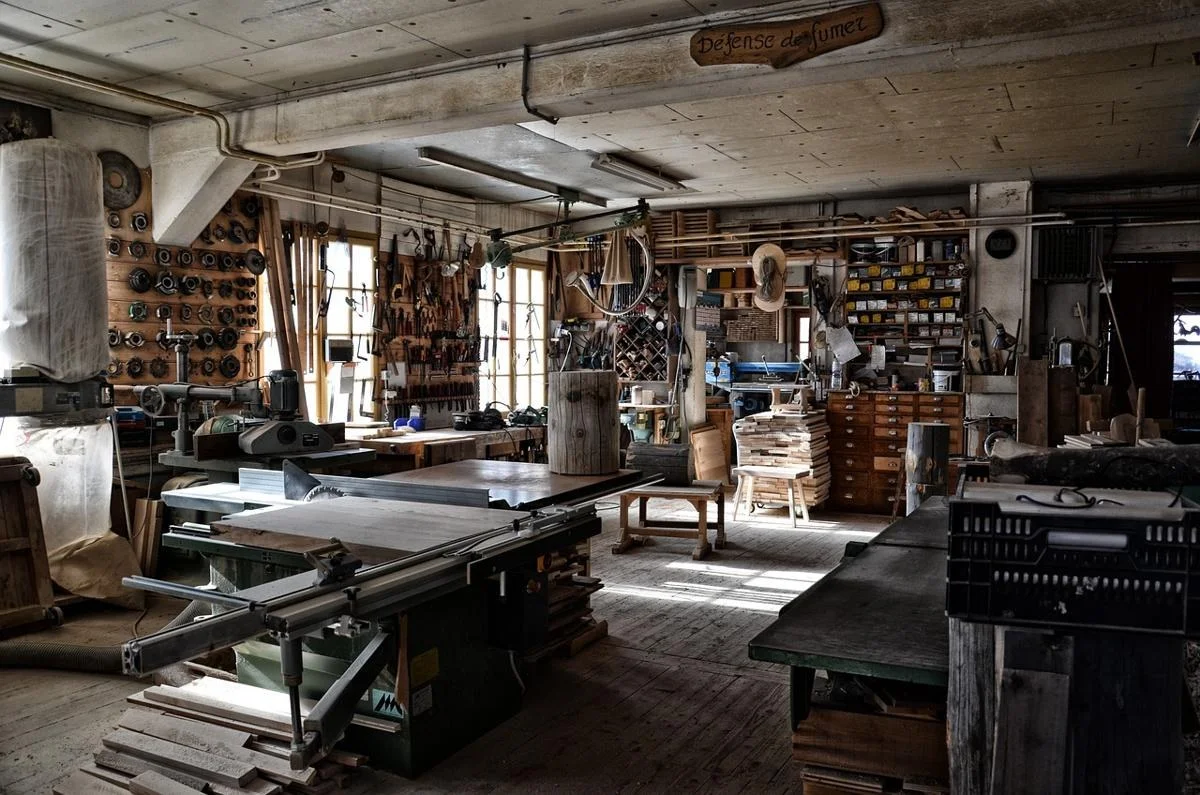
Make the tenon about 1/3 of the stock thickness, which is 5/8 in on 1-3/4 in stock, with a length of 2-1/2 to 3 in. Cut the mortises with a mortising machine, a router jig, or a chisel, and leave a haunch on the tenon so the panel groove does not show at the stile edge. Use two tenons on a wide bottom rail instead of one very wide one, because a wide tenon swells and shrinks enough to split the stile. The mortise-and-tenon sizing guide covers tenon dimensions for other stock, and a router table such as the one in this router table for DeWalt DW618 guide makes repeat tenon cuts faster.
Step 5: Dry fit and adjust
Assemble the frame and slide the panels in without glue. Check that every shoulder closes, the frame is flat on a bench, and the panels have room to move. This is where problems get found, not after the glue is spread.
Step 6: Glue and clamp the frame
Glue the tenons into the mortises but never glue the panels into their grooves, because they need room to expand across the grain. Use a glue rated for exterior use, such as a Type I water-resistant PVA, if the door will see weather. Pull the frame together with pipe clamps and check it for square by measuring the diagonals, which should match. Leaving the door clamped overnight is a safe default. Our guide to gluing a mortise-and-tenon joint covers glue amounts and open time.
Step 7: Sand and smooth
Level any joint mismatch with a plane or a belt sander at 80 grit, move to 120 grit to remove scratches, and finish at 180 to 220 grit before staining or sealing. Sand across the joint lines only as far as needed so you do not round over the crisp shoulders.
Step 8: Apply a protective finish
Use varnish, polyurethane, or an exterior oil-based finish for outdoor doors. Finish all six sides, including the top and bottom edges, before hanging. Unsealed end grain at the bottom edge is the most common way an exterior door soaks up water and swells.
Step 9: Install the hardware
Mortise the hinges into the door edge and frame, then fit the lockset. For an 80 in door, use three hinges rather than two, because the middle hinge keeps the door from sagging over time. See how to attach hinges to thin wood if your stock is thinner than 1-3/4 in.
Step 10: Hang the door
Set the door in the frame and shim it for an even gap of about 1/8 in on the latch side, the hinge side, and the top. Leave more room at the bottom, about 1/2 to 3/4 in above a finished floor, and less over a threshold. If the existing frame is soft or rotted, fix it first with the steps in how to repair a rotted wooden door frame.
How to Build a DIY Solid Wood Exterior Door
The process matches the 10 steps above, with stricter rules for moisture. The main differences from an interior door:
- Wood species: use naturally rot-resistant wood: mahogany, white oak, teak, or cedar. Pine and maple are not appropriate outdoors unless protected.
- Thickness: 1-3/4 in is standard, and heavy entry doors can go to 2-1/4 in.
- Finish all six sides: sealing the top and bottom edges before hanging is the single most important exterior step.
- Weatherstripping: add a door sweep and compression weatherstripping around the perimeter to block drafts and rain.
- Hardware: choose stainless steel or solid brass hinges and locksets, because interior hardware corrodes outdoors.
- Panel float: leave slightly more float in the grooves, about 3 mm instead of 1/8 in, to allow for larger seasonal movement.
- Hinges: consider four hinges on a heavy solid entry door.
A well-built solid wood exterior door that is kept sealed will last for decades, but the finish is the weak point, so plan to recoat the exposed faces every few years.
Common Mistakes When Building a Solid Wood Door
- Gluing the panels: a glued panel cannot move, so it splits itself or cracks the stile within a season.
- Using only the frame count for lumber: the frame is only part of the board feet, as the cut list above shows.
- Skipping the dry fit: gaps in a shoulder show up after the glue has set, when fixing them means starting over.
- Clamping a twisted frame: glue the door on a flat surface and check the diagonals before the glue sets.
- Leaving the end grain bare: unfinished top and bottom edges are the first place moisture gets in.
DIY vs Professional Solid Wood Door Making
If you’re deciding between building your own door or hiring someone, here is how the main factors compare:
| Aspect | DIY Building | Professional Building |
| Skill Required | Moderate woodworking skills needed | High level of woodworking expertise |
| Time Investment | 2-3 days to 2 weeks | Efficient and faster construction |
| Tools and Equipment | Table saw, router, chisels, clamps | Access to professional-grade tools |
| Quality Control | Depends on skill and patience | Consistent and precise craftsmanship |
| Customization | Full flexibility on design | Custom designs available at extra cost |
| Material Cost | $100-$400 for lumber | $500-$2,000+ installed |
| Durability | Depends on joinery quality | Professional quality and finish |
Finished building the door? Our wood door staining guide covers panel order, edge sealing and interior vs exterior topcoats.
Frequently Asked Questions
What type of wood is best for building a solid wood door?
Dense, stable species such as white oak, mahogany, and Douglas fir are the best choices. For exterior and entry doors, pick a naturally rot-resistant species: mahogany, white oak, teak, or western red cedar. For interior doors, maple (paint-grade), oak, and walnut (stain-grade) all work well. Avoid pine outdoors, because it absorbs moisture readily and will warp or rot without constant upkeep.
What tools are needed to build a solid wood door?
You need a table saw, miter saw, a router with straight bits for mortises, chisels, a mallet, hand planes, at least four pipe clamps, a random orbital sander, and a drill. A mortising machine or a router table speeds up joinery but is not strictly required.
What joinery is used in solid wood doors?
Mortise-and-tenon joints are the strongest and most traditional choice, and they resist racking better than any alternative. Dowel joints are faster to cut but weaker. Loose tenons cut with a Domino-style joiner are very strong and quick. Pocket-hole joints belong only on light interior doors. Exterior doors should always use mortise-and-tenon or loose-tenon joinery.
How long does it take to build a solid wood door?
An experienced woodworker can complete a standard interior door in 2 to 3 days including glue cure time. For a first-time builder, plan 1 to 2 weeks, because joinery practice, dry-fit adjustments, and finishing coats all take time. A door with glass panels or decorative profiles adds another 1 to 2 days.
Can I build a solid wood door with glass panels?
Yes. Rout a rabbet (not a groove) into the interior face of the frame around the glass opening, then hold the glass with glazing beads or wood stops instead of glue. Use tempered or laminated safety glass, not standard float glass, in any door. The cutout weakens the frame a little, so use wider stiles of 5 to 6 inches around it.
How much lumber does a solid wood door need?
A 36 x 80 inch two-panel door needs about 20 board feet of 8/4 lumber for the frame and about 11 board feet of 4/4 lumber for the panels. Add 25 percent for milling waste and defects and you reach 35 to 40 board feet of rough lumber. The cut list above shows the part-by-part math.
How much does it cost to build a solid wood door?
DIY lumber costs usually run $100 to $400 depending on species. A professionally built solid wood door costs $500 to $2,000 or more installed.
Conclusion
Building a solid wood door is a demanding but achievable project for a woodworker with basic joinery experience. Work from the cut list, keep the panels floating, finish all six sides, and use three hinges. Start with an interior door if this is your first, and move to an exterior door once the joints come out tight on the first dry fit.
Sponsored / affiliate links. As an Amazon Associate I earn from qualifying purchases. I may earn additional commission from eligible campaigns.