Power Metal Snips: Gauge Capacity, Types & How to Choose
Power metal snips cut sheet metal faster than hand snips, but gauge capacity depends entirely on the tool: cordless models top out around 14-gauge mild steel or 18-gauge stainless, while corded shears reach 18–22-gauge. Choosing the wrong type wastes a cut and can jam or dull the blade on material it was never rated for. This guide covers gauge limits by tool type, how power snips differ from aviation and tin snips, and how to pick one for your project.
What Are Power Metal Snips?
Power metal snips are motorized cutting tools — corded or battery-powered — that drive a reciprocating or rotary blade through sheet metal without hand strength doing the cutting. Sheet metal work that would take several minutes with manual snips, like trimming a long duct seam or cutting curved flashing, takes seconds with a powered shear. The tradeoff is cost and portability: a decent cordless unit runs $50–$150, versus $15–$30 for a pair of manual aviation snips.

Power Metal Snips vs. Aviation Snips vs. Tin Snips
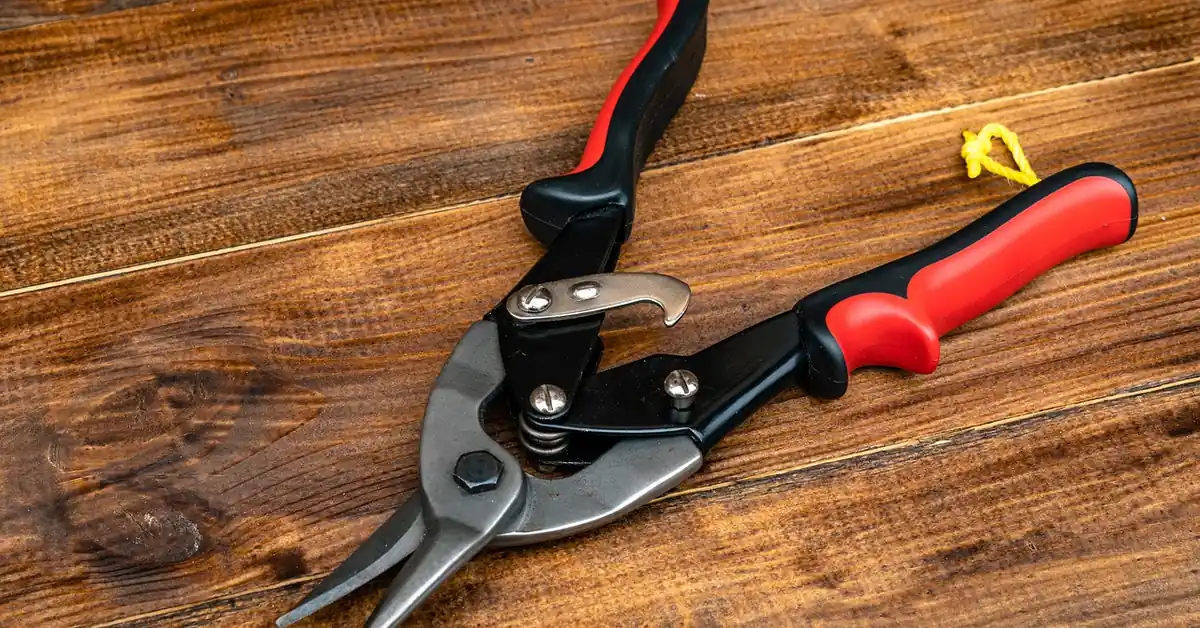
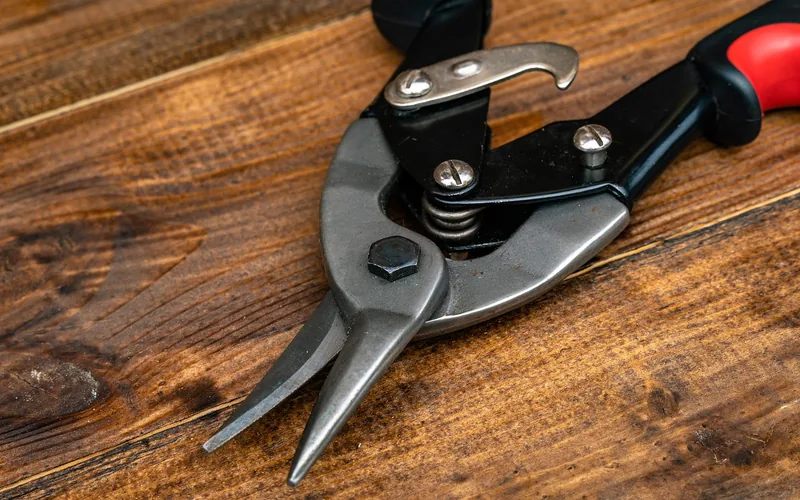
These three terms get used interchangeably, but they’re not the same tool. Tin snips are large scissor-style hand shears for straight cuts in soft, thin metal. Aviation snips are compound-leverage hand snips, color-coded green (right-cut), red (left-cut), and yellow (straight-cut), built for tighter curves in aircraft-grade sheet aluminum — hence the name. Power metal snips replace the hand-squeeze action with a motor, trading precision on tight curves for speed on long, straight, or gently curved runs.
| Tool Type | Best For | Typical Max Gauge |
|---|---|---|
| Aviation snips (manual) | Tight curves, detail cuts, HVAC fittings | ~20-gauge steel / 18-gauge aluminum |
| Tin snips (manual) | Long straight cuts in soft metal | ~22-gauge steel |
| Cordless power shears | Portable jobsite cutting, moderate runs | 14-gauge steel / 18-gauge stainless |
| Corded power shears | Heavy, continuous shop cutting | 18–22-gauge stainless |
In our shop we keep a pair of aviation snips hanging right next to the miter saw for trimming metal roof flashing and channel trim on outdoor builds — the offset handle keeps your knuckles clear of the freshly cut edge, which a straight scissor-style snip doesn’t do. For anything longer than a couple of feet, though, a powered shear saves real time.
Best Cordless Power Metal Snips Pick
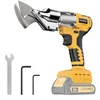 |
Cordless Metal Shear, DeWalt 20V Compatible – $59.99 A brushless bare-tool shear that runs on DeWalt 20V Max packs — useful if you already have batteries from a miter saw or drill and don’t want to buy a dedicated power source.
|
As an Amazon Associate we earn from qualifying purchases.
What Gauge Metal Can Power Metal Snips Cut?
Gauge capacity is the single most important spec on any power snip, and it’s material-specific — the same gauge number is a different actual thickness in steel, stainless, and aluminum. According to Xometry’s gauge reference, 18-gauge mild steel measures 0.0478 in., while 18-gauge stainless measures 0.0500 in. and 18-gauge aluminum only 0.0403 in. — a power shear rated for “18-gauge” steel may still struggle on 18-gauge stainless because the actual material is thicker and harder.
📊 Manufacturer’s Standard Gauge is not one scale. Carbon steel, galvanized steel, and stainless steel share the Manufacturer’s Standard Gauge, while aluminum uses the separate Brown & Sharpe system — a 14-gauge aluminum sheet is not the same thickness as 14-gauge steel. Source: Xometry, 2026
Pushing a snip past its rated gauge doesn’t just stall the tool — it flexes the blades out of alignment, which leaves every cut after that ragged even on material the snip is supposed to handle. If your project regularly runs above 18-gauge steel or 16-gauge stainless, a nibbler or plasma cutter is a better tool than any snip, powered or manual.
Best Uses for Power Metal Snips
Power metal snips earn their keep on any job with more than a few feet of sheet metal to cut. The most common applications:
- HVAC ductwork: trimming and fitting sheet-metal duct runs, elbows, and boots where a clean, straight cut matters for airflow and seam sealing.
- Metal fabrication: cutting brackets, panels, and enclosure components to size before bending or welding.
- Roofing and flashing: trimming step flashing, drip edge, and metal roof panels on site, where a cordless tool with no cord to manage is worth the tradeoff in raw power.
- Automotive body work: cutting patch panels and trim pieces from sheet metal for rust or collision repair, where thin-gauge steel is the norm.
None of these uses are woodworking per se, but they show up constantly in shop builds — metal roof panels on a garden shed, flashing on an outdoor bench, or a steel bracket welded into a jig. If your shop already leans on a saw rated to cut aluminum for larger stock, power snips fill the gap for anything too thin or curved for a blade.
How to Choose the Right Power Metal Snips
Two things decide whether a power snip will actually work for your project: the material and thickness you’re cutting, and how comfortable the tool is over a long session.
Match the Tool to Your Material
Check the manufacturer’s rated gauge for the specific material you’re cutting, not just a generic “cuts metal” claim. A shear rated for 18-gauge mild steel is not automatically safe on 18-gauge stainless, which runs harder and thicker at the same gauge number (see the table above). If you regularly switch between steel, stainless, and aluminum, buy for the hardest material you’ll cut most often.
Prioritize Ergonomics for Long Cuts
A cushioned grip and a spring-assisted or motorized return stroke both reduce hand fatigue, which matters more than raw power once you’re past a few minutes of continuous cutting. Cordless units add weight from the battery, so hold the tool in the store or check the listed weight before buying — a shear that’s a pleasure to use for 30 seconds can be exhausting after ten straight minutes of duct trimming.
Maintaining Power Metal Snips
Metal shavings and cutting oil residue are what kill a snip’s edge early, and the fix takes under a minute after each use.
- Wipe down after every use: a dry cloth removes metal shavings and debris before they work into the pivot.
- Lubricate the pivot point: a couple drops of light machine oil on the blade pivot and cutting edges after cleaning prevents rust and keeps the action smooth.
- Cycle the jaws a few times: open and close the snips after oiling to work the lubricant evenly across the blade surfaces.
- Store dry, off the cutting edge: hang on a pegboard hook or lay flat in a toolbox tray — don’t let the blade tips rest against other tools, which chips the edge.
For cordless models, remove the battery before long-term storage — a pack left in the tool for months can self-discharge deep enough to shorten its life.
Frequently Asked Questions About Power Metal Snips
What gauge metal can power metal snips cut?
Cordless power shears typically cut up to 14-gauge mild steel or 18-gauge stainless steel, while corded models reach 18–22-gauge depending on the brand and motor. Always check the manufacturer’s rating for the specific material, since steel, stainless, and aluminum gauges are not equivalent thicknesses.
Are power metal snips the same as aviation snips?
No. Aviation snips are manual, compound-leverage hand tools color-coded for cut direction, while power metal snips use a motor to drive the blade. Aviation snips handle tighter curves; power snips cut faster over long, straighter runs.
Can power metal snips cut stainless steel?
Yes, but at a lower gauge than mild steel. Most cordless power shears cut up to 18-gauge stainless, while corded models designed for heavier work can reach up to 22-gauge. Stainless is harder than mild steel at the same gauge, so it wears blades faster.
What’s the difference between tin snips and power metal snips?
Tin snips are large, scissor-style manual shears best for long, straight cuts in soft, thin metal like tin or light-gauge aluminum. Power metal snips replace the hand-squeeze cutting action with a motor, making them faster on longer cuts but less precise than manual aviation snips on tight curves.
Conclusion
Power metal snips save real time over manual shears on any job with more than a few feet of sheet metal to cut, but gauge capacity — not motor speed — is what determines whether a specific tool can actually handle your material. Match the snip’s rated gauge to the metal and thickness you cut most often, keep the blades clean and lubricated, and reach for manual aviation snips instead whenever the cut calls for a tight curve rather than a long straight run.
Sponsored / affiliate links. As an Amazon Associate I earn from qualifying purchases. I may earn additional commission from eligible campaigns.