Best chainsaw files 2026 chain cutters and depth gauges

Best Chainsaw Files: 8 Compared by File Size & Price (2026)

The Oregon Universal Chainsaw Field 7pc Sharpening Kit ($14.56) is the best chainsaw file kit for most owners — three round files, a flat file, a guide and a handle. But its three sizes cover only three of the seven round-file diameters Oregon, STIHL and Husqvarna specify across their chain ranges. Get the diameter wrong and you cut the wrong gullet profile, so start with the size chart, not the brand.

Below: eight files and kits compared on live prices, round-file diameters, kit contents and a derived cost per file — then the file-size chart built from the three manufacturers’ own published filing data, which turns out to disagree with itself in one important place.

Table of Contents show

Chainsaw Files Compared: Price, Sizes and Cost Per File

Chainsaw files sell in packs of one, two, three, six and twelve, in mixed and single diameters, with and without guides and gauges. Shelf price tells you almost nothing. This table normalises them: what each product actually contains, and what one round file works out at.

#ProductPriceRound filesDiameters included (mm)Flat fileDepth gauge toolCost per round fileVerdict
1Oregon Universal Field 7pc Kit (617067)$14.5634.0, 4.8, 5.5YesGuide doubles as setter$4.85Best all-round buy
2Hipa 12 Pack Sharpener Kit$15.9963.2, 4.0, 4.5, 4.8, 5.2, 5.5YesYes — .025″ and .030″$2.67Buy if you own mixed saws
3Oregon 25896 File Guide with File$11.4414.8NoNo$11.44Buy the guide, not the file
4PFERD Chain Sharp CS-X (17299)$36.1723.2Yes (depth gauge file)Yes — integral$18.09Best result, narrowest fit
5Husqvarna 544036940 2-Pack$11.9924.0NoNo$6.00OEM refill for small saws
6Nicholson 02229B 3-Pack$6.9934.8NoNo$2.33Best value if 4.8 mm is your size
7Oregon 70504 12-Pack$22.99124.0NoNo$1.92Cheapest steel, one size
8Oregon 27530 Depth Gauge Guide$19.620No (needs 12211)Yesn/aAdd-on, not a starting point

Prices are live Amazon buy-box prices pulled through the Amazon Creators API on 2 August 2026. Cost per round file is derived, not quoted: buy-box price ÷ number of round files in the pack. Example: Oregon 70504, $22.99 ÷ 12 = $1.92. Kits also contain guides, gauges and handles, so their per-file figure is inflated by design — compare kits to kits and bare files to bare files. File diameters and pack contents are taken from each manufacturer’s own product listing.

Two things fall out of the table immediately. The cheapest steel is the Oregon 70504 twelve-pack at $1.92 a file — a fifth of what the Oregon 25896 guide kit costs per file, because with the guide kit you are buying the frame rather than the file. And only one product here, the Hipa twelve-piece kit, carries the 4.5 mm and 5.2 mm files that Oregon and STIHL respectively specify for chain that a three-file kit silently misses.

Chainsaw guide bar and chain showing pitch marking
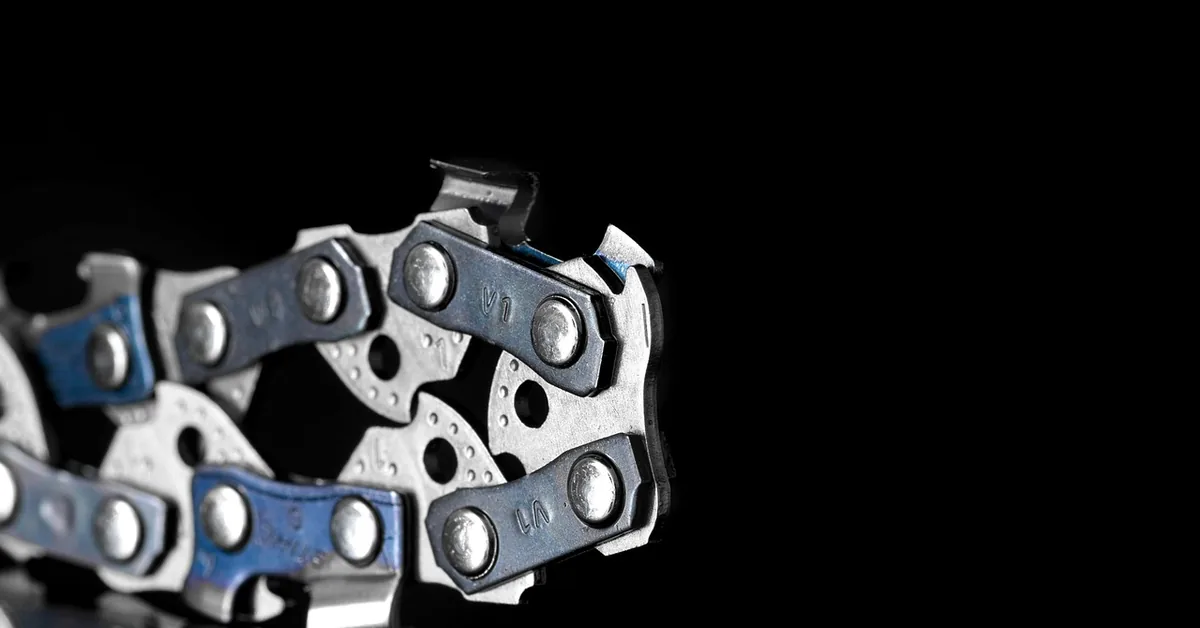
The chain, not the saw or the bar length, decides which round file diameter you need

Need to understand more about Chainsaw? This post might help you. Poulan Chainsaw Fuel Ratio: The Proven, Best Mix

Chainsaw File Size Chart: What Diameter Your Chain Actually Needs

Almost every file-size chart online publishes one number per pitch. That is wrong, and it is wrong in a way that costs people chains. The correct round-file diameter is set by the chain — its pitch and its cutter family — and the three biggest chain makers do not always specify the same file for the same nominal pitch. The chart below is built from each company’s own published filing data rather than from a consensus of other articles.

Chain pitchOregonSTIHLHusqvarnaWhat to buy
1/4″5/32″ / 4.0 mm (25AP)4.0 mm for 1/4″; 3.2 mm for 1/4″ P4.0 mm (SP21G, H00, H37); 3.5 mm for 1/4″ mini SP11G5/32″ — unless it is a Picco or mini 1/4″ chain
3/8″ low profile (Picco, “mini”)5/32″ / 4.0 mm for 91P, 91PX, 91PXL, 91VXL. 4.5 mm for 90PX and 90SG4.0 mm (5/32″)4.0 mm (S93G)5/32″ — but check for Oregon 90-series chain, which wants 4.5 mm
.325″ low profile5/32″ / 4.0 mm (80TXL)Not published4.0 mm (.325″ mini SP21G)5/32″
.325″3/16″ / 4.8 mm (95VPX, 95TXL, 20/21/22 series)4.8 mm (3/16″)4.8 mm (SP33G, S35G, H25, H30)3/16″ — all three brands agree
3/8″ (full size)7/32″ / 5.5 mm (72, 73, 75 series incl. LGX, LPX, DPX)5.2 mm (13/64″)5.5 mm (S83G, H42, H47)7/32″ for Oregon and Husqvarna chain, 13/64″ for STIHL Rapid
.404″7/32″ / 5.5 mm (27X, 27AX, 27R)5.5 mm (7/32″)5.5 mm (H64, H80)7/32″ — all three brands agree

Sources, all fetched 2 August 2026: Oregon column from Oregon Products’ own Filing and Grinding Angles chart (2020-FilingGrindingAngles.pdf, oregonproducts.com); STIHL column from the technical data for the STIHL 2-in-1 EasyFile range on stihl.co.uk, cross-checked against STIHL part numbers 5605 750 4303 / 4304 / 4305 / 4306 and 0000 750 4300; Husqvarna column from Husqvarna’s own US support article “How to choose the correct file size for a chainsaw chain?” (KA-01611). “Not published” means the manufacturer does not list a figure for that pitch — it is not a guess.

The 3/8-inch disagreement, and why it matters

Read across the full 3/8″ row. Oregon’s filing chart specifies 7/32″ (5.5 mm) for its 72, 73 and 75 series chain. Husqvarna specifies 5.5 mm for its 3/8″ chain too. STIHL specifies 5.2 mm (13/64″) for 3/8″ Rapid — that is what the 2-in-1 EasyFile for 3/8″ ships with. Same nominal pitch, two different files, and both manufacturers are right about their own chain.

This is why the two most-repeated pieces of advice in this category contradict each other and both have defenders. If you run Oregon or Husqvarna chain, 7/32″ is correct. If you run STIHL Rapid, 13/64″ is correct. If you have replaced a STIHL chain with an aftermarket Oregon loop — extremely common — the file that came with your saw is no longer the right one. Our separate breakdown of STIHL file sizes by saw model goes through the STIHL side in detail.

Hungry for more knowledge on Chainsaw? You’ll find this link insightful. Battery vs Gas Chainsaw: The Proven Best Choice

The low-profile trap

The second place charts go wrong is 3/8″ low profile, sold as Picco by STIHL and as the 90 and 91 series by Oregon. Everyone publishes 5/32″ for it, and for Oregon’s 91P, 91PX, 91PXL and 91VXL chain that is right. But Oregon’s own chart specifies 4.5 mm for 90PX and 90SG — the low-profile chain fitted to a large share of small gas and battery saws. A three-file kit does not contain 4.5 mm. Neither does any of the bare-file packs in this comparison. If your chain is stamped 90, check before you buy.

Pitch itself is worth understanding before you order anything, because it is the number the whole chart keys on. We cover the practical differences in how .325 and 3/8 chain actually differ, including how to read the stamp on the drive link.

Depth Gauge (Raker) Settings, and Which Kits Include the Tool

The round file is only half the job. In front of every cutter is a depth gauge — the raker — a small ramp that limits how deep the tooth can bite. Every time you sharpen, the cutter gets shorter and its top plate drops; the raker does not move. After several sharpenings the chain is riding on its rakers and will not pull into the wood, which almost everyone misreads as a worn-out chain.

Oregon chain familyPitchRound fileDepth gauge setting
25AP1/4″5/32″.025″
90PX, 90SG3/8″ low profile4.5 mm.025″
91P, 91PX, 91PXL, 91VXL3/8″ low profile5/32″.025″
95VPX, 95TXL, 20/21/22 BPX & LPX.325″3/16″.025″
72, 73, 75 (LGX, LPX, DPX, EXL)3/8″7/32″.025″
27X, 27AX, 27R, 27RX.404″7/32″.030″
68LX, 68JX3/8″ harvester7/32″.030″

Depth gauge settings and file sizes from Oregon Products’ own Filing and Grinding Angles chart, fetched 2 August 2026. Note that Oregon specifies a different grinding wheel width from the file diameter — its 511A and mini-grinder charts pair a 1/8″ wheel with a 5/32″ or 4.5 mm file, and a 3/16″ wheel with a 3/16″ or 7/32″ file. Wheel size and file size are not the same number.

Note the .030″ rows. Oregon specifies a deeper setting for .404″ chain and for 68LX and 68JX, and a depth gauge tool cut only for .025″ will leave those chains under-set. This is the specific reason the Hipa kit’s two-setting gauge is worth more than its price suggests, and the specific reason the Oregon 27530 gauge states it is not for .404″ chain.

If your chain no longer cuts even after a careful sharpening, the rakers are the first thing to check and chain wear is the second — see the signs a chain is past saving.

Chainsaw laid out for chain sharpening with a round file
Filing lightly and often removes less metal than waiting for the chain to go blunt

Curious about Chainsaw? We've got more info in this linked article. How to Oil a Chainsaw Bar

Best Chainsaw Files and File Kits

Eight products, each with the job it is actually best at. Prices are live Amazon buy-box prices checked on 2 August 2026 and will move.

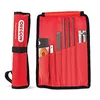
1. Oregon Universal Chainsaw Field 7pc Sharpening Kit (617067) — #1 Best Overall

Oregon Universal Chainsaw Field 7pc Sharpening Kit 617067
#1 Best Overall
$14.56 — Amazon buy-box price, checked 2 August 2026
Round files3 — 5/32″ (4.0 mm), 3/16″ (4.8 mm), 7/32″ (5.5 mm)
Also includes6″ flat file, filing guide, universal handle, rolled pouch
Cost per round file$4.85 (derived)
WarrantyLimited lifetime (Oregon listing)
Check Price on Amazon

Pros

  • Covers the three file sizes that fit the overwhelming majority of consumer chain
  • Filing guide sets the depth gauge as well as holding the file angle
  • Instruction sheet with a filing chart lives in the handle pocket
  • Cheapest complete kit here from a chain manufacturer that publishes its own filing specs

Cons

  • No 4.5 mm file, so it does not cover Oregon’s own 90PX and 90SG low-profile chain
  • No 13/64″ file, so it does not cover STIHL 3/8″ Rapid chain
  • One handle for four files means swapping every time you change size

Oregon makes saw chain, publishes the filing chart for it, and sells this kit for less than most single branded files cost. That combination is why it is the default recommendation and why it appears on nearly every competing roundup. The three round files — 5/32″, 3/16″ and 7/32″ — between them cover 1/4″, most 3/8″ low-profile, .325″, full 3/8″ and .404″ chain. For a homeowner with one or two saws that is the whole problem solved.

The filing guide is the part people underrate. It is a flat plate that sits across two rivets with the file passing through it, so it fixes both the depth the file cuts to and the angle across the top plate. Oregon’s instruction sheet also uses it to check depth gauge height. A file on its own gives you neither.

Main drawback: the three sizes are not the whole story. Oregon’s own filing chart specifies a 4.5 mm file for its 90PX and 90SG chain — the low-profile chain fitted to a large share of small gas and battery saws — and that file is not in this kit. If your chain is stamped 90, this kit will not sharpen it correctly.

Expand your knowledge about Chainsaw with this article. How to Oil Your Chainsaw Chain the Right Way

2. Hipa 12 Pack Chainsaw File & Sharpener Kit — Best Chainsaw File Kit for Mixed Chain Sizes

Hipa 12 Pack Chainsaw File and Sharpener Kit with six round files
Best Chainsaw File Kit for Mixed Chain Sizes
$15.99 — Amazon buy-box price, checked 2 August 2026
Round files6 — 1/8″ (3.2 mm), 5/32″ (4.0 mm), 11/64″ (4.5 mm), 3/16″ (4.8 mm), 13/64″ (5.2 mm), 7/32″ (5.5 mm)
Also includes6″ flat file, 2-in-1 depth gauge (.025″ and .030″), quick-check gauge, wooden handle, bar groove cleaner, pouch
Cost per round file$2.67 (derived)
Sizes markedDiameter stamped on each file
Check Price on Amazon

Pros

  • The only product here that covers six of the seven round-file diameters the three major chain brands specify
  • Includes the 11/64″ (4.5 mm) file Oregon specifies for 90PX and 90SG chain
  • Includes the 13/64″ (5.2 mm) file STIHL specifies for 3/8″ Rapid chain
  • Depth gauge tool is cut for both .025″ and .030″ settings, which covers .404″ chain too

Cons

  • No published hardness or cut specification, unlike Oregon, PFERD and Husqvarna
  • Six round files is more than any single saw needs — you pay for sizes you will not use
  • The flat plate guide is simpler than Oregon’s and gives less angle feedback

This kit answers the problem the Oregon kit leaves open. Working from the published filing charts, Oregon, STIHL and Husqvarna between them specify seven different round-file diameters across their chain ranges. This kit contains six of them; the Oregon 7pc kit contains three. If you own several saws of different ages and brands — the usual situation for anyone who has bought a used saw — that difference is the whole decision.

The 2-in-1 depth gauge deserves a specific mention because it is cut for .025″ and .030″. Oregon’s filing chart calls for .030″ on .404″ chain and on 68LX/68JX, and .025″ on everything else in its consumer range. A gauge that only does .025″ quietly leaves .404″ chain under-set.

Main drawback: nothing about the steel is published. Oregon states a double-cut design and a centreless grind, PFERD states a spiral cut and country of manufacture, Husqvarna states single cut. Hipa states none of that, so file life is the one axis where this kit cannot be compared on paper and where the branded files may well be worth their premium.

Find out more about Chainsaw by exploring this related topic. How to Cut Wood With a Chainsaw Safely

3. Oregon 25896 3/16″ Chainsaw File Guide with File — Best Chainsaw File Guide Kit

Oregon 25896 3/16 inch chainsaw file guide with file
Best Chainsaw File Guide Kit
$11.44 — Amazon buy-box price, checked 2 August 2026
Round files1 — 3/16″ (4.8 mm)
FitsChain that takes a 3/16″ file: .325″ pitch
Also includesClamp-on guide frame with angle lines
Cost per round file$11.44 (derived)
Check Price on Amazon

Pros

  • Guide grips the file and holds it at a fixed depth so the cutter profile stays right
  • Angle lines on the frame give you a reference to line up with the bar
  • Small enough to live in a saw case
  • Removes the single biggest source of freehand error — letting the file drop as you tire

Cons

  • 3/16″ only — useless on 3/8″ low-profile or full 3/8″ chain
  • Most expensive per file in this comparison
  • No depth gauge tool, so rakers still need a separate flat file and gauge

This is the answer to the file-guide question that shows up constantly in search: yes, a guide is worth it, and no, it does not have to cost much. The guide is a frame that holds the file at a fixed height relative to the cutter’s top plate, which is the geometry that actually matters. Roughly a tenth of the file’s diameter should sit above the top plate; a guide enforces that, and a bare file in your hand does not.

The catch is that it ships as one size. At $11.44 for a single 3/16″ file plus the guide, the cost per file is the worst in this group by a wide margin — you are buying the frame, not the steel. That is fine if 3/16″ is your size, and poor value if it is not.

Main drawback: it only fits chain that takes a 3/16″ file, which in practice means .325″ pitch. Buy it only after you have confirmed your chain against the size chart above, not before.

4. PFERD Chain Sharp CS-X (17299) — Best 2-in-1 File and Depth Gauge Tool

PFERD Chain Sharp CS-X chainsaw file and depth gauge tool
Best 2-in-1 File and Depth Gauge Tool
$36.17 — Amazon buy-box price, checked 2 August 2026
Round files2 — 1/8″ (3.2 mm), Classic Line
Also includesDepth gauge file, ergonomic two-handed holder
FunctionSharpens the cutter and lowers the depth gauge in the same stroke
Cost per round file$18.09 (derived)
Check Price on Amazon

Pros

  • Cutter and depth gauge are filed together, so the two can never drift out of relationship
  • Reversible — turn the tool over for the other side of the chain, no adjustment
  • The most repeatable result here for someone who has never filed a chain
  • PFERD publishes cut type and country of manufacture, which most sellers do not

Cons

  • This ASIN is the 1/8″ (3.2 mm) version, which fits 1/4″ pitch chain only
  • Most expensive tool in this comparison by a factor of two
  • You need a different CS-X for every chain pitch you own

The single most common filing mistake is sharpening the cutters repeatedly and never touching the depth gauges. Each pass shortens the cutter, which lowers its top plate; the depth gauge in front of it does not move. After a few sharpenings the gauge is standing proud and the chain rides on the rakers and stops cutting, which reads to most people as a worn-out chain. A 2-in-1 tool removes that failure mode entirely because it files both at once.

PFERD’s CS-X does this with a round file and a depth gauge file mounted in one holder, and it is reversible for the other side of the chain. STIHL sells the same concept as the 2-in-1 EasyFile, and the two brands prove the design is not a gimmick.

Main drawback: pitch-specific pricing. This listing is the 1/8″ version, which is 1/4″ pitch chain — a narrow slice of the market. Check the file diameter of the variant you are buying against the size chart above before you order, because a CS-X for the wrong pitch is $36 wasted.

5. Husqvarna 544036940 Files, 5/32″ (4.0 mm), 2-Pack — Best Chainsaw Files for Small Bars and Battery Saws

Husqvarna 544036940 5/32 inch chainsaw files 2 pack
Best Chainsaw Files for Small Bars and Battery Saws
$11.99 — Amazon buy-box price, checked 2 August 2026
Round files2 — 5/32″ (4.0 mm)
CutSingle cut, for precision filing
Fits3/8″ low-profile or “mini” chain (Husqvarna listing)
Cost per round file$6.00 (derived)
Check Price on Amazon

Pros

  • Exactly the size the short-bar saws people search about actually take
  • Single-cut steel leaves a smoother finish on the cutter than a coarse double cut
  • OEM part number, so it matches what the Husqvarna manual specifies
  • Two files is a realistic quantity for a homeowner — no bulk pack sitting in a drawer

Cons

  • No handle, guide or depth gauge — files only
  • Double the cost per file of a generic 3-pack
  • One size only, so useless if you also own a .325″ or full 3/8″ saw

The Bing queries that reach this page include people searching for files for a 7-inch bar, and that question has a clean answer: a bar that short is running 3/8″ low-profile or 1/4″ chain, and both take a 4.0 mm (5/32″) file in the Husqvarna and STIHL schemes. Husqvarna’s own listing for this file states it plainly — 5/32″ for 3/8″ low-profile or mini chain.

Buying the chain manufacturer’s own file is not superstition. Husqvarna specifies single cut here, which removes metal more slowly and leaves a cleaner cutting edge than an aggressive knurl cut. On small low-profile cutters, where there is not much tooth to give away, that is a reasonable trade.

Main drawback: it is two bare files at $6.00 each. There is no handle, so you are filing with an unguarded tang unless you already own one, and no gauge, so the depth gauges are still your problem. Treat this as a refill, not a starter purchase.

6. Nicholson 02229B 8″ × 3/16″ Round Chainsaw Files, 3-Pack — Best Value

Nicholson 02229B 3/16 inch round chainsaw files 3 pack
Best Value
$6.99 — Amazon buy-box price, checked 2 August 2026
Round files3 — 3/16″ (4.8 mm), 8″ long
CutKnurl cut — two opposed diagonal rows of teeth
FitsChain that takes a 3/16″ file: .325″ pitch
Cost per round file$2.33 (derived)
Check Price on Amazon

Pros

  • Under $2.50 a file from a file maker with a century of catalogue history
  • 8″ length gives a longer stroke and more usable file surface than a 6″
  • Knurl cut removes metal quickly on a chain that has hit dirt
  • Sealed pack, so the teeth are not blunted in transit

Cons

  • 3/16″ only
  • Knurl cut is more aggressive than single cut, so it is easier to overshoot on a light touch-up
  • No handle, guide or gauge

Files are a consumable. They dull, and the honest way to compare them is by what one file costs, not what the pack costs — which is why the pack sizes in this category (1, 2, 3, 6 and 12) make shelf prices almost meaningless without normalising. At $2.33 a file this is the best value in the comparison for anyone who has already sorted out a handle and a guide.

Knurl cut means two sets of diagonal teeth crossing each other, which cuts faster and clogs less than a fine single cut. On a chain that has been in dirty wood that is what you want. On a chain you are touching up every tank of fuel, a single-cut file gives you more control.

Main drawback: like every bare file here it is one diameter, and 3/16″ is the .325″ size. Confirm your pitch first. The identical file is also sold singly at about $1.99, which is worth knowing if you only need one.

7. Oregon 70504 Round Files, 5/32″ (4.0 mm), 12-Pack — Best Bulk Pack for Frequent Sharpening

Oregon 70504 5/32 inch chainsaw round files 12 pack
Best Bulk Pack for Frequent Sharpening
$22.99 — Amazon buy-box price, checked 2 August 2026
Round files12 — 5/32″ (4.0 mm), 8″ long
CutDouble cut, precision centreless grind
Fits1/4″ and 3/8″ low-profile chain (Oregon)
Cost per round file$1.92 (derived)
Check Price on Amazon

Pros

  • Lowest cost per file in this comparison at $1.92
  • Oregon publishes the manufacturing detail — centreless grind, uniform diameter and tooth height, demagnetised finish
  • Fits both the standard file guide and Oregon’s bar-mounted Sure Sharp guide
  • Twelve files is roughly a season for someone cutting firewood seriously

Cons

  • Twelve files of one diameter is far too many for one saw
  • 5/32″ only
  • No handle, guide or depth gauge

This is the pack to buy once you know your size and you sharpen often. $22.99 divided by twelve files is $1.92 each, which is less than half what the Husqvarna 2-pack costs per file and comfortably the cheapest steel here. The arithmetic is the entire argument.

It is also the one bare file in this group where the manufacturing is documented. Oregon states a precision centreless grind, uniform file diameter and tooth height, uniform tang length with no burrs, and a demagnetised finish. Uniform diameter matters more than it sounds: if the file is even slightly out of round, the gullet it cuts changes shape as you rotate it.

Main drawback: it is a commitment to one size, and 5/32″ is the 3/8″ low-profile and 1/4″ size — not the .325″ or full 3/8″ size. If you buy this for a saw running full 3/8″ chain you will have twelve files that do not fit.

8. Oregon 27530 Chain Sharpening Depth Gauge Setting Guide — Best Depth Gauge (Raker) Tool

Oregon 27530 chain sharpening depth gauge setting guide
Best Depth Gauge (Raker) Tool
$19.62 — Amazon buy-box price, checked 2 August 2026
Round filesNone — this is a gauge, not a file
MaterialHardened steel
Fits1/4″, 3/8″ low-profile, .325″ and 3/8″ Pro chain. Not .404″
NeedsOregon 12211 flat file, sold separately
Check Price on Amazon

Pros

  • Hardened steel stays put while you file, so the gauge height is set by the tool and not by eye
  • Oregon publishes exactly which chain pitches it covers, which almost no gauge seller does
  • Fixes the failure mode that makes people replace chain that is still good
  • Works with any flat file, not only Oregon’s

Cons

  • Flat file is not included — Oregon’s own listing points you at the separate 12211
  • Explicitly not rated for .404″ chain
  • $19.62 for a piece of stamped steel is a lot next to a $16 kit that includes a gauge

Every kit in this comparison either includes a depth gauge tool or does not, and that single line is the biggest real completeness difference between products at the same price. This is the standalone answer for anyone whose kit skipped it, or whose gauge does not cover their chain.

The tool lays across the chain so only the depth gauge protrudes through the slot; you file the protruding metal flush with a flat file and the height is set. Oregon’s filing chart calls for .025″ across its consumer range and .030″ on .404″ chain and on 68LX and 68JX. Note the mismatch: this gauge is explicitly not for .404″, which is exactly the chain that needs the .030″ setting.

Main drawback: price and incompleteness together. At $19.62 without a flat file it costs more than the Hipa kit that includes a two-setting gauge, a flat file and six round files. Buy it if you already own Oregon files and want the matching gauge; otherwise the kit is better value.

How We Picked These Chainsaw Files

No one at this site has bench-tested these eight products against each other, and nothing below is presented as a hands-on result. This is a specification and availability comparison, and here is exactly what it is built from so you can check any part of it.

  • Live pricing and availability. Every price and every ASIN was pulled through the Amazon Creators API on 2 August 2026. Two products that appeared in the previous version of this article — the Oregon 584043 4.5 mm 2-pack and a 13-piece generic kit — returned no buy-box price and were dropped rather than left in place as dead links.
  • Manufacturer filing data. The size chart comes from Oregon Products’ own Filing and Grinding Angles chart, from the technical data published for STIHL’s 2-in-1 EasyFile range and its part numbers, and from Husqvarna’s own US support article on choosing file size. Where a manufacturer publishes nothing for a given pitch, the table says “not published” rather than filling the gap with a guess.
  • Kit contents and specifications come from each manufacturer’s own product listing — file diameters, cut type, pack quantity, what is and is not in the box.
  • Cost per round file is derived arithmetic, not a quoted figure: buy-box price divided by the number of round files in the pack. The inputs are in the table so you can redo it.
  • What is not here: no file-life measurement, no strokes-to-dull figure, no hardness comparison. None of the manufacturers publish those numbers, so nobody — including us — can honestly rank the eight on how long the steel lasts.

What to Consider When Buying Chainsaw Files

Round File Diameter

This is the only spec you cannot get wrong. The file cuts the gullet and the curved face of the cutting tooth, so its diameter sets the profile of the edge. Too small and you cut an aggressive hook that grabs and dulls fast; too large and you never reach the base of the gullet and the tooth develops a back slope that will not bite. Work from the chart above, and if you can only remember one rule, remember that roughly a tenth of the file’s diameter should stand above the cutter’s top plate when it is sitting correctly.

Round Files, Flat Files and Depth Gauge Tools

Three separate jobs. The round file sharpens the tooth. The flat file lowers the depth gauge. The depth gauge tool tells the flat file when to stop. A kit missing the third item is not a complete kit, and at these prices it is the clearest way to separate products that otherwise look identical — which is why it has its own column in the comparison table.

Single Cut, Double Cut and Knurl Cut

Single cut has one set of parallel teeth and removes metal slowly with a clean finish — Husqvarna specifies it for its own files. Double cut adds a second opposed set and cuts faster; Oregon specifies double cut with fewer teeth per inch than competing files. Knurl cut, which Nicholson uses, is two opposed diagonal rows and is the most aggressive of the three. For routine touch-ups, single cut. For a chain that has been in dirt, double or knurl.

File Guides, Roller Guides and 2-in-1 Holders

A flat guide plate sets file height and gives you angle lines to follow. A roller guide adds a rolling reference along the chain. A 2-in-1 holder such as the PFERD CS-X or the STIHL EasyFile files the cutter and the depth gauge in the same stroke, which removes the most common filing mistake entirely. Each step up costs more and fits fewer chains, so the more pitches you own the less attractive the 2-in-1 becomes.

Pack Size and Cost Per File

Files are consumables and pack sizes are wildly inconsistent, so the shelf price is close to meaningless. The spread in this comparison runs from $1.92 to $18.09 a file. If you sharpen a couple of times a season, a 2 or 3-pack is right and the per-file premium is irrelevant. If you cut firewood every weekend, the twelve-pack of your one size is the obvious buy.

Handles and Ergonomics

A bare file has a pointed tang. Filing without a handle is how people put a tang through a thumb web, and it also costs accuracy because you cannot control rotation properly. Most kits include a universal wooden or plastic handle that takes every file in the set; the bare-file packs here do not include one at all, so budget for it if you do not already own one.

Brand: When It Matters and When It Does Not

For the size chart, brand matters enormously — Oregon, STIHL and Husqvarna genuinely specify different files. For the steel itself, brand mostly buys you a published specification. Oregon, PFERD and Husqvarna state cut type and manufacturing detail; generic multi-packs state nothing. That is a real difference, but it is a difference in disclosure, not a measured difference in performance, and it is worth roughly a dollar a file rather than five.

File vs Powered Sharpener: When the $12 File Wins

A round file wins on cost, on metal removed per sharpening, on portability and on the ability to touch up a chain in the middle of a job. A powered sharpener wins on speed across many chains and on consistency when a chain has been damaged badly enough that hand filing would take a long time. The crossover is roughly the point where you are maintaining more chains than you can comfortably file. If you are curious about the powered route, we cover bench and professional sharpeners separately, and sharpening with a rotary tool sits in between the two.

Round Filing vs Square Filing

Everything above assumes round-ground chain, which is what almost every consumer chain is. Square-ground chisel chain is sharpened with a square file at completely different angles — Oregon’s chart lists 45° top plate and 45° down angle for its CJ, CK and CL chain rather than the usual 25–30°. If you have that chain, see square filing technique; none of the round files here apply.

How to Sharpen a Chainsaw Chain With a File

  1. Set the chain and the saw. Engage the chain brake and clamp the bar in a vice, or wedge the saw so it cannot move. A saw that shifts mid-stroke is how angles drift.
  2. Confirm your file diameter. Read the pitch from the drive link stamp or the chain box and match it against the size chart above. This is the step people skip.
  3. Find the shortest cutter and start there. Every other cutter gets filed back to match it, which is what keeps the chain cutting straight instead of curving.
  4. Seat the file in the gullet. About a tenth of the file diameter should sit above the top plate. If you are using a guide, the guide sets this for you.
  5. File on the push stroke only, away from you, at the angle marked on your guide — 30° on most chain, 25° on some Oregon LPX and LGX families. Lift the file on the return; dragging it back blunts it.
  6. Give every cutter the same number of strokes. Three or four is normal for a touch-up. Then turn the saw around and do the other side, keeping the count identical.
  7. Check the depth gauges. Lay the depth gauge tool across the chain, file any raker protruding through the slot flush with a flat file, and round off the front edge. Use .025″ or .030″ per the table above.
  8. Reset the tension and test. Sharpening does not change tension but handling the chain often does — see how tight a chainsaw chain should be. A correctly sharpened chain throws square chips, not dust.

Frequently Asked Questions About Chainsaw Files

What size chainsaw file do I need?

It is set by your chain, not your saw, and not your bar length. Find the pitch stamped on the drive links or printed on the chain box, then read it off the chart above: 1/4″ and 3/8″ low-profile chain take a 5/32″ (4.0 mm) file, .325″ takes 3/16″ (4.8 mm), full 3/8″ takes 7/32″ (5.5 mm) on Oregon and Husqvarna chain but 13/64″ (5.2 mm) on STIHL Rapid, and .404″ takes 7/32″ (5.5 mm). Two exceptions are worth memorising: Oregon 90PX and 90SG low-profile chain takes 4.5 mm, and Husqvarna’s 1/4″ mini SP11G takes 3.5 mm.

What size file do I need for a 7-inch or other short chainsaw bar?

A bar that short is almost always running 3/8″ low-profile or 1/4″ chain, and both take a 4.0 mm (5/32″) round file in the STIHL and Husqvarna schemes. Husqvarna’s own listing for its 544036940 file states 5/32″ for 3/8″ low-profile or mini chain. Confirm it against the drive-link stamp before ordering, because bar length only correlates with pitch — it does not determine it.

What is the best chainsaw file brand?

For files where the manufacturing is documented, Oregon, PFERD and Husqvarna are the three that publish something checkable: Oregon states a double-cut design with a precision centreless grind and demagnetised finish, PFERD states spiral cut and German manufacture, Husqvarna states single cut. Generic multi-packs do not publish any of that, which is the real difference — not a claim about hardness, but whether there is a claim at all. On price per file, though, the generic and Nicholson packs win outright.

Do I need a file guide, or can I file freehand?

A guide holds the file at a fixed height and angle relative to the cutter, which is what keeps the gullet profile correct. The rule it enforces is that roughly a tenth of the file’s diameter should sit above the cutter’s top plate. Freehand filing is entirely possible and plenty of people do it well, but the failure mode — the file gradually dropping as your hand tires, which cuts a deeper hook every pass — is exactly what a guide prevents. At $11.44 for the Oregon 25896 it is cheap insurance.

What is the difference between a round file and a flat file on a chainsaw?

The round file sharpens the cutting tooth; the flat file lowers the depth gauge, also called the raker, which is the small ramp in front of each cutter that limits how deep the tooth can bite. They are not interchangeable and you need both. Every time you shorten the cutters with the round file, the depth gauges become relatively higher, so they have to be filed down periodically to keep the chain cutting. Oregon specifies .025″ for most of its chain and .030″ for .404″.

How many times can you sharpen a chainsaw chain with a file?

There is no fixed number, because it depends on how much steel you remove each time and what the chain hits. The limit is physical rather than numerical: chain is finished when the cutters have been filed back to the wear mark moulded into the top plate, or when the cutters are so short that they no longer hold an edge. Filing lightly and often removes far less metal than waiting until the chain is blunt, so a light touch-up every tank of fuel gets more sharpenings out of the same chain.

Is a chainsaw file better than an electric sharpener?

For most owners, yes, and the arithmetic is not close. A $12 file kit sharpens in the field with no power, removes very little metal, and takes a few minutes per chain. A powered sharpener is faster per chain and more consistent across many chains, which matters if you are running several saws commercially, but it removes more metal per pass, generates heat that can soften the cutter if you push, and cannot help you halfway up a hill. Buy the file first; add a powered sharpener only when the number of chains you maintain makes the time saving real.

Final Thoughts

For most people the Oregon Universal Chainsaw Field 7pc Sharpening Kit at $14.56 is the right buy: three files, a flat file, a guide, a handle and a pouch from the company that publishes the filing chart everyone else copies. If you own saws from more than one brand or more than one era, the Hipa 12-piece kit at $15.99 is the better choice for one specific reason: it is the only product here that carries the 4.5 mm and 13/64″ files the three-file kits leave out.

The number to leave with is seven. That is how many different round-file diameters Oregon, STIHL and Husqvarna specify between them, against the three that the standard kit contains. Check your chain against the chart before you check the price — and for everything else that keeps a saw cutting, our chainsaw maintenance guides cover tension, bar oil and chain replacement.

Similar Posts