Pros and Cons of Cedar Trees You Should Know
Figuring out the good and bad points about cedar trees can sometimes feel a bit tricky when you’re just starting out. You might wonder if they’re the right fit for your yard or if they’ll cause more trouble than they’re worth. It’s totally normal to feel that way!
But don’t worry, we’re going to break it all down for you step-by-step, making it super easy to grasp. Get ready to learn all about the Pros and Cons of Cedar Trees You Should Know.
Understanding Cedar Trees and Their Appeal
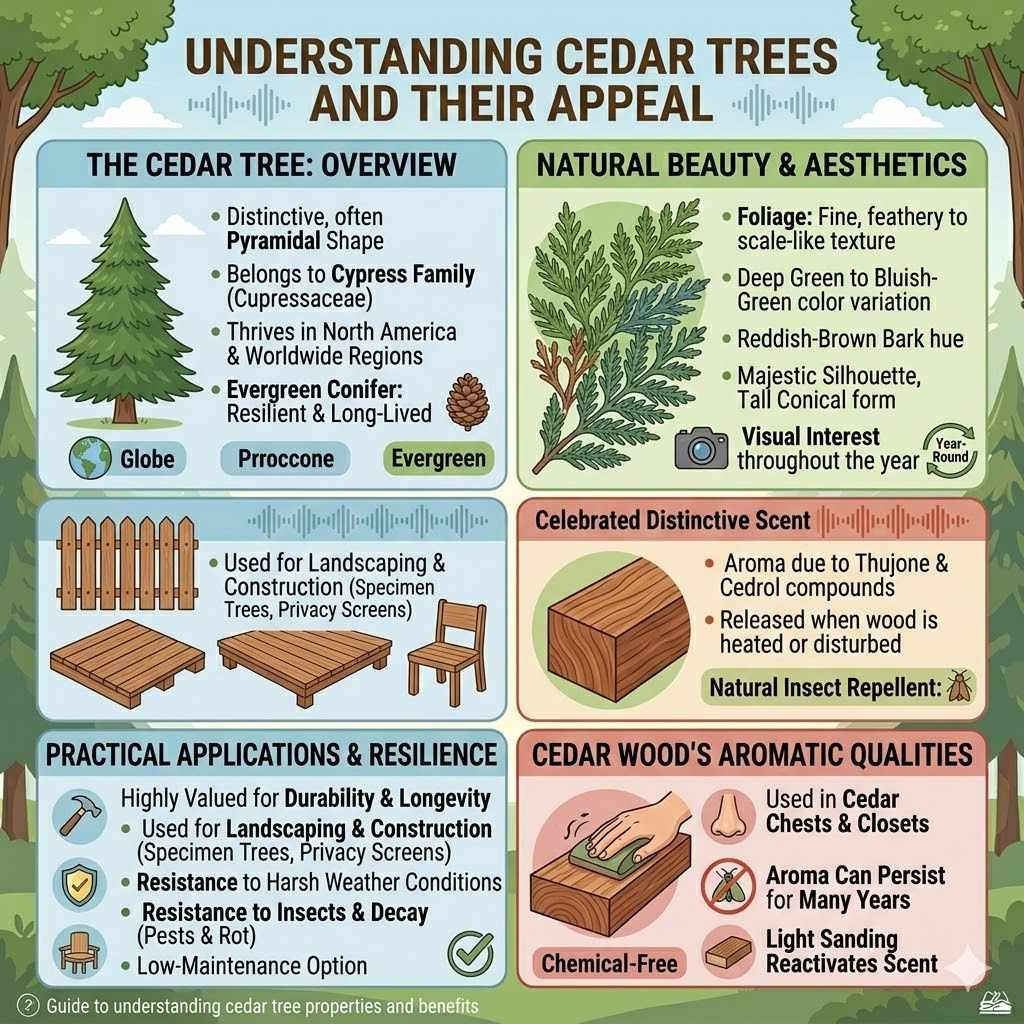
Cedar trees are admired for their distinctive aromatic wood and attractive, often pyramidal shapes. They belong to the cypress family (Cupressaceae) and are found in various regions worldwide, with many popular varieties thriving in North America.
These evergreen conifers are known for their resilience and longevity, making them a favored choice for landscaping and construction. Their natural oils provide a pleasant scent and also contribute to their resistance against insects and decay, which is a significant benefit for many applications.
Many people are drawn to cedar trees for their aesthetic qualities. Their foliage can range from deep green to bluish-green, and their bark often has a reddish-brown hue. This visual appeal makes them excellent specimen trees or natural privacy screens.
The wood itself is highly valued for its durability and natural beauty, often used in fencing, decking, and outdoor furniture. The characteristic scent is another major draw, often associated with freshness and natural spaces.
The popularity of cedar trees stems from a combination of practical and aesthetic factors. Their ability to withstand harsh weather conditions and their resistance to pests and rot make them a low-maintenance option for many homeowners. Furthermore, the distinctive fragrance they emit adds a sensory dimension to any landscape.
The Natural Beauty of Cedar
Cedar trees offer a unique aesthetic that enhances any outdoor space. Their evergreen nature means they provide color and form throughout the year, a valuable trait in landscapes. The texture of their foliage can vary, from fine and feathery to scale-like, adding visual interest.
The silhouette of a cedar tree is often majestic, with many varieties growing into tall, conical shapes. This makes them perfect for creating vertical accents in a garden or for screening less attractive views. Their scent is also a significant part of their appeal, a natural aroma that many find calming and pleasant.
The wood from cedar trees is also highly prized for its visual qualities. Its natural grain patterns and reddish-brown or light yellow tones make it a beautiful material for various outdoor projects. This combination of visual and olfactory appeal makes cedar trees a highly sought-after addition to many environments.
Cedar Wood’s Aromatic Qualities
The distinctive scent of cedar wood is one of its most celebrated features. This aroma is due to the presence of volatile organic compounds, primarily thujone and cedrol, which are released when the wood is heated or disturbed. These compounds not only create a pleasant fragrance but also act as natural repellents for many insects.
This natural insect repellent property makes cedar wood an excellent choice for storing clothing or other items susceptible to moths and other pests. Cedar chests and closets have been used for generations for this very purpose. The scent is subtle yet effective, providing a chemical-free way to protect belongings.
The aroma can persist for many years, especially in enclosed spaces. When the scent begins to fade, light sanding of the wood surface can often reactivate it. This long-lasting natural fragrance is a key benefit that sets cedar apart from other wood types.
The Advantages of Planting Cedar Trees
Planting cedar trees offers a wealth of benefits, from their aesthetic contributions to their practical applications in your garden and home. Their evergreen nature ensures year-round visual interest, while their aromatic qualities provide a pleasant, natural scent. Cedar trees are also known for their resilience, tolerating a range of conditions and requiring relatively low maintenance once established.
The privacy these trees can offer is a significant advantage. When planted strategically, they form dense barriers that shield your property from view and reduce noise pollution from busy streets. Their sturdy nature means they can withstand strong winds, providing a reliable screen that won’t easily topple.
Beyond their landscape value, cedar wood itself is renowned for its durability and natural resistance to decay and insects. This makes it an excellent material for outdoor construction projects like decks, fences, and garden furniture, often outlasting other types of wood with less need for chemical treatments.
Creating Natural Privacy Screens
Cedar trees are an ideal choice for creating natural privacy screens in your yard. Their dense foliage and upright growth habit allow them to form a thick, unbroken barrier. This is particularly useful for blocking views from neighbors or busy roads, enhancing your sense of seclusion and peace.
When selecting cedar varieties for privacy, it’s important to consider their mature size and growth rate. Some species, like the Emerald Green Arborvitae (a type of cedar), are specifically bred for their narrow, columnar shape, making them perfect for tight spaces or formal hedges. Others, like the Eastern Red Cedar, can grow quite wide, offering a broader screen.
Planting cedar trees for privacy is a sustainable and beautiful alternative to fences. They offer a living barrier that softens the landscape and provides habitat for birds. Their evergreen nature ensures privacy is maintained throughout the year, regardless of the season.
Cedar’s Resistance to Pests and Rot
One of the most significant advantages of cedar trees and their wood is their inherent resistance to pests and rot. This natural defense mechanism is due to the presence of natural oils and extractives within the wood. These compounds act as deterrents for many common wood-damaging insects, such as termites and carpenter ants.
This resistance to decay means that cedar wood can withstand exposure to moisture and the elements much better than many other types of lumber. This makes it an excellent choice for outdoor applications where wood is in constant contact with soil or subject to rain and humidity, such as fencing, decks, and outdoor furniture.
The durability of cedar significantly extends the lifespan of structures built with it. This longevity translates to lower maintenance costs and less frequent replacement over time, making it a cost-effective choice in the long run, despite a potentially higher initial cost compared to treated pine.
Aesthetic Appeal and Fragrance
Cedar trees bring a distinct visual appeal to any landscape. Their evergreen foliage provides consistent color and texture, adding depth and interest throughout the year. The shades of green, blue-green, or even silvery hues can complement various garden styles, from formal to rustic.
Many cedar species develop attractive, textured bark that can add another layer of visual interest. This bark often peels in strips, revealing different colors underneath. The overall form of cedar trees, often conical or pyramidal, lends a majestic presence to gardens and yards.
The characteristic sweet, woody fragrance of cedar is another major draw. This aroma is released from the wood, especially when heated by the sun or handled. It’s a natural scent that many find invigorating and pleasant, contributing to a relaxing outdoor atmosphere.
The Drawbacks and Challenges of Cedar Trees
While cedar trees offer many benefits, they also come with certain drawbacks that prospective planters should consider. Some varieties can grow very large, potentially overwhelming smaller gardens or encroaching on structures. Their extensive root systems can also cause issues if planted too close to foundations or underground utilities.
Cedar trees can also be susceptible to certain diseases and pests, especially when stressed or planted in suboptimal conditions. For instance, cedar-apple rust is a common fungal disease that affects many cedar species, particularly when they are grown near apple trees. Maintaining tree health is key to minimizing these issues.
Another consideration is the maintenance required for some cedar varieties. While generally hardy, they may need occasional pruning to maintain their shape or remove dead branches. Disposal of fallen cedar foliage can also be a chore, as it can be dense and prolific, contributing to leaf litter that needs managing.
Potential for Large Growth and Root Systems
Many cedar species can grow to impressive sizes, with some reaching heights of 50 to 100 feet or more. This large growth potential means they require ample space to thrive without becoming problematic. If planted too close to buildings, their branches can scrape against the siding or roof, potentially causing damage.
The root systems of mature cedar trees can also be extensive and quite powerful. These roots can spread outwards, sometimes impacting underground infrastructure like sewer lines, water pipes, or even the foundations of nearby structures. Over time, an unchecked root system can lead to costly repairs.
Careful consideration of the mature size of the specific cedar variety is crucial before planting. Researching the typical spread and height, as well as the root habit, will help you choose a location that can accommodate the tree’s full potential without creating future problems.
Susceptibility to Certain Diseases and Pests
While cedar is known for its natural resistance, it is not entirely immune to all diseases and pests. One common issue is cedar-apple rust, a fungal disease that requires both a cedar tree and an apple or crabapple tree to complete its life cycle. The rust appears as orange spots on cedar foliage in the spring and can weaken the tree if severe.
Another concern can be bagworms, small caterpillar-like creatures that create silken sacs. They can defoliate young cedar trees by consuming their needles. Heavy infestations can severely damage or even kill a tree if not managed promptly. Proper identification and treatment are key to managing these issues.
Scale insects are another potential problem, tiny creatures that attach themselves to branches and suck sap. Their presence can weaken the tree and make it more vulnerable to other stresses. Regular inspection of your cedar trees for any signs of distress, discoloration, or unusual growths is essential for early detection and management.
Allergies and Seed Dispersal Issues
For some individuals, cedar pollen can be a significant allergen. Cedar pollen is released in large quantities during the late winter and early spring, and it can cause uncomfortable symptoms for those sensitive to it. This is a factor to consider if allergies are prevalent in your household or neighborhood.
Furthermore, many cedar trees produce a large number of seeds or cones. These can be spread by wind and animals, leading to unwanted seedlings popping up in various locations around your property. This prolific seed dispersal can create a considerable cleanup task if left unmanaged, especially in well-maintained gardens.
The dense foliage of some cedar varieties can also contribute to shading out smaller plants beneath them, potentially hindering the growth of understory vegetation. Understanding these dispersal patterns and their implications for your garden or landscape is important for successful cedar tree management.
Choosing the Right Cedar Tree for Your Needs
Selecting the appropriate cedar tree is crucial to maximizing its benefits while minimizing potential drawbacks. Different species and cultivars offer varying sizes, growth habits, and tolerances to specific environmental conditions. Understanding these distinctions will help you make an informed decision that suits your landscape and preferences.
Consider the purpose for which you want the cedar tree. Are you looking for a tall shade tree, a dense privacy screen, or a decorative specimen? The answer to this question will guide you toward specific types of cedar. Researching the mature dimensions and growth rate of any potential candidate is essential.
It’s also wise to assess your local climate and soil conditions. Some cedar varieties are more tolerant of cold, heat, or drought than others. Planting a tree that is well-suited to your region’s environment will significantly increase its chances of thriving and reduce the likelihood of health issues.
Popular Cedar Varieties and Their Traits
There are numerous cedar varieties, each with unique characteristics. The Eastern Red Cedar (Juniperus virginiana) is a native North American tree known for its adaptability and resistance to drought. It can grow quite large and has aromatic wood.
The Atlas Cedar (Cedrus atlantica) is a majestic conifer with beautiful blue-green needles and an impressive stature, often used as a focal point in larger landscapes. Its wood is also fragrant and durable.
The Weeping Atlas Cedar (Cedrus atlantica ‘Glauca Pendula’) offers a more ornamental appeal with its cascading branches, making it a striking addition to gardens where its unique form can be appreciated.
These are just a few examples, and many other cultivars exist, such as various types of Arborvitae (Thuja species), which are often favored for their dense foliage and suitability for hedges and screens due to their more compact growth habits.
Assessing Your Landscape Conditions
Before planting any cedar, it’s vital to assess your landscape’s specific conditions. This includes evaluating the amount of sunlight the area receives, the soil type and drainage, and the available space for growth. Cedar trees generally prefer full sun, though some varieties can tolerate partial shade.
Soil drainage is also a critical factor. Most cedars thrive in well-draining soil and can be susceptible to root rot in waterlogged conditions. If your soil is heavy clay, consider amending it with compost or planting on raised beds to improve drainage.
Finally, consider the mature size of the cedar variety you are interested in. Measure the available space, ensuring there is enough room for the tree’s canopy and root system to develop without interfering with nearby structures, power lines, or other plants.
Matching Cedar to Your Goals
When you have a clear goal in mind, choosing the right cedar becomes much simpler. For instance, if privacy is your main objective, columnar varieties of Arborvitae, such as Emerald Green or Thuja occidenalis ‘Smaragd’, are excellent choices. They grow upright and densely, forming an effective screen.
If you are looking for a statement tree that will be a focal point in your garden, a larger species like the Incense Cedar (Calocedrus decurrens) or a majestic Atlas Cedar could be ideal. These trees offer striking form and substantial presence.
For smaller gardens or limited spaces, dwarf cedar varieties or groundcover junipers (many of which are related to cedars) might be more appropriate. These offer the scent and aesthetic of cedar without the overwhelming size.
Maintenance and Care for Cedar Trees
Once planted, cedar trees generally require less intensive care than many other ornamental trees, especially when placed in suitable conditions. However, proper initial care and ongoing attention can ensure their health and longevity. Understanding their basic needs is key to enjoying their benefits without unnecessary challenges.
Watering is most important during the establishment period, typically the first year or two after planting. Once established, most cedar trees are quite drought-tolerant, especially native species. However, during prolonged dry spells, supplemental watering can still be beneficial.
Mulching around the base of the tree is highly recommended. A layer of organic mulch helps retain soil moisture, suppress weeds, and insulate the soil from temperature extremes. It also breaks down over time, adding nutrients to the soil.
Watering and Soil Needs
Cedar trees generally prefer moist, well-draining soil. While many varieties are quite tolerant of dry conditions once established, consistent moisture is important during their first few years in the ground. Overwatering should be avoided, as soggy soil can lead to root rot.
The ideal soil pH for most cedars is slightly acidic to neutral, though they can adapt to a range of soil types. Amending heavy clay soils with organic matter, such as compost, can significantly improve drainage and aeration, which is crucial for cedar health.
When watering, it’s best to water deeply and less frequently rather than shallowly and often. This encourages the development of a strong, deep root system. Aim to keep the soil consistently moist but not saturated, checking the soil moisture a few inches down before watering again.
Pruning and Shaping Techniques
Pruning is generally minimal for most cedar trees, as they naturally maintain attractive shapes. However, occasional pruning can be beneficial for several reasons. It can help remove dead, damaged, or diseased branches, which contributes to the tree’s overall health and appearance.
For privacy screens or hedges, pruning can be done to maintain a desired shape and density. It’s best to prune in late winter or early spring before new growth begins. Avoid cutting back into old wood where no foliage exists, as many cedars do not readily resprout from old wood.
When shaping, focus on thinning out overcrowded branches rather than topping the tree. Topping can lead to weak, unnatural growth and make the tree more susceptible to wind damage. Selective pruning will enhance the tree’s natural form and vigor.
Dealing with Common Cedar Issues
Addressing common cedar issues proactively is key to keeping your trees healthy and vibrant. As mentioned, cedar-apple rust can be managed by avoiding planting cedars near apple trees or by using fungicidal sprays at specific times during the growing season.
Bagworm infestations are best treated by manually removing the bags when you see them, especially during the fall and winter months when they are easier to spot. For severe infestations, insecticidal soaps or horticultural oils can be effective.
Scale insects can be managed with horticultural oils or insecticidal soaps, applied when the insects are most vulnerable, often during their nymphal stage. Maintaining the tree’s overall health through proper watering and fertilization also makes it more resilient to pest and disease attacks.
Pros and Cons of Cedar Trees You Should Know Summary
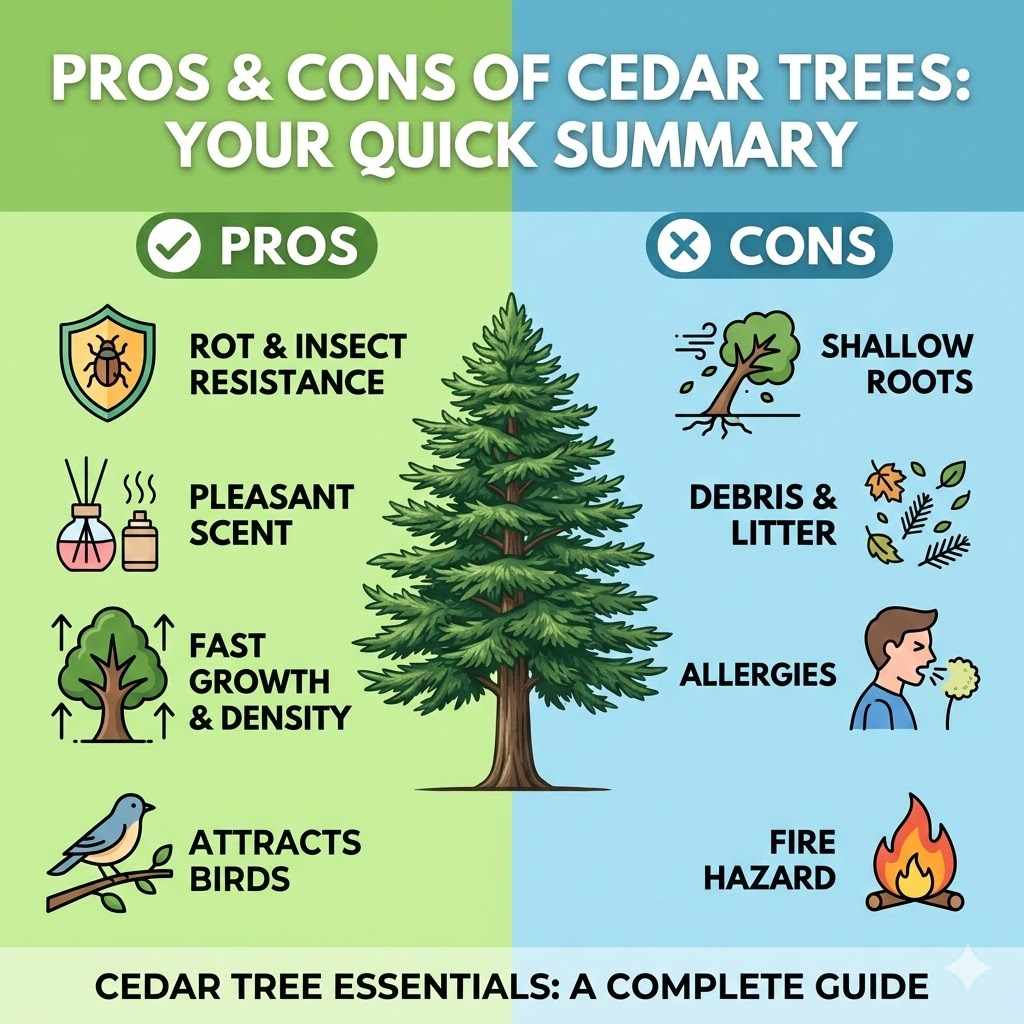
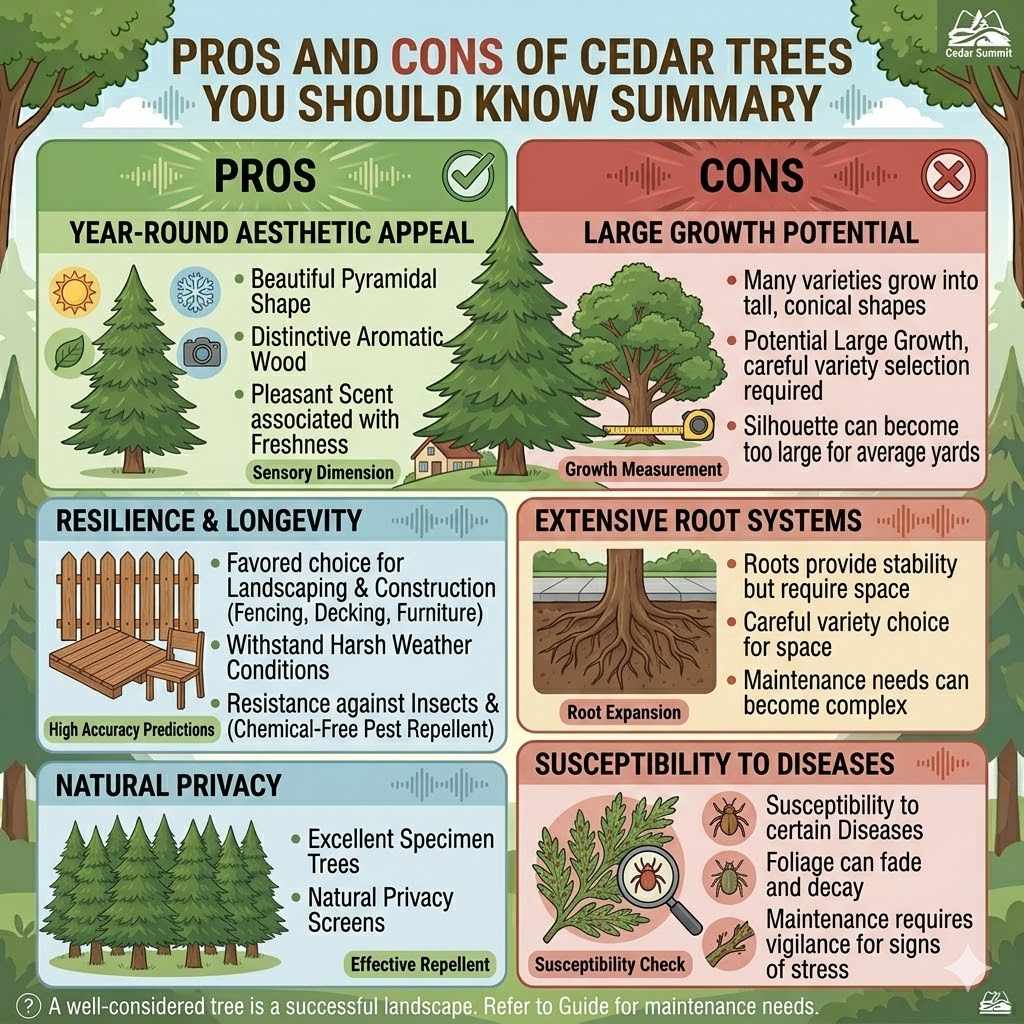
Cedar trees offer a beautiful and fragrant addition to any landscape, providing natural privacy, aromatic wood, and resilience. Their evergreen nature ensures year-round appeal, and their resistance to rot and pests makes them durable choices for construction and decor. However, potential large growth, extensive root systems, and susceptibility to certain diseases require careful consideration. Choosing the right variety for your space and understanding their maintenance needs will help you enjoy their many advantages while mitigating any challenges.
Frequently Asked Questions
Question: Are cedar trees messy?
Answer: Some cedar trees can be messy due to prolific seed or cone production and shedding of foliage. However, their messiness varies greatly by species and variety.
Question: Can cedar trees be planted close to a house?
Answer: It is generally not recommended to plant large cedar trees too close to a house due to their eventual size and root systems, which can potentially damage foundations and plumbing.
Question: Do cedar trees attract insects?
Answer: While cedar wood naturally repels many insects, the trees themselves can occasionally attract certain pests like bagworms or scale insects, especially if stressed.
Question: Are cedar trees good for privacy?
Answer: Yes, many cedar varieties are excellent for privacy screens because of their dense, evergreen foliage and upright growth habits, forming effective natural barriers.
Question: How long do cedar trees live?
Answer: Cedar trees are known for their longevity, with many species able to live for hundreds of years when grown in optimal conditions.
Summary
Cedar trees bring beauty and fragrance to your yard. They offer great privacy and their wood is naturally resistant to bugs and decay. While some can grow very large and have strong roots, choosing the right kind for your space makes them easy to enjoy. Proper care helps them thrive for many years.