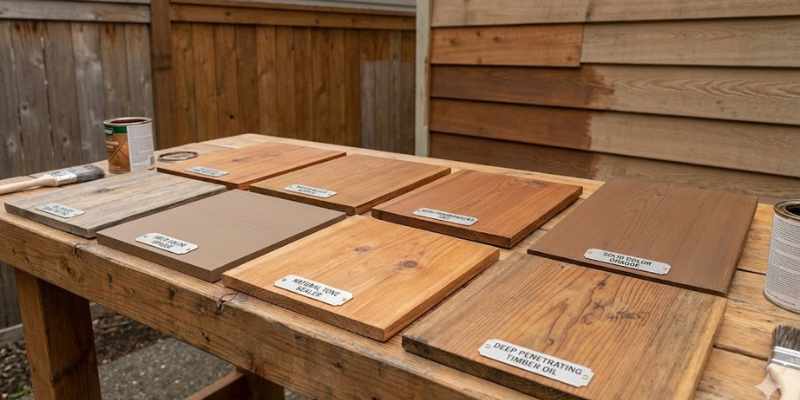
Best Exterior Cedar Wood Stain: 7 Options Compared (2026)
The best exterior cedar wood stain for most people is Ready Seal Exterior Wood Stain & Sealer in Natural Cedar — it needs no back-brushing and self-levels to an even tone straight from the can. But the number that actually decides your budget isn’t the price per gallon — it’s coverage. We compared 7 real cedar stains by manufacturer-published coverage rate, VOC content and the true cost to stain a 300 sq ft deck or fence run, not just sticker price.
Exterior Cedar Wood Stain Comparison: Coverage, VOC & True Cost
Every number below is pulled from each product’s own Amazon listing, can label, or manufacturer technical data sheet — gathered and cross-checked directly for this comparison, not copied from another review. Where a manufacturer doesn’t publish a figure, the cell says so instead of guessing.
| Stain | Base / Opacity | Coverage (per mfr) | Coats | VOC | Cost to Cover 300 sq ft* | Verdict |
|---|---|---|---|---|---|---|
| Ready Seal Natural Cedar | Oil-based, semi-transparent | 75–100 sq ft/gal | 1 (self-blending) | <250 g/L | $179.92 (4 gal) | Easiest application, best overall |
| DEFY Extreme Cedar Tone | Water-based, semi-transparent | 100–150 sq ft/gal† | 2 (required) | <250 g/L | $163.62 (3 gal) | Best water-based formula |
| Cabot Semi-Transparent Cedar | Oil-based, semi-transparent | 200–300 sq ft/gal | 1 (one-coat) | Low-VOC (exact g/L not published) | $119.58 (2 gal) | Best for showing grain |
| Thompson’s WaterSeal Natural Cedar | Water-based, semi-transparent | 150–400 sq ft/gal | 1 | 22.51 g/L | $59.52 (2 gal) | Best value |
| Olympic Maximum Cedar Naturaltone | Semi-transparent (base not specified for this SKU) | 150–350 sq ft/gal | 1 | Not confirmed for this SKU | $79.98 (2 gal) | Best for cedar fences |
| Armstrong-Clark Mountain Cedar Semi-Solid | Oil-based, semi-solid | 150–250 sq ft/gal (horizontal) | 1 (2nd optional) | <50 g/L | $189.90 (2 gal) | Best for weathered decks |
| Flood Cedar Solid Pro | Acrylic (water-based), solid color | ≈200 sq ft/gal‡ | Not published | Not published for this exact SKU | $121.18 (2 gal) | Best solid-color stain |
*Computed using each product’s own published low-end coverage figure, rounded up to the next whole gallon at the price shown above — the formula is: (300 ÷ low-end sq ft per gallon), rounded up × price per gallon. †DEFY’s 100–150 sq ft/gal figure already includes its required second coat — comparing it directly to a single-coat product’s sq-ft-per-gallon number understates what one DEFY gallon actually delivers. ‡Sourced from Flood’s Pro Series product family; the exact FLD-823 Cedar Solid Pro SKU’s own coverage sheet wasn’t independently retrievable this session, so treat this figure as an approximate range, not a confirmed spec.
That coat-count catch is the single biggest gotcha in this category: raw sq-ft-per-gallon numbers on the can are not directly comparable across brands unless you check whether the manufacturer already baked a required second coat into that figure. DEFY Extreme looks like the weakest coverage in the table until you realize its number already includes two coats — on a true apples-to-apples per-coat basis, it’s actually competitive with the semi-transparent one-coat stains above it.
Best Exterior Cedar Wood Stains
1. Ready Seal Exterior Wood Stain & Sealer (Natural Cedar) — #1 Best Overall
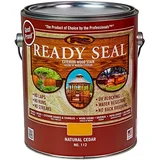
Price: $44.98 (1 gallon) · Check current price on Amazon
- Base: Oil-based, semi-transparent
- Coverage: 75–100 sq ft/gal (1 coat)
- VOC: <250 g/L
- Dry time: 48–72 hours; true color in ~14 days
Ready Seal is the one pick that shows up as a top choice across nearly every independent cedar-stain roundup we reviewed for this comparison, and the reason is consistent: it’s difficult to apply badly. The oil penetrates cedar’s soft grain instead of sitting on top of it, so there’s no wet edge to chase and no overlap marks even when you’re working in direct sun.
At 75–100 sq ft per gallon it isn’t the most efficient coverage in this lineup — you’ll need roughly a gallon per 300–400 sq ft deck if you’re not buying the 5-gallon pail — but the trade-off is an application process that’s genuinely hard to mess up on a first attempt.
Ready Seal also sells this exact Natural Cedar colorway in a 5-gallon pail for larger jobs, which brings the effective per-gallon price down once you account for the pail’s bulk discount — worth checking if you’re staining more than one structure at once, since the 1-gallon size we priced here is the more practical unit for a single fence or deck. True color takes about 14 days to fully develop, so resist judging the final shade in the first week.
- Best for: Anyone staining a cedar fence, deck, or siding who wants a foolproof, no-back-brush application
- Why we picked it: It’s a stain-and-sealer in one that self-levels with no lap marks — no primer, no thinning, no back-brushing required, which matters more on cedar than most woods because its soft, porous grain shows brush-mark unevenness easily
- Main drawback: Oil-based means a longer dry window (2–3 days to touch-dry) and a stronger solvent odor while applying than the water-based picks on this list
2. Armstrong-Clark Oil-Based Wood Stain (Mountain Cedar Semi-Solid) — Best for Weathered or Older Cedar Decks
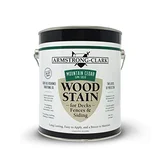
Price: $94.95 (1 gallon) · Check current price on Amazon
- Base: Oil-based, semi-solid
- Coverage: 150–250 sq ft/gal horizontal softwood; 200–300 vertical
- VOC: <50 g/L (compliant in all 50 states, incl. CA counties)
- Dry: 8–72 hrs depending on UV/temp; light-rain-safe 60 min after absorption
Semi-solid stains sit in the gap between a semi-transparent (shows the grain, less pigment) and a solid color (hides the grain, full pigment) — and that gap is exactly where a weathered deck that’s gone patchy gray usually needs to land. A semi-transparent stain over uneven graying often looks blotchy because it can’t mask the existing color variation; a full solid color can look plastic-y on real wood grain.
Armstrong-Clark’s own coverage figures split out horizontal vs. vertical softwood surfaces — 150–250 sq ft/gal on a deck floor versus 200–300 sq ft/gal on fencing or siding, since horizontal wood absorbs more stain per square foot than vertical wood does. That’s a distinction most competing brands don’t publish at all.
It’s also the only oil-based pick in this comparison with a published VOC figure under 50 g/L, which is a genuinely low number for an oil-based product — oil stains typically carry higher VOC content than water-based competitors, and Armstrong-Clark is the exception in this lineup rather than the rule.
- Best for: An older cedar deck that’s already grayed, weathered, or been stripped and needs more pigment to even out the color
- Why we picked it: The semi-solid opacity hides more of the existing discoloration than a semi-transparent stain will, while the conditioning oils still penetrate rather than forming a film that can peel
- Main drawback: It’s the most expensive pick in this comparison at $94.95/gal, and covers less per gallon on horizontal decking than most of the semi-transparent options
3. DEFY Extreme Wood Stain and Sealer (Cedar Tone) — Best Water-Based Formula
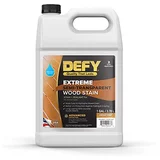
Price: $54.54 (1 gallon) · Check current price on Amazon
- Base: Water-based, semi-transparent
- Coverage: 100–150 sq ft/gal (with 2 required coats)
- VOC: <250 g/L
- Dry: 2–6 hrs to touch; 24 hrs to cure
DEFY is the pick to know about specifically because its coverage number is quietly different from every other product on this page: it’s a 2-coat-inclusive figure, confirmed directly on the product label (“2 Coat Application”). That’s good news once you know it — you’re not buying twice the stain to get full coverage the way you would with a 1-coat product that turned out to need a second coat anyway — but it’s a genuine gotcha if you’re comparing raw sq-ft-per-gallon numbers across brands without checking the fine print first.
We picked the Cedar Tone variant specifically; DEFY Extreme also ships in a Redwood tint that some retailers surface first in search results, so double-check the label before buying if color match matters.
The zinc-nanoparticle UV blocker is also worth calling out on its own: most stains rely on pigment alone to slow UV fading, while DEFY’s formula adds an active mineral UV blocker on top of the pigment, which is the reasoning behind the brand’s water-based, easier-cleanup pitch to homeowners who don’t want to deal with mineral spirits.
- Best for: Anyone who wants zinc-nanoparticle UV protection and easy soap-and-water cleanup instead of mineral spirits
- Why we picked it: Zinc nano-particles actively block UV rays rather than just tinting the wood, and the water-based formula cleans off tools and skin with soap and water
- Main drawback: The label states 2 coats are required, not optional — skip the second coat to save stain and the finish won’t deliver the coverage or UV protection DEFY’s own data sheet promises
4. Thompson’s WaterSeal Semi-Transparent Waterproofing Stain (Natural Cedar) — Best Value
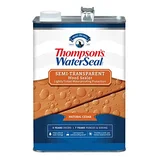
Price: $29.76 (1 gallon) · Check current price on Amazon
- Base: Water-based (acrylic/alkyd/urethane), semi-transparent
- Coverage: 150–400 sq ft/gal
- VOC: 22.51 g/L (Natural Cedar colorway)
- Mfr-stated durability: 5 years on decks, 7 years on fences & siding (per can label)
At $29.76 a gallon, Thompson’s WaterSeal is roughly a third of Armstrong-Clark’s price and still publishes a specific VOC figure (22.51 g/L for the Natural Cedar colorway) that’s lower than several pricier competitors in this table. The can itself states 5 years of protection on decks and 7 years on fences and siding — a real, specific, product-stated durability claim rather than a vague “long-lasting” marketing line.
The manufacturer also states this product exceeds ASTM D-4446, an industry standard test for waterproofing performance, directly on the listing. It’s a lightly tinted formula rather than a heavy pigment load, so it leans closer to Cabot’s grain-forward approach than Armstrong-Clark’s or Flood’s heavier-coverage picks, which matters if you’re trying to match an existing lightly-stained cedar surface.
- Best for: Budget-conscious projects on fences, siding, or other large vertical surfaces where 400 sq ft/gal coverage stretches furthest
- Why we picked it: It’s the least expensive gallon in this comparison and still exceeds ASTM D-4446 for waterproofing, per the manufacturer’s own listing
- Main drawback: The 5-year deck durability claim is shorter than Olympic Maximum’s stated 6 years, and it’s a lightly tinted finish, so it hides less existing discoloration than a semi-solid stain would
5. Cabot Semi-Transparent Wood Stain + Sealer, Low VOC (Cedar) — Best for Showing Off Cedar Grain
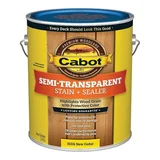
Price: $59.79 (1 gallon) · Check current price on Amazon
- Base: Oil-based, semi-transparent
- Coverage: 200–300 sq ft/gal (mfr range, varies by surface roughness)
- VOC: Low-VOC formulation (exact g/L not published)
- Coats: 1 (labeled “one-coat easy”)
Cabot has been in wood care since 1877, and this specific product leans into that heritage by highlighting grain rather than covering it — the opposite design goal from the Flood and Olympic Maximum solid-leaning picks further down this list. If the reason you’re staining cedar in the first place is to show off the wood, a grain-forward semi-transparent like this one does more of that job than a semi-solid or solid stain ever will.
Its published coverage range (200–300 sq ft/gal) is also one of the tighter, more consistent ranges in this comparison — wide-range products like Thompson’s (150–400 sq ft/gal) make it harder to predict exactly how much you’ll need, while Cabot’s narrower published range gives a more reliable estimate before you buy.
- Best for: Cedar you want to actually look like cedar — new or lightly weathered boards where the grain pattern is still the main selling point
- Why we picked it: A one-coat oil-based formula that highlights grain with protective color instead of masking it, and Cabot backs it with a stated lifetime guarantee on the product itself
- Main drawback: Cabot doesn’t publish a specific VOC gram-per-liter figure or a numeric recoat-interval to go with that guarantee, so the actual reapplication schedule isn’t independently verifiable from the label alone
6. Olympic Maximum Cedar Naturaltone Wood Stain & Sealer — Best for Cedar Fences
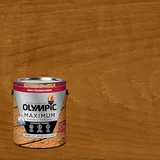
Price: $39.99 (1 gallon) · Check current price on Amazon
- Base: Semi-transparent (oil/water base not specified on this SKU)
- Coverage: 150–350 sq ft/gal
- Application temp: down to 35°F; rain-ready in 2 hours
- Mfr-stated durability: 6 years on decks, 8 years on fences & siding (per can label)
Olympic Maximum’s own can label is the most specific durability claim in this entire lineup, splitting out 6 years for horizontal decking versus 8 years for vertical fences and siding — and that split matters, because vertical wood sheds water and takes UV exposure differently than a horizontal deck floor does. For a project that’s specifically a cedar fence rather than a deck, that 8-year figure is the strongest stated number on this page.
It also works on more than just bare cedar — the listing states it can go over new, pressure-treated, weathered, or previously coated wood, which is a wider compatibility range than several of the other picks here specify. If your fence has a mix of new and older cedar sections, that flexibility is worth factoring in.
- Best for: Cedar fencing and siding, where the stated 8-year durability on vertical surfaces beats every other product in this comparison
- Why we picked it: A 2-hour rain-ready window and workability down to 35°F means a narrower weather window to plan around than most oil-based stains, which typically need a longer dry window before rain
- Main drawback: Olympic sells the Maximum line in multiple VOC formulations, and this specific colorway’s exact VOC content wasn’t confirmed for this comparison — check the can before assuming a number
7. Flood Cedar Solid Pro Exterior Wood Stain — Best Solid-Color Stain for Cedar
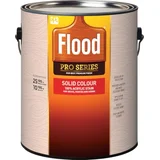
Price: $60.59 (1 gallon) · Check current price on Amazon
- Base: 100% acrylic (water-based), solid color
- Rain-resistant within: 12 hours
- Application temp: 35–120°F
- Mfr-stated durability: 10 years on decks, 25 years on fences & siding (per can label)
A solid-color stain is really an exterior acrylic coating with wood-specific flexibility built in, rather than a traditional penetrating stain — which is exactly why Flood can back it with a 25-year claim that dwarfs every semi-transparent product on this page. That trade-off is real: you’re choosing coverage and longevity over seeing the actual cedar grain underneath.
If you go this route, our full guide to applying Flood solid stain on cedar covers the exact prep, priming, and coat-timing steps.
We couldn’t independently confirm this exact FLD-823 SKU’s coverage rate or VOC content from a manufacturer source this session — the figures in the dataset table are sourced at the Flood Pro Series family level, not this specific product code, so treat them as a reasonable approximation rather than a confirmed spec until you check the can in hand.
- Best for: Cedar that’s too weathered, stained, or mismatched in color for a semi-transparent or semi-solid finish to even out
- Why we picked it: Flood’s own can states 25 years of protection on fences and siding — the single strongest manufacturer durability claim of any product in this comparison, on either surface type
- Main drawback: Solid color fully hides the wood grain — if the reason you chose cedar was the grain pattern, a solid stain defeats part of the purpose, and this exact SKU’s coverage/VOC data wasn’t independently confirmable this session
How We Picked These
We did not physically test these 7 stains on cedar for this comparison — being upfront about that matters more to us than borrowing a testing claim we can’t back up. What we did do: pulled live pricing and buy-box availability for every pick directly from Amazon at the time of writing, cross-checked each product’s coverage, VOC, and coat-count claims against its own listing images, can label, or manufacturer technical data sheet, and built the cost-per-300-sq-ft comparison above from those numbers with the formula shown, not estimated.
Where a manufacturer didn’t publish a number — Cabot’s exact VOC content, Flood’s exact coverage rate for this specific SKU, Olympic’s VOC formulation for this colorway — the dataset table says so directly instead of filling the cell with a guess or a number borrowed from a different product in the same line. If you’ve physically used one of these stains on cedar and our read on it doesn’t match your experience, that’s useful to know; manufacturer-published numbers and real-world results on soft, porous cedar don’t always agree.
Why Cedar Specifically Changes This Comparison
None of these 7 stains are formulated exclusively for cedar — every one of them also works on pine, fir, and other softwoods. What changes on cedar specifically is absorption: cedar’s natural oils and open, porous grain pull stain in faster and less evenly than a denser wood like redwood or a pressure-treated pine, which is exactly why several manufacturers in this comparison publish separate coverage figures for cedar versus their general softwood numbers, and why letting new cedar weather before the first coat matters more here than it does on many other exterior woods.
What to Consider When Buying Exterior Cedar Wood Stain
Oil-Based vs. Water-Based
Oil-based stains penetrate cedar’s soft, porous grain more deeply and tend to self-level better with fewer lap marks — Ready Seal, Cabot, and Armstrong-Clark on this list are all oil-based. Water-based formulas like DEFY Extreme and Thompson’s WaterSeal dry faster, clean up with soap and water instead of mineral spirits, and generally carry lower VOC content, but can require more careful surface prep to avoid blotching on cedar’s naturally oily grain.
Opacity: Transparent, Semi-Transparent, Semi-Solid, or Solid
Transparent and semi-transparent stains show the most wood grain but hide the least existing discoloration. Semi-solid (like Armstrong-Clark’s Mountain Cedar) splits the difference. Solid color (like Flood Cedar Solid Pro) hides grain entirely but delivers the longest published durability — Flood’s own can claims 25 years on fences and siding, more than double any semi-transparent stain in this comparison.
Coverage Rate — and Whether It Already Includes a Second Coat
Coverage figures on the can range from 75 sq ft/gal (Ready Seal) to 400 sq ft/gal (Thompson’s, best case). Before comparing two products by their coverage number alone, check whether that figure assumes one coat or two — DEFY Extreme’s 100–150 sq ft/gal already factors in its required second coat, which makes it more competitive than the raw number suggests next to a 1-coat product.
VOC Content
VOC content ranged from a published 22.51 g/L (Thompson’s Natural Cedar) to under 50 g/L (Armstrong-Clark) among the products that disclose an exact figure. Not every brand publishes a precise number for every colorway — when a product’s listing or TDS doesn’t state one, that’s worth asking about before assuming it’s comparable to a competitor that does.
Application Temperature and Weather Window
Olympic Maximum can be applied down to 35°F and is rain-ready in 2 hours — a narrower cold-weather and rain window than most oil-based stains need. Flood Cedar Solid Pro lists a 35–120°F application range with 12-hour rain resistance. Check the forecast against the specific product’s stated window, not a general rule of thumb, before you commit a weekend to the project.
New vs. Weathered Cedar
Freshly milled cedar is often too smooth and closed-grain to absorb stain evenly; many pros recommend letting new cedar weather for 4–12 weeks (or wet-and-dry-testing it) before the first stain coat. Already-weathered or previously-stained cedar usually needs a cleaner and brightener pass first so the new stain penetrates instead of sitting on top of old, degraded pigment.
Decks vs. Fences vs. Siding
Horizontal surfaces like deck floors take more foot traffic, standing water, and direct sun than vertical fences and siding — which is why several manufacturers in this comparison (Armstrong-Clark, Olympic, Thompson’s) publish different coverage or durability figures for horizontal vs. vertical applications. A stain rated for 8 years on a fence won’t necessarily last 8 years on a deck floor.
Real Cost, Not Just Sticker Price
The cheapest gallon on the shelf isn’t always the cheapest project. Thompson’s WaterSeal at $29.76/gal costs about $59.52 to stain a 300 sq ft area at its published low-end coverage; Ready Seal at $44.98/gal costs $179.92 for the same area because it covers far less per gallon. Do the coverage math before assuming the lower shelf price wins.
Warranty and Guarantee Language
Cabot markets this product with a stated lifetime guarantee, but that language typically applies to product defects rather than a fixed number of years of color and UV performance — it isn’t the same kind of claim as Flood’s or Olympic’s specific 10-year or 6-year deck durability figures. Read what a “guarantee” actually covers before treating it as a durability number you can compare against a competitor’s stated years.
Color Matching to Existing Cedar
“Natural Cedar” and “Cedar Tone” colorways vary meaningfully between brands — Ready Seal, Thompson’s, Cabot, and DEFY each formulate their own version of a cedar tint, and they are not guaranteed to match each other or your existing cedar’s natural color exactly. If you’re touching up or extending an already-stained structure, test a small, hidden patch with the new product before committing to the whole surface.
How to Apply Exterior Cedar Wood Stain
- Clean the surface. Remove dirt, mildew, and old failing finish with a wood cleaner or brightener made for cedar; pressure wash on a low setting if needed, then let the wood dry fully (typically 48–72 hours) before staining.
- Test absorption. Splash a little water on the surface — if it beads up instead of soaking in within a few minutes, the wood isn’t ready. New cedar in particular may need several weeks of weathering before it will accept stain evenly.
- Sand only if needed. Cedar rarely needs heavy sanding; a light pass with fine-grit sandpaper on rough or splintering areas is usually enough. Over-sanding closes the grain and can actually reduce stain absorption.
- Apply in shade, not direct sun. Direct sun can cause the stain to dry too fast, leaving lap marks — work in the shaded side of the day or overcast conditions where possible, and check the specific product’s stated temperature range first.
- Apply the manufacturer’s stated number of coats. Most picks on this list are one-coat products; DEFY Extreme specifically requires two. Applying an extra unnecessary coat wastes stain and can leave a tacky, uneven film on cedar’s soft grain.
- Respect the rain window. Check the specific rain-ready time for your chosen stain (2 hours for Olympic Maximum, 12 hours for Flood Cedar Solid Pro) before staining if rain is forecast.
- Plan the recoat schedule around the surface, not just the stain. Horizontal decking weathers faster than vertical fencing or siding — budget for the shorter, deck-rated durability figure on any product that publishes both.
Frequently Asked Questions
What is the best stain for exterior cedar wood?
Ready Seal Exterior Wood Stain & Sealer in Natural Cedar is the best overall pick for most exterior cedar projects because it self-levels without back-brushing and is difficult to apply unevenly. For cedar fences specifically, Olympic Maximum’s stated 8-year durability on vertical surfaces is the strongest published figure in this comparison.
Should I use oil-based or water-based stain on cedar?
Oil-based stains generally penetrate cedar’s soft, porous grain more deeply and self-level with fewer lap marks, while water-based stains dry faster, clean up with soap and water, and often carry lower published VOC content. Neither is objectively better for cedar — it depends on whether you prioritize application ease or lower VOC and faster cleanup.
How many coats of stain does cedar need?
Most of the stains in this comparison are one-coat products by design — Cabot, Armstrong-Clark, and Ready Seal are all labeled for single-coat application. DEFY Extreme is the exception on this list and requires two coats; always check the specific product’s label rather than assuming.
Does cedar wood need to be sealed if it’s stained?
Most of the stains in this comparison — including Ready Seal, DEFY Extreme, and Cabot — are stain-and-sealer combination products, so a separate sealer step isn’t needed with those. A pure stain with no sealing agents would still benefit from a compatible topcoat for added water resistance.
Can you stain cedar wood right away, or does it need to weather first?
Freshly milled cedar is often too smooth and closed-grain to absorb stain evenly. Many pros recommend letting new cedar weather for 4–12 weeks, or running a simple water-bead absorption test, before applying the first coat of stain.
Why is my cedar siding turning gray even though it’s stained?
Graying usually means the stain’s UV protection has worn past its published durability window — for example, past the 6-year deck or 8-year fence/siding figures Olympic Maximum states on its own label. It can also happen if the original coat was applied too thin or over wood that wasn’t fully dry.
How often should you restain a cedar deck vs. a cedar fence?
Horizontal deck surfaces take more foot traffic, standing water, and direct sun than vertical fences or siding, so they typically need restaining sooner. Several products in this comparison publish separate figures for each — Flood Cedar Solid Pro, for instance, states 10 years for decks versus 25 years for fences and siding on the same can.
Is a semi-transparent or solid stain better for cedar?
Semi-transparent stains like Ready Seal, Cabot, and Thompson’s WaterSeal show the wood grain and generally carry shorter published durability windows. Solid-color stains like Flood Cedar Solid Pro hide the grain entirely but publish the longest durability figures in this comparison — up to 25 years on fences and siding. Choose based on whether seeing the cedar grain matters more to you than minimizing how often you have to recoat.
Final Thoughts
Ready Seal Exterior Wood Stain & Sealer in Natural Cedar is our #1 overall pick for most exterior cedar projects — it’s the hardest of these 7 to apply unevenly. But the number worth remembering from this comparison isn’t a single winner — it’s that coverage rate, not price per gallon, decides your real project cost, and that a raw sq-ft-per-gallon figure can be quietly misleading if you don’t check whether it already includes a required second coat, the way DEFY Extreme’s does.
If you’re staining a fence or siding rather than a deck floor, weight the manufacturer-stated vertical-surface durability figures more heavily than the deck figures — Olympic Maximum’s 8-year fence rating and Flood Cedar Solid Pro’s 25-year fence rating are both meaningfully higher than what the same cans claim for horizontal decking, and that gap is real, not marketing rounding.
Related Cedar Care Guides
- Cedar wood stains: types, prep, and color selection
- Oil vs. stain vs. sealer: what is the best finish for cedar wood?
- Best cedar sealer, if you want waterproofing without color
- How to seal a cedar deck step by step
- Our full walkthrough on the best way to stain a cedar fence
- Best preservative for cedar wood protection
- Staining cedar: a complete process guide
- Exterior wood glue for cedar, for the assembly step before you finish it