Are There Redwood Trees in Yosemite National Park?
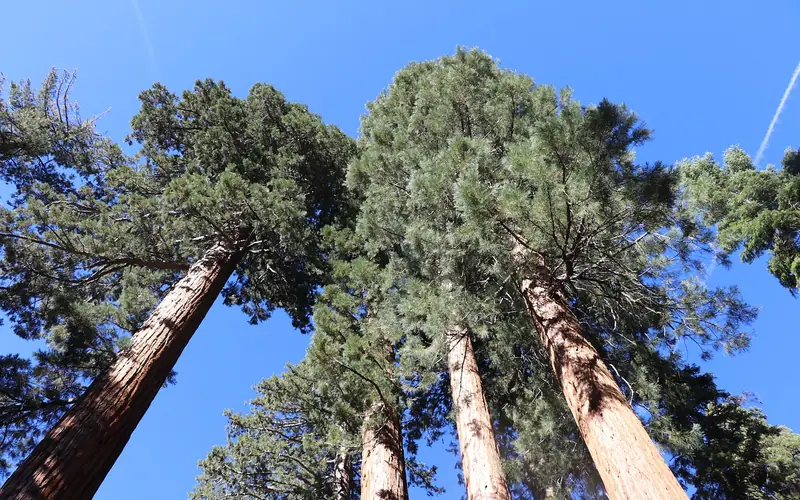
Yosemite National Park has no true redwood trees. Its famous giants are giant sequoias, a related but distinct species found in three groves: Mariposa, Merced, and Tuolumne. Confusing the two matters for trip planning — real coast redwoods grow roughly 205 miles away near Muir Woods, outside Yosemite’s Sierra Nevada boundaries entirely. This guide covers the real redwood-versus-sequoia difference, exactly where Yosemite’s three groves are, and how the 2022 Washburn Fire changed what visitors see today.
Redwood vs. Giant Sequoia: What’s the Difference?
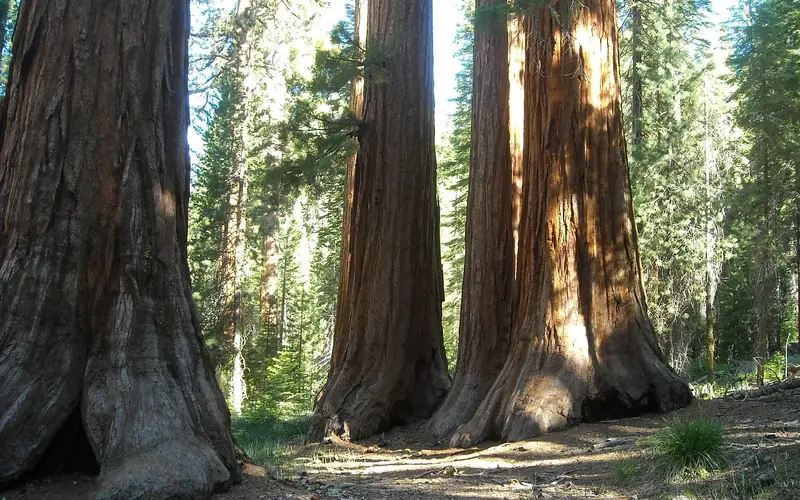
Giant sequoia (Sequoiadendron giganteum) is a conifer native to only about 70 groves scattered along the western slopes of California’s Sierra Nevada, at elevations between roughly 4,000 and 8,000 feet. It belongs to the cypress family, the same family as the coast redwood — but it is a different genus, adapted to mountain snowpack rather than coastal fog.
The two are easy to mix up because both are called “redwood” in casual speech, and giant sequoias are sometimes nicknamed “Sierra redwoods.” But they diverge sharply once you compare them side by side.
| Feature | Giant Sequoia | Coast Redwood |
|---|---|---|
| Found in Yosemite? | Yes — 3 groves | No — nearest is ~205 miles away |
| Tallest known example | ~275 ft (General Sherman, Sequoia National Park) | ~380 ft (Hyperion, Redwood National Park) |
| Claim to fame | Largest tree by wood volume on Earth | Tallest living tree species on Earth |
| Native range | Sierra Nevada, 4,000–8,000 ft elevation | Pacific fog belt, Big Sur to SW Oregon |
| Typical old-growth lifespan | Up to 3,000+ years | Up to 2,000 years |
Source: National Park Service data for Sequoia & Kings Canyon National Parks and Redwood National and State Parks.
Yosemite’s Three Giant Sequoia Groves
According to the National Park Service, Yosemite protects three sequoia groves, and they are not equally sized or equally easy to reach.
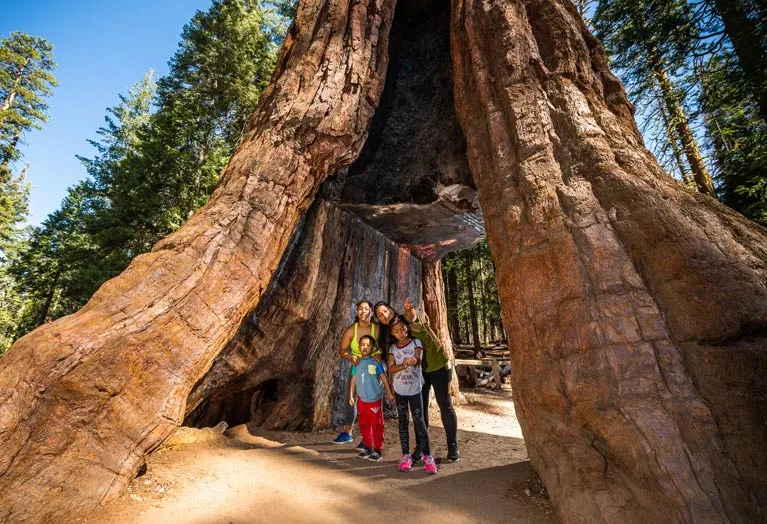
- Mariposa Grove — the largest and most visited, home to more than 500 mature giant sequoias near Wawona, about a 1-hour-15-minute drive from Yosemite Valley. Its most famous tree, the Grizzly Giant, is estimated at more than 1,800 years old.
- Merced Grove — the smallest and quietest, with roughly two dozen mature sequoias reached by a 1.5-mile trail that drops about 500 feet in elevation, west of Crane Flat.
- Tuolumne Grove — also about two dozen mature sequoias, just off Tioga Road near Crane Flat, reached by a 1-mile trail with a similar 500-foot elevation change.
Where to See True Redwood Trees Near Yosemite
If a true coast redwood is what you’re after, plan a separate trip west. The nearest grove is Muir Woods National Monument, about 205 miles (roughly a 4-hour drive) from Yosemite Valley. For the tallest and oldest old-growth stands, Redwood National and State Parks lie further north along the coast. Coast redwood’s naturally rot-resistant wood is also why it’s a longtime favorite for outdoor decking and lumber, alongside other durable species covered in our wood species guide.
Are Yosemite’s Giant Sequoias Safe? The 2022 Washburn Fire
In July 2022, the Washburn Fire ignited near the lower end of Mariposa Grove and eventually burned about 4,886 acres before full containment on August 1. It was the closest a wildfire had come to the grove in decades, and it raised a real question for anyone planning a visit: did the sequoias survive?
📊 4,886 acres burned, 0 mature sequoias lost in Mariposa Grove — Source: Washburn Fire incident data, National Park Service, 2022.
They did. National Park Service crews wrapped the base of the Grizzly Giant in fire-resistant aluminum material and ran a temporary sprinkler system to keep humidity high around the tree — the same triage approach used to protect sequoia groves during the KNP Complex Fire the year before. Mariposa Grove reopened to visitors on August 3, 2022, with only the Washburn Trail and a short stretch of the perimeter trail still closed for cleanup.
“Fire crews wrapped the base of the Grizzly Giant in protective material and used a sprinkler system to raise humidity around it during the Washburn Fire — standard NPS protocol for defending old-growth sequoias from active wildfire.”
Exploring Yosemite’s Giant Trees
Most first-time visitors combine a sequoia grove with Yosemite Valley’s other landmarks in the same trip. Bridalveil Fall and El Capitan are both a short drive from the Valley floor, and Tunnel View is the classic photo stop for seeing Half Dome, El Capitan, and the valley together in one frame. If a grove visit is the priority, Mariposa Grove is the easiest to reach without a long hike, while Merced and Tuolumne reward visitors willing to walk a bit further for a quieter grove.
Protecting the Giant Sequoias
Giant sequoias evolved to survive low-intensity fire — their thick, fibrous bark insulates the trunk, and their cones actually need fire’s heat to open and release seed. The danger today comes from fires burning hotter and faster than that adaptation was built for, due to a century of fire suppression and a warming, drying climate. Park rangers now use prescribed burns to clear built-up undergrowth before it can fuel a catastrophic fire, alongside the emergency wrapping and sprinkler tactics used during the Washburn Fire.
Visitors help most by staying on marked trails — a sequoia’s roots spread wide but only a few feet deep, and repeated foot traffic compacts the soil above them, which stresses the tree over time.
Frequently Asked Questions
Are There Any Redwood Trees in Yosemite?
No. Yosemite has no true coast redwood trees. What it has are giant sequoias — a related but taxonomically distinct species sometimes nicknamed the “Sierra redwood.” Both belong to the cypress family, but they differ in range, height, and trunk volume, as shown in the comparison table above.
Is Yosemite in the Redwoods?
No. Yosemite sits in the Sierra Nevada, not the coastal redwood belt. True coast redwoods grow only within a foggy strip of coastline running from Big Sur to southwestern Oregon — roughly 205 miles from Yosemite Valley at the nearest point, Muir Woods National Monument.
What Kind of Trees Are Famous at Yosemite National Park?
Yosemite is best known for its giant sequoias, especially in Mariposa Grove, alongside ponderosa pine, sugar pine, and incense cedar. Mariposa Grove alone holds more than 500 mature giant sequoias, including the Grizzly Giant, estimated at more than 1,800 years old.
Are Sequoias the Same as Redwoods?
Not quite. Giant sequoias (Sequoiadendron giganteum) and coast redwoods (Sequoia sempervirens) are different genera in the same cypress family. Sequoias are bulkier and grow inland in the Sierra Nevada; redwoods are taller and grow only near the Pacific coast.
Did the Washburn Fire Destroy Yosemite’s Giant Sequoias?
No. The 2022 Washburn Fire burned about 4,886 acres near Mariposa Grove, but National Park Service crews wrapped tree bases in fire-resistant material and used sprinklers to protect them. The grove’s roughly 500 mature sequoias came through largely unscathed and reopened to visitors by August 3, 2022.
How Many Giant Sequoia Groves Are in Yosemite?
Three: Mariposa Grove (about 500 mature trees, the largest and most visited), Merced Grove, and Tuolumne Grove (each with roughly two dozen mature sequoias, reached by a moderate 1- to 1.5-mile hike).
Conclusion
Yosemite’s giant sequoias are the real headline act, not coast redwoods — and once you know the difference, the trip only gets better. Mariposa Grove is the easiest introduction, Merced and Tuolumne reward a longer walk with fewer crowds, and the Washburn Fire recovery is a good reminder of how much active management keeps these groves standing. If true coast redwoods are on your list too, budget a separate day for Muir Woods or Redwood National Park — they’re a different tree, in a different range, about 205 miles from the Valley.
Sponsored / affiliate links. As an Amazon Associate I earn from qualifying purchases. I may earn additional commission from eligible campaigns.