Wood Screw Sizes Chart: #0-#24 Diameter, Length & Pilot Holes
Wood screw size is a gauge number plus a length: a #8 x 1-1/4″ screw is 0.164″ (4.17 mm) across the threads and 1-1/4″ long, and every gauge step adds 0.013″. Pick the wrong pilot hole and thin or hard stock splits. This guide gives the #0-#24 diameter chart, clearance and pilot hole bits for #4-#14, length by board thickness, and the closest metric size for each gauge.
Wood Screw Sizes Chart: Gauge, Diameter, Length & Pilot Hole
|
Best Countersink Pilot Bit Pick Bosch SP515 5-Piece Countersink Bit Set (#6, #8, #10, #12), $21.99 Each bit drills the pilot hole and the countersink in one pass for the #6 to #12 gauges in the chart below, so the hole matches the screw instead of a guess.
|
As an Amazon Associate we earn from qualifying purchases.
Every wood screw gauge has a fixed diameter set by ASME B18.6.1. The chart below lists the six gauges that cover almost all woodworking, #4 through #14, with the diameter, the lengths you will typically find in stores, the clearance hole for the top board, and the pilot hole for the board the screw bites into.
| Gauge | Diameter (in / mm) | Common lengths | Clearance hole (top board) | Pilot hole: softwood | Pilot hole: hardwood |
|---|---|---|---|---|---|
| #4 | 0.112″ / 2.84 mm | 3/8″ to 1-1/4″ | 7/64″ | 1/16″ | 5/64″ |
| #6 | 0.138″ / 3.51 mm | 3/8″ to 2″ | 9/64″ | 5/64″ | 3/32″ |
| #8 | 0.164″ / 4.17 mm | 3/4″ to 3″ | 11/64″ | 3/32″ to 7/64″ | 1/8″ |
| #10 | 0.190″ / 4.83 mm | 1″ to 3-1/2″ | 3/16″ | 7/64″ to 1/8″ | 9/64″ |
| #12 | 0.216″ / 5.49 mm | 1-1/2″ to 4″ | 7/32″ | 1/8″ to 9/64″ | 5/32″ |
| #14 | 0.242″ / 6.15 mm | 1-1/2″ to 4″ | 1/4″ | 9/64″ to 5/32″ | 11/64″ to 3/16″ |
Treat the pilot columns as a starting range, not a law. Published charts disagree by one drill-bit step: for a #8 in softwood, one chart lists 3/32″ and another lists 7/64″, so both appear above. Start with the smaller bit in softwood, the larger in hardwood, and test on scrap, especially within an inch of a board end where splitting risk is highest. The #14 pilot sizes are extrapolated at the same ratio the other rows follow (roughly 57% of shank diameter in softwood, 74% in hardwood), and the clearance holes are the shank diameter rounded to the nearest 64th of an inch, so confirm them against the box if you are using a structural screw.
📊 Wood screw diameter follows one formula: D = 0.060 in. + (gauge x 0.013 in.), so a #8 is 0.060 + 8 x 0.013 = 0.164 in. Source: Engineer’s Edge, ANSI B18.6.1
Full Gauge Ladder, #0 to #24 (Computed)
The six-gauge chart above covers most projects, but gauges run from #0 to #24. This table computes every standard size from the formula above and matches each to the closest metric screw. The metric column is our own rounding to the nearest half millimeter, so use it to find a substitute, not as a catalog equivalence.
| Gauge | Diameter (in) | Diameter (mm) | Closest metric size |
|---|---|---|---|
| #0 | 0.060″ | 1.52 | M1.5 (approx.) |
| #1 | 0.073″ | 1.85 | M2 (approx.) |
| #2 | 0.086″ | 2.18 | M2 (approx.) |
| #3 | 0.099″ | 2.51 | M2.5 (approx.) |
| #4 | 0.112″ | 2.84 | M3 (approx.) |
| #5 | 0.125″ | 3.17 | M3 (approx.) |
| #6 | 0.138″ | 3.51 | M3.5 (approx.) |
| #7 | 0.151″ | 3.84 | M4 (approx.) |
| #8 | 0.164″ | 4.17 | M4 (approx.) |
| #9 | 0.177″ | 4.50 | M4.5 (approx.) |
| #10 | 0.190″ | 4.83 | M5 (approx.) |
| #12 | 0.216″ | 5.49 | M5.5 (approx.) |
| #14 | 0.242″ | 6.15 | M6 (approx.) |
| #16 | 0.268″ | 6.81 | M7 (approx.) |
| #18 | 0.294″ | 7.47 | M7.5 (approx.) |
| #20 | 0.320″ | 8.13 | M8 (approx.) |
| #24 | 0.372″ | 9.45 | M9.5 (approx.) |
Wood Screw Length: How To Pick By Board Thickness
Pick length after gauge. The screw should reach about two-thirds of the way into the board it bites into, so the minimum length is the top board thickness plus two-thirds of the base board. The table below applies that rule to real lumber thicknesses (a nominal 1x board is 3/4″ thick and a 2x board is 1-1/2″) and rounds up to a length you can buy.
| Top board | Base board | Minimum length (computed) | Typical pick |
|---|---|---|---|
| 1/2″ plywood | 3/4″ board | 1/2″ + 1/2″ = 1″ | #6 x 1″ |
| 3/4″ board | 3/4″ board | 3/4″ + 1/2″ = 1-1/4″ | #8 x 1-1/4″ |
| 3/4″ board | 1-1/2″ (2x) | 3/4″ + 1″ = 1-3/4″ | #8 x 2″ |
| 1-1/2″ (2x) | 1-1/2″ (2x) | 1-1/2″ + 1″ = 2-1/2″ | #10 x 2-1/2″ |
The arithmetic is ours; the two-thirds rule is the common shop shortcut. For the engineering minimum (the NDS ties penetration to screw diameter, not board thickness), see our guide on how far a screw should go into wood.
How Screw Length Is Measured
Length is measured differently by head style. For flat (countersunk) heads, ASME B18.6.1 measures from the tip to the top of the head, so the whole head counts toward the length and sits inside the top board. For pan and round heads the length stops at the underside of the head, so add the head height when you check that the tip will not poke through the far side. A #8 x 1-1/4″ flat head and a #8 x 1-1/4″ pan head therefore reach different depths.
Different Types Of Wood Screws
The type and size of screw you use affects the strength, stability, and appearance of your finished project. The three types below cover nearly every woodworking situation: traditional wood screws, chipboard screws, and deck screws. If you are fastening into a fence rather than a bench or cabinet, see our fence screw guide for the coating and length specifics that apply outdoors.
Traditional Wood Screws
Traditional (slotted) wood screws are designed for softwoods, plywood, and other solid material. They have a sharp, pointed tip for easy penetration and a coarse thread for holding power, in sizes from #0 to #24; larger numbers mean a thicker shank.
Chipboard Screws
Chipboard screws are built for particle board, MDF, and other composite wood. Deep threads and a sharp point let them grip the material without causing it to split, but you still need the correct pilot hole for the panel thickness to get a reliable hold. In very soft composite, a threaded insert holds better than a screw that will be removed and reinstalled often.
Deck Screws
Deck screws are engineered for outdoor and high-moisture use: decking, fences, and other exterior projects. They are made from corrosion-resistant stainless steel or coated carbon steel, with a sharp self-drilling point and coarse threads for fast driving and strong holding power.
What Is A Wood Screw, Exactly?
A wood screw is a threaded fastener with a sharp, self-starting point that grips directly into wood fiber without a pre-tapped hole or nut. Its thread is coarser than a machine screw and usually runs only partway up the shank, leaving a smooth section below the head. Use a wood screw, not a machine screw or a bolt, any time you are joining wood to wood or wood to a soft composite without threaded metal on the other side.
| Type | Best For | Typical Material | Drive |
|---|---|---|---|
| Traditional | Softwood, plywood, general joinery | Uncoated or zinc-plated steel | Slotted or Phillips |
| Chipboard | Particleboard, MDF, composite panels | Coated steel | Phillips or Pozi |
| Deck | Exterior, pressure-treated lumber | Stainless steel or coated carbon steel | Square or star (Torx) |
Wood Screw Anatomy
Knowing the parts of a wood screw helps you choose the right one and read a spec sheet correctly. The four major parts are the head, shank, threads, and point.
Understanding Major Parts
The head sits flush or proud of the surface and gives a tool something to drive against. The shank is the main body of the screw; the threads are the ridges that grip the wood. The point, usually sharp, starts the screw into the material.
Importance Of Thread Pitch And Diameter
Two diameters matter. The gauge chart lists the major diameter, measured across the thread crests. The root diameter, measured at the bottom of the thread, is smaller, and it is the number a pilot hole is really sized against: the hole has to leave the threads cutting fresh fiber while the core of the screw still fits. Thread pitch (the distance between threads) also affects grip, with a finer pitch generally suiting dense hardwood and a coarser pitch suiting softwood and composite panels.
Deciphering Wood Screw Sizes
Wood screw sizes are written as gauge, then length. For example, a #8 x 1-1/4″ screw is a #8 gauge screw that is 1-1/4 inches long. Metric screws are labeled by diameter in millimeters instead of a gauge number.
Reading Screw Size Markings
Packaging typically lists gauge number, length in inches, and sometimes thread count. A box marked “#8 x 1-1/4″” tells you both numbers you need without measuring.
Metric Vs. Imperial Measurements
Imperial (gauge plus inches) is standard in the US; metric (diameter in mm) is standard in Europe. The gauge number is not a size in fractions of an inch or in millimeters: a #8 is 4.17 mm, not 8 mm, and not 8/64″. Use the full gauge ladder above to match a metric screw to its closest US gauge.
| Measurement Type | Key Characteristics |
|---|---|
| Metric | Specified in millimeters; standard in European markets |
| Imperial | Measured by gauge number and inches; standard in the US |
- Always check the manufacturer spec sheet for the exact gauge and length, because markings vary between brands.
- Match pilot hole size to material density, not just gauge (see the chart above).
Choosing The Right Wood Screw
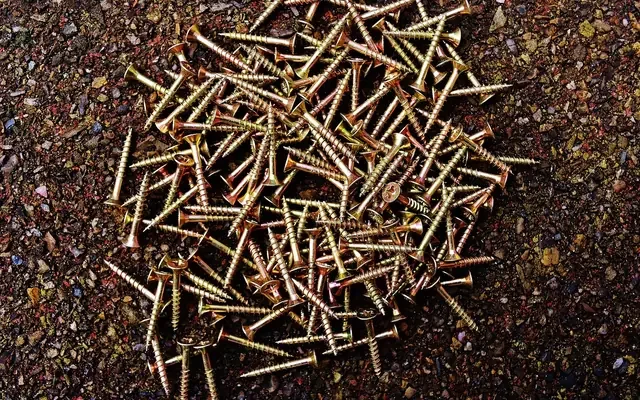
Two factors decide the right screw: the thickness of the material you are joining, and how much load the joint needs to carry.
Considering Wood Thickness
Thin stock needs a shorter, thinner screw so the point does not punch through the far side. Thicker stock needs a longer, thicker screw for a solid bond. Use the length table above, and go up one gauge when moving from a softwood like pine to a hardwood like oak or maple only if the board is thick enough to take the larger pilot hole without splitting.
Weight-bearing Capacities
A screw load capacity depends on its material, diameter, and how much thread is actually engaged in solid wood, not just its length. Undersized screws loosen over time under load. For a load-bearing joint such as a shelf bracket or stair tread, use the maker load table rather than a size chart; this page is a dimension reference, not an engineering design.
Practical Applications
Securing Cabinets And Furniture
Smaller gauges like #6 or #8 suit lightweight furniture and cabinet face frames; #10 or #12 suit heavier pieces that need more shear strength at the joint. For gauge and length picks by cabinet part, see what screws to use for cabinets.
Outdoor Construction Projects
For decks, sheds, and pergolas, use screws with a weather-resistant coating: stainless steel or hot-dip galvanized for lumber treated with modern ACQ preservatives, since standard zinc plating corrodes quickly against the copper in that treatment. A larger diameter and length also help hold pressure-treated or hardwood framing together through seasonal wood movement.
Tips And Tricks
Pre-drilling Pilot Holes
A pilot hole keeps the wood from splitting when you drive a screw. Drill the clearance hole through the top board first so the screw pulls the two boards tight, then the pilot hole into the base board.
- Choose the pilot bit from the softwood or hardwood column in the chart above.
- Drill the pilot about as deep as the threaded part of the screw.
- Keep the pilot hole straight so the screw does not wander off-line.
- Keep small screws at least half an inch from a board end or edge where you can, because that is where splits start.
Countersinking For A Professional Finish
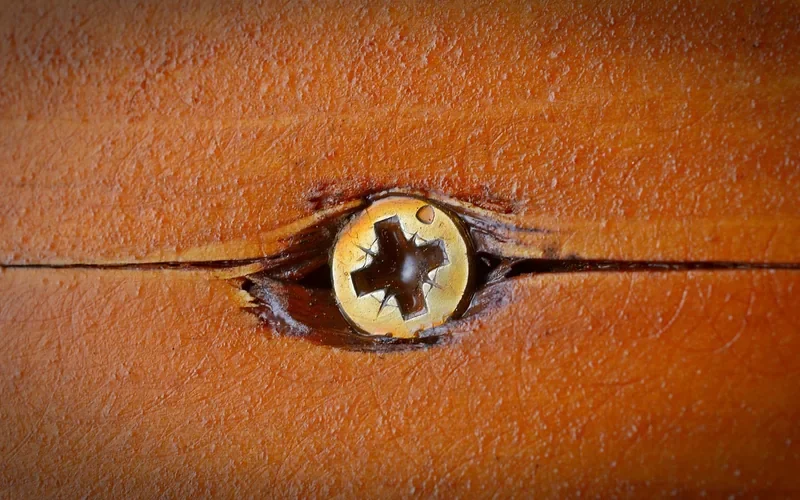
Countersinking creates a conical recess so the screw head sits flush with, or just below, the surface. Our guide to what it means to countersink a screw gives the recess depth for each gauge.
- Use a countersink bit sized to your screw head, not just its gauge.
- Test the depth on scrap before committing to show-face material.
- Adjust the countersink depth per gauge, because a #4 and a #12 need different settings.
For a deeper look at drill sizes by bit rather than by gauge, our wood screw drill size guide covers the same question from the drill-bit side, and the screwdriver size chart matches the driver tip to the screw head. Both sit under our drilling and fastening hub.
Frequently Asked Questions Of Wood Screws Sizes Chart
What Are The Different Wood Screw Sizes Available?
Wood screws are made in gauges from #0 up to #24, though #4 through #14 cover nearly every woodworking project. The gauge number sets the shank diameter (0.060 in. plus 0.013 in. per gauge); length is specified separately and typically runs from 3/8 inch to 4 inches or more.
How Do I Determine The Right Wood Screw Size For My Project?
Pick the gauge for the load, then the length so the screw reaches about two-thirds of the way into the base board. A #6 or #8 covers most furniture and cabinet work; #10 or #12 suits heavier joints. For 3/4 inch boards joined face to face, a #8 x 1-1/4 inch screw is the usual minimum.
Can I Use Any Type Of Wood Screw For Any Project?
No. Traditional wood screws suit softwood and plywood, chipboard screws suit particleboard and MDF, and deck screws suit exterior and pressure-treated lumber. An uncoated traditional screw outdoors will corrode, and corrosion weakens the joint over time.
What Is The Difference Between Flat Head And Countersunk Wood Screws?
Flat head and countersunk describe the same head shape in most catalogs: a tapered underside that sinks into a matching countersunk hole so the top sits flush with the wood surface. A round or pan head stays proud of the surface and is not meant to be recessed.
What Size Drill Bit Do I Need For A #8 Wood Screw?
For a #8 wood screw (0.164 in. diameter), drill a 3/32 to 7/64 inch pilot hole in softwood or a 1/8 inch pilot hole in hardwood, and an 11/64 inch clearance hole through the top board. Charts differ by one bit size, so test on scrap first.
Is A Bigger Wood Screw Gauge Always Stronger?
Not always. A higher gauge means a thicker shank and more shear strength, but only if the material can take the larger pilot hole. An oversized screw near the edge of thin stock or MDF can split the piece instead of adding strength. Match gauge to material thickness first, then increase gauge within that limit.
Conclusion
Gauge sets the diameter, length sets how deep the screw bites, and the pilot hole keeps the wood from splitting while it does. Bookmark the chart above, add two-thirds of the base board to the top board thickness for length, and test the pilot on scrap before you drive the screw into your project.
Sponsored / affiliate links. As an Amazon Associate I earn from qualifying purchases. I may earn additional commission from eligible campaigns.
 INDPROD #8 × 1" Flat Head Phillips Wood Screw, Flat Head Self Tapping Screw Sheet Metal Screws Wood Screws, Stainless Steel 304 (18-8), 8 × 1-Inch, 100Pcs
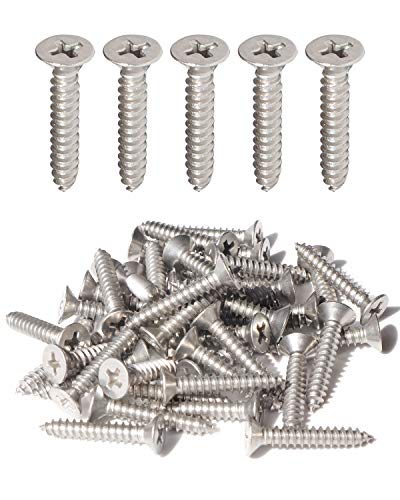 1 Inch Wood Screws #8 200pcs Flat Head Phillips Screws 18/8 (304) Stainless Steel for Sheet Metal, Deck, Cabinet, Hinges, Indoor & Outdoor Use by IMSCREWS