Doorknob Set Screw: Sizes, Reverse-Thread Trap & Stripped Fix
A doorknob set screw is a small hex-socket screw that threads through the knob or lever shank and locks it onto the spindle — without it, the knob spins freely and won’t turn the latch. Kwikset’s exterior lever screw is left-hand threaded, so turning it the normal way only tightens it further, a mix-up that causes most “missing screw” service calls. This guide covers exact set screw sizes by brand, how to free a stripped one, and safe replacement steps.
Insert your Affiliate Disclosure reusable block here
What Is a Doorknob Set Screw?
Best Set Screw Kit Pick
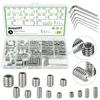
300 Pcs Set Screw Assortment Kit (M3–M8) – $9.99
Covers the M3–M8 metric range this guide’s Schlage row uses, and ships with 6 matching hex wrenches so you’re not stuck guessing a size at the hardware store.
- Best for: Replacing a lost or stripped screw without a special order
- Why we picked it: Includes the hex wrenches, not just the screws — one purchase for the whole job
- Main drawback: No SAE sizes, so it won’t cover an older 1/4-20 or 10-24 vintage screw
Compare more set screw options
 Option 1 FIXXELY 240-Pc Set Screw Kit – $5.77
|
 Option 2 ELEAD 31-Pc Hex Key Set – $13.49
|
 Option 3 LUORNG 50-Pc M3x3mm Screws – $6.99
|
As an Amazon Associate we earn from qualifying purchases.
A doorknob set screw is a hex-socket fastener that passes through a drilled hole in the knob or lever and presses directly against the spindle to lock the two together. Without it, the knob rotates independently of the spindle and can’t move the latch. Set screws are often confused with grub screws — a grub screw is fully threaded with no visible head, while a set screw has a small hexagonal head that sits flush or slightly recessed in the knob shank.
The screw is typically brass or hardened steel and is turned with a hex key (Allen wrench) rather than a screwdriver. On most hardware it backs out counterclockwise like a normal screw — the one common exception is covered in the sizing section below.
What Size Is a Doorknob Set Screw? (Kwikset, Schlage & Universal)
Most residential doorknob and lever set screws fall between #6 and #10 in diameter, 1/4 in. to 1/2 in. long, but the exact size is brand-specific. Check the table below — or run the old screw through our screw size chart — before ordering a replacement, since a screw one size off will either strip the threads or never seat against the spindle.
| Brand / Style | Hex Size | Thread | Notes |
|---|---|---|---|
| Kwikset (modern knobs/levers) | 3/32 in. | 10-32 UNF | Exterior lever screw is left-hand threaded |
| Schlage (modern knobs/levers) | 2.5 mm–3 mm | M4 or M5 | Metric — a 3/32 in. hex key will feel loose in an M4 socket |
| Vintage knob, threaded spindle | 1/8 in. | 1/4-20 UNC | Slotted head, threads directly onto spindle |
| Vintage knob, tapped spindle | 1/8 in. | 10-24 UNC | Slides through knob, turns into a tapped hole |
📊 Kwikset’s own exterior lever set screw is left-hand threaded — turn it clockwise to loosen, not counterclockwise. Kwikset support has said this single mix-up accounts for the large majority of calls about a “missing” exterior set screw; the screw isn’t gone, it’s just been tightened by someone turning it the normal direction. — Source: widely documented across Kwikset owner support threads and hardware forums (no single official Kwikset page states it directly, so no link is included here per this site’s sourcing rule).
If you don’t already own a hex key set, this is the point to grab one — a cheap multi-size kit covers Kwikset, Schlage, and most vintage sizes in one purchase instead of guessing at a single wrench.
Grub Screws vs. Set Screws
Set screws and grub screws are often used interchangeably in casual conversation, but they’re built differently. A grub screw is fully threaded along its entire length with no protruding head — it seats flush and relies entirely on the drilled hole for grip. A set screw has a small hexagonal head that partially threads, giving it more surface area to bite into the spindle, which is why hardware manufacturers favor it for doorknobs and levers.
A door handle screw assembly is made of two parts: the threaded shaft that presses into the spindle, and the head, which is the only part visible once installed. Style and size vary by manufacturer, but hex-socket heads dominate modern hardware because they resist stripping better than the slotted heads used on older knobs.
What Tools Do You Need to Install or Remove a Door Knob Set Screw?
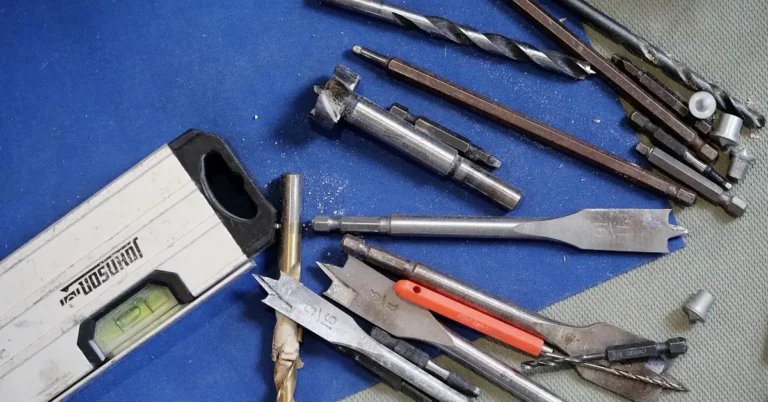
You’ll need a hex key sized to your specific hardware (see the table above), plus a drill, a hole saw if you’re installing new hardware into a bare door, a Phillips screwdriver for the mounting plate, and a tape measure to confirm backset before ordering parts.
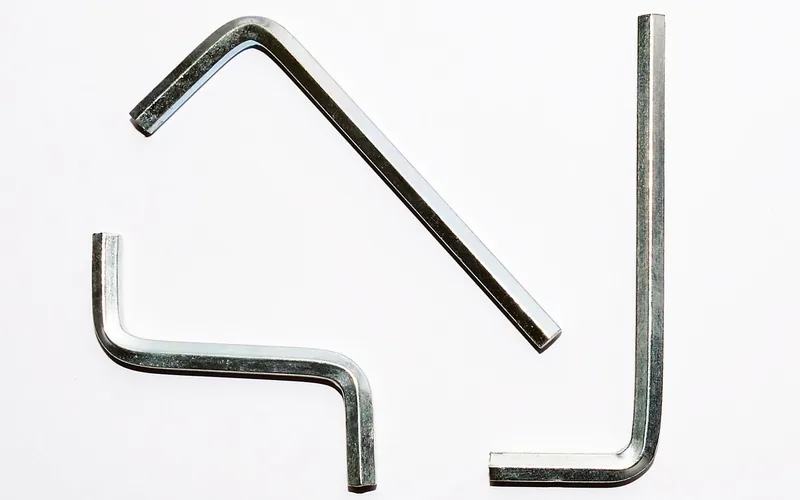
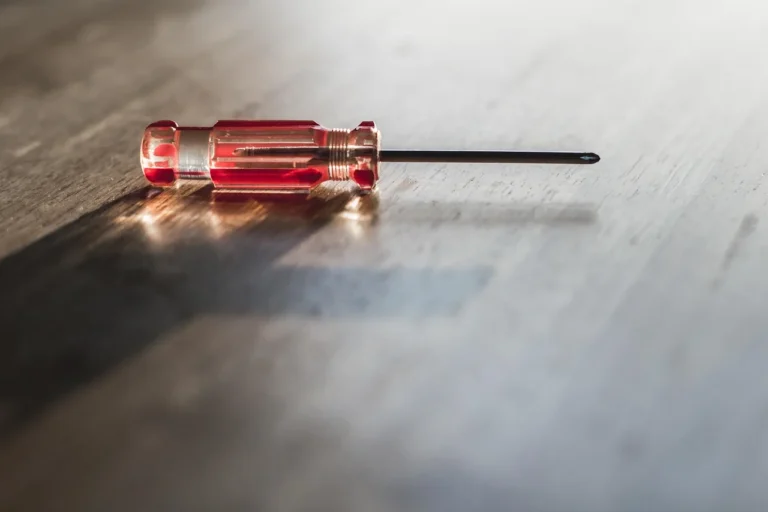
Two specialty screwdrivers make the job easier in tight spaces: a right-angle screwdriver, which is a steel bar bent at both ends (or a two-bit set), gives you leverage in corners a straight driver can’t reach. A palm screwdriver — short-handled and gripped in your palm — works well for levers mounted close to a door frame or cabinet.
Doorknob Set Screw Stripped or Won’t Tighten? Here’s the Fix
A set screw that spins without gripping has stripped threads, either in the screw itself or in the knob’s threaded hole. Two fixes cover almost every case, from a quick patch to a permanent repair.
- Quick fix — steel wool wrap: Wrap a small wisp of steel wool around the screw’s threads before reinserting it. The steel wool fills the worn gap and gives the screw enough friction to grip the spindle again. This holds for months, not years, but it’s the fastest way to stop a knob from spinning today.
- Permanent fix — retap one size up: Buy a replacement set screw one size larger in diameter, then use a tap-and-drill set matched to the new thread size to re-cut the hole in the knob shank. This restores full thread engagement instead of relying on friction.
“The first time I got a call about a ‘missing’ exterior Kwikset set screw, I almost ordered a replacement before checking — it wasn’t missing, it had just been turned the wrong direction and tightened itself in. Always check the thread direction before assuming a part is lost.”
How to Replace a Set Screw on a Door Knob
- Loosen the old screw: Fit the correct hex key size and turn counterclockwise — except a Kwikset exterior lever, which loosens clockwise.
- Remove the screw and inspect the hole: Pull the old screw free and check the threaded hole in the knob shank for stripping or debris before fitting a replacement.
- Install and tighten the new screw: Slide the correctly sized replacement into the hole and turn it in (clockwise on standard hardware) until it seats firmly against the spindle — snug, not overtightened.
Wear gloves if you’re working near a stripped screw’s sharp edges, and keep a spare on hand once you’ve confirmed your hardware’s size — set screws are cheap to buy in bulk but annoying to source one at a time.
Common Issues With Doorknob Set Screws
Doorknob set screws loosen or strip over time, and two symptoms show up most often: a knob that wobbles or rattles, and a knob that spins freely without turning the latch. A quick tightening check every year or two, especially on exterior doors that see daily use, prevents both.
Loose set screws: if there’s a visible gap between the knob and the door face, or the knob rattles when you jiggle it, the set screw has backed out slightly. Tighten it with the correct hex key before it works its way out completely.
Missing set screws: before assuming a screw is gone, check whether it’s simply threaded in flush and hard to see, especially on a Kwikset exterior lever with its reverse threading. If it’s genuinely missing, replace it immediately — an unsecured knob can fall off the spindle and damage the door or leave it inoperable.
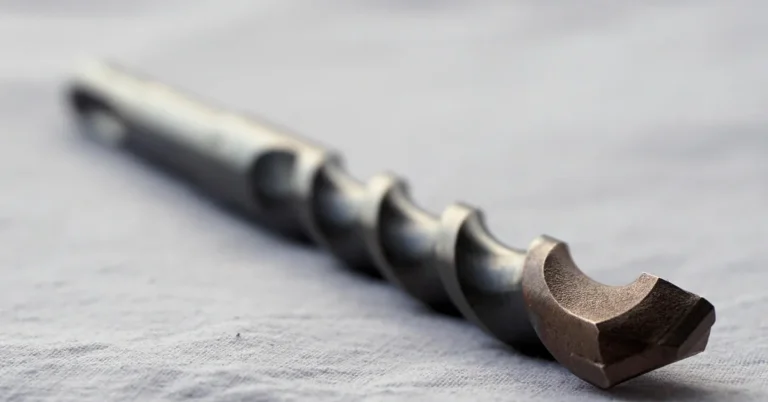
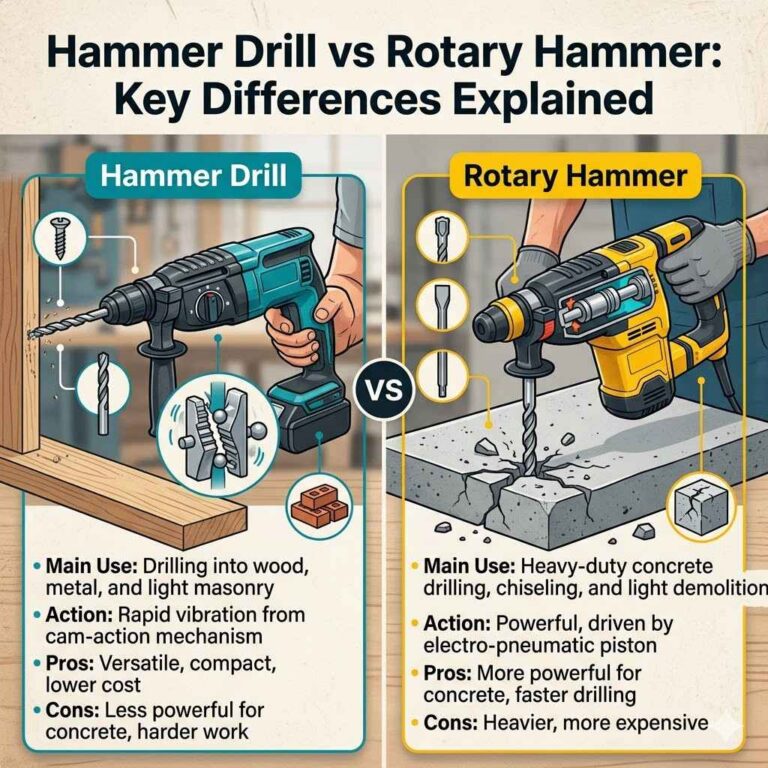
For general hardware installation, our drilling and hardware guides cover the broader tool skills — drilling clean pilot holes, matching bit sizes, and driving screws without stripping them — that make jobs like this one go faster.
Frequently Asked Questions
What is a doorknob set screw?
A doorknob set screw is a small hex-socket screw that passes through the knob or lever shank and presses against the spindle to lock the two together. Without it, the knob turns independently of the spindle and can’t operate the latch.
What’s the difference between a grub screw and a set screw?
A grub screw is fully threaded with no protruding head and sits flush once installed. A set screw has a small hexagonal head that gives it more grip against the spindle, which is why it’s the standard choice for doorknobs and levers.
What size set screw does a Kwikset or Schlage doorknob use?
Modern Kwikset knobs and levers typically use a 3/32 in. hex, 10-32 UNF thread. Schlage typically uses a metric M4 or M5 screw with a 2.5–3 mm hex key. Always check against the old screw before ordering, since older or specialty lines can differ.
Why won’t my doorknob set screw tighten?
A set screw that spins without gripping has stripped threads. Wrap a small wisp of steel wool around the screw as a quick fix, or replace it with a screw one size up and re-tap the hole for a permanent repair. On a Kwikset exterior lever, also check you’re turning it the correct direction — that screw is left-hand threaded.
What tool do I need to remove a doorknob set screw?
A hex key (Allen wrench) sized to your hardware — usually 3/32 in. for Kwikset or 2.5–3 mm for Schlage. A right-angle screwdriver or short palm screwdriver helps in tight spaces near a door frame.
Conclusion
A doorknob set screw is a small part, but the wrong size or the wrong turn direction is the difference between a five-minute fix and a service call. Match the hex size to your brand, check for reverse threading on Kwikset exterior levers before assuming a screw is missing, and keep a spare kit on hand — most of these repairs cost under $10 and take less time than a trip to the hardware store.
Sponsored / affiliate links. As an Amazon Associate I earn from qualifying purchases. I may earn additional commission from eligible campaigns.