Should Japanese Maples Be Fertilized Regularly
Many people wonder, Should Japanese Maples Be Fertilized Regularly? It can be a bit confusing for new gardeners because there are mixed opinions. Some say yes, some say no. This guide will make it super simple.
We will walk you through exactly what your Japanese maple needs to thrive. Get ready to learn the easy steps to keep your tree happy and healthy.
Understanding Japanese Maple Fertilization Needs
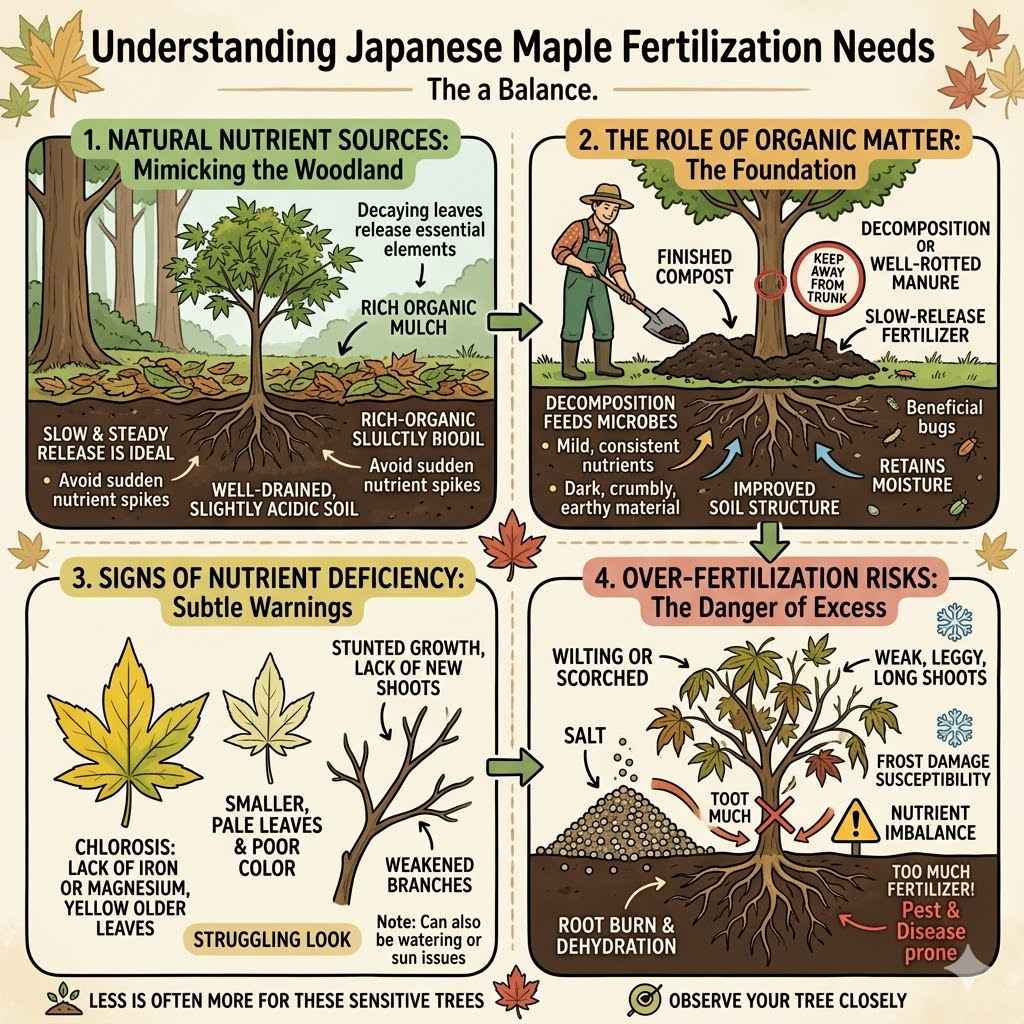
This section explores whether Japanese maples typically benefit from regular feeding. We will look at the natural conditions where these trees grow and how that translates to their needs in our gardens. It is important to know that these trees are often found in woodland settings.
They get nutrients from decaying leaves and forest soil. This natural system often provides enough food for them.
Natural Nutrient Sources for Japanese Maples
Japanese maples in their native habitats are used to a steady supply of nutrients from their surroundings. Decaying leaves from surrounding trees form a rich organic mulch. This mulch breaks down over time, releasing essential elements into the soil.
This slow and steady release is ideal for these sensitive trees. They do not experience sudden nutrient spikes, which can be harmful.
Think of a forest floor. It’s always covered in fallen leaves and organic matter. This is like a natural buffet for the tree’s roots.
The soil in these areas is often well-drained and slightly acidic. These conditions help the tree absorb nutrients efficiently. Gardeners aim to mimic these natural conditions for optimal growth.
These trees have evolved to be quite efficient with the nutrients available to them. They do not have a high demand for fertilizers like some other plants. Over-fertilizing can actually cause more harm than good.
It can lead to weak growth or even burn the delicate root system.
The Role of Organic Matter
Organic matter is king for Japanese maples. It acts like a slow-release fertilizer and improves soil structure. When organic materials decompose, they feed beneficial soil microbes.
These microbes then help make nutrients available to the tree’s roots. This natural process is slow and gentle.
Adding compost or well-rotted manure around the base of your Japanese maple can greatly benefit it. This material breaks down slowly. It provides a consistent, mild source of nutrients.
It also helps retain moisture in the soil, which is important for these trees. Plus, it improves drainage. This helps prevent root rot.
The key is to use organic matter that has fully decomposed. Fresh compost or manure can be too strong. It might contain substances that can damage the tree.
Aim for materials that are dark, crumbly, and smell earthy. Spread a layer of this material around the base of the tree. Keep it a few inches away from the trunk itself.
Signs of Nutrient Deficiency
Sometimes, your Japanese maple might show signs that it needs more nutrients. These signs are usually subtle at first. Yellowing leaves, especially on older foliage, can be an indicator.
This is called chlorosis. It often means there is a lack of iron or magnesium.
Another sign might be stunted growth. If your tree is not putting out new leaves or branches as expected, it could be hungry. The leaves might also appear smaller than usual.
They might not have the vibrant color you expect. This can apply to the typical green leaves or the red and purple varieties.
Weakened branches or a generally unhealthy appearance can also be red flags. If the tree looks like it’s struggling to keep its leaves or its overall form is poor, it’s worth checking its nutrient status. But remember, these symptoms can also be caused by other issues like improper watering or too much sun.
It’s important to observe your tree closely. Comparing its appearance to healthy specimens can help. Also, consider its environment.
Has anything changed? Has the soil quality declined? These observations help pinpoint the problem.
It’s not always about fertilizer.
Over-Fertilization Risks
Giving your Japanese maple too much fertilizer is a common mistake. It can lead to several problems. The most immediate risk is root burn.
Fertilizers contain salts. Too much salt can dehydrate and damage the fine root hairs that absorb water and nutrients.
This damage can make the tree weaker. It might show signs of wilting or leaf scorch. Even if the roots aren’t severely damaged, over-fertilizing can cause excessive, weak growth.
The new shoots might be long and leggy. They may not harden off properly before winter. This makes them susceptible to frost damage.
Another issue is nutrient imbalance. If you add too much of one nutrient, it can prevent the tree from absorbing others. This creates a deficiency in something else.
For example, too much phosphorus can block the uptake of iron, leading to chlorosis.
The leaves might also become unnaturally dark green. This might seem good, but it can be a sign of too much nitrogen. This type of growth is often more prone to pests and diseases.
It’s like feeding a child too much candy; they get a sugar rush but it’s not healthy long-term.
When and How to Fertilize Japanese Maples
Deciding Should Japanese Maples Be Fertilized Regularly? depends on several factors. Generally, they do not need frequent fertilization. If your soil is rich and you add organic matter, you might not need to fertilize at all.
However, if your tree shows signs of deficiency or is in poor soil, a light feeding can help. The key is to do it at the right time and with the right type of fertilizer.
Best Time of Year for Fertilizing
The ideal time to fertilize Japanese maples is in early spring. This is when the tree is waking up from dormancy and starting its active growth phase. Fertilizing at this time helps support new leaf and branch development.
It gives the tree a boost for the growing season.
Wait until the threat of hard frost has passed. Applying fertilizer too early can encourage new growth. This new growth can be damaged by late frosts.
A good rule of thumb is to fertilize after the last expected frost in your area. Usually, this is around March or April in many temperate climates.
Avoid fertilizing in the late summer or fall. Doing so can stimulate new growth that will not have time to harden off before winter. This makes the tree more vulnerable to cold damage.
The tree needs to prepare for dormancy, not start new growth.
Some gardeners might opt for a second, very light feeding in late spring or early summer. This is usually only if the tree seems to be lacking vigor. It should be a very diluted application.
It’s better to err on the side of caution and fertilize less often.
Choosing the Right Fertilizer
When you do fertilize, choose a fertilizer that is specifically formulated for trees and shrubs. Look for a balanced fertilizer. A common recommendation is a fertilizer with a low nitrogen number.
For example, something like a 5-10-10 or 10-10-10. The numbers represent nitrogen, phosphorus, and potassium.
Japanese maples do not need a lot of nitrogen. Too much nitrogen promotes leafy growth at the expense of flowers or overall health. They also benefit from phosphorus and potassium, which help with root development and disease resistance.
Consider using a slow-release fertilizer. These release nutrients gradually over several months. This provides a steady food supply without overwhelming the tree.
It also reduces the risk of leaching into groundwater.
Another excellent option is a fertilizer designed for acid-loving plants. Japanese maples prefer slightly acidic soil. Fertilizers that help maintain this pH can be beneficial.
Always read the label carefully. Ensure it is suitable for ornamental trees.
Organic Fertilizer Options
Many gardeners prefer organic fertilizers. These are derived from natural sources like compost, bone meal, or fish emulsion. Organic fertilizers break down slowly.
They also improve soil health as they decompose.
Composted manure is a fantastic choice. It provides a range of nutrients and organic matter. Ensure it is well-composted to avoid burning the roots.
Another option is fish emulsion or kelp meal. These are rich in micronutrients and can give your tree a gentle boost.
Bone meal is a good source of phosphorus. It aids in root development and flowering. However, it can be slow to break down.
Rock phosphate is another slow-release phosphorus source. These are good additions if your soil test indicates a deficiency in these particular nutrients.
Using a combination of organic materials can provide a well-rounded nutrient profile. For instance, a layer of compost mixed with some bone meal can be very effective. The key with organic options is their gentle nature and soil-enriching properties.
How to Apply Fertilizer
Proper application is crucial to avoid harming your Japanese maple. Never apply fertilizer directly against the trunk. Instead, spread it around the drip line.
The drip line is the imaginary circle on the ground directly under the farthest extent of the tree’s branches.
This is where the majority of the tree’s feeder roots are located. When you apply fertilizer here, it is most effectively absorbed. Use a spreader for granular fertilizers.
For powdered or liquid fertilizers, follow the dilution instructions precisely.
After applying granular fertilizer, water the area thoroughly. This helps dissolve the fertilizer and move it into the soil. It also washes away any granules that might have settled on the leaves.
Watering also prevents the fertilizer salts from sitting on the soil surface and burning roots.
For liquid fertilizers, apply them to moist soil. This prevents burning. Ensure even coverage around the drip line.
Do not over-apply, even if it is diluted. A little goes a long way with these sensitive trees.
Fertilizer Application Methods
- Granular Fertilizer: This is the most common type. It comes in small pellets. You spread it around the base of the tree. It dissolves slowly with water. Always follow the package directions for application rates. Too much can harm the tree.
- Liquid Fertilizer: This is diluted in water. You can pour it around the base of the tree. It is absorbed quickly by the roots. This is a good option for a quick nutrient boost. Be very careful with dilution.
- Slow-Release Spikes: These spikes are pushed into the ground near the tree’s roots. They release nutrients gradually. They are convenient but can sometimes deliver nutrients unevenly.
Each method has its pros and cons. Granular fertilizers are easy to use and provide a steady supply. Liquid fertilizers offer a fast acting boost but require careful dilution.
Spikes are convenient for a set-and-forget approach. For Japanese maples, slow-release granular or liquid fertilizers applied at the right time are often preferred.
Dosage and Frequency Guidelines
This is where many gardeners get it wrong. For Japanese maples, less is definitely more. If you are using a balanced, slow-release fertilizer, once a year in early spring is often enough.
The amount you use depends on the product. Always follow the instructions on the fertilizer bag.
A general guideline for a mature tree might be about 1-2 pounds of fertilizer per inch of trunk diameter. However, it is best to err on the side of caution. For younger trees, use less.
For established trees in healthy soil with added organic matter, you might skip fertilizing altogether for a few years.
If you notice signs of deficiency, you can apply a diluted liquid fertilizer. Use half the strength recommended on the package. Apply it once in spring and potentially again in early summer if needed.
Never fertilize more than twice a year.
Soil testing is also a great way to determine if fertilization is even necessary. A soil test can tell you what nutrients are lacking. It can also tell you the pH of your soil.
This helps you choose the right fertilizer and avoid over-application.
Alternatives to Chemical Fertilizers
If you are still wondering Should Japanese Maples Be Fertilized Regularly? with chemicals, consider alternatives. Nature provides excellent ways to nourish your tree without harsh substances. These methods are often gentler and improve soil health over time.
Composting Around Your Maple
Composting is one of the best things you can do for your Japanese maple. It’s like giving it a healthy meal. You can create your own compost pile at home.
It is made from kitchen scraps and yard waste. This compost is rich in nutrients.
When it is ready, spread a layer of compost around the base of your tree. Make sure to keep it a few inches away from the trunk. This layer will break down.
It will release nutrients slowly into the soil. It also helps improve the soil structure.
Compost adds organic matter. This helps the soil retain moisture but also improves drainage. It feeds beneficial microorganisms.
These microbes help the tree absorb nutrients better. It’s a win-win situation for your tree and the soil.
If you don’t have your own compost, you can buy bagged compost. Look for high-quality, finished compost. Avoid compost that still has large chunks of undecomposed material.
It should look dark and crumbly.
Benefits of Composting
- Slow nutrient release: Compost feeds the tree gradually. This prevents sudden nutrient spikes that can harm it.
- Improved soil structure: It makes clay soils drain better. It helps sandy soils hold more water.
- Increased microbial activity: Compost is full of beneficial bacteria and fungi. These help break down nutrients and make them available to the tree.
- Water retention: It helps the soil hold onto moisture. This means you might need to water less often.
- pH balancing: Compost can help moderate soil pH, bringing it closer to the ideal range for Japanese maples.
Composting is a sustainable practice. It diverts waste from landfills. It creates a natural fertilizer that benefits your entire garden.
For Japanese maples, it’s a foundational element for long-term health.
Mulching Strategies
Mulching is another fantastic way to care for your Japanese maple. Mulch is a layer of material placed on top of the soil. It can be made of wood chips, shredded bark, or even pine needles.
It helps conserve moisture and suppress weeds.
For Japanese maples, organic mulches are best. They break down over time. This process adds nutrients to the soil.
It also mimics the natural forest floor. Use a mulch that is slightly acidic, like pine bark or pine needles. This is good for Japanese maples.
Apply mulch in a ring around the base of the tree. Keep the mulch a few inches away from the trunk. This prevents moisture from getting trapped against the bark.
Trapped moisture can lead to rot and disease. A layer of 2-3 inches is usually sufficient.
As the mulch breaks down, it enriches the soil. This slow decomposition process releases nutrients. It’s like a continuous, gentle feeding for your tree.
Mulch also helps regulate soil temperature. It keeps the roots cooler in summer and warmer in winter.
Types of Organic Mulch
- Wood Chips: These are readily available and break down slowly. They offer good weed suppression.
- Shredded Bark: This is a popular choice. It looks attractive and decomposes at a moderate pace.
- Pine Needles: These are slightly acidic and are excellent for Japanese maples. They provide a natural look.
- Composted Leaves: If you collect fallen leaves, compost them. They make a nutrient-rich mulch.
Avoid using dyed mulches or rubber mulches. These can contain chemicals that are not good for your tree or the environment. Stick to natural, organic materials.
These provide the most benefit for your Japanese maple.
Using Diluted Liquid Organic Feed
If your tree needs a little extra help, consider using diluted liquid organic feeds. Products like fish emulsion or liquid kelp are great choices. They are packed with micronutrients and trace elements that can boost plant health.
These are best applied during the growing season. Mix them with water according to the product’s instructions. It’s important to dilute them even further than recommended for Japanese maples.
Use about half the strength suggested on the label.
Apply the diluted liquid feed to the soil around the drip line. This provides a readily available nutrient boost. It can help improve leaf color and overall vigor.
Use this method sparingly, perhaps once or twice during the spring and early summer.
This is not a substitute for good soil health. It is more of a supplemental treatment. It can help correct minor deficiencies.
It’s a way to give your tree a gentle nudge when it needs it most.
Troubleshooting Common Japanese Maple Issues
Even with the best care, Japanese maples can sometimes face problems. Understanding these issues helps you act quickly. This section addresses common concerns and how to solve them, helping you know when and if you should fertilize.
Yellowing Leaves (Chlorosis)
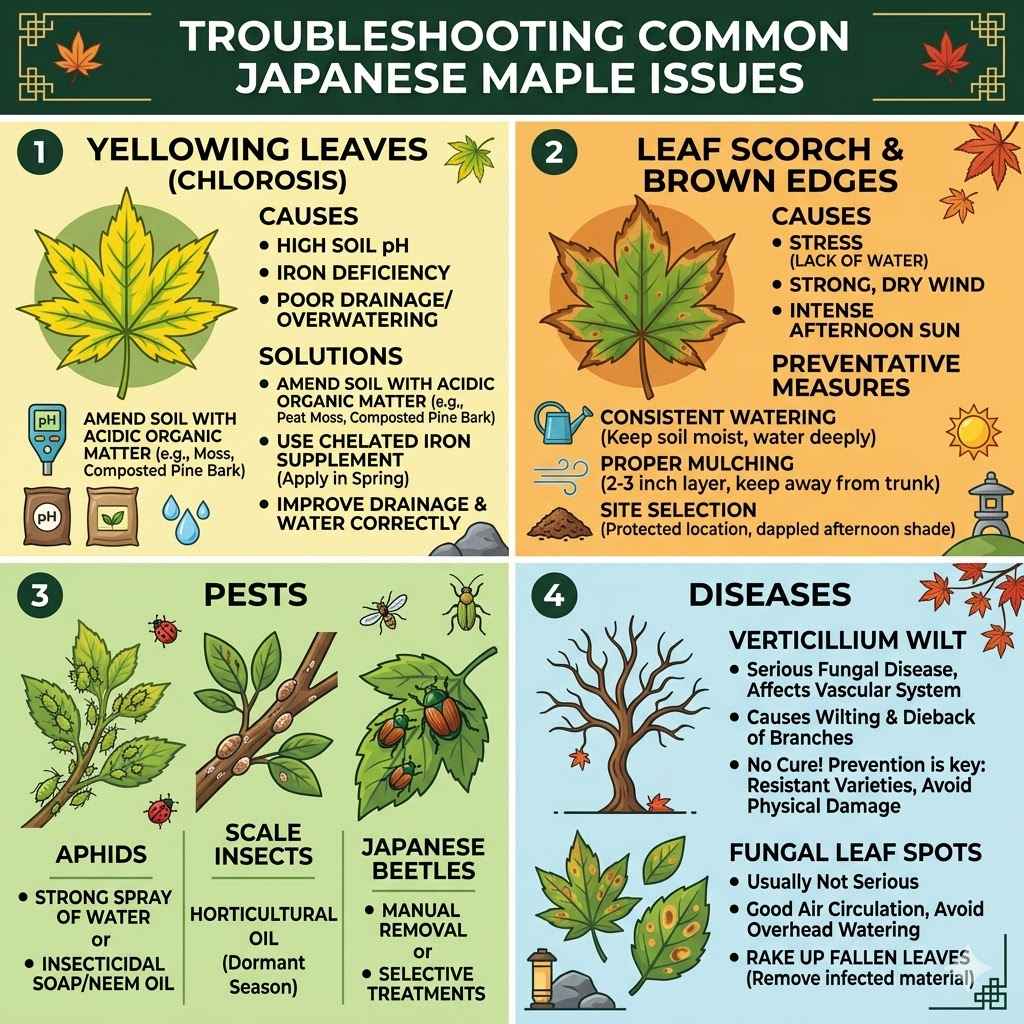
Yellowing leaves on a Japanese maple, especially if the veins remain green, is a common sign of chlorosis. This often happens when the soil pH is too high. Japanese maples prefer slightly acidic soil, around 5.5 to 6.5.
In alkaline soil, iron becomes unavailable to the tree.
Iron deficiency is the most frequent cause. Other causes can include waterlogged soil or poor drainage. Sometimes, over-fertilizing can also lead to nutrient imbalances that manifest as yellowing.
It is important to identify the root cause.
To correct this, you can try amending the soil with acidic organic matter. Adding peat moss or composted pine bark can help lower the pH. You can also use a chelated iron supplement.
This is a form of iron that is more easily absorbed by the plant, even in alkaline soils.
Apply iron supplements in spring. Follow the product instructions carefully. Avoid over-application.
If the problem is due to poor drainage, improve the soil by adding compost. Ensure the area around the tree is not holding excess water.
Causes and Solutions for Yellow Leaves
| Symptom | Possible Causes | Solutions |
|---|---|---|
| Leaves turning yellow, veins stay green (Chlorosis) | High soil pH, iron deficiency, poor drainage, overwatering | Amend soil with acidic organic matter, use chelated iron supplement, improve drainage, water correctly |
| Overall yellowing, pale leaves | General nutrient deficiency, too much sun, severe stress | Light feeding with balanced fertilizer in spring, provide adequate shade, check watering |
It’s always wise to get a soil test done. This can confirm if high pH or nutrient deficiencies are the issue. This takes the guesswork out of treating chlorosis.
Leaf Scorch and Browning Edges
Leaf scorch is characterized by brown, dry edges on the leaves. It can also appear as brown spots. This often happens when the tree is stressed, usually due to lack of water.
Japanese maples are sensitive to drought, especially during hot, dry periods.
Wind can also contribute to leaf scorch. Strong, dry winds can pull moisture from the leaves faster than the roots can supply it. This is especially true if the tree is exposed.
Planting in a protected location helps prevent this.
Sunburn can also cause browning. While some varieties can take more sun, many prefer dappled shade. Intense afternoon sun can scorch their delicate leaves.
Providing afternoon shade can prevent this.
To prevent and treat leaf scorch, ensure consistent watering. Water deeply and regularly, especially during dry spells. Mulching helps retain soil moisture and keeps roots cooler.
Avoid fertilizing during hot, dry weather, as this can worsen the stress.
If your tree suffers from leaf scorch, prune away the affected parts. Do this during the dormant season. It is mostly a cosmetic issue, and the tree will likely recover.
Preventing Leaf Scorch
- Consistent Watering: Keep the soil consistently moist but not waterlogged. Water deeply when the top inch of soil feels dry.
- Proper Mulching: Apply a 2-3 inch layer of organic mulch around the tree. Keep it a few inches from the trunk.
- Site Selection: Plant Japanese maples in a location protected from strong, dry winds. Provide dappled shade, especially from harsh afternoon sun.
- Avoid Over-Fertilizing: Excessive fertilizer can damage roots and make the tree more susceptible to stress.
Addressing these factors helps keep your Japanese maple healthy and its leaves looking their best.
Pests and Diseases
Japanese maples are generally resilient. However, they can sometimes be affected by pests and diseases. Common pests include aphids, scale insects, and Japanese beetles.
Diseases can include verticillium wilt and fungal spots.
Aphids are small, sap-sucking insects. They often cluster on new growth. A strong spray of water can often dislodge them.
If the infestation is severe, insecticidal soap or neem oil can be used. These are generally safe for Japanese maples.
Scale insects are tiny, immobile insects that attach themselves to branches. They can weaken the tree over time. Horticultural oil applied during the dormant season can help control them.
You can also try to scrape them off manually.
Verticillium wilt is a serious fungal disease that affects the vascular system of the tree. It causes wilting and dieback of branches. There is no cure.
Planting resistant varieties and maintaining tree health are the best defenses. Proper watering and avoiding physical damage to the trunk are important.
Fungal leaf spots appear as discolored spots on the leaves. They are usually not serious. Good air circulation and avoiding overhead watering can help prevent them.
Rake up fallen leaves to remove infected material.
Managing Common Pests and Diseases
The best approach to pest and disease management is prevention. A healthy tree is less susceptible. Ensuring good soil drainage, proper watering, and adequate sunlight helps build the tree’s natural defenses.
When pests or diseases do appear, identify them correctly. Then, choose the least toxic treatment option first. Horticultural oils and insecticidal soaps are often effective and environmentally friendly.
Avoid over-fertilizing, as this can make the tree more attractive to certain pests. Also, ensure proper pruning techniques are used. Removing dead or diseased branches promptly helps prevent the spread of infection.
If you suspect a serious disease like verticillium wilt, consult with a local arborist or horticultural extension office. They can help diagnose the problem and recommend appropriate management strategies.
Frequently Asked Questions
Question: How often should I fertilize my Japanese maple?
Answer: Generally, Japanese maples do not need regular fertilization. If your soil is healthy and you add organic matter like compost, you may never need to fertilize. If you do fertilize, do it only once in early spring with a balanced, slow-release fertilizer, and use it sparingly.
Question: What type of fertilizer is best for Japanese maples?
Answer: A balanced, slow-release fertilizer formulated for trees and shrubs is best. Look for one with a lower nitrogen number, such as a 5-10-10 or 10-10-10. Organic options like compost, bone meal, or kelp meal are also excellent choices.
Question: When is the worst time to fertilize a Japanese maple?
Answer: The worst time to fertilize is in late summer or fall. This can stimulate new growth that won’t have time to harden off before winter. Fertilizing too early in spring before the threat of frost has passed can also damage new shoots.
Question: My Japanese maple’s leaves are turning yellow. What should I do?
Answer: Yellowing leaves, especially with green veins, can indicate chlorosis, often due to high soil pH or iron deficiency. Amend the soil with acidic organic matter, ensure good drainage, and consider a chelated iron supplement if needed.
Question: Can I fertilize my Japanese maple with compost?
Answer: Yes, compost is an excellent option. Applying a layer of well-rotted compost around the base of the tree in spring provides nutrients slowly and improves soil health. Keep the compost a few inches away from the trunk.
Conclusion
So, Should Japanese Maples Be Fertilized Regularly? The short answer is usually no. These beautiful trees thrive best with minimal intervention. Focus on providing rich, well-drained soil and consistent moisture.
Organic matter like compost and mulch offers gradual nourishment. If you see signs of deficiency, a light feeding in spring is appropriate. Avoid over-fertilizing to protect your tree’s delicate roots.