Jenny Lind Maple Wood Spindle Convertible Baby Crib: Safety Facts and Buying Guide
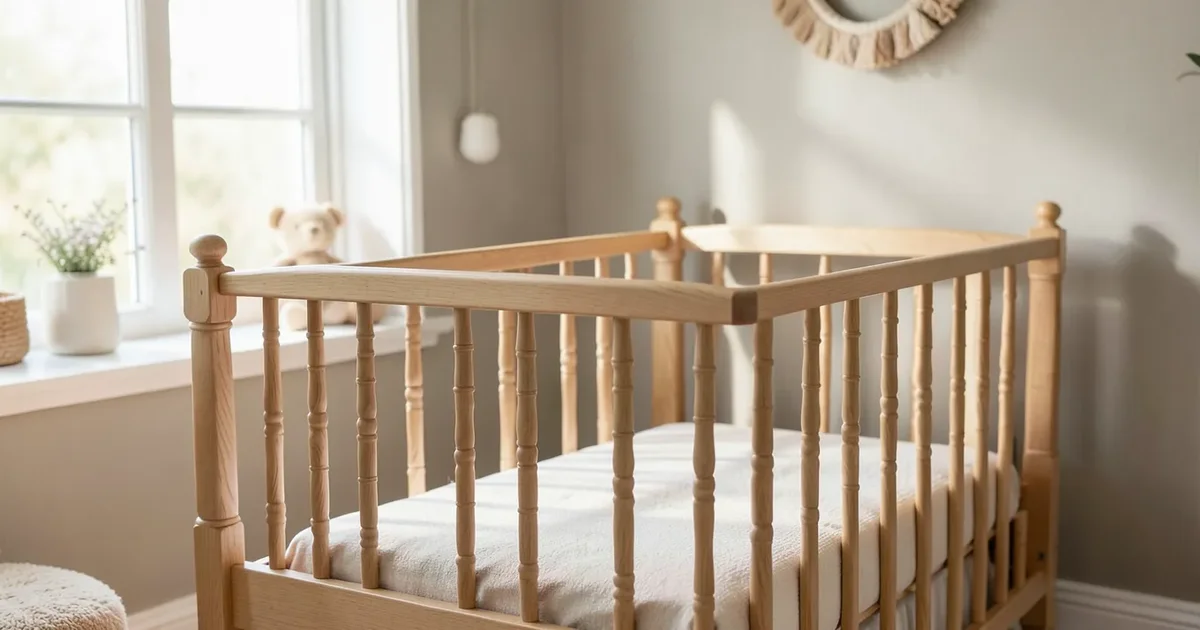
The Jenny Lind spindle crib is a classic turned-baluster design dating back to the 1850s. A modern, currently manufactured Jenny Lind crib – like DaVinci’s 3-in-1 convertible version – is built to the same federal safety standard as every other new crib sold in the US: slats no more than 2 3/8 inches apart, no drop-side rail, and a mattress support that doesn’t leave a gap a baby could get trapped in.
That distinction matters more with this specific style than most, because genuine antique and older secondhand Jenny Lind cribs are exactly the kind of vintage furniture that shows up at estate sales, in family attics, and on secondhand marketplaces – and an original 19th- or 20th-century spindle crib was built decades before any federal crib safety standard existed. Below is what the current safety rules actually require, why the drop-side design that used to be common was banned, and what to check before you buy new or accept a hand-me-down.
What Current Federal Crib Safety Standards Actually Require
Current-Standard Spindle Crib
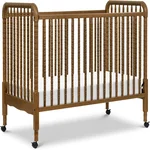 |
DaVinci Jenny Lind 3-in-1 Crib – $279.00 The classic spindle silhouette this article is about, built new to current CPSC standards. Note: the original light “Maple” colorway is discontinued – Walnut and a few other finishes are the current in-stock options.
|
Every crib manufactured or sold in the US since June 28, 2011 has to meet a mandatory federal safety standard set by the Consumer Product Safety Commission. The rules that matter most for a spindle-style crib specifically:
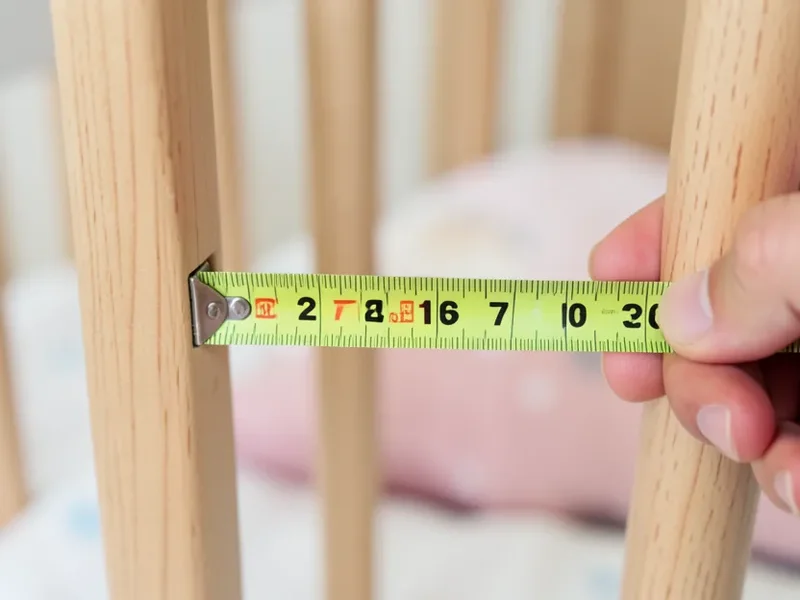
- Slat spacing: no more than 2 3/8 inches between spindles – narrow enough that a baby’s body can’t slip through and get trapped, but wide enough to avoid head entrapment on the other end of the size range. This is the single most important measurement to check on any older crib.
- No drop-side rails. Traditional drop-side cribs, where one side slides up and down, are banned outright – they can no longer be manufactured, sold, or even resold or used in childcare settings in the US.
- A tight-fitting mattress support with no more than a two-finger-width gap between the mattress and the crib frame on any side.
- No corner post extensions above 1/16 inch (except on canopy cribs) – tall decorative corner posts can snag clothing and are a strangulation risk.
- Hardware that resists loosening – stronger mattress support brackets and slats than the pre-2011 standard required, tested under repeated stress.
A crib carrying a JPMA (Juvenile Products Manufacturers Association) certification seal has been independently tested against these requirements, on top of the manufacturer’s own compliance testing – worth checking for on the box or listing before you buy.
Why Drop-Side Cribs Were Banned
Drop-side cribs – where one long side rail slides down so a parent doesn’t have to reach over a fixed rail – were the standard design for decades. The CPSC linked 32 infant suffocation and strangulation deaths between 2000 and 2010 to drop-side hardware: the plastic tracking and hardware holding the sliding rail could loosen, warp, crack, or detach over time, opening a gap between the rail and the mattress where an infant could become wedged and trapped. Millions of drop-side cribs were recalled across multiple major brands in the years leading up to the ban.
That history is exactly why a genuine vintage Jenny Lind crib deserves real scrutiny rather than nostalgia. A spindle crib built in the 1960s, 70s, or 80s predates both the drop-side ban and the current slat-spacing standard – the classic Jenny Lind silhouette existed with wider spindle spacing long before 2 3/8 inches became the legal maximum. An antique crib can also carry old lead-based paint, and the original hardware has decades of wear the manufacturer never tested for stress that long. None of that means every old crib is automatically dangerous, but it does mean measuring the spindle gaps, checking for a drop-side mechanism, and confirming there’s no flaking old paint are non-negotiable before a vintage or hand-me-down crib goes anywhere near a baby.
Convertible Functionality: What “3-in-1” Actually Means
A 3-in-1 convertible crib like the current Jenny Lind converts from a standard crib to a toddler bed, and then to a daybed, by removing or swapping specific rail pieces – typically sold as a separate conversion kit rather than included in the original crib purchase. Read the specific model’s conversion instructions before buying if getting years of use out of one piece of furniture is the deciding factor, since the conversion hardware isn’t universal between brands or even between different generations of the same product line.
Most convertible cribs also offer 3-4 adjustable mattress support heights – start at the highest setting for a newborn (easier reach for you) and lower it as the baby starts pulling up to stand, which is also the point to double-check the mattress-to-frame gap again, since a baby who can pull to standing puts real force on the crib sides.
Assembly, Maintenance, And When To Replace It
Assembly on a spindle crib takes longer than a panel-side crib simply because there are more individual pieces – dozens of spindles instead of a few flat panels – so budget more time than the box estimate and keep the hardware bag sorted by size as you go. Use the exact hardware included; substituting longer or shorter bolts than specified can affect how securely the mattress support locks in.
For maintenance, clean with a barely-damp cloth and mild soap rather than harsh chemicals, which can degrade the finish over the years the crib will see use. More importantly, re-check and tighten every screw and bolt every few months – a spindle crib has far more joints than a solid-panel crib, and any one of them loosening is a real hazard, not just a squeak.
On lifespan: manufacturers and the CPSC generally recommend against using any crib older than 10 years, new standard or not, since hardware fatigues and safety requirements can be updated again after a crib is built. Before using any secondhand crib – Jenny Lind style or otherwise – look up the model and manufacture date against the CPSC’s recall database, not just the brand name, since recalls are often model- and date-range-specific.
Frequently Asked Questions
Why Is It Called A Jenny Lind Crib?
The Jenny Lind crib is named after the 19th-century Swedish opera singer Jenny Lind. The turned-spindle furniture style she was associated with during her famous 1850s American tour became strongly linked to her name, and spindle cribs and beds built in that style have carried the “Jenny Lind” name ever since.
Is It OK To Use A Vintage Crib?
Generally, no – not without real inspection. A genuine vintage crib was almost certainly built before the 2011 federal standard, may have spindle gaps wider than the current 2 3/8-inch maximum, could have a drop-side mechanism (banned since 2011), and may carry old lead-based paint. If you’re set on using one, measure the spindle gaps yourself, confirm there’s no drop-side rail, and have any old paint tested before it goes near a baby.
Do Convertible Cribs Expire?
There’s no legal expiration date, but manufacturers and the CPSC generally recommend not using any crib older than about 10 years, since hardware wears with age and safety standards can change after the crib was built. Always check the specific model and manufacture date against the CPSC recall database before reusing an older crib.
What Is The Best Wood To Build A Baby Crib?
Solid hardwoods like maple, birch, and beech are common choices for crib construction because they’re dense and hold up to years of hardware stress without loosening. That said, wood species matters far less to safety than meeting the current CPSC standard – a solid hardwood crib built before 2011 can still fail on slat spacing or drop-side design, while a current, certified crib in a lighter softwood core still meets every federal requirement.
Conclusion
The Jenny Lind spindle look has stayed popular for over 150 years, and a current, CPSC-compliant version gives you that heirloom style with 2 3/8-inch-max slat spacing, no drop-side rail, and a mattress support built to the modern hardware standard. The one place to slow down is a genuine vintage or hand-me-down Jenny Lind crib – measure the spindle gaps, rule out a drop-side mechanism, and check for old paint before it’s anywhere near a baby. The style hasn’t changed in over a century; the safety engineering underneath it has, significantly, and that part isn’t optional.
Sponsored / affiliate links. As an Amazon Associate I earn from qualifying purchases. I may earn additional commission from eligible campaigns.