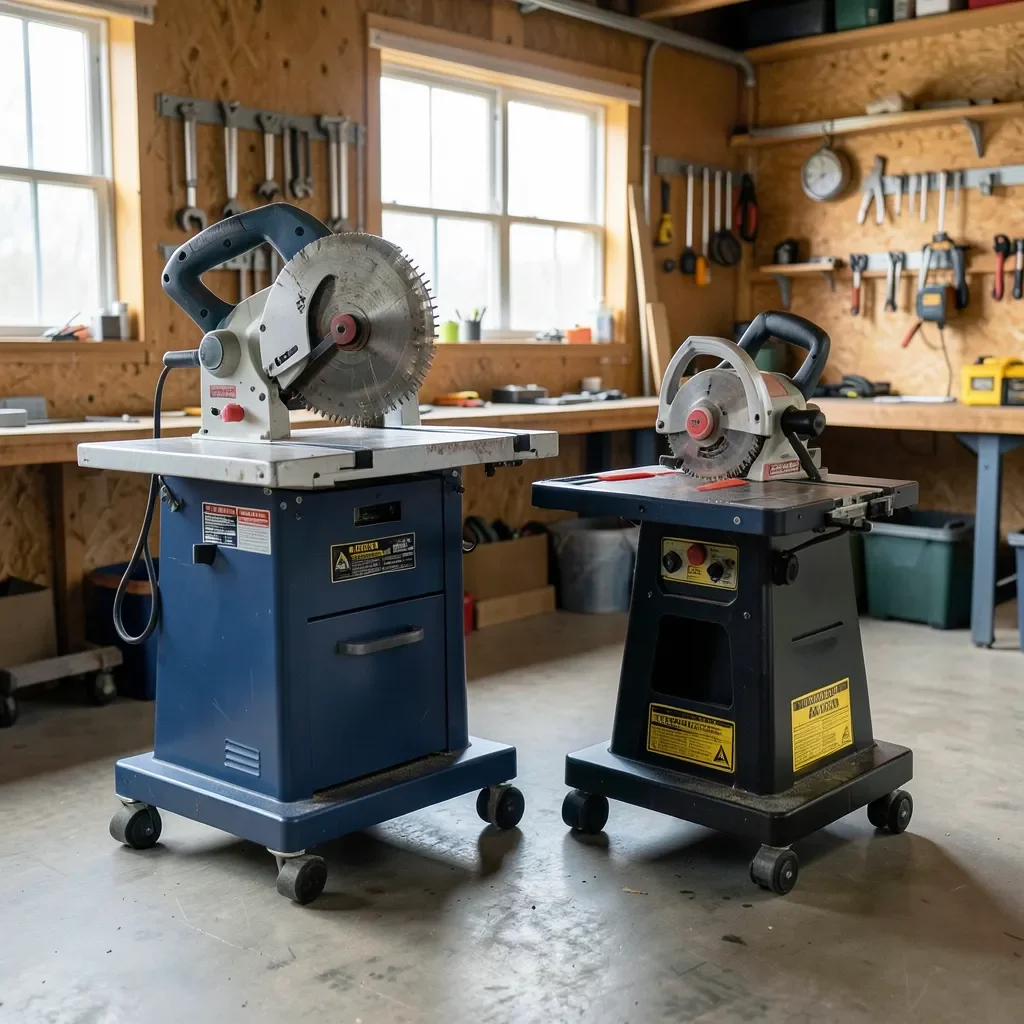
Skilsaw SPT99 Worm Drive vs. DeWalt DWE7491RS Table Saw
The DeWalt DWE7491RS actually spins faster — 4,800 RPM versus the Skilsaw SPT99-12’s roughly 3,650 RPM — but the Skilsaw’s worm-drive gearing trades that top-end speed for more torque, letting it cut 3-5/8 inches deep at 90° versus the DeWalt’s 3-1/8 inches. The DeWalt rips wider at 32-1/2 inches versus the Skilsaw’s 30-1/2 inches. This guide compares these two specific jobsite table saws by real spec, not brand reputation.
Insert your Affiliate Disclosure reusable block here.
Looking for a broader brand-level comparison instead of these two specific jobsite models? See our Skil vs. DeWalt table saw buying guide.
Skilsaw SPT99-12 vs. DeWalt DWE7491RS: Spec Comparison
Best Jobsite Table Saw Pick
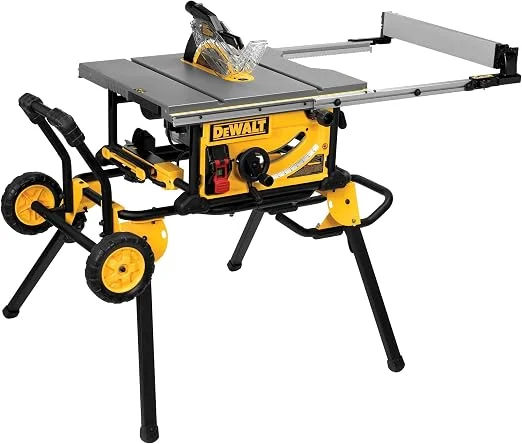 |
DeWalt DWE7491RS 10″ Jobsite Table Saw w/ Rolling Stand – $599.00 The wider-ripping, higher-RPM option from this comparison — a straightforward pick if your work leans toward sheet goods and general framing rather than thick hardwood.
|
| Spec | Skilsaw SPT99-12 | DeWalt DWE7491RS |
|---|---|---|
| Drive type | Worm drive (geared) | Direct drive |
| Motor | 15 amp | 15 amp |
| No-load speed | ~3,650 RPM | 4,800 RPM |
| Max depth of cut at 90° | 3-5/8 in | 3-1/8 in |
| Rip capacity (right of blade) | 30-1/2 in | 32-1/2 in |
| Fence system | Rack-and-pinion | Rack-and-pinion telescoping |
| Typical street price | ~$579-$650 | ~$549-$599 |
Why the Skilsaw Has More Torque Despite Lower RPM
A worm-drive gear train uses a worm screw turning a perpendicular gear, which mechanically trades output speed for torque — the same principle behind worm-drive circular saws. That’s why the Skilsaw SPT99-12 turns its blade slower than the DeWalt but bogs down less in dense hardwood or repeated heavy ripping. Neither saw is simply “more powerful” — they trade speed and torque in opposite directions.
Rip Capacity and Cutting Depth
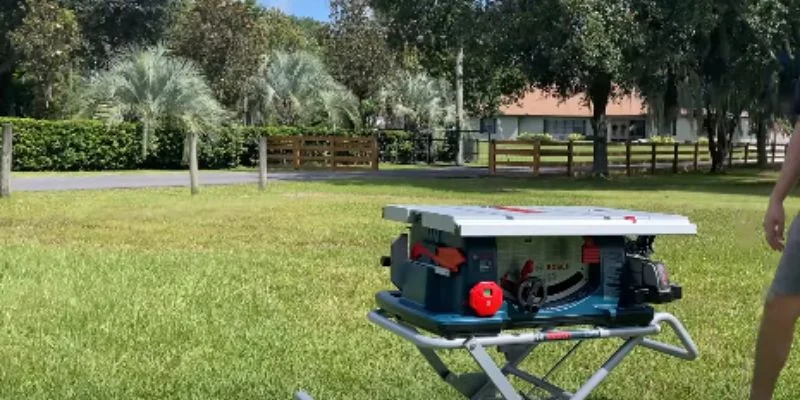
The DeWalt’s 32-1/2-inch rip capacity beats the Skilsaw’s 30-1/2 inches, which matters most when breaking down full 4×8 sheet goods to width. The Skilsaw counters with a deeper 3-5/8-inch maximum cut at 90°, versus the DeWalt’s 3-1/8 inches — relevant if you regularly rip thick stock like 4×4 posts or thick hardwood slabs rather than sheet material.
Fence System and Portability
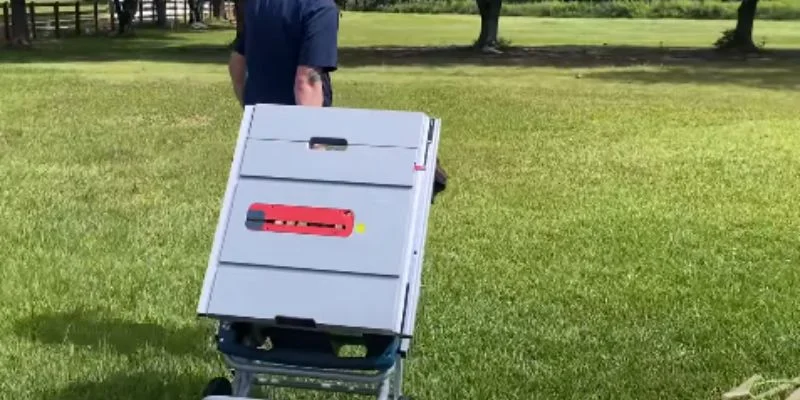
Both saws use a rack-and-pinion fence system for quick, repeatable adjustments, and both fold onto a rolling stand for jobsite transport. The Skilsaw’s stand uses larger 16-inch wheels, which roll more easily over gravel or uneven ground than a standard jobsite dolly — a real advantage if you’re wheeling the saw across an active site rather than a paved driveway or garage floor.
Which One Should You Buy?
Pick the Skilsaw SPT99-12 if you regularly rip thick or dense hardwood and want the deeper cut and worm-drive torque to avoid bogging down. Pick the DeWalt DWE7491RS if you cut more sheet goods and general framing lumber, want the wider rip capacity, and want to save roughly $30-$50 at typical street prices.
Frequently Asked Questions
Does the Skilsaw worm drive table saw have a higher RPM than the DeWalt?
No. The DeWalt DWE7491RS actually spins faster at 4,800 RPM compared to the Skilsaw SPT99-12’s roughly 3,650 RPM. The Skilsaw’s worm-drive gearing trades top-end speed for more torque, not the other way around.
Why does a worm drive table saw have more torque if it spins slower?
A worm-drive gear train uses a worm screw turning a gear at a right angle, which mechanically multiplies torque at the cost of output speed — the same tradeoff worm-drive circular saws make. More torque means the blade is less likely to bog down in dense or thick material, even though the arbor itself turns slower than a direct-drive saw’s.
Which has a bigger rip capacity, the Skilsaw SPT99 or the DeWalt DWE7491RS?
The DeWalt DWE7491RS rips wider at 32-1/2 inches to the right of the blade, compared to the Skilsaw SPT99-12’s 30-1/2 inches. For cutting full sheet goods down to size, that extra 2 inches occasionally matters.
Is the Skilsaw worm drive table saw worth the higher price?
It depends on what you’re cutting. The Skilsaw’s worm-drive torque and deeper 3-5/8-inch cut favor thick hardwood and repeated heavy-duty ripping, while the DeWalt’s higher RPM, wider rip capacity, and lower price favor general jobsite framing and sheet-good work.
Are Dewalt table saws suitable for beginners?
Yes. The DWE7491RS is straightforward to set up, has a rack-and-pinion telescoping fence that’s easy to read and adjust, and includes standard safety features like a blade guard and anti-kickback pawls, which makes it a reasonable first table saw.
Conclusion
These two saws trade capabilities rather than one simply beating the other: the DeWalt DWE7491RS spins faster and rips wider, while the Skilsaw SPT99-12’s worm-drive gearing cuts deeper and handles dense material with less bogging down. Match the saw to what you actually cut most — sheet goods and framing favor the DeWalt, thick hardwood favors the Skilsaw.
Sponsored / affiliate links. As an Amazon Associate I earn from qualifying purchases. I may earn additional commission from eligible campaigns.