Thermo Ash Decking: Real Specs, Pros and Cons (Class 1 Rated)
Thermo ash decking is white ash baked in a steam-filled kiln at about 419 degrees F (215 degrees C), which lifts it to decay durability class 1 in Thermory’s tests. It does not make the wood harder, though, and it lowers bending strength. This guide covers the real numbers, how thermo ash compares with untreated ash, weathering, and installation rules.
What Is Thermo Ash Decking?
Thermo ash decking is heat-treated ash made into deck boards. Thermory, a major producer, says its ash is produced at a peak temperature of at least 419 degrees F (215 degrees C) using only heat and steam. One common mix-up: “thermo ash” is not the ash left after burning biomass or coal. That is fly ash, a different material used in concrete and soil, and it has nothing to do with decking.
Best Thermo Ash Deck Screw Pick
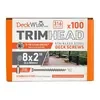 |
DeckWise #8 x 2 in. 316 Stainless Steel Trim-Head Deck Screws (100 pack) Thermory calls for stainless fasteners on its thermo-ash decking. These are 316-grade, the more corrosion-resistant stainless grade, with a small trim head and a star drive bit.
|
As an Amazon Associate we earn from qualifying purchases.
Thermo Ash vs Untreated White Ash: The Real Numbers
The two sets of figures below come from different sources, so read the gaps as directional rather than a lab head-to-head. The untreated column is the Wood Database species average for white ash. The thermo-ash column is from Thermory’s 2024 ash decking data sheet, tested at Tallinn University of Technology and by CATAS.
| Property | Untreated white ash | Thermory thermo ash |
|---|---|---|
| Decay resistance | Heartwood rated perishable or only slightly durable | Durability class 1, very durable (EN 113-2:2020) |
| Janka hardness | 1,320 lbf | 1,320 lbf (EN 1534:2010) |
| Bending strength (MOR) | 15,000 psi | 9,795 psi (about 35% lower) |
| Stiffness (MOE) | 1,740,000 psi | 2,279,191 psi |
| Density | 42 lb/ft3 at 12% moisture | 37.65 lb/ft3 oven-dry |
Two myths fall out of this table. First, thermal modification does not make ash harder: the Janka number is identical at 1,320 lbf. Second, it is not “stronger” wood. Bending strength drops by about a third while stiffness rises, which is the usual trade for thermally modified timber: it stays flat and decay-resistant but is less forgiving when overloaded or fastened carelessly.
Stability is where thermo ash earns its price. Thermory’s data sheet lists equilibrium moisture content of 3.5% at 35% relative humidity, 4.7% at 65% and 7.1% at 90%, and a width and thickness change of only 0.28% when humidity moves from 35% to 65%. Untreated white ash shrinks 4.9% radially and 7.8% tangentially from green to dry, according to the Wood Database, so the treated board simply has less moving to do.
How Long Does Thermo Ash Decking Last?
Thermory rates its thermo ash as class 1 and describes that as 25-plus years of protection against wood decay. Treat that as a laboratory decay rating, not a written guarantee of how your deck will look in 25 years. Untreated white ash is the opposite case: the Wood Database calls the heartwood perishable and not resistant to insects, which is why plain ash is a poor deck species. For a broader look at outdoor ash, see our guide to ash wood for exterior use.
A class 1 deck board is only half the system. Thermory’s installation guidance says to match the durability of the substructure to the decking. A 25-year board fastened to a substructure that fails in 10 years is a 10-year deck.
Will Thermo Ash Stay Brown or Turn Gray?
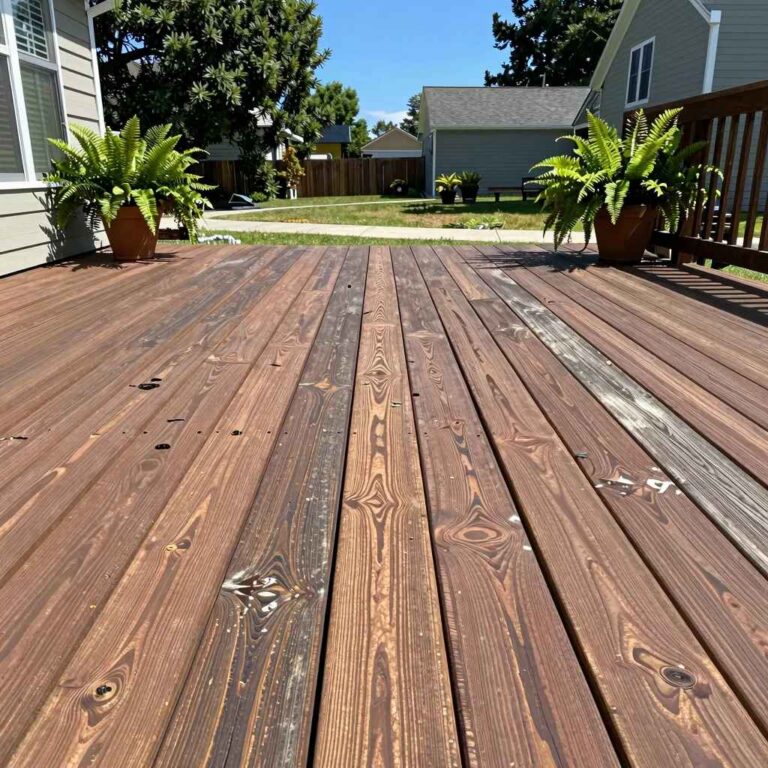
Freshly modified ash is a deep brown. Thermory states that the wood weathers to grey unless a UV-penetrating oil is applied and maintained, and it lists optional annual oiling for its decking. Color variation between boards is normal, because it reflects differences in how each tree grew.
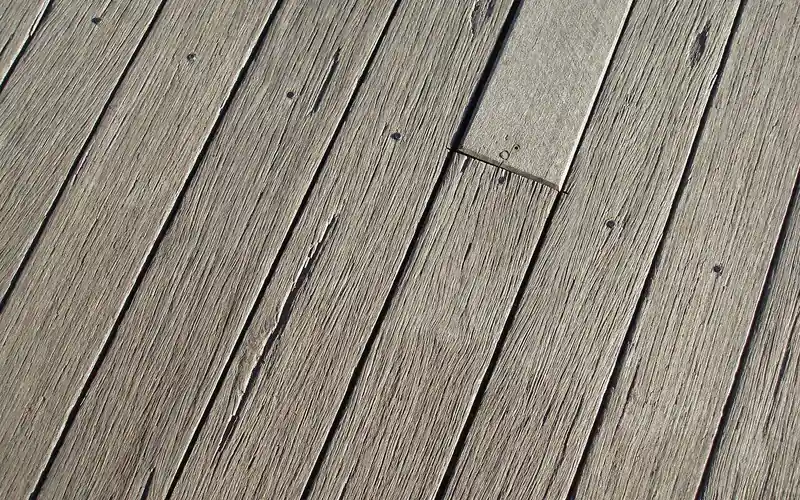
Most owners of thermally modified decking end up choosing between the two looks. Silver-grey means no upkeep beyond cleaning. Brown means committing to a UV oil on a schedule. Oil changes the color, not the decay rating. For routine cleaning, our guide on how to clean deck wood applies.
Thermo Ash Decking Pros and Cons
Pros
- Class 1 decay durability without preservatives; the modification runs through the whole board, not just the surface.
- Dimensional stability: a 0.28% size change between 35% and 65% relative humidity means less cupping and gap movement.
- Chemical-free process: only heat and steam, and Thermory says offcuts do not count as hazardous waste.
- Real hardwood look with a smooth, planed face and a deep brown starting color.
Cons
- Lower bending strength (9,795 psi in Thermory’s test against a 15,000 psi species average), so follow the supplier’s joist-spacing guidance for your board profile.
- More brittle at the fastener: visible screws need pre-drilled holes.
- Not harder than ordinary ash: the Janka rating is unchanged at 1,320 lbf, so do not expect it to resist dents any better than plain ash.
- Turns gray unless you oil it on a schedule.
- Premium price compared with pressure-treated pine. Get written quotes for your square footage.
- Storage matters: Thermory says boards must stay out of rain even in their packaging, because stacked or wrapped boards cannot dry.
How to Install Thermo Ash Decking
The steps below follow Thermory’s published installation guidance. Always check the guide for your specific profile before you cut.
- Store the boards correctly: keep them off the ground, under cover and out of the sun. If you must use a tarp, leave the ends open so moisture is not trapped.
- Build a substructure that matches the decking: use joists with a durability rating comparable to class 1 so the frame does not fail first.
- Choose your fixing method: hidden stainless clips or visible stainless screws. Stainless is required to avoid corrosion and staining.
- Set the gaps: Thermory’s T-4 clip leaves a 4 mm air gap between boards, and its T-6 and PC clips leave 6 mm.
- Fasten to every joist: with hidden systems, each clip must be screwed to every joist to prevent damage from excessive span.
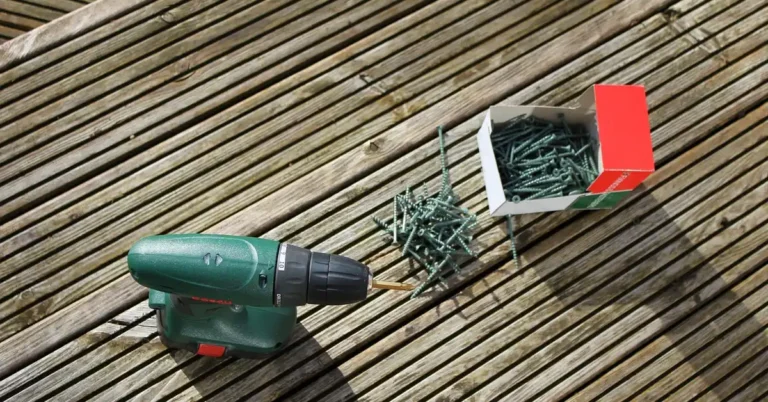
- Pre-drill for visible screws: use a drill bit 1 mm larger than the screw diameter.
- Oil if you want to keep the brown: apply a UV-penetrating oil after installation and repeat on a schedule.
For visible-screw installs, a small-head 316 stainless screw like the trim-head option in our pick above keeps the fastener pattern subtle. Boards are sold in standard thicknesses of 0.79 in. and 1.02 in. and widths of 3.5 to 6.3 in., depending on profile, per Thermory’s data sheet.
How Thermo Ash Compares With Other Modified Wood Decking
Thermo ash is one of several thermally modified decking options. Our guide to modified wood decking covers the whole category, including lifespan and process differences, and our Arbor Wood decking page looks at another real-wood alternative to composite. The short version: ash is a pale wood that modification turns brown, so choose it if you want that look and can accept the price and the gray-out.
Frequently Asked Questions
What is thermo ash?
Thermo ash is white ash (Fraxinus) that has been heated to around 419 degrees F (215 degrees C) with steam in a controlled kiln, with no chemicals added. It is real solid wood, not a composite and not the ash left after burning biomass.
Is thermo ash decking real wood or composite?
Real wood. Thermo ash decking boards are solid, planed ash. The heat treatment changes the wood chemistry throughout the board, not just the surface, which is what improves decay resistance and dimensional stability.
Does thermo ash decking turn gray?
Yes. It starts deep brown and weathers to silver-gray in sunlight unless you apply and keep up a UV-penetrating oil. Oiling is optional and mostly cosmetic. It does not change the decay rating.
Do you need to pre-drill thermo ash decking?
Yes when you use visible screws. Thermory specifies pre-drilling the holes with a bit 1 mm larger than the screw diameter, because thermally modified wood is more brittle than untreated ash and can split at the screw.
Is thermo ash decking chemical-free?
The modification process uses only heat and steam. Thermory states that no chemicals are added, and that its thermally modified wood does not need to be treated as hazardous waste.
Bottom Line
Thermo ash decking is a legitimate class 1 real-wood option, but it is not harder than plain ash and it is weaker in bending, so installation discipline matters: stainless fasteners, pre-drilled holes, correct gaps and a substructure that lasts as long as the boards.
Sponsored / affiliate links. As an Amazon Associate I earn from qualifying purchases. I may earn additional commission from eligible campaigns.