Using Plywood for Flooring: Grades, Cost, and Installation
CDX plywood makes a solid, budget subfloor at $1–$1.56 per square foot, but 3/4-inch tongue-and-groove sheets are what you actually want as the finished, walkable surface — anything thinner flexes and squeaks underfoot. Using 1/2-inch plywood where code calls for 3/4-inch can void a finished-flooring warranty outright. This guide covers plywood grades and thickness, installation steps, finishing options, and real 2026 cost ranges for both subfloor and finished plywood floors.
Quick Answer
Plywood works well as flooring — either as a hidden subfloor (CDX grade, 3/4-inch, $1–$1.56/sq ft) or as the visible finished floor itself (cabinet-grade tongue-and-groove sheets, sanded, stained, and sealed). A DIY finished plywood floor runs roughly $2–$4 per square foot total, a fraction of solid hardwood, but it needs a moisture barrier in damp rooms and a real protective topcoat to hold up to foot traffic.
Plywood Grades and Thickness for Flooring
Best Plywood Floor Finish Pick
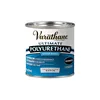 |
Varathane Water-Based Satin Polyurethane – $13.49 A visible plywood-plank floor needs a real protective topcoat, not just stain — this dries to the touch in 30 minutes and covers about 31 sq ft per coat, so a small room only needs one can per coat.
|
As an Amazon Associate we earn from qualifying purchases.
Not every plywood grade belongs on a floor. The grade and thickness you pick determines whether the floor feels solid or bounces and squeaks within a year.
| Grade | Best Use | 2026 Material Cost |
|---|---|---|
| CDX (pine/fir) | Hidden subfloor under carpet, tile, or engineered wood | $1–$1.56/sq ft |
| Structural 1 | Subfloor in areas needing extra load rating (garages, additions) | $1.50–$2/sq ft |
| Marine grade | Bathrooms, laundry rooms, anywhere moisture is a concern | $2.03–$3.44/sq ft |
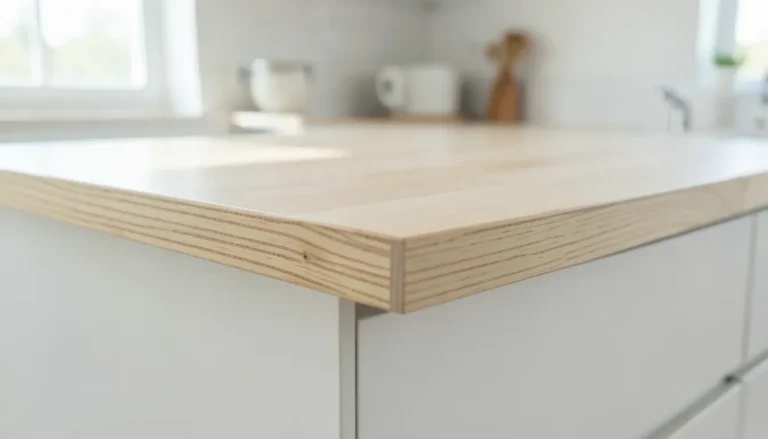
| Cabinet-grade hardwood ply | Visible, finished plywood-plank flooring | $2–$4/sq ft (birch/oak face) |
For a hidden subfloor, 3/4-inch tongue-and-groove CDX is the standard most codes expect over 16-inch on-center joists — the tongue-and-groove edge locks adjoining sheets together so the seam doesn’t flex separately from the rest of the panel. For a finished plywood floor that will be sanded, stained, and walked on directly, cabinet-grade plywood with a hardwood face veneer (birch or oak) holds a finish far better than construction-grade CDX, whose surface voids and rough face telegraph through paint or stain.
Preparation and Installation
Before laying any plywood, prepare the subfloor properly — skipping this step is the most common reason plywood floors squeak or shift later.
- Clean the subfloor: Remove dirt, debris, and old adhesive from the existing subfloor or joists.
- Level the surface: Fill gaps and low spots so the new plywood sits flat — an uneven base telegraphs through as squeaks and gaps at the seams.
- Add a moisture barrier: Required over concrete slabs or in any room prone to humidity; skipping it invites cupping and delamination.
- Acclimate the plywood: Let sheets sit in the room for at least 48 hours so they adjust to the space’s humidity before fastening them down.
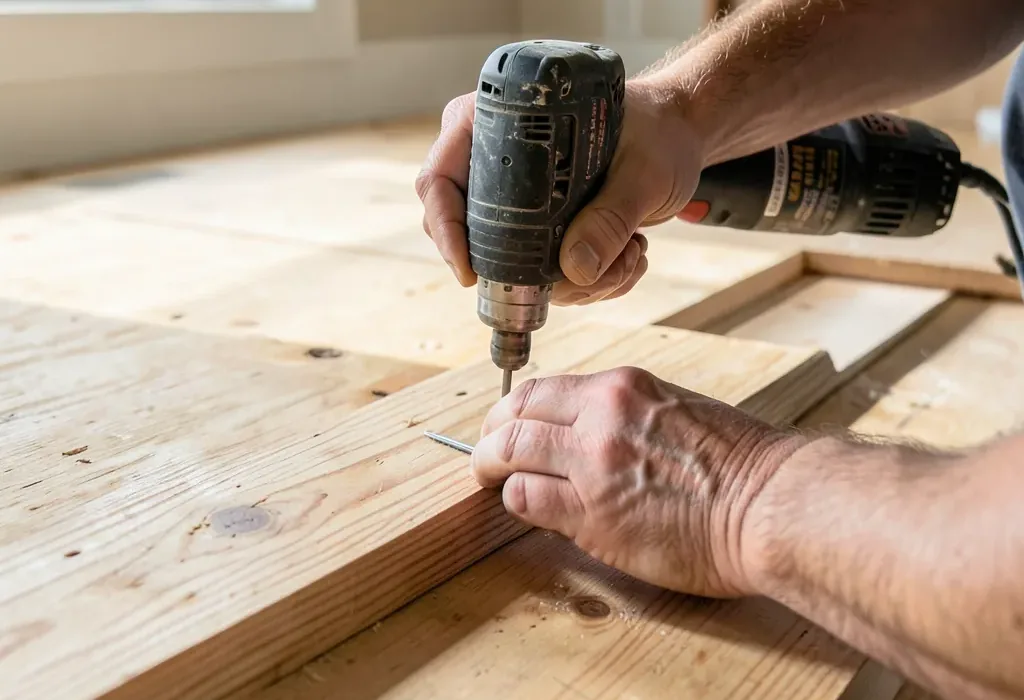
Once the subfloor is ready, install starting from the center of the room for even distribution, glue each sheet to the subfloor with construction adhesive, then screw or ring-shank nail every 6 inches along the edges and 8–12 inches in the field. Stagger the seams between rows so no four corners meet at one point — that single detail does more to prevent long-term squeaks than almost anything else in the install.
Design and Finishing Options
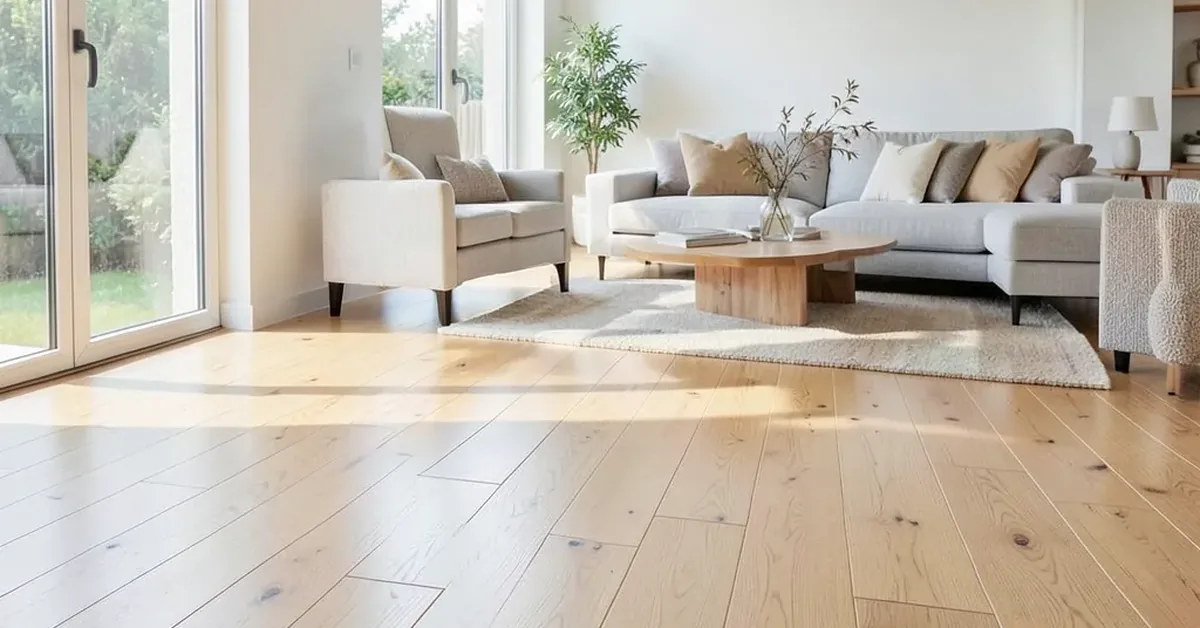
A finished plywood floor isn’t limited to plain sheets. Cut plywood into planks and lay it in a straight-lay or herringbone pattern, or leave it as full sheets with the seams as part of the design. Staining or painting the plywood before sealing lets you match almost any interior style, from a natural-grain rustic look to a solid painted floor.
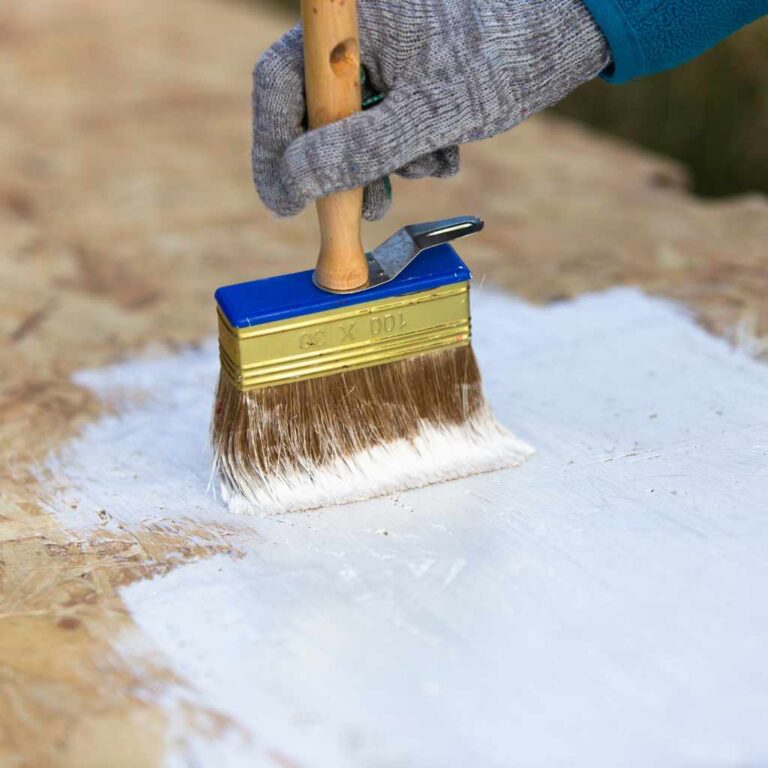
Whatever the pattern, the finish coat is what actually takes the wear. Water-based polyurethane dries fast, cleans up with soap and water, and stays clear over light stains — oil-based polyurethane is more durable but ambers over time and takes longer between coats. Either way, plan on 2–3 coats minimum, and seal the plywood edges with wood putty or edge banding so raw ply layers don’t show or catch moisture at the seams.
Maintenance and Durability
A properly installed, properly finished plywood floor can last decades — the finish coat and the installation quality matter more to its lifespan than the plywood itself.
- Sweep or vacuum regularly; grit tracked in on shoes is what actually scratches a finish coat.
- Standing water is the fastest way to damage any plywood floor, finished or not, so mop up spills right away.
- Use a cleaner made for wood or polyurethane floors; skip ammonia-based or abrasive cleaners, which dull the topcoat.
- Re-coat with a fresh layer of polyurethane every few years in high-traffic rooms, once the existing finish starts looking dull or scuffed.
Because a finished plywood floor can be sanded and refinished, most surface damage — scuffs, light scratches, worn finish — is fixable without replacing the floor. Deep gouges through the veneer into the plywood core are the exception; on cabinet-grade ply the veneer layer is thin, so it can only take one or two light sandings before you sand through to the core layer underneath.
📊 1/2-inch plywood used where 3/4-inch is specified is a leading cause of bouncy, squeaky floors and can void a finished-flooring manufacturer’s warranty — Source: 2026 flooring-cost industry data (Angi)
Cost Compared to Other Flooring
Plywood’s biggest advantage over solid hardwood or engineered flooring is straightforward: it costs less to buy and less to install. A professionally installed CDX subfloor runs about $4.50–$10 per square foot including labor, while a DIY finished plywood floor — cabinet-grade plywood, stain, and 2–3 coats of polyurethane — typically totals $2–$4 per square foot in materials, well below solid hardwood. Plywood is also made from thin veneers glued together rather than solid-sawn lumber, so a given tree yields more usable flooring material per board foot than solid hardwood milling does.
Frequently Asked Questions About Plywood Flooring
Is plywood a good choice for flooring?
Yes, for the right application. As a subfloor, CDX plywood is the industry standard under nearly every other flooring type. As a finished floor, cabinet-grade tongue-and-groove plywood holds up well when properly sanded, stained, and sealed — it just needs a real protective topcoat since it will be walked on directly.
Can plywood be used in all areas of the house?
Plywood works in most rooms, including kitchens, as long as spills are wiped up promptly and the floor has a real finish coat. In bathrooms, basements, or laundry rooms, use marine-grade plywood and a moisture barrier — standard CDX in a consistently damp room can delaminate over time.
How is plywood flooring installed?
Plywood is glued to the subfloor with construction adhesive, then fastened with screws or ring-shank nails every 6 inches along the edges and 8–12 inches in the field. Seams are staggered row to row so no four corners meet at one point, which is what prevents the floor from squeaking as it ages.
Can you use 1/2-inch plywood instead of 3/4-inch for flooring?
Not where 3/4-inch is specified. Thinner plywood flexes between joists, which causes bouncing and squeaking and can void a finished-flooring manufacturer’s installation warranty. Save 1/2-inch plywood for underlayment over an existing subfloor, not as the structural subfloor itself.
Is plywood flooring easy to maintain?
Yes. Regular sweeping and occasional mopping with a cleaner made for wood or polyurethane floors is usually enough. Wipe up spills immediately, avoid abrasive cleaners, and re-coat the polyurethane every few years in high-traffic rooms to keep the surface protected.
Conclusion
Plywood earns its place in flooring twice over: as the CDX subfloor underneath nearly every other floor type, and as an affordable finished floor in its own right when cabinet-grade sheets are sanded, stained, and properly sealed. Match the grade and thickness to the job — 3/4-inch CDX for a hidden subfloor, marine grade where moisture is a concern, cabinet-grade for a visible finished floor — and a plywood floor will hold up for decades.
Sponsored / affiliate links. As an Amazon Associate I earn from qualifying purchases. I may earn additional commission from eligible campaigns.