Vertical Plywood Storage Rack: Build Plan + Weight Limits
A vertical plywood storage rack holds full 4×8 sheets on edge against a slanted frame, saving floor space that horizontal stacking eats up — but only if the frame can carry real weight. A single 3/4-inch sheet runs 60 to 70 lbs, so a rack holding 15 sheets needs to support close to 1,000 lbs without racking or tipping. This guide covers frame dimensions, the safe weight range, and step-by-step build instructions.
Insert your Affiliate Disclosure reusable block here
Quick Answer
To store plywood vertically, lean full sheets against a slanted A-frame or wall-mounted rack angled 5–10 degrees, then strap multiple sheets together across the top, middle, and bottom with ratchet straps or bungee cords so they can’t bow forward. A 2×4 frame with lag-bolted joints (not just screws) can safely carry 12–15 sheets, or roughly 700–1,000 lbs.
Vertical vs. Horizontal Plywood Storage: Which Saves More Space?
Best Plywood Storage Rack Pick
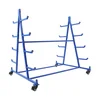
5-Tier Rolling Double-Sided Pipe & Lumber Rack, 500 lbs Capacity
A ready-built, load-rated alternative if you’d rather skip the framing and lag bolts entirely.
- Best for: Shops storing 8–10 sheets who want a stamped weight rating instead of guessing
- Why we picked it: 500 lbs rated capacity matches the 10-sheet mark in the table above, and locking casters mean it can roll to the cut station
- Main drawback: At 55.9 x 44.1 x 52 inches, it needs more clearance than a wall-mounted A-frame
Compare more plywood storage options
 Option 1 Ratchet Tie-Down Straps, 1″ x 15’, Set of 4
|
 Option 2 4″ Locking Plate Casters, 1,200 lbs, Set of 4
|
 Option 3 31-Piece Bungee Cord Assortment
|
As an Amazon Associate we earn from qualifying purchases.
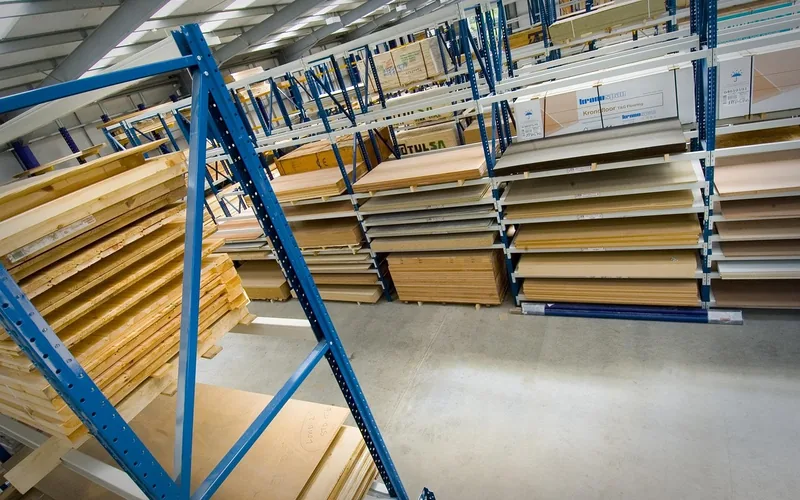
Vertical storage wins on floor space and warp resistance; horizontal stacking wins on stability for very short stacks. Vertical racks stand sheets on edge, so a rack footprint of roughly 4 feet by 2 feet can hold 15+ sheets that would otherwise sprawl across 60 square feet of floor stacked flat. The tradeoff is that vertical sheets need a lean angle and straps to stay put — horizontal stacks just sit there, but the bottom sheets take the full weight of everything above them and are the first to bow or delaminate.
| Factor | Vertical Storage | Horizontal Stacking |
|---|---|---|
| Floor space per 15 sheets | ~8 sq ft | ~60+ sq ft |
| Warping risk | Low if strapped | High on bottom sheets |
| Sheet access | Flip through like a book | Must unstack from the top |
| Practical stack limit | 15–20 sheets (rack-dependent) | 6–8 sheets before bottom sag |
| Best for | Ongoing shop storage | Short-term, single-project use |
Thin material behaves differently than full sheets. Boards under 1/4 inch flex too much to stand upright reliably and are better stored horizontally on a flat shelf, while 1/2-inch and 3/4-inch sheets are stiff enough to stand on edge without support along their length.
How Much Weight Can a Plywood Rack Hold?
A 4×8-foot sheet of 3/4-inch softwood plywood weighs 60 to 70 lbs; hardwood-faced plywood runs slightly lighter at 55 to 65 lbs. That number is the one most build guides skip, and it’s the one that actually decides how heavy-duty your frame needs to be.
📊 A standard 3/4-inch, 4×8 softwood plywood sheet weighs 60–70 lbs. — Source: Inch Calculator and ThePlywood.com plywood weight data, 2026
Use the table below to size your frame against how many sheets you actually plan to store — not a generic “heavy duty” claim with no number behind it.
| Sheets Stored | Approx. Total Weight | Minimum Frame Rating |
|---|---|---|
| 5 sheets | ~325 lbs | 2×4 frame, screwed + glued joints |
| 10 sheets | ~650 lbs | 2×4 frame, lag-bolted joints |
| 15 sheets | ~975 lbs | 2×6 base rails, lag-bolted + cross-braced |
| 20 sheets | ~1,300 lbs | Steel-frame or commercial-rated rack |
Past roughly 15 sheets, most shop-built 2×4 frames are working outside their comfort zone. That’s the point where a commercial-rated rack — already load-tested and stamped with a number — stops being overkill and starts being the cheaper mistake to avoid.
Materials and Tools You’ll Need
Building a rack rated for 10–15 sheets (the range most home shops actually need) takes:
- Lumber: four 2×4s for the base frame, four more for the vertical uprights, sized to your ceiling height
- Plywood scrap: a 3/4-inch offcut for the base deck and gusset plates at each joint
- Lag bolts: 3/8-inch x 4-inch lag bolts at every load-bearing joint — screws and glue alone aren’t rated for a fully loaded rack
- Wood glue: reinforces every joint alongside the bolts
- Ratchet straps or bungee cords: to secure stored sheets across the top, middle, and bottom
Tools: a circular saw to cut the lumber and plywood to size, a drill for pilot holes and driving the lag bolts, a socket wrench, clamps to hold joints while the glue sets, and a measuring tape and speed square to keep every cut square.
How to Build a Vertical Plywood Storage Rack
This A-frame design leans sheets against a central spine at a 5–10 degree angle — enough to keep them from sliding forward, not so much that it eats extra floor space.
- Cut the base frame: cut four 2×4s to your target width (36–48 inches is typical) and four more for the depth, then assemble into a rectangle with lag bolts and glue.
- Build the vertical spine: attach two upright 2×4s to the center of the base frame, angled 5–10 degrees back from vertical, and brace them to the base with diagonal gussets.
- Cut the plywood shelves: cut the base deck to fit inside the frame, giving each sheet a flat surface to rest on rather than bare framing.
- Drill and bolt the joints: pre-drill pilot holes before driving every lag bolt — skipping this step is the most common cause of split lumber at the load-bearing joints.
- Add cross braces: install diagonal braces between the base and the spine to stop the whole frame from racking sideways under a full load.
- Finish and load-test: sand any rough edges, then load it gradually — a few sheets at a time — checking that the frame stays rigid before storing it at full capacity.
For a full video walkthrough of this A-frame build, including how the stretchers and slats go together:
Tips for Securing Plywood Sheets Vertically
Storing plywood vertically saves space, but an unsecured stack is a tipping hazard the moment someone pulls a sheet from the middle. Run a ratchet strap or bungee cord across the top of the stack, another at mid-height, and a third near the base — three points of contact stop sheets from bowing outward even when the rack is fully loaded.
- Store the rack on a flat, level surface — an uneven floor amplifies lean and makes tipping more likely as sheets are removed
- Group sheets by thickness so straps apply even pressure instead of crushing thinner stock against thicker stock
- Leave the frontmost slot empty or reserve it for the sheet you’re currently using, so you’re not wrestling straps every time you need one board
- Check strap tension monthly — ratchet straps loosen with humidity swings and temperature changes in an unheated garage
Common Mistakes to Avoid When Storing Plywood Vertically
Most rack failures trace back to one of three mistakes: too little lean angle, screws instead of bolts at the load-bearing joints, or no load-testing before storing a full stack.
“The most common mistake I see in shop-built racks is leaving the lean angle too vertical — anything under 5 degrees lets the top sheet lean forward under its own weight over time, and anything past 15 degrees just wastes floor space you didn’t need to give up. Five to ten degrees is the range that actually holds.”
- Skipping lag bolts: screws alone shear under a fully loaded rack’s weight; every load-bearing joint needs lag bolts, not just wood glue and screws
- Ignoring the weight table: a rack sized for 5 sheets that ends up holding 15 will eventually rack sideways or pull loose at the base
- Mixing storage angles: a lean angle over 15 degrees doesn’t add stability, it just pushes the rack’s footprint deeper into the shop for no benefit
- No load-testing: load a new rack gradually instead of stacking a full 15 sheets on day one — a slow load reveals a weak joint before it fails under full weight
FAQ
How do you store plywood vertically?
Lean full sheets against a slanted A-frame or wall-mounted rack angled 5–10 degrees, then secure multiple sheets together with ratchet straps or bungee cords across the top, middle, and bottom. Thinner boards under 1/4 inch flex too much for vertical storage and should be stacked horizontally instead.
How much weight can a plywood storage rack hold?
It depends on the frame, but a shop-built 2×4 rack with lag-bolted joints and cross bracing typically holds 10–15 sheets, or roughly 650–975 lbs, since each 3/4-inch sheet weighs 60–70 lbs. Commercial steel racks are usually rated 500 lbs and up, with a stamped capacity instead of an estimate.
What angle should a plywood rack lean?
5 to 10 degrees back from vertical is the range that keeps sheets from sliding forward without wasting extra floor space. Less than 5 degrees lets the top of a full stack lean forward under its own weight over time; more than 15 degrees pushes the rack’s footprint deeper into the shop for no added stability.
Should plywood be stored flat or on edge?
Full 1/2-inch and 3/4-inch sheets are best stored on edge in a vertical rack, since standing them up prevents the sagging that happens when sheets are stacked flat and the bottom ones carry the full weight of everything above. Sheets thinner than 1/4 inch flex too much to stand alone and should be stored flat on a sturdy, level surface instead.
Where should plywood be stored?
Store plywood in a cool, dry, well-ventilated area away from direct moisture. If you have to store sheets outside, keep them off the ground on a rack or pallet and covered with a waterproof tarp to block rain and sun exposure — humidity swings are what actually cause delamination, not just time in storage.
Conclusion
A vertical plywood storage rack earns its floor space back, but only when it’s built to the weight it will actually carry — size the frame off the sheet count, lag-bolt every load-bearing joint, and keep the lean angle in the 5–10 degree range. Whether you build one from 2x4s or buy a load-rated cart, strap every stack across the top, middle, and bottom, and it will outlast a decade of full loads without a single warped sheet.
Sponsored / affiliate links. As an Amazon Associate I earn from qualifying purchases. I may earn additional commission from eligible campaigns.