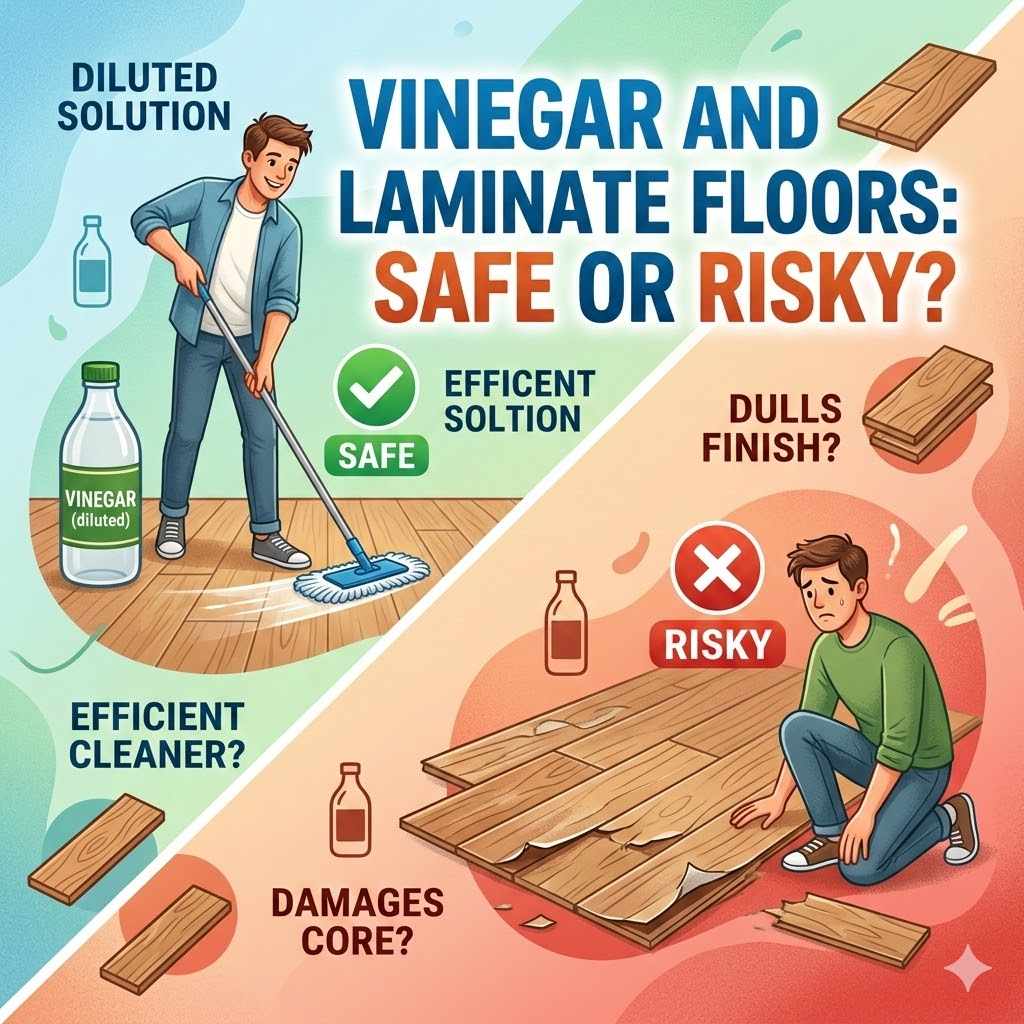
Vinegar and Laminate Floors Safe or Risky
Many people wonder about using vinegar to clean their laminate floors. This common question pops up because vinegar seems like a natural cleaner. However, mixing cleaning methods can be tricky, especially for those new to home care.
Is it truly safe or does it pose a risk? Don’t worry; this guide breaks it down simply. We’ll go step-by-step to show you what works best.
Vinegar and Laminate Floors Safe or Risky?
Deciding whether to use vinegar on laminate floors is a frequent point of confusion for homeowners. Laminate flooring offers a beautiful and practical surface, but it requires specific care. The idea of using a common household item like vinegar for cleaning is appealing due to its perceived effectiveness and affordability.
However, the acidic nature of vinegar raises concerns about its potential to damage the protective top layer of laminate. This section will explore the core issues surrounding this popular cleaning query, helping you understand the underlying reasons for the debate and setting the stage for a clear solution.
The Composition of Laminate Flooring
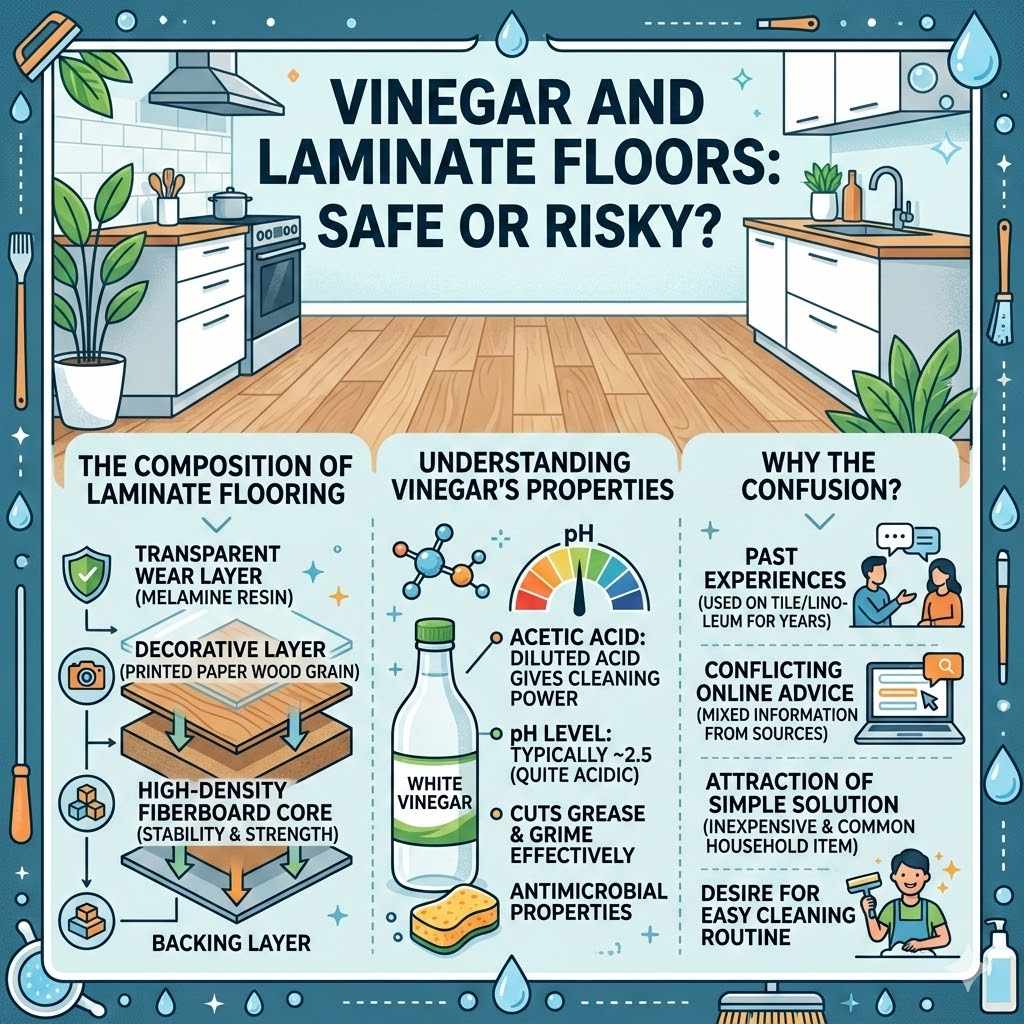
Laminate flooring is a multi-layered synthetic product. It’s made to mimic wood or stone. The core layer is usually a high-density fiberboard.
This core provides stability and strength. Above this core is a decorative layer, often a printed paper showing wood grain or tile patterns. The crucial part for cleaning is the very top layer.
This is a transparent wear layer, usually made of melamine resin. This wear layer is designed to protect the decorative layer from scratches, stains, and moisture. Its integrity is key to the floor’s longevity and appearance.
The wear layer is tough but not indestructible. It can be sensitive to certain cleaning agents. Strong chemicals can break down its protective qualities.
This can lead to dullness, discoloration, or even warping over time. Understanding this structure helps explain why certain cleaning methods are recommended or advised against for laminate floors. The goal is always to preserve that outer shield.
Understanding Vinegar’s Properties
Vinegar is essentially diluted acetic acid. Its acidity is what gives it cleaning power. It can cut through grease and grime effectively.
It also has antimicrobial properties. This makes it a popular choice for many cleaning tasks. However, this acidity is also its potential downfall when used on sensitive surfaces.
The pH level of white vinegar is typically around 2.5. This is quite acidic.
For surfaces like laminate, which have a protective coating, this acidity can be problematic. The acetic acid can slowly degrade the melamine wear layer. Over time, this degradation can lead to a dull finish.
It might also make the floor more susceptible to damage from moisture and stains. Therefore, while vinegar is a good cleaner for many things, its suitability for laminate floors needs careful consideration. The strength of the acid is the main factor to evaluate.
Why the Confusion?
The confusion around using vinegar on laminate floors stems from a few factors. Firstly, many people have used vinegar to clean other types of flooring successfully for years. They might have linoleum or tile floors where vinegar is perfectly fine.
This leads them to assume it’s safe for all floor types. Secondly, there’s a lot of conflicting advice online. Some sources say it’s okay in very diluted forms, while others strongly advise against it.
This mixed information makes it hard to know who to believe.
Beginners might be particularly challenged by this. They are often trying to establish a good cleaning routine for their homes. The idea of using a simple, inexpensive product like vinegar is very attractive.
They want to keep their floors looking nice without buying specialized cleaners. This desire for a straightforward solution often leads them to experiment or trust common wisdom that may not be entirely accurate for their specific flooring.
The Risks of Using Vinegar on Laminate
Using vinegar on laminate floors comes with several potential risks. These risks primarily concern the integrity and appearance of the flooring’s surface. Understanding these downsides is crucial before deciding on a cleaning approach.
The main concern is damage to the wear layer, but other issues can also arise.
Damage to the Wear Layer
The most significant risk is the potential damage to the laminate floor’s protective wear layer. This layer is typically made of a clear, hard plastic material, often melamine or aluminum oxide. Its purpose is to shield the decorative paper layer beneath from abrasion, scratches, and moisture.
Vinegar, being acidic, can break down this protective layer over time.
When vinegar is used repeatedly, the acetic acid can slowly eat away at the melamine. This process is not instantaneous but happens with consistent exposure. The result is a dulling of the floor’s finish.
The surface may lose its shine and appear worn. In more severe cases, the wear layer can become permanently etched or damaged. This compromises the floor’s ability to resist stains and scratches.
Consider a scenario where you spill a tiny amount of vinegar and don’t wipe it up immediately. While a single incident might not cause visible harm, it still exposes the wear layer to acid. If this happens frequently, or if you mop with a vinegar solution regularly, the cumulative effect can be substantial.
It’s like repeatedly exposing a protective coating to a mild solvent; eventually, it will degrade.
Discoloration and Fading
Another risk associated with vinegar is the potential for discoloration or fading of the laminate. The decorative layer of laminate flooring is essentially a printed paper. This paper is protected by the wear layer, but if the wear layer is compromised by vinegar, the decorative layer becomes vulnerable.
The acidic nature of vinegar can potentially alter the pigments in the printed design. This might not be immediately noticeable after one use. However, with repeated applications, the colors could start to look washed out or faded.
Sunlight can exacerbate this effect. If a floor is exposed to direct sunlight and also cleaned with vinegar, the fading can occur faster. This is because the wear layer is already weakened, making the printed design more susceptible to UV damage.
Warping and Swelling
Laminate flooring, while generally resistant to moisture, is not waterproof. The core of laminate is often made of wood composite material. This material can absorb moisture and swell if exposed to excess water for too long.
While vinegar itself is a liquid, the act of mopping with a vinegar solution introduces moisture to the floor.
If the wear layer is damaged or if too much liquid is used, moisture can seep into the core. This can cause the planks to swell. Swelling often appears as buckling or warping of the floor.
The planks might lift at the edges or create uneven surfaces. This is a more serious issue that can be difficult and expensive to repair. It’s important to remember that even though vinegar evaporates, if it penetrates the surface, it can contribute to moisture problems.
For example, imagine a small gap between two laminate planks. If you mop with a vinegar solution and a significant amount of water pools in that gap, it has a direct path to the core material. The vinegar’s acidity might have already softened the edges of the wear layer around that gap, making it easier for the water to penetrate.
This can lead to the planks in that area expanding and potentially warping.
Loss of Shine and Dullness
One of the first signs that vinegar might be harming your laminate floor is a loss of its natural shine. Laminate floors are designed to have a certain sheen. This gives them a polished and attractive look.
Vinegar’s acidic properties can etch the surface of the wear layer. This etching creates microscopic imperfections.
These imperfections scatter light differently than a smooth, intact surface. The result is a dull, matte appearance. The floor may look less vibrant and appear aged prematurely.
This dullness is often irreversible. Once the wear layer is etched, restoring the original shine can be very challenging. It’s a visual cue that the protective coating is being compromised.
Safe Alternatives for Cleaning Laminate Floors
Given the potential risks, it’s wise to explore safer alternatives for cleaning your laminate floors. Fortunately, there are effective and floor-friendly cleaning methods that will keep your laminate looking its best without causing damage. These alternatives focus on gentle cleaning agents and proper techniques.
Water-Based Cleaning
The simplest and often most effective way to clean laminate floors is with plain water. Damp mopping is usually sufficient for everyday cleaning. A microfiber mop is ideal for this.
It picks up dust and dirt effectively without leaving excessive moisture.
The key is to use a well-wrung-out mop. The mop should be damp, not wet. Excess water is the enemy of laminate floors.
After damp mopping, you can dry the floor with a clean, dry microfiber cloth if any dampness remains. This method removes light dust and grime without introducing any chemicals that could harm the floor’s finish.
For a slightly deeper clean, you can use a specialized laminate floor cleaner. These cleaners are pH-neutral. They are formulated to be safe for the wear layer.
Always follow the manufacturer’s instructions for dilution and application. Many reputable brands offer excellent products for laminate.
pH-Neutral Cleaners
When water alone isn’t enough, a pH-neutral cleaner is the next best option. pH-neutral means the cleaner has a balanced pH level, neither too acidic nor too alkaline. This is important because both extreme acidity and extreme alkalinity can damage the laminate’s wear layer.
Many flooring manufacturers recommend using only pH-neutral cleaners. You can find these readily available at most home improvement stores or supermarkets. Look for products specifically labeled for use on laminate flooring.
These cleaners are designed to lift dirt and grime effectively without stripping the finish or causing discoloration.
Using a pH-neutral cleaner ensures that you are cleaning your floors effectively while protecting their long-term appearance and durability. Always test a new cleaner in an inconspicuous spot first, though this is rarely an issue with pH-neutral formulations designed for laminate.
Mild Soap Solutions (with Caution)
In some cases, a very mild soap solution can be used, but with extreme caution. If you choose to use soap, opt for a product that is dye-free and fragrance-free. A tiny amount of mild dish soap diluted in a large bucket of water can be effective for tougher spots.
The critical point here is the dilution and the rinsing. Use only a drop or two of soap. After mopping with this solution, you must thoroughly rinse the floor with clean water.
This rinsing step is crucial to remove any soap residue. Soap residue can leave a sticky film on the floor. This film attracts dirt and can make the floor appear dull.
You will still need to use a well-wrung-out mop for both the cleaning and rinsing stages. Never leave standing water on the laminate. This method should be used sparingly and only when necessary for specific stubborn marks.
For regular cleaning, stick to water or a dedicated laminate cleaner.
Steam Mops (Check Manufacturer Guidelines)
Steam mops can be a controversial topic when it comes to laminate floors. Some manufacturers explicitly state that steam mops should not be used. Others allow them, provided certain conditions are met.
The concern with steam mops is the heat and moisture they generate.
The high heat and pressurized steam can potentially force moisture into the seams between planks. This can lead to swelling and damage to the core material. If your laminate flooring manufacturer advises against steam mops, absolutely avoid them.
If they permit their use, ensure the steam mop is set to its lowest setting. Use it for the shortest time necessary and never allow steam to build up on the floor.
A good practice is to consult your laminate flooring’s warranty and care instructions before using a steam mop. If in doubt, it is always safer to use a damp mop or a dedicated laminate cleaner. The risk of permanent damage often outweighs the convenience of steam cleaning for laminate.
How to Properly Clean Laminate Floors
Cleaning laminate floors effectively and safely involves a few key steps. Following this routine will help maintain your floors’ appearance and longevity. The focus is on gentle cleaning and preventing moisture damage.
Step 1 Preparation and Dry Cleaning
Before you introduce any moisture, start with dry cleaning. This involves sweeping or vacuuming your laminate floors. Use a soft-bristle broom or a vacuum cleaner with a hard floor attachment.
Avoid using vacuums with beater bars, as these can scratch the surface.
The goal of this initial step is to remove all loose dirt, dust, and debris. This prevents these particles from being pushed around by a wet mop, which can cause scratching. It also ensures that your subsequent wet cleaning will be more effective at removing actual grime and stains.
Step 2 Damp Mopping Technique
When it’s time to damp mop, use a microfiber mop. Dip the mop head into your cleaning solution (plain water or a pH-neutral cleaner). Wring it out thoroughly.
The mop should feel barely damp to the touch, not wet. Excess water is the biggest threat to laminate floors.
Mop the floor in small sections. Work your way out of the room. For stubborn spots, you might need to go over them a couple of times.
Always ensure that no standing water is left on the floor. If you see puddles, you’re using too much water.
Step 3 Rinsing if Necessary
If you used a cleaner other than plain water, rinsing might be necessary. Prepare a separate bucket with clean water. Use another clean, well-wrung-out microfiber mop.
Mop the floor again with just water to remove any cleaning solution residue.
Rinsing is important to prevent the buildup of film or residue. Soap residue, in particular, can attract dirt and make the floor look dull over time. Thorough rinsing ensures the floor is clean and maintains its natural sheen.
Step 4 Drying and Ventilation
After mopping and rinsing, ensure the floor dries quickly. You can speed up the drying process by opening windows or using fans. This helps the moisture evaporate from the surface and from any minuscule gaps between planks.
Proper ventilation is key to preventing moisture-related damage. Never leave laminate floors to air dry if there’s a chance of standing water remaining. A final wipe with a dry microfiber cloth can also help absorb any lingering dampness.
This ensures your laminate floors remain beautiful and durable.
Expert Opinions and Recommendations
Flooring professionals and manufacturers generally agree on the best practices for laminate floor care. Their advice is based on extensive knowledge of materials and their performance. Heeding these expert recommendations is the best way to protect your investment.
Manufacturer Guidelines Are Key
The most important source of information regarding laminate floor care is the manufacturer’s guidelines. Every laminate flooring product is made slightly differently. The warranty and care instructions provided by the manufacturer are specific to your flooring type.
They will detail what cleaning products and methods are safe and which ones to avoid.
For example, some manufacturers might approve of a very dilute vinegar solution for specific tough stains, while others will outright forbid it. Always refer to your specific product’s documentation. This information is usually found on the manufacturer’s website or in the paperwork you received when you purchased the flooring.
Ignoring these guidelines can void your warranty.
What Flooring Experts Say
Most flooring experts strongly advise against using vinegar on laminate floors. They emphasize that the acidic nature of vinegar can damage the wear layer, leading to dullness and reduced protection. The consensus among experienced flooring installers and refinishers is to stick to pH-neutral cleaners or just water.
They often cite cases where homeowners have caused irreversible damage by using harsh chemicals like vinegar or ammonia. These experts also highlight the importance of proper mopping techniques. They stress the “damp, not wet” rule.
This simple rule prevents many common problems associated with laminate floor maintenance.
Statistics on Flooring Damage
While precise statistics on vinegar-specific laminate damage are hard to find, general data on flooring maintenance issues can be informative. A survey by the National Wood Flooring Association (NWFA) indicated that moisture damage is a leading cause of flooring failure. Although laminate is not wood, the principle of moisture sensitivity applies.
Additionally, consumer reports often highlight customer complaints related to floor finishes being dulled or damaged by improper cleaning methods. These reports suggest that many users opt for what they believe are “natural” or “all-purpose” cleaners without considering the specific needs of their flooring materials. This often leads to unintended consequences.
Proper cleaning can extend the life of your flooring by decades, preventing premature replacement costs.
Vinegar and Laminate Floors Safe or Risky? A Definitive Answer
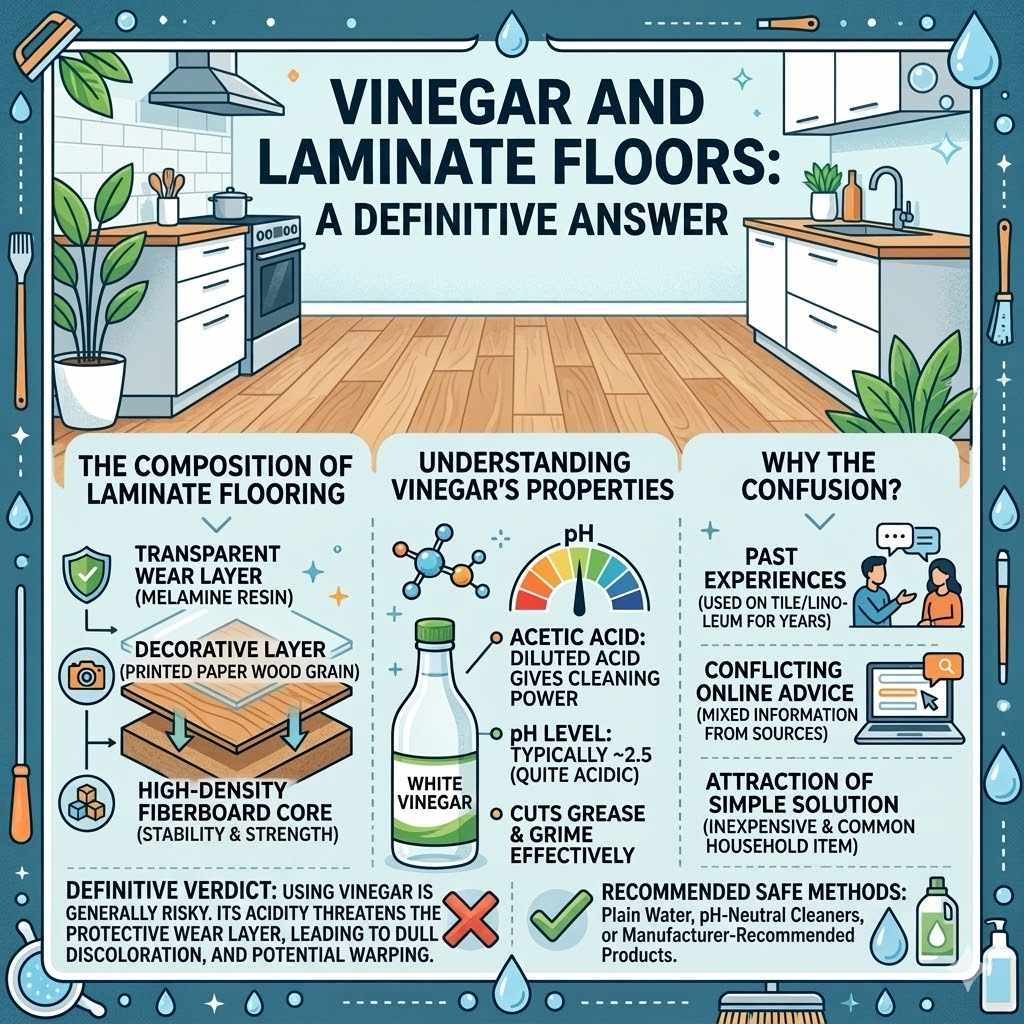
So, to finally answer the question: Vinegar and Laminate Floors Safe or Risky? The definitive answer is that using vinegar on laminate floors is generally risky.
While it might seem like a good idea, the acidic nature of vinegar poses a threat to the protective wear layer of laminate flooring. This can lead to dullness, discoloration, and potential warping over time. The risks often outweigh any perceived benefits.
It’s much safer and more effective to use cleaning methods specifically designed for laminate.
Opt for plain water, pH-neutral cleaners, or products recommended by your flooring manufacturer. By following these safe practices, you can ensure your laminate floors stay beautiful and last for years to come. Protect your investment by choosing the right cleaning solutions.
Frequently Asked Questions
Question: Can I use a tiny bit of vinegar in my mop water for laminate floors?
Answer: While some people do this with minimal apparent damage, it is still considered risky. The acidity can slowly degrade the wear layer over time, leading to dullness. It’s best to avoid vinegar altogether and use pH-neutral cleaners or plain water for your laminate floors.
Question: What is the best way to remove tough stains from laminate floors?
Answer: For tough stains, use a pH-neutral cleaner specifically designed for laminate floors. Apply a small amount to a cloth and gently rub the stain. If the stain persists, consult your flooring manufacturer’s recommendations, as some stains may require specialized treatments.
Question: How often should I mop my laminate floors?
Answer: For daily maintenance, dry sweeping or vacuuming is usually sufficient. Damp mop your laminate floors as needed, typically once a week or when they appear visibly dirty. Avoid over-wetting the floor, and ensure it dries quickly.
Question: Can I use a vinegar and water solution on sealed laminate floors?
Answer: Even on sealed laminate floors, vinegar’s acidity can still be a concern for the wear layer. While sealing might offer a bit more protection, it doesn’t make the floor immune to acidic damage. Sticking to recommended cleaners is still the safest approach.
Question: My laminate floor looks dull. Can vinegar help restore the shine?
Answer: No, vinegar will likely make the dullness worse. A dull finish on laminate floors is often a sign that the wear layer has been etched or damaged. Restoring shine typically involves specialized laminate floor restorers, but it’s essential to ensure they are compatible with your specific flooring type.
Conclusion
Vinegar and laminate floors are not a good combination. The acidity of vinegar poses risks like dulling, fading, and warping the protective wear layer. It’s much safer to use water or pH-neutral cleaners.
Always check your flooring manufacturer’s care instructions. This ensures your laminate stays looking great for years.