Vinyl Flooring Next to Hardwood: Transitions and Matching
The seam where vinyl plank meets hardwood is a height problem, a movement problem and a color problem, and the transition strip you pick only solves the first one.
Most guides stop at “use a transition strip.” This one covers the part that decides whether the seam lasts: how far apart the two floors sit vertically, which profile fits that exact gap, where the expansion space goes, and how to make the color break look planned. If you are still choosing between materials, start with our hardwood vs laminate vs vinyl comparison and come back once the vinyl is chosen.
Measure the Height Gap Before You Buy Any Transition
| Best Wood Reducer Pick | |
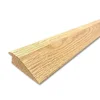 |
Randall Oak Overlap Reducer, 3 ft x 2 1/2 in (for 1/2 in flooring)
|
Vinyl plank is much thinner than hardwood, so the two floors almost never meet flush. Typical luxury vinyl plank runs about 5 mm to 8 mm thick, while engineered hardwood commonly comes in 3/8, 1/2 and 3/4 inch and solid hardwood is usually 3/4 inch. The table below is simple subtraction from those nominal thicknesses (3/4 inch is 19.1 mm, 1/2 inch is 12.7 mm, 3/8 inch is 9.5 mm). It shows what the step looks like before you add underlayment or adhesive.
| Hardwood next to vinyl | Vinyl thickness | Approx. step | What it usually needs |
|---|---|---|---|
| 3/4 in solid | 5 mm | about 9/16 in | Wide reducer or threshold, or raise the vinyl subfloor |
| 3/4 in solid | 8 mm | about 7/16 in | Reducer with a long ramp |
| 1/2 in engineered | 6 mm | about 1/4 in | Standard overlap reducer |
| 3/8 in engineered | 6 mm | about 1/8 in | Low-profile reducer |
| 3/8 in engineered | 8 mm | about 1/16 in | T-molding or flush transition |
These are nominal numbers. Measure the real finished heights at the doorway with a straightedge and a tape, because glue-down adhesive, attached pad, a thicker underlayment or an uneven subfloor can each move the answer by 1/16 inch or more. For why the underlayment choice matters under engineered wood, see our engineered hardwood underlayment guide.
Pick the Transition Profile by Height, Not by Looks
The most common mistake is buying a T-molding because it looks tidy. A T-molding only works when both floors are at the same height. Anything else leaves one edge sticking up or hanging in the air. Match the profile to the step you measured:
| Profile | Use it when | Skip it when |
|---|---|---|
| T-molding | Both floors sit at the same height | There is any visible step between floors |
| Reducer (overlap or flush) | One floor is lower and the strip should ramp down to it | The step is large enough to trip on and needs a subfloor fix first |
| End cap or square nose | Hardwood ends at a sliding door, stairs or a fireplace hearth | You need to cover two floors at a doorway |
| Threshold (saddle) | A wide doorway with a larger step or a wall thickness to span | The gap is tiny and a thin reducer would do |
Wood strips can be stained to your hardwood, while vinyl and aluminum strips are cheaper and easier to cut. In a doorway, a stained oak or species-matched reducer usually looks like part of the hardwood. A vinyl strip looks like part of the vinyl. Choose which floor you want the eye to read as continuous.
Leave the Expansion Space on Both Sides of the Seam
Both floors move, in different ways. Wood swells and shrinks with humidity, and floating vinyl expands and contracts with temperature, which is why a sunny doorway can behave differently from the middle of the room. The National Wood Flooring Association asks for expansion space around the perimeter of a solid wood floor that is at least equal to the flooring thickness, and for engineered wood at least 1/2 inch at walls and vertical obstructions. Vinyl makers publish their own numbers, often around 1/4 inch or more at obstructions for floating plank. Always use the figure in your own product guide.
The transition has to cover that space without pinning either floor. That means:
- Fasten the track or strip to the subfloor, never through floating vinyl planks.
- Keep the gap free of glue, caulk and adhesive so the floor can move.
- Size the strip so its cap overlaps the gap on both sides by a visible margin.
- Where hardwood is nailed down, the strip can fasten to the subfloor beside it, but still leave the vinyl side free to float.
Skipping this step is how a flat floor ends up peaking at the doorway a few months later. For the full perimeter rules on the hardwood side, see our wood flooring installation guide.
Match Color and Grain So the Seam Looks Chosen
People who search for LVP that matches oak, cherry or honey-colored hardwood are usually trying to hide the seam. It rarely works to chase an exact match, because real wood has variation and ages. Two approaches do work.
- Match undertone, not just lightness. Hold a vinyl sample against your floor in daylight and in evening lamp light. A warm red oak and a cool gray-beige vinyl will clash even when they are the same depth.
- Or contrast on purpose. A noticeably lighter or darker vinyl in a separate room, with a clean transition at the doorway, reads as a design choice. A near-miss in an open space reads as a mistake.
Three more details help. Match plank width as closely as you can, since a 3 inch hardwood next to a 7 inch vinyl plank looks mismatched even when the color is right. Compare the sheen, because high-gloss vinyl beside satin hardwood draws attention to the line. And check your real floor, not the showroom sample: cherry and similar species darken with light exposure and many finishes amber over time, so match the floor as it is today. A herringbone or patterned floor should stop at a doorway rather than continue into plain vinyl plank across an open sightline.
Where the Transition Belongs in Open Plans and Kitchens
Put the break where the eye already expects one: a doorway, an archway or the line of a cabinet run. A seam running through the middle of an open room cannot be hidden by any strip. If the two rooms share one open view, use a hardwood-matched reducer and keep the vinyl plank direction the same as the hardwood so the lines continue across. Our guide on which way floor planks should run covers choosing that direction in the first place.
In kitchens and entries, spilled water is the other concern. A strip does not seal the gap, so keep the hardwood edge fully finished and wipe water at the seam promptly. If you are comparing vinyl with laminate for the wetter room, our laminate vs LVP guide covers where each one holds up. If you are laying vinyl over an existing hardwood floor rather than beside it, read this guide on vinyl over wood floors instead.
How to Install a Reducer at the Doorway
- Measure the step with a straightedge at both ends and the center of the doorway. Use the largest figure.
- Undercut the door jamb and casing so both floors can slide under, leaving the expansion space you need.
- Install the hardwood and vinyl first, with their expansion spaces left clear.
- Cut the strip to the opening width with a fine-tooth saw, and test fit it dry.
- Fasten it to the subfloor (screws through a track or into the subfloor beside the hardwood), not through the floating vinyl.
- Check that the vinyl can still move: you should see a small clear gap under the cap, not a pinched edge.
Labor for the whole vinyl job is a separate budget item, covered in our vinyl plank labor cost breakdown.
Frequently Asked Questions
Do I need a transition strip between vinyl and hardwood?
Yes in almost every case. The two floors rarely sit at the same height, and both need expansion space at the seam. A strip covers the gap and the height difference, and it protects the edge of the thinner floor from being kicked up.
Should I use a T-molding or a reducer?
Use a T-molding only when the two floors are at the same height. If one floor is lower, which is usual with hardwood next to vinyl plank, a reducer ramps down to the lower surface and covers the edge of the higher one.
How big of a gap do I leave between vinyl and hardwood?
Follow each floor maker’s guide. The NWFA asks for at least the flooring thickness at the perimeter of solid wood and at least 1/2 inch for engineered wood, and floating vinyl guides commonly call for about 1/4 inch or more. The transition strip covers that space.
Can vinyl flooring go directly against hardwood with no strip?
It is a bad idea. Butting the floors together pins both, so seasonal movement can cause peaking, gaps or a raised edge, and any height step becomes a trip hazard.
What color vinyl matches oak or cherry hardwood?
Match the undertone, not just the shade. Compare samples to your real floor in daylight and lamp light. Since cherry darkens and many finishes amber with age, match the floor as it looks now, or choose a deliberate contrast.
Sponsored / affiliate links. As an Amazon Associate I earn from qualifying purchases. I may earn additional commission from eligible campaigns.