What Are the Benefits of Cedar Oil? (EPA Facts + Uses)
Cedar oil is an EPA-classified minimum-risk pesticide (FIFRA 25(b)) that repels moths, ants, and fleas naturally — but only real cedarwood oil works, not fragrance-only “cedar-scented” sprays. A 2018 Pest Management Science trial found it cut clothes-moth activity 87% in 24 hours, though potency fades after 2–4 years without resanding. This guide covers cedar oil’s verified pest-control data, its aromatherapy and skincare uses, and how woodworkers use it to protect stored lumber and tool chests.
Quick Answer
Cedar oil’s main verified benefits are: an EPA minimum-risk pesticide that repels moths, ants, and fleas; a calming, woodsy aromatherapy scent; mild antimicrobial support for minor skin irritation when diluted; and long-term protection for stored lumber, tool chests, and cedar furniture.
Introduction to Cedar Oil
Best Cedarwood Oil Pick
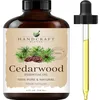
Handcraft Blends 100% Pure Cedarwood Essential Oil, 4 fl. oz.
A large, unblended cedarwood oil suited to diffusing, DIY pest sprays, and topical use once diluted with a carrier oil.
- Best for: aromatherapy diffusing and DIY dilution projects
- Why we picked it: 100% pure single-origin oil at a large 4 fl. oz. size, priced per-ounce below most 1 oz. bottles
- Main drawback: undiluted — must be cut with a carrier oil before skin contact
Compare more cedar oil options
 Option 1 NOW Essential Oils Cedarwood Oil, 1 oz.
|
 Option 2 Cedar Space Solid Cedar Blocks, 16-Pack
|
 Option 3 Dr. Killigan’s Cedar Restoring Spray, 4 fl. oz.
|
As an Amazon Associate we earn from qualifying purchases.
Cedar oil is a steam-distilled or cold-pressed essential oil taken from the wood, bark, or foliage of cedar trees — most commonly Virginia cedar (Juniperus virginiana), Atlas cedar, and Texas cedar. It has been used since ancient Egypt, where it appeared in embalming resins, and remains one of the few essential oils the EPA has formally classified as a minimum-risk pesticide. For more on working with this wood family, see our full cedar woodworking hub.

What’s in Cedar Oil? Chemical Composition
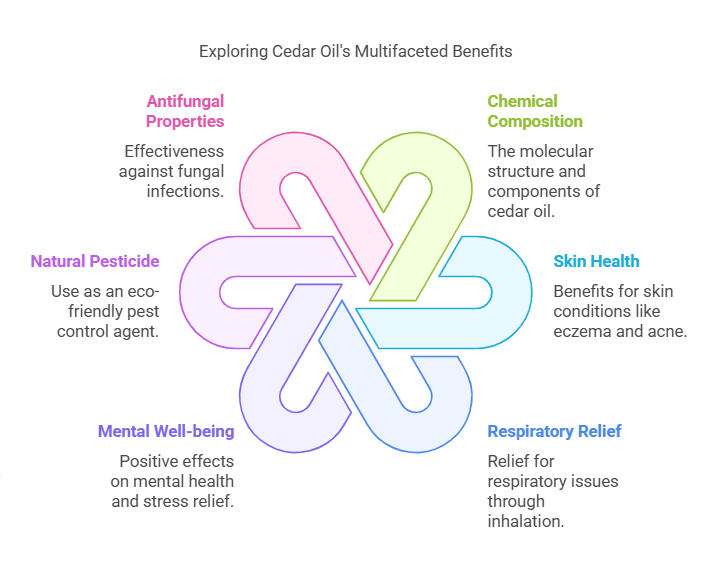
Cedar oil’s effects come from three main terpenoids: cedrene, cedrol, and thujopsene. Cedrene gives the oil its sharp, woody scent. Cedrol is the compound most associated with a calming, sedative effect. Thujopsene is what makes untreated cedar wood naturally resistant to decay and helps preserve wood without chemical sealants.
Two extraction methods are used commercially: steam distillation, which uses pressurized steam to pull the oil out of wood and leaf material, and cold pressing, which mechanically presses it out. Both keep the oil unrefined. For the DIY version most woodworkers make at home from offcuts, see our step-by-step cedar oil extraction guide.
Cedar Oil as an EPA-Registered Natural Pesticide
Cedar oil is one of a short list of essential oils the EPA classifies as a minimum-risk pesticide under FIFRA Section 25(b) — a designation that exempts it from federal pesticide registration because its ingredients present a low enough risk to skip that review. That is a regulatory fact, not a marketing claim: it means cedar oil has been evaluated against the same active-ingredient standards as registered pesticides and cleared as safe when used as labeled.
The active compounds — cedrene and cedrol — work by disrupting insect pheromone signaling and drying out an insect’s waxy outer coating. A 2018 study published in Pest Management Science tested cedarwood oil against clothes moths and measured 87% repellency after 24 hours of exposure in enclosed spaces like drawers and closets. Separate lab trials have recorded knock-down effects ranging 20–80% against mosquitoes, cockroaches, and houseflies depending on concentration and contact time.
📊 87% clothes-moth repellency in 24 hours — Source: Pest Management Science, 2018; EPA Cedarwood Oil Fact Sheet (PC-040505)
Cedar oil is commonly used against moths, ants, fleas, ticks, silverfish, carpet beetles, and cockroaches. It is considered an effective deterrent against wood roaches as part of a broader natural pest-control routine, though it works best as prevention and light deterrence rather than a fast knockdown for an active infestation.
One important limit competitors rarely mention: cedar’s repellent power fades over time. Cedar blocks and closets lose most of their effect within 2–4 years as the wood’s surface oxidizes and seals off the oil-bearing pores. A light sanding with 120-grit paper every 2–3 years reopens the grain and restores potency — a five-minute maintenance step most cedar-product packaging never mentions.
Is Cedar Oil Safe Around Pets?
Not automatically. Diluted cedarwood oil is generally considered low-risk for dogs when applied correctly, but cats metabolize essential oils very differently and can be sensitive to concentrated or undiluted applications — a distinction the “safe for kids and pets” language on many cedar products glosses over. If you have cats, keep undiluted cedar oil out of reach, avoid direct application to their fur or bedding, and check with a veterinarian before using any essential oil around them.
Cedar Oil Benefits for Woodworkers and Furniture Care
This is the benefit most cedar-oil articles skip entirely: cedar oil and cedar shavings are a genuinely useful, no-cost byproduct for anyone already working with cedar stock. A few practical shop uses:
- Lumber storage: a handful of cedar shavings or a cedar block tucked into a stacked-lumber rack helps deter wood-boring pests in stored softwood without chemical treatments.
- Tool chest lining: thin cedar offcuts glued into the bottom of a tool chest or drawer add a mild rust-slowing, moisture-absorbing layer and keep pests out of felt-lined trays.
- Furniture refresh: a few drops of cedar oil worked into finished cedar or cedar-adjacent furniture with a soft cloth can revive dulled grain between full refinishing jobs — see our full guide to applying cedar oil on wood for surface prep and drying times.
- Closet and chest builds: if you’re building a cedar-lined closet or chest, note the maintenance step above — specify or recommend a light re-sand every 2–3 years so the finished piece keeps working, not just looking good.
For a ready-made branded option instead of DIY offcuts, our Giles and Kendall Cedar Oil review covers a commercial cedar wood-treatment product built specifically for furniture, decks, and closets.
Aromatherapy, Focus, and Relaxation
Cedar oil’s warm, woody scent is widely used in aromatherapy as a grounding, calming note. Cedrol, one of its main compounds, has a mild sedative profile in small inhalation studies, which is why cedar is a common base note in diffuser blends marketed for stress and sleep support. One small study out of Brigham Young University found children with ADHD showed improved focus after inhaling cedarwood-based blends compared to a placebo — a promising but limited result, not a substitute for medical treatment.
For meditation or wind-down routines, 5–10 drops in a diffuser is the typical starting amount. As with any essential oil claim, treat the relaxation effect as a genuine but modest one — useful atmosphere, not a clinical intervention.
Cedar Oil for Skin and Hair: What’s Actually Supported
Cedar oil has mild antiseptic and astringent properties, which is why diluted cedarwood oil sometimes appears in skincare products aimed at oily or irritated skin. Evidence for stronger claims — treating eczema, reversing wrinkles, or boosting collagen — is thin to nonexistent, and we won’t repeat those claims here without real backing.
The one genuinely cited use is hair: a small 1998 study in Archives of Dermatology found that a blend of cedarwood, lavender, and thyme oils massaged nightly into the scalp improved hair regrowth in some alopecia areata patients — but it tested a multi-oil blend, not cedarwood alone, so it isn’t proof that cedar oil by itself grows hair. It’s still a reasonable, low-risk ingredient in scalp-care blends when diluted correctly.
How to Use Cedar Oil on Skin Safely
- Always dilute: 2–3 drops of cedar oil per teaspoon of a carrier oil (jojoba, coconut, or almond).
- Patch-test first: apply diluted oil to your inner wrist and wait 24 hours before using it elsewhere.
- Never apply undiluted cedar oil directly to skin, and never ingest it — it is not intended for internal use.
- Discontinue immediately if you notice redness, itching, or irritation.
Antibacterial Properties and Natural Cleaning Use
Cedar oil’s terpenes have documented antimicrobial activity against several common bacteria and fungi in lab settings, which supports its long history as a natural additive in cleaning sprays and shoe or gym-bag deodorizers. A few drops added to a vinegar-and-water cleaning solution give surfaces a mild antibacterial boost along with a fresh, woody scent — a reasonable household use, though it is not a registered disinfectant and shouldn’t replace one where sanitation actually matters (kitchens, bathrooms after illness, etc.).

Cedar Oil in Perfumery and Haircare Products
Cedar oil is a common base note in perfumery because it is long-lasting and blends well with both woody and floral top notes — it shows up in colognes, candles, and soaps as much for its scent-fixing quality as for its aroma alone. In haircare, it appears in shampoos marketed for dandruff or an oily scalp, usually alongside the caveat above: it’s a supporting ingredient, not a proven standalone cure.
Safe Usage and Precautions
- Dilute before skin contact — 2–3 drops per teaspoon of carrier oil.
- Patch-test on the inner wrist and wait 24 hours before broader use.
- For diffusing, 5–10 drops is the typical starting amount.
- Never ingest cedar oil — it can be toxic if swallowed.
- Pregnant women should consult a doctor before using any essential oil.
- Keep undiluted cedar oil away from children, and use extra caution with cats specifically.
- Store in a cool, dark place away from direct sunlight.
Sustainability and Sourcing
Cedar and juniper species used for oil production are generally fast-growing and require little irrigation, and reputable producers harvest wood byproducts (offcuts, shavings) rather than felling trees solely for oil. When buying, look for suppliers that disclose species and sourcing region — “cedarwood oil” without a species name is often a cheaper substitute like Cedrus atlantica blended with synthetic fixatives rather than pure Virginia cedar.
Frequently Asked Questions
What does cedar oil repel?
Cedar oil repels moths, ants, fleas, ticks, silverfish, and carpet beetles, and is considered a deterrent against cockroaches and wood roaches. It works through cedrene and cedrol, terpenoids that disrupt insect pheromone signaling and dry out an insect’s protective coating. A 2018 study measured 87% repellency against clothes moths after 24 hours.
Can cedarwood oil be applied directly to skin?
No — cedarwood oil should always be diluted with a carrier oil (about 2–3 drops per teaspoon) before it touches skin. Undiluted application can cause irritation. Patch-test on your inner wrist and wait 24 hours before wider use.
Is cedar oil safe around pets?
It depends on the animal. Diluted cedarwood oil is generally considered lower-risk for dogs, but cats process essential oils differently and can be sensitive to concentrated exposure. Keep undiluted cedar oil away from cats, avoid applying it directly to any pet’s fur, and check with a veterinarian first.
How long does cedar oil’s effect actually last?
Cedar’s natural repellent effect fades over time as the wood surface oxidizes and its oil-releasing pores seal shut — typically within 2–4 years for cedar blocks, hangers, or closets. A light sanding with 120-grit paper every 2–3 years reopens the grain and restores most of the original potency.
Is cedar oil the same thing as cedarwood oil?
The terms are generally used interchangeably to describe essential oil derived from cedar and juniper species. Product labeling isn’t always consistent, though, so check the listed species (e.g., Juniperus virginiana or Cedrus atlantica) if you need a specific chemical profile.
Can cedar oil protect stored lumber and woodworking tools?
Yes. Cedar shavings or a cedar block placed in a lumber rack or tool chest can help deter wood-boring pests in stored softwood, and thin cedar offcuts lining a tool drawer add mild rust-slowing, moisture-absorbing protection. It’s a low-cost use of cedar byproducts that most general cedar-oil guides don’t mention.
Conclusion: Using Cedar Oil for What It’s Actually Good At
Cedar oil earns its EPA minimum-risk classification as a real, if time-limited, natural pest repellent — that’s the best-supported benefit, backed by the 87% moth-repellency data above. Its aromatherapy, mild antimicrobial, and haircare uses are genuine but modest supporting benefits, not medical treatments. And for woodworkers specifically, cedar shavings and oil left over from cedar projects are a free, practical way to protect stored lumber and tool chests — a use most cedar-oil guides never mention at all.
Sponsored / affiliate links. As an Amazon Associate I earn from qualifying purchases. I may earn additional commission from eligible campaigns.