What Does Butcher Block Oil and Finish Do
Many people wonder What Does Butcher Block Oil and Finish Do? It can seem a bit tricky when you first get a butcher block countertop or cutting board. You want to keep it looking great and working well, but the steps aren’t always super clear. Don’t worry!
This guide will walk you through everything simply. We’ll break down exactly why oil and finish are important and how to use them the easy way. Get ready to make your butcher block beautiful and tough.
The Purpose Of Butcher Block Oil And Finish
Butcher block surfaces need special care to stay strong and look their best. Oil and finish are key to this care. They protect the wood from daily wear and tear.
They also bring out the natural beauty of the wood grain. Without this protection, butcher block can easily get damaged by water, stains, and scratches.
Think of oil and finish as a shield for your wood. They soak into the wood or form a protective layer on top. This makes the surface less likely to absorb liquids or get marked up.
Using the right products will make your butcher block last much longer and stay looking like new for years to come. This section will explore the main jobs these treatments perform.
How Oil Protects Butcher Block
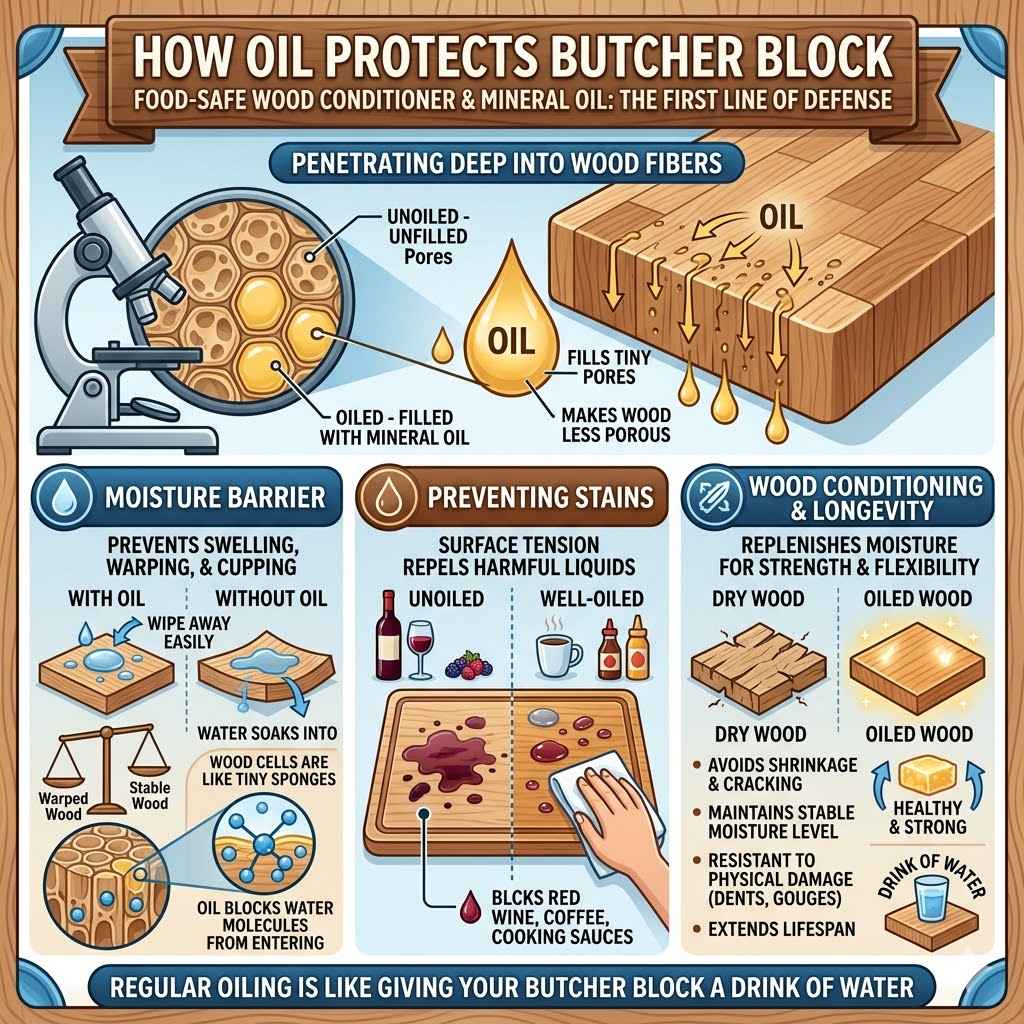
Butcher block oil, often called mineral oil or a food-safe wood conditioner, is the first line of defense. Its main job is to penetrate deep into the wood fibers. This fills the tiny pores within the wood, making it less porous.
When wood is less porous, it can’t easily soak up liquids.
This is super important for kitchen surfaces where spills are common. Drinks, cooking oils, and water can quickly stain or warp untreated wood. By oiling the butcher block, you create a barrier against these liquids.
The oil also helps to prevent the wood from drying out and cracking. Wood is a natural material that can shrink and swell with changes in humidity. Keeping it moisturized with oil helps it maintain a stable moisture level.
Moisture Barrier
The moisture barrier created by oil is one of its most vital functions. When you apply oil, it seeps into the wood cells. These cells are like tiny sponges.
Oil fills these spaces, making it much harder for water molecules to enter. This prevents common issues like swelling, warping, and the dreaded cupping where the wood bends upwards or downwards.
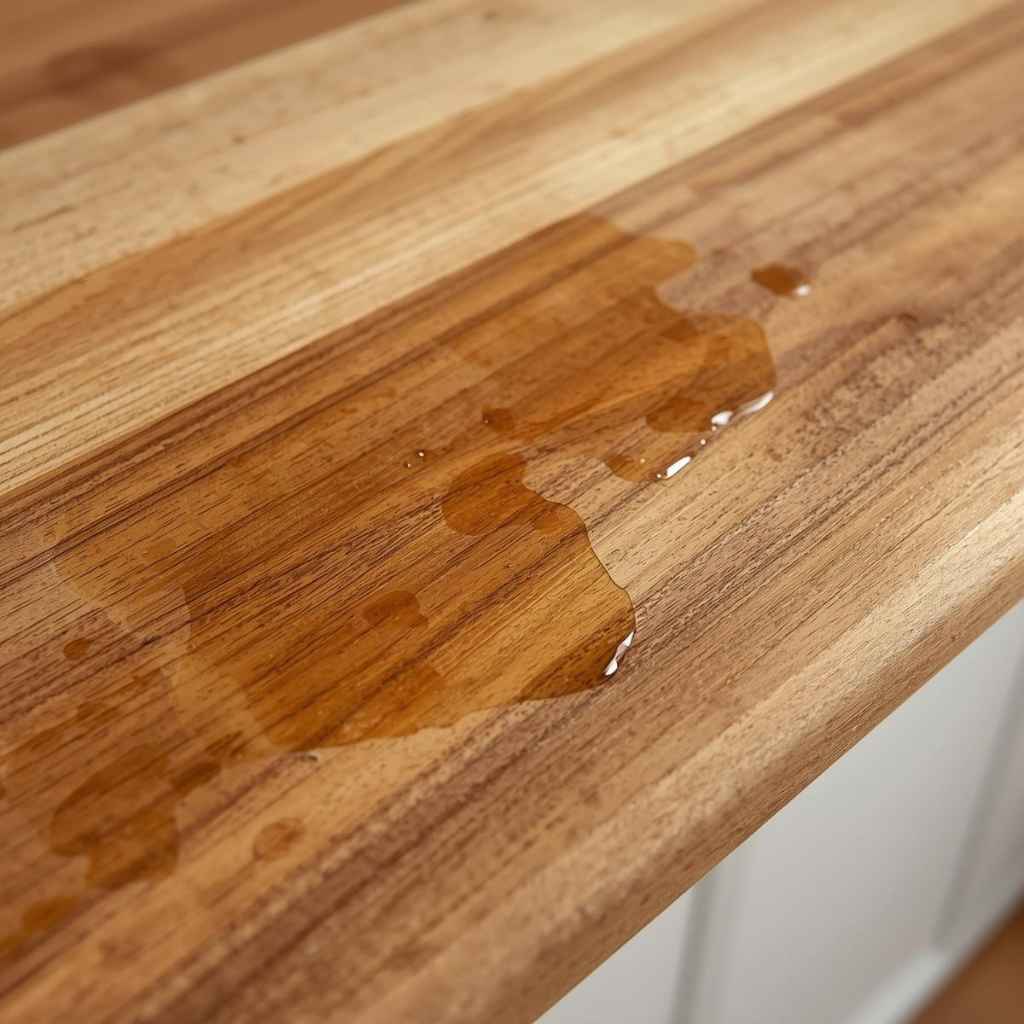
For example, if you spill a glass of water on an oiled butcher block, the water will likely bead up on the surface. You can then easily wipe it away without it soaking in. An unoiled surface would absorb that water, potentially causing damage over time.
This is especially true if spills are left for a while.
Preventing Stains
Beyond just water, oil helps block other liquids that can cause stains. Think about red wine, coffee, or cooking sauces. These dark liquids can quickly leave permanent marks on unprotected wood.
The oil creates a surface tension that forces these liquids to sit on top rather than absorb into the wood.
A practical example is a cutting board. If you chop beets or berries on an unoiled board, the juices will likely stain the wood. However, a well-oiled cutting board will repel most of these juices.
You can wipe them away cleanly, leaving the wood looking fresh. This also helps keep your surfaces hygienic by reducing areas where bacteria might hide.
Wood Conditioning And Longevity
Wood naturally loses moisture over time, especially in dry environments. This drying out can lead to shrinkage, making the wood brittle and prone to cracking. Butcher block oil acts as a conditioner, replenishing this lost moisture.
By keeping the wood hydrated, the oil helps maintain its flexibility and strength. This greatly extends the lifespan of your butcher block. A well-conditioned piece of wood is more resistant to physical damage, like dents and gouges, too.
Regular oiling is like giving your butcher block a drink of water to keep it healthy and strong.
The Role Of Butcher Block Finish
While oil soaks into the wood, a finish typically forms a protective layer on the surface. This can be a clear coating or a more decorative sealant. Finishes offer a different kind of protection and can also change the look of the wood.
Finishes are often more durable than oil alone, providing a tougher barrier against wear and tear. They can make the surface smoother and easier to clean. Many finishes are designed to be very hard-wearing, which is ideal for high-traffic areas like kitchen countertops.
Surface Protection And Durability
A good butcher block finish creates a strong, protective film on the wood’s surface. This film is typically harder and more resilient than oil alone. It acts as a shield against scratches, scuffs, and impacts that can occur during everyday use.
For kitchen countertops, this durability is essential. Chopping, placing hot pans (with appropriate protection), and general kitchen activities can be tough on surfaces. A durable finish can withstand this constant use much better than bare wood or just oil.
Some finishes are so tough they can even resist minor knife marks, though direct cutting is still not recommended.
Water And Stain Resistance
Finishes are excellent at preventing liquids from penetrating the wood. Unlike oil which soaks in, finishes create a non-porous barrier on top. This means spills sit on the surface, making them very easy to wipe away.
This is particularly beneficial for preventing water damage and stubborn stains.
Imagine a busy cooking day. There are likely to be spills from sauces, oils, or drinks. A well-finished butcher block will easily repel these.
A quick wipe with a damp cloth often suffices to clean it up without any sign of the spill. This is a major advantage for maintaining a clean and attractive kitchen.
Aesthetic Enhancements
Finishes can also enhance the visual appeal of butcher block. They can add a sheen, deepen the wood’s color, or provide a smooth, luxurious feel. Some finishes offer a matte look, while others provide a high-gloss shine, allowing you to customize the appearance of your butcher block.
For instance, a natural oil finish might give a warm, matte look that emphasizes the wood’s natural texture. A polyurethane or varnish finish, however, can create a glossy, almost furniture-like appearance. This can transform the look of your kitchen or dining area, making the butcher block a beautiful focal point.
Common Types Of Butcher Block Oils And Finishes
Understanding the different types of products available is key to choosing the right one for your butcher block. Each has its own benefits and best uses.
The choice between oil and finish, or a combination, depends on how the butcher block will be used, the desired look, and how much maintenance you are willing to do.
Food-Safe Mineral Oil
This is the most common type of oil used for butcher blocks and cutting boards that come into contact with food. It is odorless, tasteless, and non-toxic. It is also very easy to apply and reapply.
Mineral oil works by soaking into the wood. It keeps the wood hydrated and prevents it from drying out or cracking. It also makes the surface resistant to moisture and stains.
It is important to use pure mineral oil and not baby oil or other petroleum-based products that might have additives.
Tung Oil And Linseed Oil
These are natural drying oils. Tung oil, derived from the tung tree nut, is known for its durability and water resistance. Pure tung oil provides a hard, durable finish that is food safe once fully cured.
It has a natural, matte appearance.
Linseed oil, derived from flax seeds, is another popular choice. Like tung oil, it penetrates the wood and hardens over time. However, raw linseed oil can take a long time to cure and can sometimes develop a sticky residue.
Boiled linseed oil has drying agents added to speed up the process, but it is often not considered food safe.
For butcher block, especially for countertops, the curing time and potential for stickiness with linseed oil can be drawbacks. Tung oil is often preferred for its better durability and faster, cleaner curing, provided it is pure tung oil.
Wax Based Finishes
Many butcher block products combine oil with wax, like beeswax or carnauba wax. These wax finishes are excellent for providing an extra layer of protection on top of the oil. They add a smooth feel and a bit of sheen to the wood.
Wax finishes also offer good water repellency. Water tends to bead up nicely on a waxed surface. They are easy to reapply and help maintain the protective layer provided by the oil.
They are a great option for adding that extra bit of polish and protection.
Polyurethane And Varnish
These are types of surface coatings that create a hard, protective film on top of the wood. Polyurethane and varnish are very durable and provide excellent resistance to scratches, heat, and moisture. They are often used on furniture and cabinets.
However, many polyurethane and varnish products are not considered food safe. If you are using them on a butcher block countertop that is also used for food preparation, you need to be very careful. It is often recommended to use these finishes on the sides or areas of the butcher block that will not directly contact food.
For surfaces used for cutting or serving food, food-safe oils and waxes are the better choice.
If you do opt for a polyurethane or varnish, look for water-based formulas, as they tend to be less toxic and have lower VOCs (volatile organic compounds). They also cure faster and are more flexible than oil-based versions.
How To Apply Butcher Block Oil And Finish
Applying oil and finish correctly is crucial for achieving the best results. It’s not complicated, but following the right steps ensures your butcher block is well-protected and looks great.
The process is similar whether you are treating a new piece of butcher block or refreshing an older one. The key is thoroughness and allowing adequate drying or curing time between applications.
Surface Preparation
Before applying any oil or finish, the butcher block surface must be clean and dry. If it’s new, it might have dust or manufacturing residue. If it’s old, it might have grease, grime, or old finishes that need to be removed.
For a new surface, a light sanding with fine-grit sandpaper (around 220-grit) can help open the wood pores for better oil absorption. Wipe away all dust with a tack cloth or a dry, lint-free cloth. If you are refinishing an old piece, you may need to strip any old finish and sand it down to bare wood.
It’s important to ensure the wood is completely dry after cleaning or sanding. Any trapped moisture can interfere with the oil or finish penetrating properly.
Applying Oil
Applying oil is straightforward. Pour a generous amount of food-safe mineral oil directly onto the butcher block surface. Use a clean, lint-free cloth or a brush to spread the oil evenly over the entire surface.
Make sure to cover all sides and edges.
Allow the oil to soak into the wood for at least 15-30 minutes, or even longer, up to several hours or overnight. The longer you let it soak, the more it will penetrate. You will notice that some areas absorb more oil than others.
Apply more oil to these dry spots.
After the soaking period, take a clean cloth and wipe away any excess oil that has not been absorbed by the wood. You want the surface to feel smooth and conditioned, not greasy or sticky. For the first few applications, you might need to repeat this process multiple times over a few days to fully saturate the wood.
A practical scenario for a new cutting board would be to apply oil liberally, let it soak for 30 minutes, wipe off excess, and then repeat this process 2-3 more times on the first day. Then, oil it again daily for the next 3 days. This deep saturation is crucial for initial protection.
Applying Wax Finishes
Wax finishes are typically applied over an oiled surface. Once the oil has been applied and excess wiped off, you can apply the wax. Use a clean, lint-free cloth to apply a thin, even layer of butcher block wax to the entire surface.
Allow the wax to haze over for about 10-15 minutes. Then, use a clean, dry cloth to buff the surface vigorously. This buffing action will bring out a nice sheen and create a smooth, protective layer.
For countertops, you might reapply wax every 1-3 months, depending on usage. For cutting boards, it might be more frequent, perhaps once a month or whenever the wood starts to look dry.
Applying Other Finishes (Polyurethane, Varnish)
If you are using a non-food-safe finish like polyurethane or varnish, follow the manufacturer’s instructions carefully. These typically involve applying thin, even coats with a brush or roller.
You will need to allow each coat to dry completely before applying the next. This usually takes several hours. Light sanding between coats with very fine-grit sandpaper can help create a smoother finish.
Ensure good ventilation when applying these products, as they can have strong fumes.
Remember that these finishes are not ideal for areas that will directly contact food. If you are finishing a countertop, consider leaving the main work surface area unfinished or finished only with food-safe oil and wax, while using polyurethane on the edges or non-food-prep zones.
Maintaining Your Butcher Block
Proper maintenance is key to keeping your butcher block looking beautiful and functional for years to come. It’s not difficult, but it does require regular attention.
Regular cleaning and periodic reapplication of oil or finish are the most important aspects of butcher block care. By following a few simple guidelines, you can prevent damage and keep your butcher block in excellent condition.
Daily Cleaning Tips
After each use, clean your butcher block surface promptly. For most daily messes, warm water and a mild dish soap are sufficient. Use a soft cloth or sponge to wipe down the surface.
Avoid letting water pool on the surface for extended periods. Always wipe it dry with a clean, soft towel. Never use harsh abrasive cleaners, steel wool, or strong chemicals, as these can damage the finish and the wood itself.
For tougher grime or sticky spots, a paste made of baking soda and water can be effective. Apply the paste, let it sit for a few minutes, then gently scrub and wipe clean. Rinse thoroughly and dry immediately.
Periodic Reapplication Of Oil And Finish
The frequency of reapplication depends on the type of finish and how much the butcher block is used. For surfaces treated with food-safe mineral oil, you might notice the wood looking dull or dry every 1-3 months. When this happens, it’s time to reapply the oil.
For wax finishes, reapplication might be needed every 1-3 months for countertops and monthly for cutting boards, or whenever water stops beading up nicely. Simply clean the surface, apply a thin layer of wax, let it haze, and buff it off.
If you have used a more durable finish like polyurethane, reapplication might be needed only every few years, or when you notice wear and tear. Always clean and prepare the surface thoroughly before reapplying any finish.
Dealing With Scratches And Stains
Minor scratches on oiled or waxed butcher block can often be removed by applying more oil. The oil can help to blend the scratch and make it less noticeable. For deeper scratches, light sanding might be necessary, followed by reapplication of oil and wax.
Stubborn stains can be a bit more challenging. For food-safe finishes, try a paste of baking soda and water. For very deep stains or damage on non-food-safe finishes, you might need to sand down the affected area and reapply the finish.
Always test any cleaning or repair method on an inconspicuous area first.
It is important to note that while oil and finishes offer protection, butcher block is still a natural material. Some wear and tear are to be expected, especially on frequently used surfaces like cutting boards. Embrace the natural patina that develops over time; it adds character to your butcher block.
What Does Butcher Block Oil And Finish Do For You
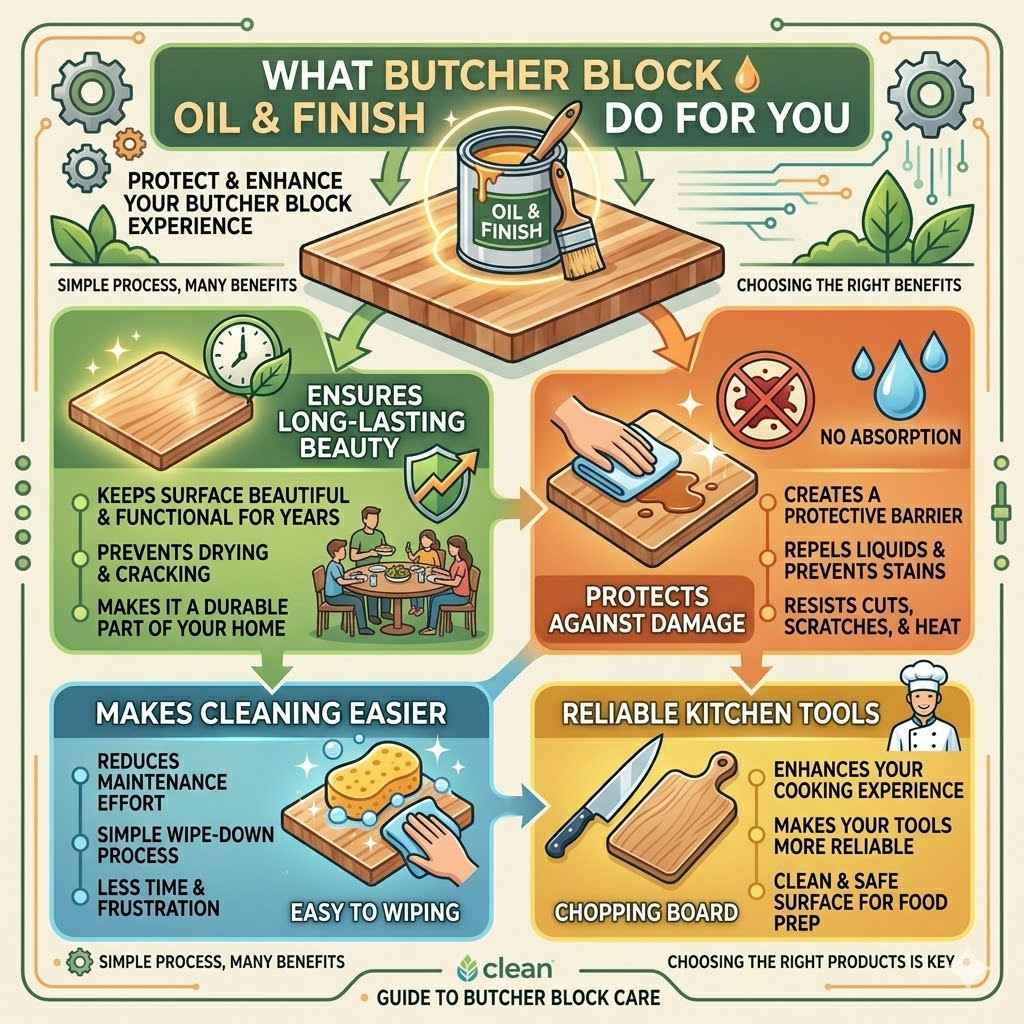
Ultimately, applying oil and finish to your butcher block does more than just protect it; it enhances your experience. It ensures your kitchen or dining area looks great and your tools are reliable. The protective layers keep your surfaces safe from spills and damage.
They also make cleaning much easier.
Choosing the right products and applying them correctly means your butcher block will last longer. It will remain a beautiful and functional part of your home for many years. This guide has shown you how simple this process can be.
Frequently Asked Questions
Question: Is butcher block oil and finish necessary for all butcher block applications
Answer: Yes, for most applications, especially those exposed to moisture or food, oil and finish are highly recommended. They protect the wood from water damage, stains, and drying out, extending its lifespan and maintaining its appearance. For cutting boards and countertops, these treatments are essential for hygiene and durability.
Question: Can I use any cooking oil on my butcher block
Answer: No, it is best to use food-safe mineral oil or specialized butcher block oils. Other cooking oils like olive oil or vegetable oil can go rancid over time, leading to unpleasant odors and sticky residues. Pure mineral oil is odorless, tasteless, and doesn’t go bad.
Question: How often should I re-oil my butcher block countertop
Answer: For a butcher block countertop, re-oiling is typically needed every 1-3 months. You’ll know it’s time when the wood starts to look dull or dry, and water no longer beads up on the surface. Frequent use and humidity levels can affect how often you need to oil it.
Question: What is the difference between oil and a finish
Answer: Oil penetrates the wood to condition and protect it from within, making it less porous. A finish, like polyurethane or varnish, forms a protective layer on the surface of the wood. Finishes are often more durable but may not be food safe.
Oils are easier to reapply and maintain a natural look.
Question: Can I put a butcher block countertop over a dishwasher
Answer: It is generally not recommended to place a butcher block countertop directly over a dishwasher. Dishwashers produce significant steam and heat, which can warp, swell, or damage the butcher block over time. If you must, ensure adequate ventilation and consider using a waterproof sealant on the underside, though it’s still a risk.
Summary
Applying oil and finish to butcher block is essential. It protects the wood from moisture, stains, and drying out. Oils penetrate to condition the wood, while finishes create a durable surface layer.
Proper application and regular maintenance keep your butcher block beautiful and long-lasting. Simple cleaning and periodic reapplication ensure your butcher block stays strong and attractive.