What Grit Sandpaper Equals 0000 Steel Wool? Around 400
0000 steel wool matches roughly 300 to 600 grit sandpaper, with 400 grit the closest single equivalent — estimates vary because CAMI and European FEPA grit scales measure fine abrasives differently. Using coarser sandpaper by mistake on a delicate lacquer or shellac finish can leave visible scratches steel wool would never cause. This guide covers the full steel wool grade chart, why sources disagree, and when to pick steel wool over grit sandpaper.
This fine-grit range is used for polishing or buffing wood, metal, and automotive finishes — removing minor imperfections without leaving visible scratch marks. On delicate surfaces, 0000 steel wool can still leave behind tiny metal fibers that rust if not fully wiped away, so fine sandpaper is sometimes the safer choice for bare wood that will be stained afterward. For the full sanding-to-topcoat sequence, see our wood finishing guide.
Understanding Grit Sandpaper and 0000 Steel Wool
Best 0000 Steel Wool Pick
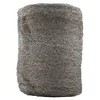
Homax Rhodes American 0000 Super-Fine Steel Wool Pads (16-Pack)
Rhodes American #0000 super-fine grade — the same finest-commercial grade discussed in this guide, sized for a full refinishing project.
- Best for: Rubbing out shellac/lacquer, buffing wood between coats
- Why we picked it: 16 pads at the exact 0000 grade this article covers
- Main drawback: Sheds fine metal fibers — wipe surfaces clean after use
Compare more steel wool & fine-grit sandpaper options
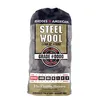 Option 1 Homax 0000 Steel Wool, 12-Pad, Final Finish Grade
|
 Option 2 40-Pc Wet/Dry Sandpaper Assortment (220-3000 Grit)
|
 Option 3 Sandpaper Assortment 120-2000 Grit, 21 Sheets
|
As an Amazon Associate we earn from qualifying purchases.
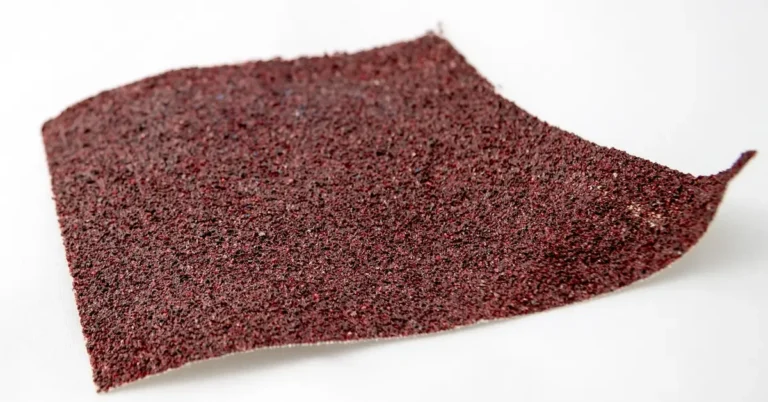
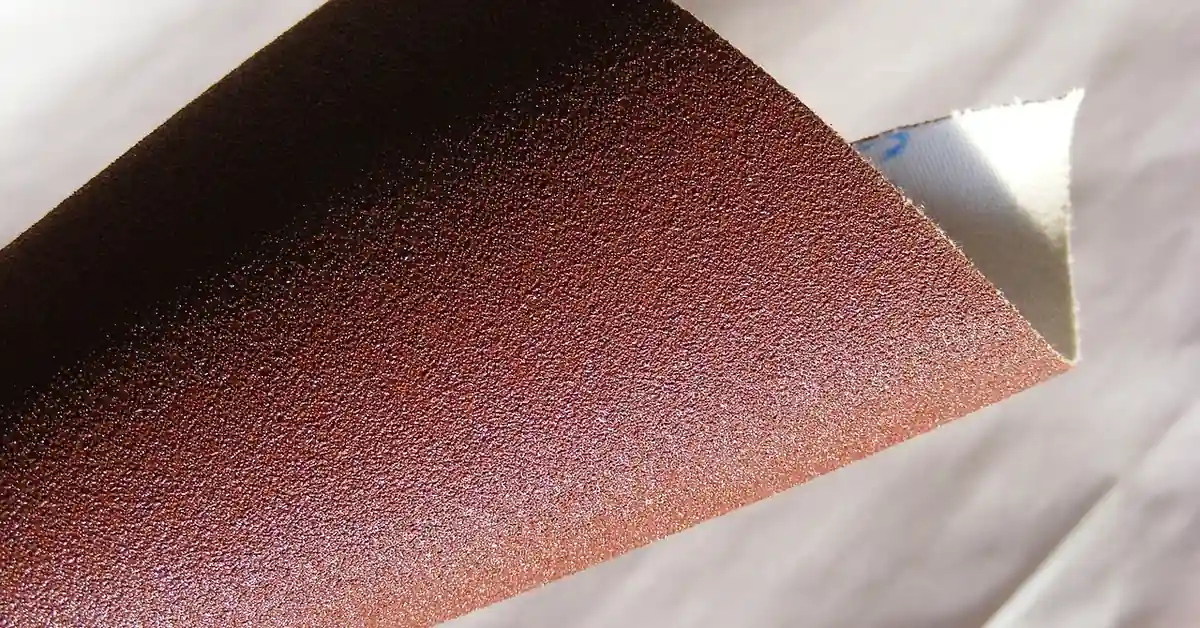
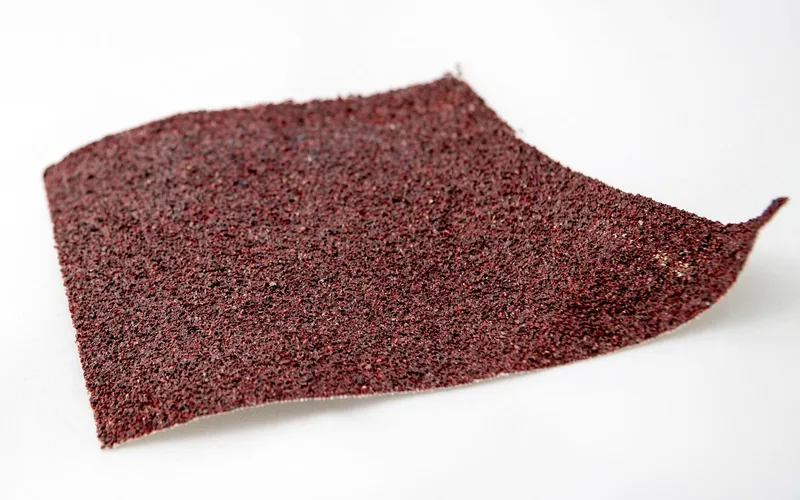
Grit refers to the size of the abrasive particles bonded to a sandpaper sheet — the higher the number, the finer the particle and the smoother the finish. Steel wool uses a different system entirely: strand thickness graded from coarse Grade 4 down to the finest, Grade 0000. Because the two systems measure different materials, any grit-to-grade comparison is always an approximation, not an exact match.
Sandpaper Grit Ranges (CAMI Scale)
| Category | Grit Range | Typical Use |
|---|---|---|
| Extra-coarse | 24–36 | Stripping paint, sanding old floors |
| Coarse | 40–50 | Shaping wood, removing old finish |
| Medium | 60–80 | Smoothing rough wood, removing scratches |
| Fine | 100–120 | Final smoothing before finishing |
| Very fine | 150–220 | Between coats of paint or varnish |
| Extra/super fine | 240–600 | Polishing, final rub-out (0000 steel wool range) |
| Ultra-fine | 800–1000 | Final polish on finishes and metal |
📊 0000 steel wool falls inside the 240–600 extra/super-fine sandpaper band, with 400 grit cited most often as the closest single match — Source: common CAMI grit-chart convention (Family Handyman, Bob Vila).
Full Steel Wool Grade Chart: Grade 4 to 0000
Most comparisons online only cover the single 0000-to-sandpaper conversion. Steel wool actually comes in eight grades, and knowing the whole ladder helps you pick the right one whether you’re stripping old finish or rubbing out a final coat.
| Steel Wool Grade | Approx. Sandpaper Equivalent | Common Use |
|---|---|---|
| 4 (coarsest) | 30–40 grit | Heavy paint/rust stripping |
| 3 | 40–60 grit | Rough surface prep |
| 2 | 60–80 grit | General-purpose cleaning |
| 1 | 80–120 grit | Removing rust, light stripping |
| 0 | 100–150 grit | Smoothing bare wood |
| 00 | 150–220 grit | Between-coat scuffing |
| 000 | 280–320 grit | Fine polishing, wax application |
| 0000 (finest) | 300–600 grit | Final rub-out, glass, delicate finishes |
This full range is why a woodworker reaching for Grade 000 instead of 0000 by mistake still gets a usable — just slightly coarser — result rather than a ruined finish.
Why Sources Disagree: CAMI vs. European (FEPA/P) Grit
CAMI (Coated Abrasive Manufacturers Institute) is the U.S. grit standard, written as a plain number. FEPA (the European standard) uses a “P” prefix, like P400. At coarse grits the two are nearly interchangeable, but they diverge sharply at fine grits — CAMI 600 measures closer to P1200 in actual particle size. That divergence is a real reason different sources quote 0000 steel wool as anywhere from 300 to 600, or even higher: they may be reading a CAMI chart, a European P-chart, or a visual/tactile comparison instead of a lab measurement.
In my own shop, I treat any steel-wool-to-grit conversion as a starting point, not a spec — I test on an offcut before committing to a full tabletop or door panel, since a coat of shellac or lacquer reacts differently to steel wool’s fibers than it does to a sanded finish.
Comparing Grit Sandpaper to 0000 Steel Wool
When it comes to sanding and polishing surfaces, both grit sandpaper and 0000 steel wool are popular choices. They both serve the purpose of smoothing rough materials and preparing them for a final finish.
Key Similarities
- Both are abrasives used to remove surface imperfections on wood, metal, and other materials.
- Both are common in woodworking, metalworking, and general surface prep.
- Both can be used to remove oxidation or rust from metal surfaces.
Key Differences
| Factor | Grit Sandpaper | 0000 Steel Wool |
|---|---|---|
| Material | Aluminum oxide or silicon carbide bonded to paper/cloth | Fine steel strands |
| Flexibility | Rigid, best on flat surfaces | Pliable, reaches curves and corners |
| Typical role | Preliminary step before finishing | Final rub-out for a satin sheen |
| Risk | Visible scratches if too coarse | Metal fibers can rust if not cleaned off |
When to Reach for Steel Wool vs. Sandpaper
Grit sandpaper is the better choice for efficient material removal — stripping old paint, leveling rough wood, or prepping bare wood before staining. Its uniform, bonded grain gives consistent results pass after pass, and it’s built to withstand a power sander without breaking down.
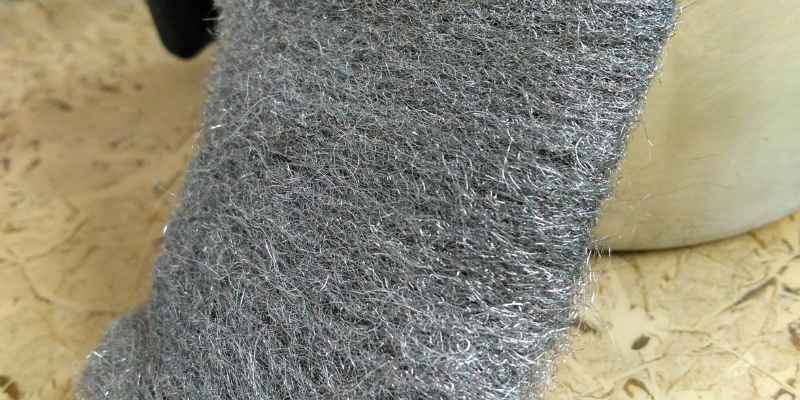
0000 steel wool earns its place at the finishing end of the process: buffing a shellac or lacquer coat to a satin sheen, cleaning and reviving old wooden furniture, or smoothing dust nibs between finish coats without cutting through. It flexes into carved details and tight corners that a flat sanding block can’t reach, and unlike sandpaper it can be rinsed and reused several times before it wears out. The tradeoff: always rub with the grain, and wipe the surface down afterward to remove stray metal fibers before they have a chance to rust.
Choosing the Right Tool for the Job
Three factors decide which one to reach for: the surface material, the size of the job, and how much abrasiveness the project can tolerate. A small area of delicate antique finish calls for steel wool’s control; a full tabletop stripped down to bare wood calls for sandpaper’s speed.
- Test on a small area first: try both on an inconspicuous spot before committing to the whole surface.
- Match the grit to the step: coarser grits for removal, 0000 steel wool or 400+ grit sandpaper only for the final pass.
- Consider access: steel wool’s flexibility wins on contoured or carved surfaces; sandpaper wins on flat, large areas.
Frequently Asked Questions
What Can Be Used Instead of 0000 Steel Wool?
A synthetic abrasive pad (like a fine nylon scrub pad) or 400–600 grit sandpaper can substitute for 0000 steel wool. Neither is identical — nylon pads won’t shed metal fibers, and sandpaper cuts more uniformly but leaves finer directional scratches — so test the substitute on scrap first.
What Is Grade 0000 Steel Wool?
Grade 0000 is the finest commercial steel wool grade made, roughly equal to 300–600 grit sandpaper. It’s used for rubbing out finishes, polishing glass and metal, and buffing wood between coats without cutting through the film.
What Is Steel Wool Grit?
Steel wool doesn’t use a numeric grit scale like sandpaper — it uses a grade system running from coarsest (Grade 4) to finest (Grade 0000), passing through 3, 2, 1, 0, 00, and 000 along the way. The higher the number of zeros, the finer and softer the strands.
Can I Use Sandpaper Instead of Steel Wool?
Yes — 400 to 600 grit sandpaper is the closest sandpaper substitute for 0000 steel wool. It won’t flex into corners the way steel wool does and can leave slightly more visible scratch direction, but it works well on flat panels and won’t leave rust-prone metal fibers behind.
Does 0000 Steel Wool Scratch Wood?
0000 steel wool rarely scratches wood when used correctly — always rub with the grain, not across it. Rubbing across the grain, or pressing too hard, can still burnish or mar a soft wood like pine, so light, even, grain-direction strokes are the safest technique.
Conclusion
0000 steel wool lines up with roughly 300 to 600 grit sandpaper, closest to 400 grit — but the two materials behave differently enough that the grit number is only a starting point. Use sandpaper for efficient stripping and leveling, and save 0000 steel wool for the final rub-out where its softer fibers protect a delicate finish that coarser sandpaper would mark.
Sponsored / affiliate links. As an Amazon Associate I earn from qualifying purchases. I may earn additional commission from eligible campaigns.