What Size Hole Saw for a Shower Valve? Usually 1-3/4 to 2-1/2 Inches
Most shower valve hole saws run 1-1/4 to 3-1/8 inches in diameter — the exact size depends on the valve brand, not a universal standard. California Faucets rough-in valves need only 1-1/4 inch, while a Delta remodel trim plate needs up to 3-1/8 inches for screw clearance. Cutting the hole even 1/4 inch too big can leave a gap the trim plate can’t cover. This guide covers exact sizes by brand, how to measure your own valve, and which hole saw type cuts cleanest in tile, fiberglass, or cement board.
Factors That Determine Your Shower Valve Hole Size
Best Shower Valve Hole Saw Pick
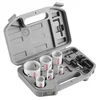
Bosch HSBIM9 9-Piece General-Purpose Bi-Metal Hole Saw Kit
A spinlock arbor system with six hole saws covering the common shower valve range, plus a pilot bit for a clean starting hole.
- Best for: Kohler, Delta, and Moen new-construction valves in the 1-3/4″ to 2-1/2″ range
- Why we picked it: One universal arbor covers most brand sizes in the table above, so you’re not buying single-size saws for each valve
- Main drawback: Bi-metal teeth aren’t rated for tile or cement board — use a diamond or carbide saw for those surfaces
Compare more hole saw options
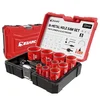 Option 1 EZARC 16-Piece Bi-Metal Hole Saw Kit, 3/4″-2-1/2″
|
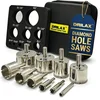 Option 2 Drilax Diamond Hole Saw Kit for Tile and Glass, 1/4″-2″
|
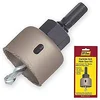 Option 3 IVY Classic 1-3/4″ Carbide Grit Edge Hole Saw
|
As an Amazon Associate we earn from qualifying purchases.
There is no single “shower valve hole saw size” because valve bodies aren’t standardized across manufacturers. Three things decide the size you need: the valve type, the brand, and the wall material you’re cutting into.
Valve Type
Pressure-balanced, thermostatic, and manual (single-handle compression) valves all have different body diameters. A thermostatic valve typically has the largest body of the three, so it needs a larger hole than a basic manual mixing valve. Check which type you have before buying a hole saw.
Brand
Every manufacturer sets its own rough-in hole size — see the brand table below. Always confirm against the printed template that ships with the valve; a brand’s “typical” size can still vary by model year.
Wall Material and Installation Type
New-construction rough-ins (cutting into open studs before drywall goes up) generally use a smaller hole than a remodel/thin-wall installation, where the hole also has to clear the old plaster or tile edge. Tile and cement board need a hole saw rated for masonry, not a standard wood/metal bi-metal blade.
Shower Valve Hole Saw Size by Brand
None of the major installation guides put every brand side by side, so here’s the size comparison compiled from manufacturer rough-in instructions and installation documentation. Always cross-check against the template in your specific valve’s box — sizes can shift between model generations.
| Brand | Typical Hole Saw Size | Notes |
|---|---|---|
| Delta | 1-3/4″ (new construction) to 3-1/8″ (remodel trim) | Remodel plates need extra clearance for faceplate screw holes |
| Moen (Posi-Temp) | 1-7/8″ to 3″ | Varies between plaster-ground and thin-wall applications |
| Kohler | 1-3/4″ | Confirm against the model-specific template; varies by valve series |
| California Faucets | 1-1/4″ | Smallest hole size of the major brands; used for rough-in valve bodies |
“Each hole needs to be 1 1/4 inch in diameter.”
California Faucets rough-in valve installation instructions
📊 A hole cut more than about 1/4 inch oversized can leave a gap the decorative trim plate can’t fully conceal, since the plate’s job is to cover the rough-in valve and the cut wall edges — not add extra coverage. Measure twice; a hole saw only cuts one size larger, never smaller.
How to Measure the Right Hole Saw Size
If you don’t have the valve’s paper template, measure the valve body directly. Getting this wrong in either direction causes problems: too small and the valve won’t seat, too large and the trim plate won’t cover the gap.
- Remove the valve cover: Take off the cover to expose the bare valve body.
- Measure the valve body diameter: Use a caliper across the widest point of the valve body — this is your baseline hole size.
- Measure the valve’s depth: Use a tape measure from the front of the valve body to the back to confirm the hole depth needed.
- Add clearance: Add about 1/8 inch to the diameter for tile thickness, and confirm the total against the brand table above before cutting.
Tools You’ll Need
- Caliper — for measuring the valve body diameter accurately
- Tape measure — for checking valve depth
- Center punch — to mark a clean starting point before drilling
- Hole saw — sized to match your measurement and wall material (see picks below)
Double-check your measurement before cutting, mark the center point with painter’s tape and a center punch, and run the drill at low speed on the first pass — a sharp hole saw with a pilot bit tracks straighter and prevents the wandering that ruins a tile face.
For a video walkthrough of the full rough-in and trim process, this installation guide covers the hole-cutting step alongside valve mounting:
Hole Saw Types for Cutting a Shower Valve Opening
Which hole saw material you need depends on what you’re cutting through, not just the diameter. Using a wood/metal bi-metal saw on tile will dull the teeth in one pass and can crack the tile face.
Diamond Hole Saw
Diamond-edged hole saws cut tile, stone, ceramic, and glass cleanly. For shower valve installs they typically range from 5/16 inch to 2 inches in diameter, which covers every brand in the table above.
Carbide Grit Hole Saw
A carbide hole saw handles cement board, fiberglass, and tile without the cost of diamond grit, and holds up over repeated cuts on a full remodel. Sizes commonly run 1/4 inch to 1-1/2 inches.
Bi-Metal Hole Saw
Bi-metal saws combine high-speed steel teeth with a softer metal body, and cut wood, fiberglass, and thin sheet metal in the 3/4 inch to 2 inch range. They’re the right choice for a fiberglass tub-shower surround, not for glazed tile.
Arbored vs. Non-Arbored
Most consumer hole saw kits use an arbored design with a built-in pilot bit, which keeps the cut centered on your marked point — the safer choice for a first-time valve install.
Cutting the Hole in Tile, Fiberglass, or Cement Board
The material behind your shower wall changes both the hole saw type and the exact size you should cut, since some materials need extra clearance to avoid cracking.
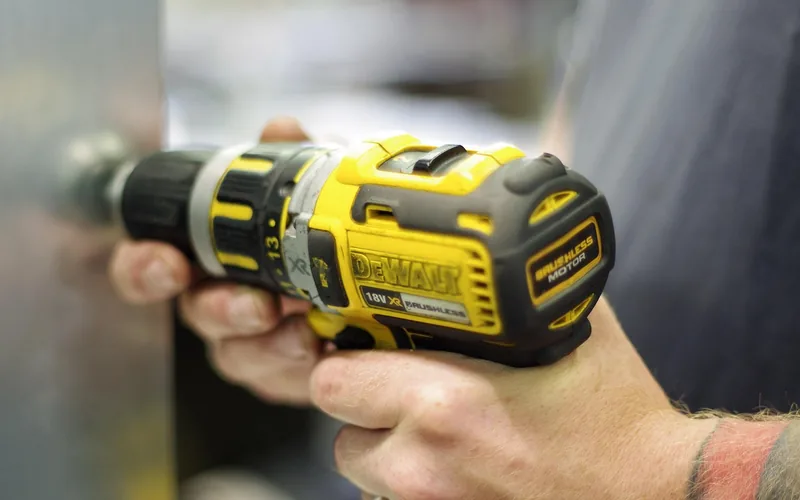
Cutting a Hole in Tile
Use a diamond or carbide-grit hole saw at low speed. Mark the center point first, and expect the finished hole to land around 2-1/2 inches for most tile installs — but confirm against your valve’s measured diameter, not this figure alone.
Cutting a Hole in Fiberglass or Acrylic Tub-Shower
Fiberglass and acrylic surrounds crack more easily than tile if the saw runs too fast or the hole is undersized for the material’s flex. Use a bi-metal saw in the 2-3/4 to 3 inch range at low drill speed with steady, even pressure.
Cutting a Hole in Cement Board
A carbide-grit hole saw cuts cement and fiber-cement board cleanly. Sizes typically fall between 1-7/8 and 2-3/4 inches depending on the valve. Mark and center-punch the hole before starting, and keep drill speed low to avoid chipping the board’s edge.
Frequently Asked Questions
How big of a hole do you need for a shower valve?
There’s no single official size — it depends on the brand and model, as long as the trim plate can fully cover the opening. Use the paper template that ships with the valve, or measure the valve body directly with a caliper and add about 1/8 inch for tile thickness.
What size hole do you need for a Moen shower valve?
Moen Posi-Temp valves typically need a hole between 1-7/8 and 3 inches, depending on whether it’s a plaster-ground or thin-wall (remodel) installation. Check the specific model’s template before cutting.
What size hole for a Delta shower valve?
Delta new-construction valves usually need about 1-3/4 inches, but remodel trim plates can require up to 3-1/8 inches for faceplate screw clearance. There’s no single official Delta size — match the trim to the hole, not the other way around.
What size hole for a Kohler shower valve?
Kohler shower valves typically use a 1-3/4 inch hole, though this varies by valve series. Confirm against the model-specific installation template before cutting.
What size hole do you need for a California Faucets valve?
California Faucets’ own rough-in instructions specify a 1-1/4 inch hole for its single-handle valve bodies — noticeably smaller than Delta or Moen, so don’t reuse a Delta-sized hole saw for this brand.
What size hole for a bathtub faucet?
Bathtub faucet hole size depends on the specific model and manufacturer, similar to shower valves. Check the installation guide that ships with the faucet, or consult a licensed plumber before cutting into a finished wall.
Cutting the right size hole comes down to matching your specific valve’s brand and installation type — not a single universal number. Measure the valve body, cross-check the brand table above, and pick a hole saw material rated for your wall surface. See our drilling and hole-sizing guides for related drill bit and hole saw sizing articles.
Sponsored / affiliate links. As an Amazon Associate I earn from qualifying purchases. I may earn additional commission from eligible campaigns.