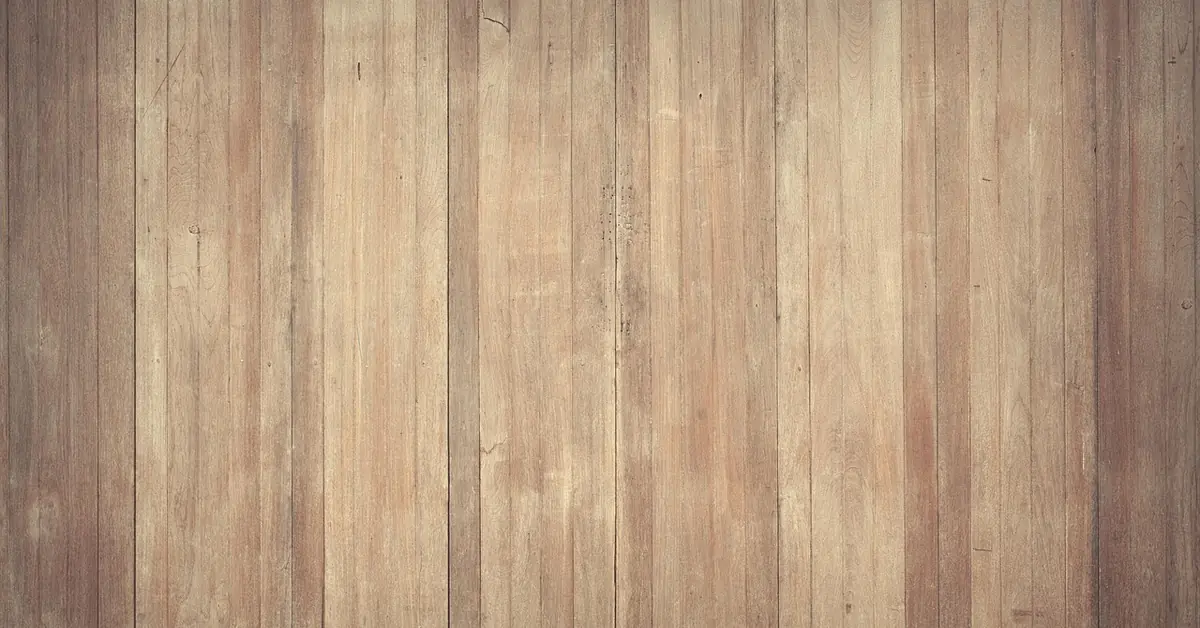
What Wood Matches Acacia? Walnut, Teak and Other Warm Tones
Acacia’s warm, honey-to-reddish-brown tones pair best with hardwoods that share a warm undertone — walnut and mahogany for rich contrast, oak and teak for a close tonal match. Mixing acacia with a cool gray-toned wood like ash or hard maple usually clashes and makes a room feel disjointed. This guide covers the best matches by undertone and grain, what to use for dark acacia specifically, and close domestic alternatives like black locust and sweet gum.
The Best Woods to Pair With Acacia (By Undertone)
Best Wood-Matching Stain Pick
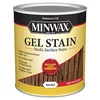
Minwax Gel Stain, Walnut – $19.05
The walnut shade this guide recommends for pushing a lighter new piece toward acacia’s tone — the non-drip gel formula avoids the blotching that trips up porous woods on vertical surfaces.
- Best for: Matching a new piece to existing dark or medium acacia furniture
- Why we picked it: Trusted finishing brand, even coverage on vertical and horizontal surfaces
- Main drawback: Gel stains need a pre-stain conditioner on porous woods for the smoothest result
Compare more wood-matching finish options
 Option 1 Varathane Pre-Stain Wood Conditioner – $18.29
|
 Option 2 Watco Danish Oil, Natural – $14.98
|
 Option 3 Americana Gel Stain 3-Pack – $17.99
|
As an Amazon Associate we earn from qualifying purchases.
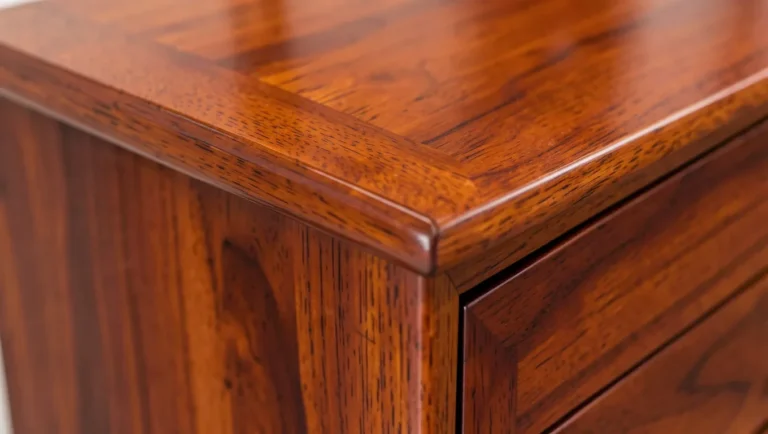
Acacia’s grain runs from light honey-gold to deep reddish-brown, so the deciding factor isn’t the species name — it’s whether the other wood shares acacia’s warm undertone (see our full guide to wood species for how undertone works across other pairings). Walnut and mahogany sit at the darker, richer end and create contrast; oak and teak sit closer to acacia’s own tone and blend more seamlessly; cherry works as a warm mid-tone accent. Avoid ash furniture or pale hard maple — both read as cool and gray next to acacia’s warmth instead of complementing it.
| Wood | Undertone | Value vs. Acacia | Best Use With Acacia |
|---|---|---|---|
| Walnut | Warm, chocolate-brown | Darker — rich contrast | Accent furniture, contrasting cabinetry |
| Oak | Warm, golden-tan | Close match | Flooring alongside acacia furniture |
| Teak | Warm, golden-brown | Close match | Outdoor pairings, matching patio sets |
| Mahogany | Warm, reddish-brown | Darker — sophisticated contrast | Formal furniture, trim |
| Cherry | Warm, reddish (darkens with age) | Lighter, warms over time | Cabinetry, light accent pieces |
| Hard Maple | Neutral-to-cool, pale | Lighter — can clash if too pale | Use cautiously; better as trim than a major piece |
How to Get an Exact Visual Match When Staining or Finishing
When the new piece isn’t already the right species, a stain or finish is what actually closes the gap. Pre-treat bare wood with a pre-stain conditioner so it absorbs color evenly, then apply a gel stain in a walnut or medium-brown shade to push a lighter wood toward acacia’s tone — gel stains sit on the surface rather than soaking in unevenly, which matters most on porous woods like pine or poplar that would otherwise blotch. Always test the stain on a hidden scrap first; acacia’s own color varies board to board, so “walnut” from one can label can still run lighter or darker than your specific piece.
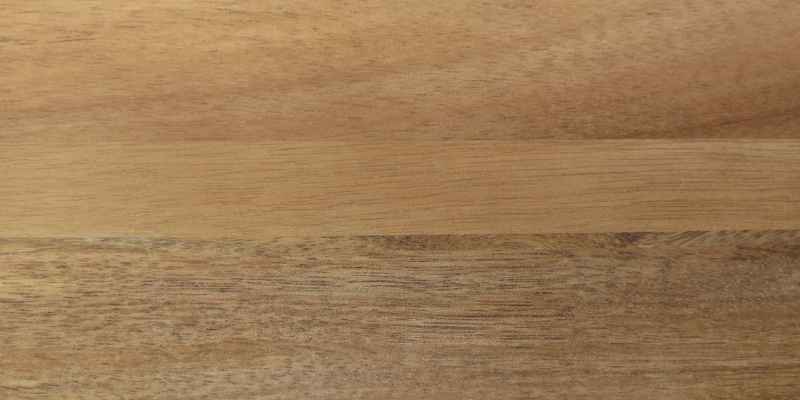
Lighting changes how a match reads, too: acacia’s warmth shows best under warm-white bulbs (2700K–3000K) and natural daylight, while cool-white LEDs (4000K+) can make even a well-matched pairing look mismatched by flattening the warm undertones in both woods. If you’re matching an existing piece, view your stain sample in the room and time of day where the furniture will actually sit before committing.
“The best way to mix and match woods in the same room is having the undertones match — meaning, go for either warm, cool, or neutral undertones.”
Emily Henderson, interior designer
Which Wood Matches Dark Acacia?
Dark acacia — the deep reddish-brown, almost espresso-toned boards — pairs best with walnut or mahogany at a similar depth, or with a mid-tone wood like oak stained a dark walnut shade to bridge the gap. Skip anything blonde or gray-washed; next to dark acacia, pale cool woods read as mismatched rather than intentionally contrasted.
If you’re adding one new piece next to an existing dark acacia item, bring a scrap or a clear photo of the acacia piece when shopping. Acacia’s color varies significantly between boards and even between pieces from the same manufacturer, so matching from memory alone is unreliable.
What Wood Is Closest to Acacia? (Domestic and Budget Alternatives)
If true acacia isn’t available or the budget doesn’t stretch to it, a few domestic species come close in grain and tone. Black locust — sometimes nicknamed “false acacia” — has a similar olive-to-golden-brown color and comparable hardness. Sweet gum (also sold as satin walnut) has a close grain texture and a reddish-brown heartwood. American elm heartwood shares acacia’s interlocked grain pattern, though it typically runs a shade lighter. All three are usually less expensive than imported acacia while reading as a close match once finished.
Can You Mix Oak and Acacia in the Same Room?
Yes — oak and acacia can share a room as long as their undertones match. Oak flooring under warm-toned acacia furniture works because both are warm woods; the real mismatch risk comes from pairing a cool, gray-washed oak floor (a common finish trend over the last several years) with acacia’s warm brown. If your oak substrate already has a gray or ashy cast, either warm it with a honey or amber-toned refinish, or choose a different pairing wood for the acacia piece instead of forcing the two together.
What Wood Matches Acacia for a Cutting Board or Butcher Block?
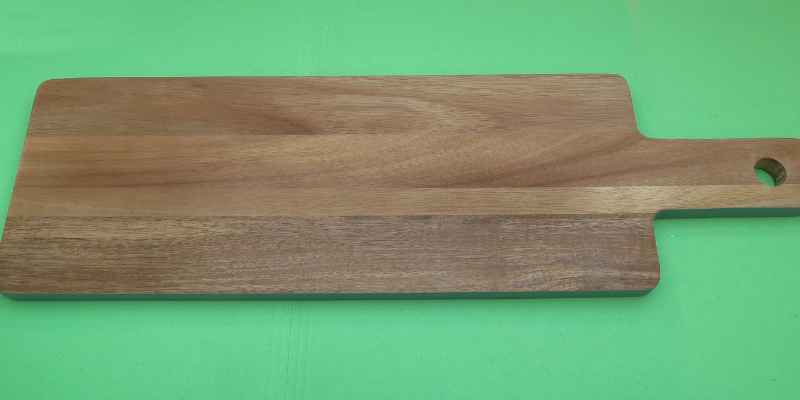
For a butcher block or cutting board, walnut and maple are the two most common pairings sold alongside acacia boards, but for the closest tonal match, look for a board blended with teak or stick with a second acacia board. Acacia’s natural oils also make it one of the more water-resistant choices for kitchen use, which is worth factoring in alongside color. See our acacia vs. birch butcher block comparison for how the two actually hold up side by side on hardness and moisture resistance.
Janka Hardness: How Acacia Compares to Common Pairing Woods
Beyond color, hardness matters when you’re mixing woods in flooring or a high-traffic tabletop — pairing a much softer wood next to acacia means the softer one will show dents and wear faster, which undercuts the visual match over time.
| Wood | Janka Hardness (lbf) |
|---|---|
| Acacia (commercial A. mangium) | ~1,430–1,700 |
| Hard Maple | 1,450 |
| White Oak | 1,360 |
| Teak | 1,155 |
| African Mahogany | 1,100 |
| Walnut | 1,010 |
| Cherry | 950 |
📊 Acacia’s Janka hardness runs from roughly 1,430 lbf for common plantation-grown A. mangium up to 2,300 lbf for harder acacia species — harder than walnut, teak, and mahogany, and on par with hard maple. Source: The Wood Database, Janka Hardness
In practice, this means acacia will usually outlast a softer pairing wood like walnut or cherry in a high-wear spot such as a floor transition or a tabletop edge. It’s one more reason acacia holds up well even in demanding settings, and why pairing it with a similarly hard wood like oak keeps wear looking even across both materials.
Frequently Asked Questions
What wood matches acacia?
Walnut, oak, teak, mahogany, and cherry all match acacia well because they share its warm undertone. Walnut and mahogany create a darker contrast, oak and teak sit close to acacia’s own tone, and cherry works as a lighter warm accent. Avoid cool, gray-toned woods like ash, which clash with acacia’s warmth.
What wood matches dark acacia?
Dark acacia pairs best with walnut or mahogany at a similar depth, or with oak stained a dark walnut shade to bridge the gap. Blonde or gray-washed woods look mismatched next to dark acacia rather than intentionally contrasted.
What wood is closest to acacia as a substitute?
Black locust (nicknamed “false acacia”), sweet gum, and American elm heartwood are the closest domestic substitutes for acacia’s grain and tone. All three are typically less expensive than imported acacia and read as a close match once finished, though American elm runs slightly lighter.
Can you mix oak and acacia wood in the same room?
Yes, as long as the undertones match. Warm-toned oak flooring pairs fine with warm acacia furniture. The mismatch risk comes from cool, gray-washed oak, which clashes with acacia’s warm brown undertone.
What wood matches acacia for a cutting board?
Walnut and maple are the most common pairings sold alongside acacia cutting boards. For the closest tonal match, look for a board blended with teak, or choose a second acacia board so the tones match exactly.
Is it okay to mix different wood tones in a room?
Yes, as long as every wood shares the same undertone family — all warm, all cool, or all neutral. Mixing values (light and dark) within one undertone family looks intentional; mixing undertones (warm acacia next to a cool gray wood) is what typically reads as a mistake.
Conclusion
Matching wood to acacia comes down to undertone before species name: walnut and mahogany for contrast, oak and teak for a close blend, and black locust or sweet gum if you need a more affordable domestic substitute. Test any stain on a scrap first, view it in the room’s actual lighting, and keep hardness in mind for any pairing that will see daily wear.
Sponsored / affiliate links. As an Amazon Associate I earn from qualifying purchases. I may earn additional commission from eligible campaigns.