White Oak Flooring Pictures: 6 Stain & Grain Looks Compared
White oak flooring pictures look different mainly because of two variables: grain cut and stain. Plain sawn shows bold cathedral grain, while rift and quarter sawn read straighter and cleaner, especially under gray or white finishes — but pair the wrong cut with the wrong stain and a $5-$14-per-square-foot floor can look flat or blotchy once it’s installed. This guide compares all three grain cuts against three stain families side by side, in real rooms.
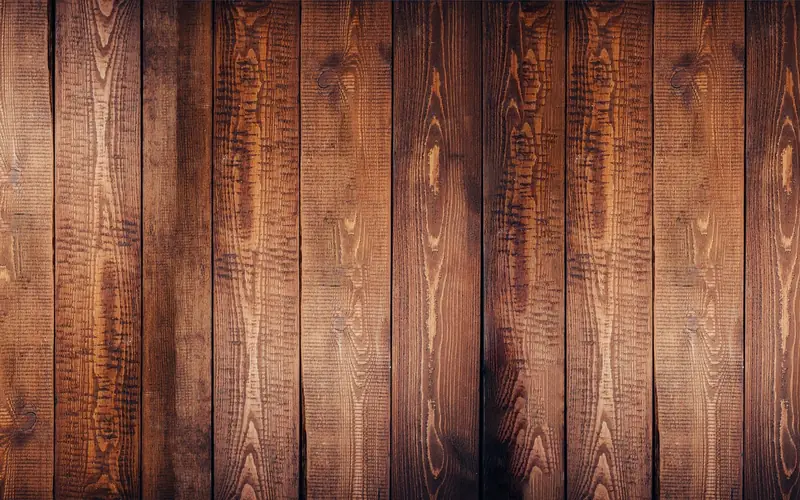
White Oak Flooring Grain Cuts: Plain, Rift, and Quarter Sawn (Pictures)
Best White Oak Floor Cleaner Pick
Bona Hardwood Floor Cleaner Spray – 32 fl oz
A pH-neutral, no-rinse spray made for finished hardwood — including stained and prefinished white oak.
- Best for: weekly maintenance on gray, white, or natural white oak finishes without dulling the sheen
- Why we picked it: pH-neutral formula won’t strip or discolor stained white oak the way vinegar or ammonia-based cleaners can
- Main drawback: not effective on wax-finished or unsealed floors
Compare more white oak floor care options
 Option 1 Bona Premium Spray Mop Kit
|
 Option 2 method Hardwood Floor Cleaner
|
 Option 3 ZEP Hardwood & Laminate Cleaner
|
As an Amazon Associate we earn from qualifying purchases.
The single biggest reason two white oak flooring pictures can look completely different is grain cut, not stain. Here is what each cut looks like and why millers charge more for two of the three.
Plain Sawn White Oak
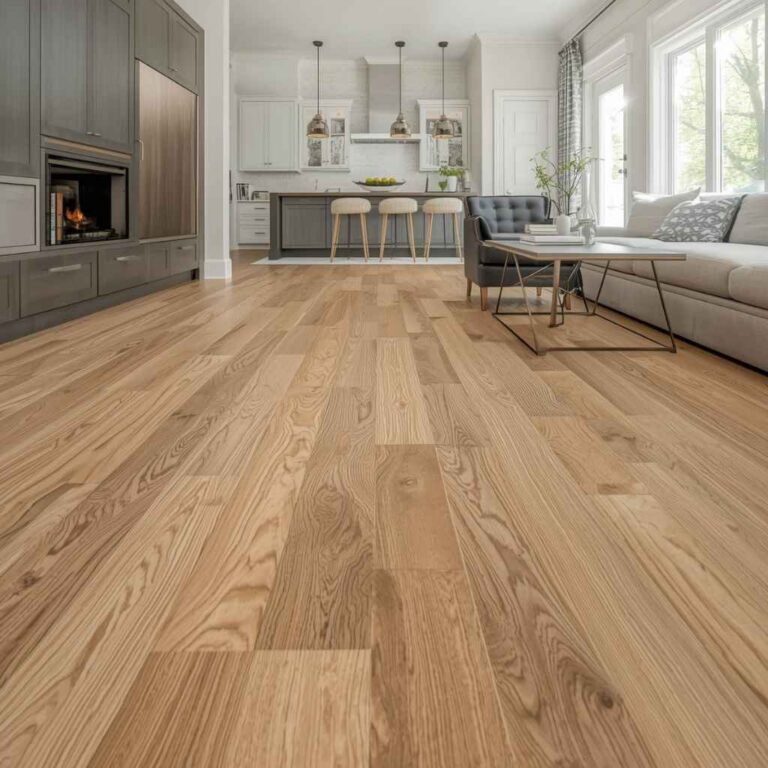
Plain sawn white oak is cut tangentially across the log, producing the familiar cathedral-arch grain pattern with the most natural variation board to board. It is the most widely available cut because it yields the most boards per log, which keeps plain sawn white oak the cheapest of the three options.
Rift Sawn White Oak
Rift sawn white oak is cut at a consistent 30-60 degree angle to the growth rings, producing a tight, linear grain with almost no cathedraling. This cut yields fewer boards per log, so rift sawn white oak typically costs more than plain sawn — but it is also the most resistant of the three cuts to cupping and warping.
Quarter Sawn White Oak
Quarter sawn white oak is cut perpendicular to the growth rings after the log is first quartered, producing a straight grain with the distinctive medullary ray flecking unique to white oak. It’s the most dimensionally stable cut and won’t cup, since the growth rings run perpendicular to the face — but it’s also the most expensive because of how little usable board comes from each log.
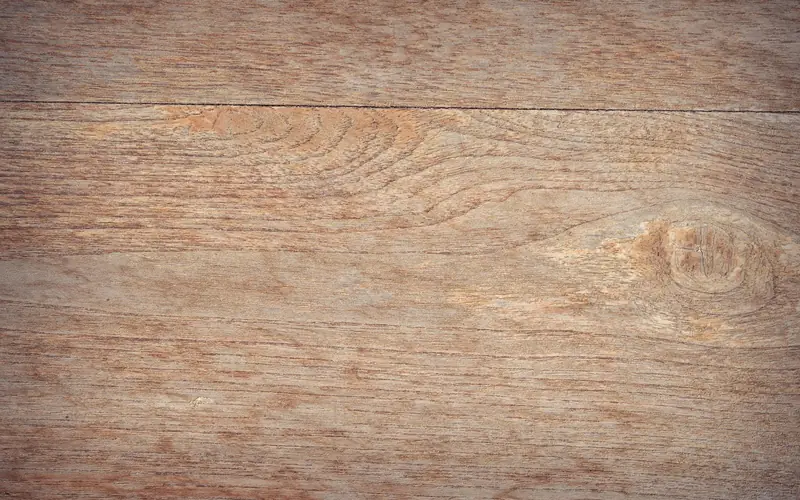
Grain Cut vs. Stain Look: Quick Reference
This is the comparison most white oak flooring pictures don’t show side by side — how each grain cut actually reads once a stain family is applied over it.
| Grain Cut | Natural / Unstained Look | Under Gray or White Stain | Under Dark Stain |
|---|---|---|---|
| Plain Sawn | Bold cathedral arches, most variation | Grain still reads busy; cathedral pattern stays visible | Cathedral grain contrasts hardest, most dramatic look |
| Rift Sawn | Tight, linear, calmer | Cleanest, most uniform gray/white look of the three | Linear grain reads subtle and modern |
| Quarter Sawn | Straight grain plus ray fleck | Fleck pattern stays visible, adds texture to a flat stain | Fleck shows as lighter flashes against the dark tone |
For style ideas beyond grain and stain alone, see our 6 white oak flooring styles and cut types breakdown.
White Oak Flooring Stain Colors: Natural, Gray, and Dark (Pictures)
White oak’s closed grain structure — it’s full of microscopic tyloses that block its pores — means stain sits and cures more evenly across a board than it does on open-grained red oak. That’s the real reason white oak takes gray and white stains so cleanly instead of blotching.
Natural and Whitewashed White Oak
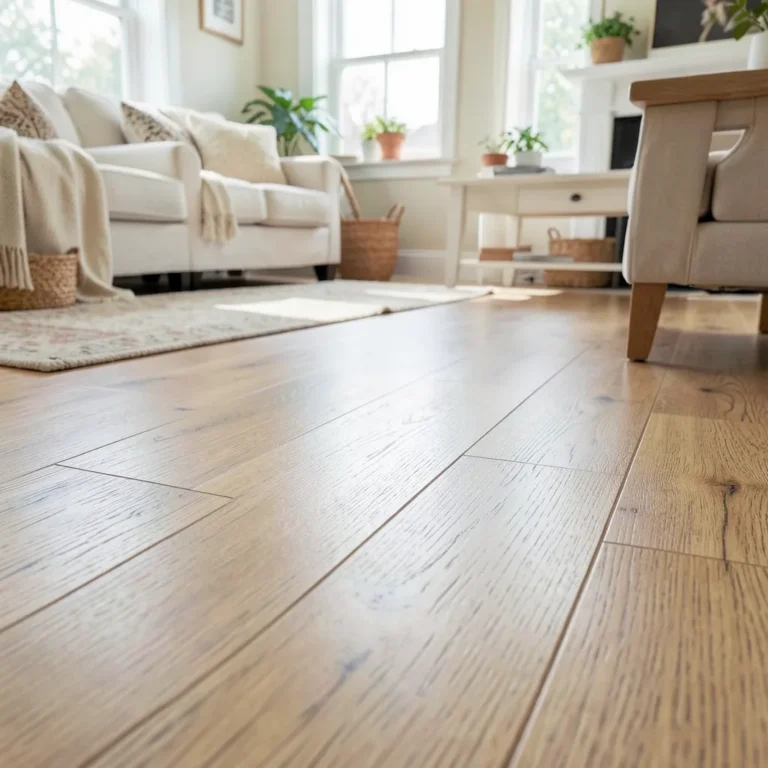
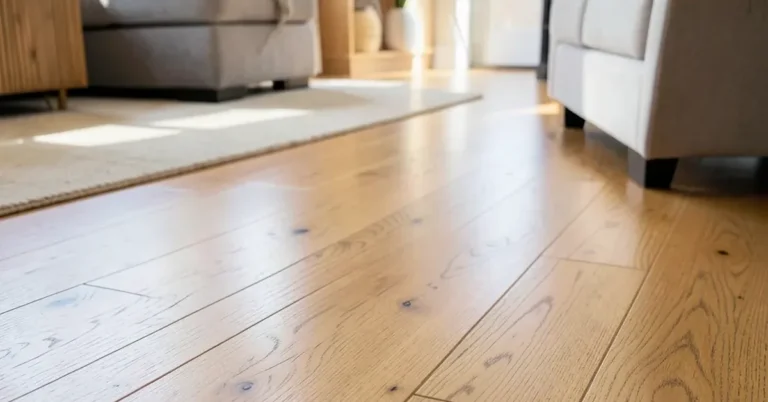
Left natural or sealed with a low-pigment finish such as Bona Nordic Seal, white oak keeps its light tan color — one coat lightens it slightly, two coats push it closer to white without fully hiding the grain. This is the lowest-maintenance option because touch-up sanding won’t create a visible color mismatch the way a heavily pigmented stain can.
Gray and “Weathered Oak” Stains
Gray tones — especially Duraseal Weathered Oak and Classic Gray — are the most requested white oak finish going into 2026 because they read as a soft, sun-bleached driftwood color rather than a flat painted gray. See our full oak floor stain colors guide for 12 shades compared, or our oak floors stained gray page for gray-specific pairing advice.
Dark Stains on White Oak Floors
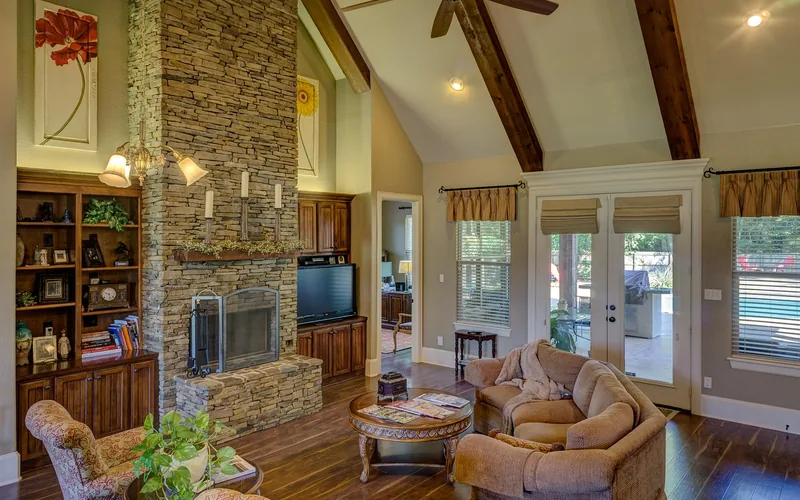
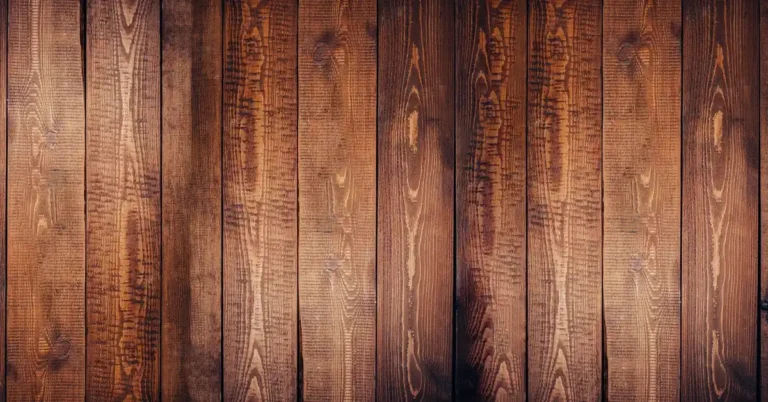
Dark stains push white oak the opposite direction from the 2026 trend, but they still work well in traditional or rustic rooms — the tight grain means less blotching than you would get staining red oak this dark. For technique and product specifics, see staining oak floors dark.
White Oak vs. Red Oak: Which Takes Stain Better?
White oak is the harder and more stable of the two — a 1,360 Janka rating against red oak’s 1,290 — and its closed-pore, tyloses-filled grain resists moisture and takes stain more evenly. Red oak’s more open grain has a pink-salmon undertone that fights cooler stains, while white oak’s neutral tan base is why designers reach for it for gray and white looks specifically.
📊 White oak is now the most specified domestic hardwood flooring species, selected by roughly 60-63% of surveyed professionals — Source: National Wood Flooring Association member data, reported by Floor Focus, Woodcuts (Jan. 2026).
At the medium-to-dark end of the stain range, the visual gap between the two species narrows a lot — if you’re staining dark, species choice matters less than if you want a light or gray finish.
White Oak Flooring by Room and Pattern (Pictures)
Herringbone and Chevron Patterns
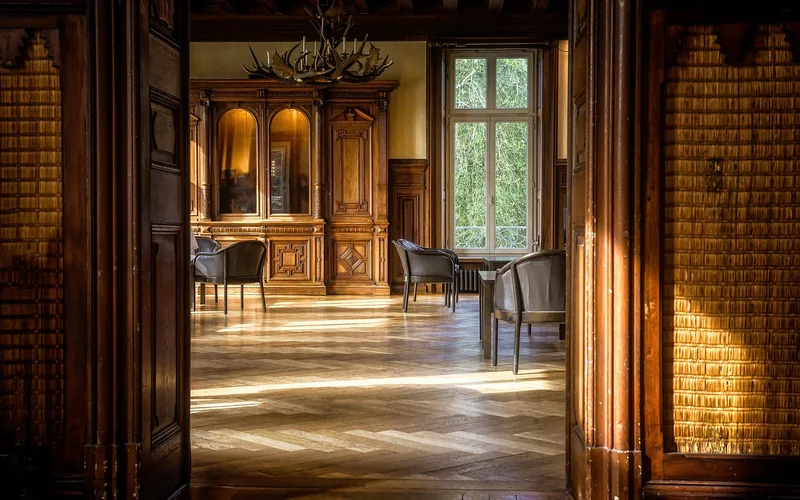
Herringbone and chevron patterns use shorter, narrower pieces laid at an angle rather than long straight planks, and they show grain cut differences even more than straight-laid floors because so many end grains are visible at once. Rift or quarter sawn stock is the more common choice for herringbone specifically, since its calmer grain doesn’t compete with the pattern itself.
White Oak in Kitchens
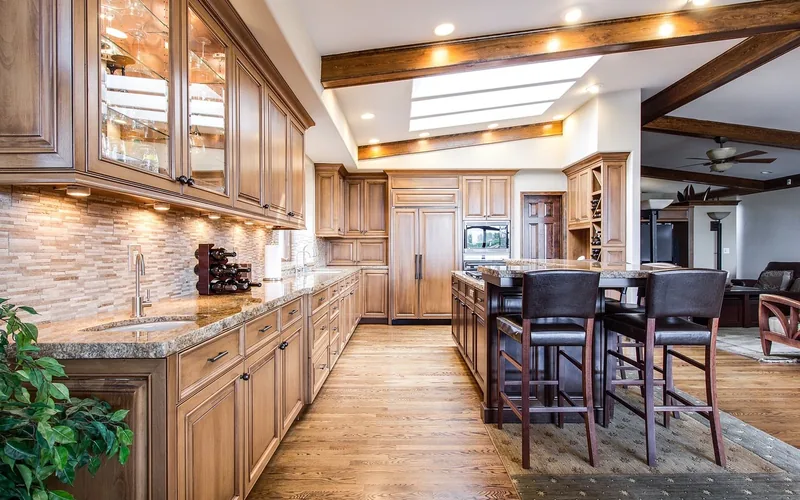
For a full breakdown of hardness underfoot, moisture handling, and care near appliances, see our dedicated guide to white oak flooring in kitchens. If you’re comparing it against a living space instead, white oak flooring for living rooms covers Janka rating and design pairing specific to that room.
Does White Oak Flooring Yellow Over Time?
It can, but the cause is usually the finish, not the wood. Oil-based polyurethane ambers noticeably within a few years and keeps darkening with UV exposure, which is the main reason white, gray, and “cool” white oak floors eventually drift warm. A water-based, non-yellowing topcoat is the standard fix specified for light and gray white oak finishes, since it stays clear instead of ambering.
Frequently Asked Questions About White Oak Flooring Pictures
What is the disadvantage of white oak in flooring?
White oak’s main disadvantage is cost and grain variation between boards — solid white oak runs $5 to $14 per square foot, more than red oak, and open-stock boards can show inconsistent grain unless you buy a single-lot run. It can also darken slightly with years of direct UV exposure.
What is the trend in white oak flooring 2026?
The dominant 2026 trend is Weathered Oak and Classic Gray tones — cool, driftwood-like stains that lean on white oak’s neutral tan undertone instead of fighting it. Wide-plank widths (7 to 10 inches) and rift-and-quarter-sawn grain are the two other trends showing up most in new installs.
What color is white oak flooring naturally?
Unstained, white oak is a light, warm tan to pale brown, often with faint golden or olive undertones and less pink than red oak. That neutral base is exactly why it takes gray and white stains so cleanly compared to other oak species.
Does white oak make good flooring?
Yes — white oak has a Janka hardness rating of 1,360, moderately harder than red oak’s 1,290, and its closed-pore grain structure makes it more moisture-resistant. According to National Wood Flooring Association member data reported by Floor Focus for 2026, it’s now the most specified domestic hardwood species in the industry.
What is the best stain color for white oak floors?
Weathered Oak and Classic Gray are the most requested 2026 shades for white oak, because both lean into the wood’s cool, neutral undertone rather than pushing it warm. For a lighter look, a low-pigment sealer such as Bona Nordic Seal lightens the wood in one coat without going fully white.
What’s the difference between plain sawn, rift sawn, and quarter sawn white oak?
Plain sawn is cut tangentially for bold cathedral-arch grain and is the most affordable and widely available. Rift sawn is cut at a 30-60 degree angle for a tight, linear grain with almost no cathedraling. Quarter sawn is cut perpendicular to the growth rings, producing a straight grain with distinctive fleck patterns and the best resistance to cupping.
Conclusion
The white oak flooring pictures that end up looking best are the ones where grain cut and stain were chosen together, not separately — rift or quarter sawn under a gray or white finish for a calm, modern look, or plain sawn under a dark stain if you want maximum grain drama. Either way, white oak’s closed grain gives you more room to change your mind with a refinish than most other hardwood species. Browse our full oak flooring guide hub for more grain, stain, and room-specific breakdowns.
Sponsored / affiliate links. As an Amazon Associate I earn from qualifying purchases. I may earn additional commission from eligible campaigns.