Will Butcher Block Last Outdoors?
Thinking about putting butcher block outside? Many folks wonder about this. It’s a great question for anyone planning an outdoor kitchen or bar.
Butcher block looks so nice indoors, but the weather is a different story. Sometimes, the advice you find can be confusing, making it seem like a tough job for beginners. Don’t worry, though!
We’ll break down exactly what you need to know, step by step, so you can make a smart decision. Get ready to learn the simple secrets to making your butcher block work beautifully outdoors.
Will Butcher Block Last Outdoors A Full Guide
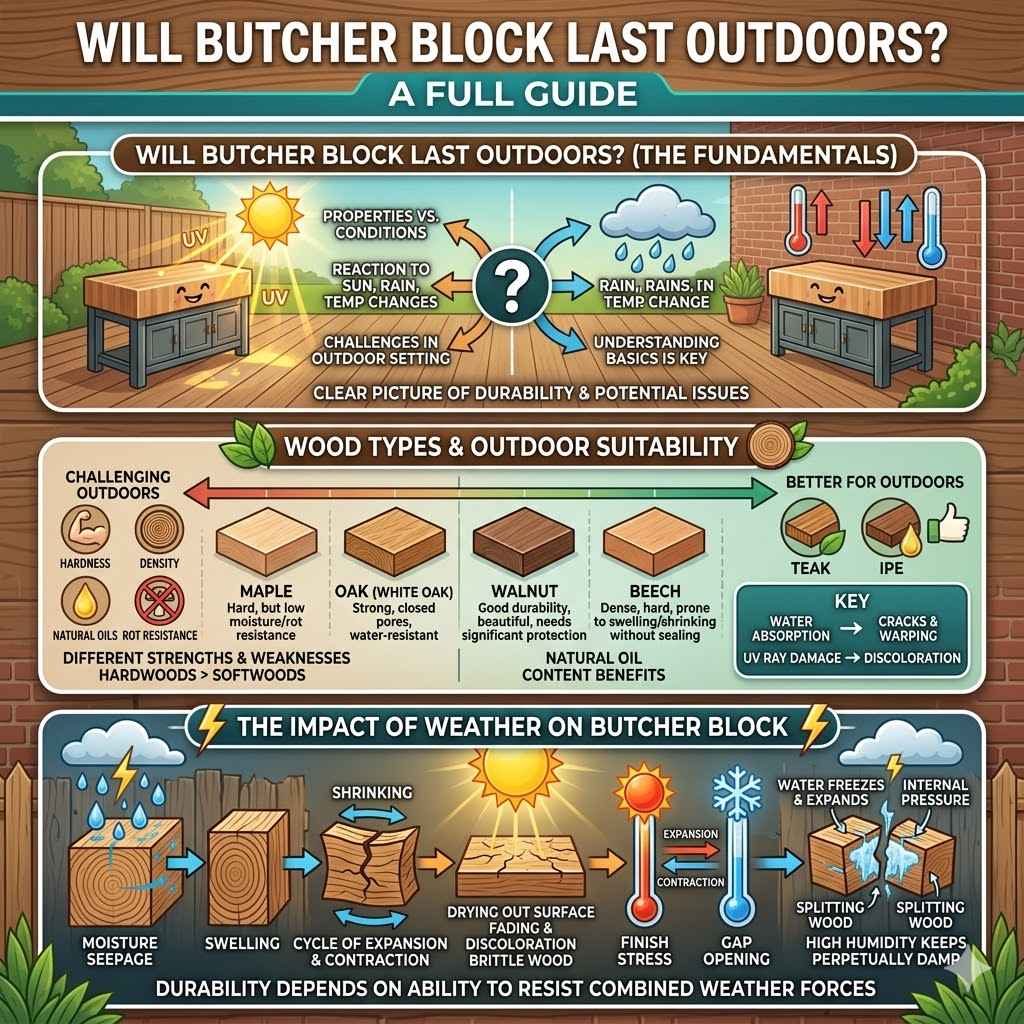
This section explores the fundamental question: Will butcher block last outdoors? We will look at the properties of butcher block wood and how they react to different outdoor conditions like sun, rain, and temperature changes. You’ll learn why some woods are better suited for outdoor use than others and what makes butcher block uniquely challenging in an outdoor setting.
We aim to provide a clear picture of the durability and potential issues you might face. Understanding these basics is key to a successful outdoor project.
Wood Types And Outdoor Suitability
Different types of wood have very different strengths and weaknesses, especially when exposed to the elements. For butcher block, common woods include maple, oak, walnut, and beech. When considering outdoor use, hardness, density, and natural oil content are important.
Hardwoods are generally more durable than softwoods. Woods with higher natural oil content, like teak or ipe, are naturally more resistant to moisture and decay. These oils act as a barrier, helping to repel water and deter insects.
Maple, often used for indoor butcher block, is quite hard but has lower natural resistance to moisture and rot compared to woods like teak. Oak is a strong contender, especially white oak, which has closed pores that make it more water-resistant. Walnut offers good durability and a beautiful look, but like maple, it requires significant protection outdoors.
Beech wood is dense and hard but can be prone to swelling and shrinking with moisture changes if not properly sealed.
For any wood to last outdoors, its ability to withstand water absorption and UV ray damage is paramount. Water causes wood to swell, leading to cracks and warping. UV rays break down the wood’s surface and can cause discoloration.
Therefore, the choice of wood is the first critical factor in determining how well butcher block will hold up outside.
The Impact Of Weather On Butcher Block
The weather is the biggest challenge for any material used outdoors, and butcher block is no exception. Rain, humidity, direct sunlight, and extreme temperature shifts all play a role in how wood behaves over time. Constant exposure to moisture is particularly damaging.
Water can seep into the wood’s grain, causing it to swell. As the wood dries, it shrinks, and this cycle of expansion and contraction can lead to cracks, splits, and warping.
Direct sunlight, especially intense summer sun, can dry out the wood’s surface. This can lead to fading, discoloration, and can make the wood more brittle. Think of how wood furniture left in the sun for years can start to look aged and worn.
Temperature changes also cause wood to expand and contract. This constant movement puts stress on the wood and its finish, potentially opening up gaps where moisture can enter.
High humidity levels contribute to the moisture problem, keeping the wood perpetually damp. Even freezing temperatures can cause issues, especially if water has already penetrated the wood. When water freezes, it expands, creating internal pressure that can split the wood.
Therefore, the durability of butcher block outdoors depends heavily on its ability to resist these combined weather forces.
Protecting Butcher Block For Outdoor Use
Protecting butcher block for outdoor use is not optional; it is absolutely essential for its longevity. Without proper protection, even the hardest woods will eventually succumb to the elements. This section will cover the most effective ways to shield your butcher block from sun, rain, and temperature fluctuations.
We will explore different types of finishes, sealants, and maintenance routines that can make a significant difference. Following these steps will help ensure your butcher block remains beautiful and functional for years to come.
Sealing And Finishing Techniques
The right sealing and finishing techniques are the frontline defense for your butcher block outdoors. The goal is to create a barrier that repels water and protects against UV rays. For outdoor butcher block, you’ll typically need more heavy-duty products than you would for indoor use.
Film-forming finishes like exterior-grade polyurethane or spar urethane are common choices. These create a protective layer on top of the wood.
Oil finishes, such as tung oil or linseed oil, penetrate the wood and can offer good protection. However, they usually require more frequent reapplication than film finishes. Exterior-grade penetrating oils are designed to soak into the wood fibers, providing protection from within and also offering a more natural look.
When choosing a finish, look for products specifically labeled for outdoor use and that offer UV protection.
Applying multiple thin coats is much more effective than one thick coat. Ensure you thoroughly sand the wood between coats to create a smooth surface and allow each coat to cure properly. Pay special attention to the edges and ends of the boards, as these are the areas most prone to moisture absorption.
A well-applied finish is crucial for preventing water damage and extending the life of your butcher block.
Regular Maintenance And Care
Even with the best protection, regular maintenance is key to ensuring your outdoor butcher block lasts. Think of it like caring for a car or any other outdoor furniture. Occasional attention makes a big difference.
This includes routine cleaning, inspection, and reapplication of protective finishes as needed. Neglecting maintenance is a sure way to see your butcher block deteriorate quickly outdoors.
After use, always wipe down the butcher block to remove spills and food debris. Use a mild soap and water solution, and dry it thoroughly. Avoid abrasive cleaners that can damage the finish.
Periodically, inspect the surface for any signs of wear, such as small cracks, peeling finish, or discoloration. Addressing these issues early can prevent larger problems down the line.
The frequency of reapplication for your chosen finish will depend on your climate and the amount of direct exposure the butcher block receives. In harsh climates with lots of sun and rain, you might need to reapply oil finishes every few months or a protective coating annually. This consistent care is what transforms a potentially short-lived project into a lasting feature.
Shielding From The Elements
Beyond finishes, there are practical ways to shield your butcher block from the harshest elements. One of the simplest methods is to use covers. For example, if you have an outdoor kitchen island with a butcher block countertop, a sturdy, waterproof cover can be used when it’s not in use or during prolonged periods of bad weather.
This greatly reduces direct exposure to rain and intense sun.
Consider the placement of your butcher block. If possible, position it in a location that receives some shade during the hottest part of the day. An overhang from a roof, a pergola, or even strategically placed umbrellas can provide valuable protection.
This not only helps the wood but also makes the surface more comfortable to use on hot days.
Another strategy is to build it with an overhang. This means the countertop extends beyond the base of the island or table, helping to direct rain away from the edges where water can more easily penetrate. Even small design choices can significantly improve the weather resistance of your outdoor butcher block.
Will Butcher Block Last Outdoors Practical Considerations
This section delves into the practical realities of using butcher block outdoors. We will look at the costs involved, the labor of installation and upkeep, and what kind of lifespan you can realistically expect. Understanding these practical aspects will help you make an informed decision about whether butcher block is the right material for your specific outdoor project.
It’s about balancing the desire for a beautiful look with the demands of an outdoor environment.
Expected Lifespan And Durability
The lifespan of butcher block outdoors can vary dramatically. With minimal protection and in a harsh climate, it might only last a year or two before showing significant signs of wear like warping and rot. However, with diligent sealing, regular maintenance, and strategic shielding from the elements, you can extend its life considerably.
Some sources suggest that well-maintained outdoor butcher block can last anywhere from 5 to 10 years, and in some ideal conditions with exceptional care, potentially longer.
Durability also depends on the thickness of the butcher block. Thicker pieces are generally more forgiving of minor moisture absorption and less prone to warping than thinner ones. The type of wood used is also a major factor.
A dense hardwood like teak or ipe, if used as butcher block, would naturally be far more durable outdoors than a softer wood like pine, even if both are sealed.
It’s important to have realistic expectations. Butcher block will likely never be as low-maintenance or as long-lasting outdoors as materials like granite, concrete, or high-quality composite decking designed specifically for outdoor use. You are choosing butcher block for its unique aesthetic, and this choice comes with a commitment to ongoing care to maintain its beauty and function.
Cost Of Outdoor Butcher Block Projects
The cost of an outdoor butcher block project involves several components. The butcher block itself can range in price depending on the wood species and thickness. For example, a standard maple butcher block might be more affordable, while exotic hardwoods like teak will be significantly more expensive.
You then need to factor in the cost of high-quality exterior-grade sealants, stains, and finishes. These specialized products are often pricier than their indoor counterparts.
Don’t forget the cost of supplies for preparation, such as sandpaper and brushes. If you are hiring a professional for installation, that labor cost will also add to the total. Maintenance materials, like more sealant for annual touch-ups, should also be considered as an ongoing expense.
Compared to some other outdoor countertop materials, butcher block can be a mid-range to high-end option, especially if you opt for premium woods and finishes. The initial investment might be less than solid stone, but the ongoing maintenance costs and shorter lifespan compared to some composites or concrete could make the long-term cost comparable or even higher.
Installation And Building Tips
When installing butcher block outdoors, proper support is critical. Ensure the base structure is sturdy and can handle the weight of the wood, especially when it becomes wet. Avoid designs where water can pool or get trapped underneath the butcher block.
Good drainage is essential.
If you are creating an outdoor kitchen island, consider adding a slight slope to the countertop, directing water away from the structure and towards the edges or a designed drainage point. This prevents water from sitting on the surface for extended periods.
When joining pieces of butcher block, use exterior-grade wood glue and clamps. Once the glue has dried, you may want to further reinforce the joint with screws from underneath if the design allows, ensuring they are countersunk and the holes are properly sealed. Proper joinery prevents gaps that can allow moisture to enter.
Real-Life Example Outdoor Butcher Block Bar
Consider Sarah, who wanted a rustic outdoor bar for her patio. She chose a thick, solid oak butcher block for the countertop. Her climate experiences hot summers with frequent rain showers.
Sarah understood that she couldn’t just install it and forget it.
First, she thoroughly sanded the oak and applied three coats of a marine-grade spar urethane, which is known for its flexibility and UV resistance. She focused on sealing all edges and end grains. She built her bar frame with a slight slope and ensured there was adequate airflow underneath.
During the summer, she wiped down the bar after every use and dried it thoroughly. She also invested in a custom-fit, waterproof cover that she uses whenever the bar is not in use for more than a day, especially during rainy spells. Once a year, before the main summer season, she inspects the surface and reapplies a coat of spar urethane to maintain the protective barrier.
After two years, Sarah’s bar still looks fantastic. There are no visible cracks, warping, or significant signs of wear. The key, she says, was the combination of a durable wood choice, a robust sealant, and a consistent maintenance plan, including protective covers.
This practical approach is what makes outdoor butcher block a success.
Alternatives To Butcher Block For Outdoors
Given the challenges, it’s helpful to know about alternatives to butcher block for outdoor projects. If the level of maintenance seems too high or you need a more robust material, other options offer great looks and superior durability in outdoor environments. This section will briefly touch on some popular and effective alternatives that might be a better fit for your needs.
Composite Decking And Countertops
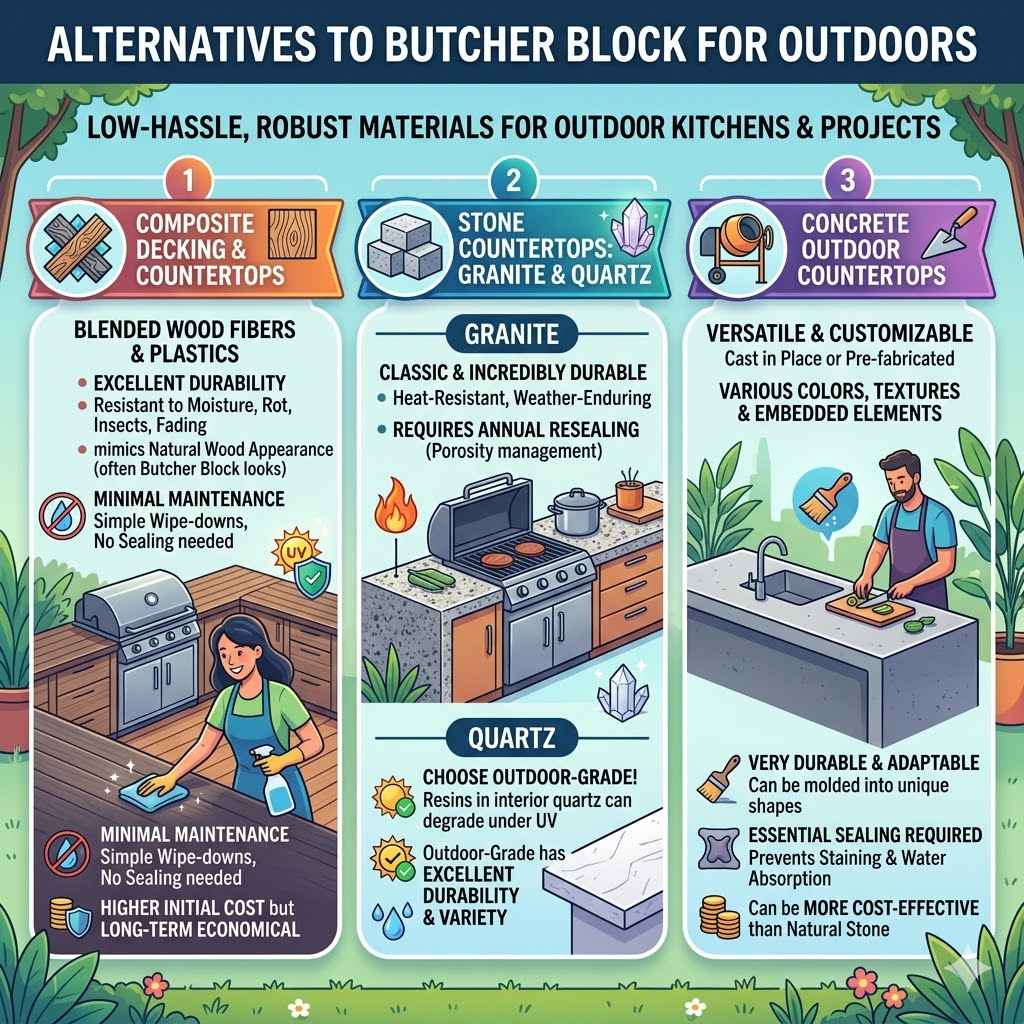
Composite materials are made from a blend of wood fibers and plastics. They are engineered to be highly resistant to moisture, rot, insects, and fading. Many composite products are now available in styles that mimic the look of natural wood, including finishes that could resemble butcher block.
Composite countertops are becoming increasingly popular for outdoor kitchens. They require very little maintenance beyond a simple wipe-down. They don’t need sealing or regular refinishing.
This makes them an excellent choice for those seeking a low-hassle, long-lasting solution. The initial cost can be higher than some wood options, but the minimal upkeep often makes them more economical in the long run.
Stone Countertops Granite And Quartz
Natural stone like granite is a classic choice for outdoor countertops. It is incredibly durable, heat-resistant, and can withstand various weather conditions. While granite is porous, high-quality sealants can make it highly resistant to stains and moisture.
Granite countertops generally require annual resealing.
Quartz countertops are also a strong contender. However, it’s crucial to choose quartz specifically designed for outdoor use. Some resins used in interior quartz can degrade under UV exposure.
Outdoor-grade quartz offers excellent durability and a wide range of aesthetic options.
Concrete Outdoor Countertops
Concrete has become a versatile and popular material for outdoor countertops. It can be cast in place or pre-fabricated and can be customized with various colors, textures, and embedded elements. Concrete is very durable and can be sealed to resist stains and moisture.
Sealing is essential for concrete to prevent staining and water absorption, but once properly sealed, it offers excellent performance outdoors. It can be more cost-effective than natural stone, and its ability to be molded into unique shapes makes it highly adaptable for custom outdoor kitchen designs.
Frequently Asked Questions
Question: Can butcher block be used outdoors at all
Answer: Yes, butcher block can be used outdoors, but it requires significant protection and ongoing maintenance to last. It is not a low-maintenance option for outdoor use.
Question: What is the best wood for outdoor butcher block
Answer: Denser hardwoods like teak, ipe, or white oak are generally better suited for outdoor use due to their natural resistance to moisture and decay. Maple and walnut require more diligent sealing and maintenance.
Question: How often should I seal outdoor butcher block
Answer: The frequency depends on your climate and the type of sealant used. For oil finishes, it might be every few months. For film finishes like spar urethane, annual reapplication or as needed based on inspection is common.
Question: Will rain damage butcher block
Answer: Yes, prolonged exposure to rain will damage unprotected butcher block, causing it to swell, warp, crack, and potentially rot. Proper sealing and protection are vital.
Question: Is outdoor butcher block a good idea
Answer: It can be a good idea if you love the look of butcher block and are committed to regular maintenance. If you prefer a low-maintenance material, other options like composite or stone might be better.
Summary
To answer Will Butcher Block Last Outdoors? definitively, it can, but with dedicated effort. Choosing the right wood, applying robust outdoor-grade finishes, and performing consistent maintenance are crucial.
Protecting it from direct sun and excessive moisture with covers or strategic placement significantly extends its life. While it offers a unique beauty, be prepared for ongoing care to keep it looking its best and functioning well in an outdoor setting.