Maple vs Oak Flooring: Hardness, Movement, Staining
Hard maple is the harder, paler, smoother floor, and it is the one that fights back when you stain it. Oak is slightly softer, warmer and more forgiving because its open grain hides wear and takes stain evenly. Neither species is a bad choice: this guide shows the real numbers so you can match the wood to your rooms.
Below you will find hardness and shrinkage figures from the Wood Database, what they mean on an actual floor, how each species looks and stains, and a checklist for choosing. If you want the general wood comparison beyond flooring (cabinets, furniture, cutting boards), read our oak vs maple wood guide, and for the wider flooring picture see our wood flooring guide.
Maple vs Oak Flooring at a Glance
Best Maple Stain Prep Pick
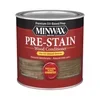 |
Minwax Pre-Stain Wood Conditioner, 1/2 Pint Maple is the wood that blotches when stained, and a conditioner is cheap insurance for a stained maple floor or a test board.
|
| Hard maple | Red oak | White oak | |
|---|---|---|---|
| Janka hardness | 1,450 lbf | 1,220 lbf | 1,350 lbf |
| Radial shrinkage | 4.8% | 4.0% | 5.6% |
| Tangential shrinkage | 9.9% | 8.6% | 10.5% |
| T/R ratio | 1.9 | 2.2 | 1.9 |
| Volumetric shrinkage | 14.7% | 13.7% | 16.3% |
| Color | Nearly white to cream sapwood, sometimes reddish or golden | Light to medium brown, often reddish | Light to medium brown, often with an olive cast |
| Grain | Fine, tight | Coarse with large open pores | Coarse, with ray fleck when quartersawn |
Source: Wood Database species pages for hard maple, red oak and white oak. Other charts list slightly different Janka numbers for oak, so compare species within one chart, not across charts.
Hardness: How Much Does the Janka Number Matter?
Hard maple tops the chart at 1,450 lbf, white oak sits at 1,350 lbf and red oak at 1,220 lbf. The gap between maple and red oak is 230 lbf, roughly 19 percent of red oak’s number. That is a real difference, but all three are hard woods, and the gap is small next to the gap between any of them and a softwood floor.
The common myth is that the harder floor always looks better for longer. Hardness resists dents, but it does not stop scratches from showing. A pale, smooth floor like maple shows a dark scratch or a dirt line more clearly than an oak floor whose busy grain camouflages it. Grit, pet nails and furniture legs do most of the damage, and felt pads and a doormat do more for the floor than the species does.
Movement: The Number Most Buyers Never Check
Wood swells and shrinks as its moisture content changes, and the Wood Database lists how much each species shrinks from green to oven-dry. White oak shrinks the most (16.3 percent volumetric), hard maple is next (14.7) and red oak the least (13.7). The T/R ratio compares tangential to radial shrinkage: a higher ratio means the wood is more likely to distort as it dries. Red oak’s 2.2 is the highest of the three, while maple and white oak share 1.9.
So the picture is mixed. Red oak shrinks the least overall but has the highest T/R ratio, while white oak shrinks the most overall but more evenly in direction. These are lab figures from green to oven-dry, so a finished floor in a house will move far less. The practical lesson is to let the boards acclimate and keep indoor humidity steady whatever species you pick, and to follow the flooring maker’s installation instructions on moisture, which override any general chart.
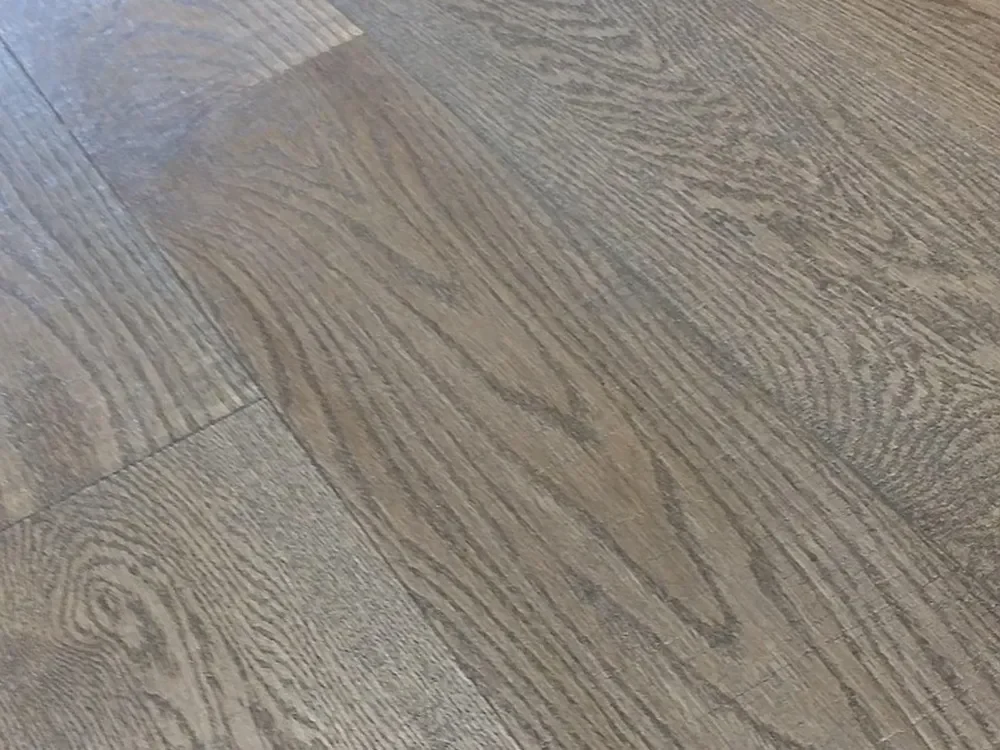
Looks and Grain
Maple
Maple is the clean-lined choice. The sapwood used for most lumber runs from nearly white to cream, sometimes with a reddish or golden hue, and the grain is tight and quiet. That is why maple suits modern and minimalist rooms and why it reads as bright. The smooth look also means knots, mineral streaks and color variation stand out, so decide whether you want a uniform grade or the natural variation.
Red oak and white oak
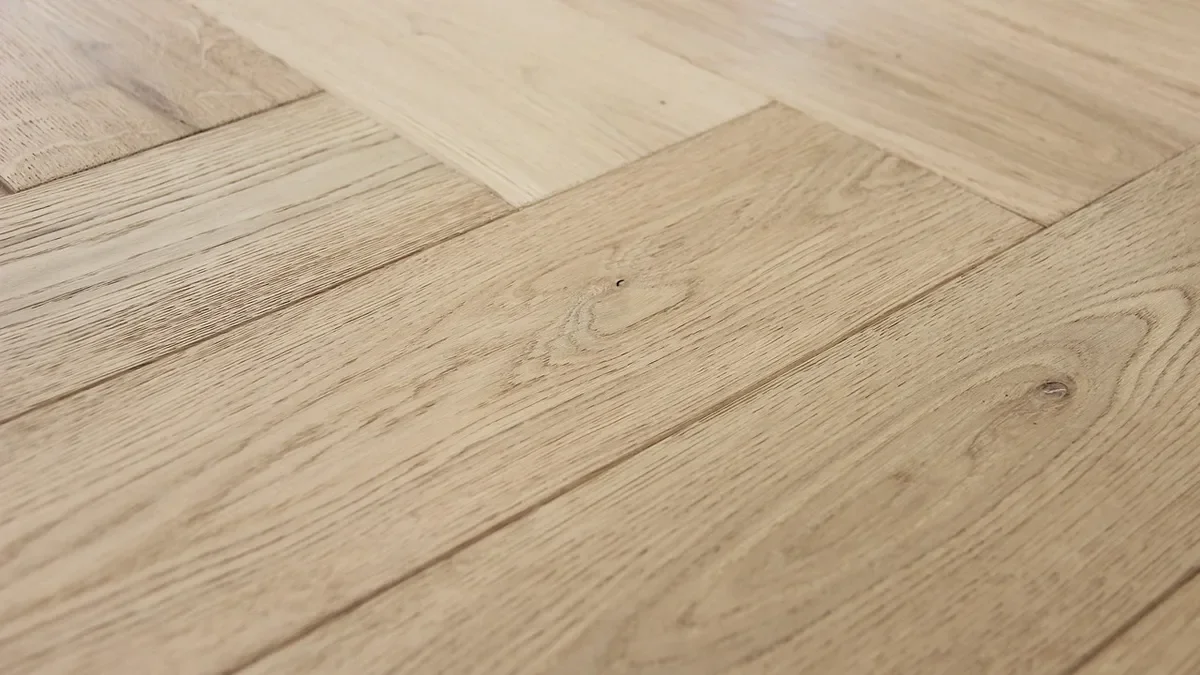
Oak has a straight, coarse grain with large open pores, which gives the floor its texture and the classic cathedral pattern on plainsawn boards. Red oak leans warm and reddish, while white oak tends toward a brown with an olive cast, and quartersawn white oak shows a distinctive ray fleck. Which one looks better is a taste question, not a durability one.
Staining: Where Maple Fights Back
This is the biggest practical difference. The Wood Database notes that blotches can occur when staining hard maple and recommends pre-conditioners, gel stains or toners for even coloring. Red oak has large open pores that take in stain and emphasize the grain. If you want a dark or colored floor, oak is the easier species. If you want maple’s pale look, stay natural or use a clear finish and skip the fight. Our gel stain vs oil stain guide explains how the two differ, and the box above is the pre-stain step for maple.
- Test first: stain a spare board or an offcut from the same lot, not a store display sample.
- Condition maple: follow the conditioner can’s wait time before staining.
- Sand evenly: uneven sanding leaves uneven stain.
- Go clear or natural: if the goal is a pale floor, maple’s color needs no stain.
Water Resistance: What Tyloses Do and Do Not Do
White oak has abundant tyloses in its large pores, which the Wood Database credits for its use in boatbuilding and tight cooperage. Red oak has few or none, so its open pores let liquid move through the wood. That makes white oak the safer oak in a room with occasional spills, but it does not make any solid wood floor waterproof. Standing water or a leak damages maple and oak alike, and a finished floor is only as water-tolerant as its coating.
Working With Each Species
If you cut or refinish floors yourself, note that the Wood Database says hard maple is fairly easy to work but can burn when machined with high-speed cutters such as a router, so keep tools sharp and moving. Our guide to sanding and refinishing wood floors covers the process. For daily care, see how to care for hardwood floors.
Cost: What Actually Drives the Price
Prices swing with grade, plank width, finish, region and whether the floor is prefinished, so a species label alone will not tell you which is cheaper in your area. Get written quotes for the same grade and width in each species, and add installation and finishing to the comparison. If you are pricing white oak lumber, our white oak per board foot guide lists current rates. We have not listed a price per square foot here because we could not verify one for this update.
Which Should You Choose?
- Choose hard maple if you want the hardest of the three, a pale, uniform look, and plan to keep it natural or clear-finished.
- Choose red oak if you want a warm classic look, a floor that hides scratches, and easy staining.
- Choose white oak if you want a brown with an olive cast and better pore resistance to moisture.
- Weigh installation and finish as heavily as species. Acclimation and coating quality decide how a floor looks in ten years. To tell what is already in your house, our guide to identifying maple wood helps.
Frequently Asked Questions
Is maple or oak better for flooring?
Neither wins on every point. Hard maple is harder (1,450 lbf on the Janka scale versus 1,220 for red oak and 1,350 for white oak, per the Wood Database) and gives a clean, modern look. Oak has a more forgiving open grain, stains evenly, and comes in two species. Pick maple for a pale, uniform look and oak for warmth and grain.
Is maple harder than oak?
Yes. Hard maple measures 1,450 lbf, red oak 1,220 lbf and white oak 1,350 lbf in the Wood Database’s Janka figures. Other charts list slightly different oak numbers, but compare species within one chart and hard maple comes out on top.
Does maple flooring stain well?
It can, but maple is prone to blotching, so the Wood Database recommends pre-conditioners, gel stains or toners for even color. Many people leave maple natural or use a clear finish, and always test the stain on a spare board first.
Which floor moves more with humidity, maple or oak?
By the Wood Database’s shrinkage figures, white oak shrinks the most (16.3 percent volumetric), hard maple is in the middle (14.7) and red oak the least (13.7). Those are green-to-dry lab figures, so they show ranking, not how much a finished floor will move in your house.
Is white oak better than maple for a kitchen?
White oak has abundant tyloses in its pores, which is why it is used for boats and barrels, but no solid wood floor is waterproof. Wipe spills promptly whichever species you choose.
Sponsored / affiliate links. As an Amazon Associate I earn from qualifying purchases. I may earn additional commission from eligible campaigns.