Are Maple Leaves Edible? Species Table and Horse Warning
Yes, with limits: foraging references describe young maple leaves, picked in the first few weeks after they open, as edible raw or cooked. They do not cover full-size summer leaves as food. The larger hazard is for animals: wilted red maple leaves are toxic to horses, and boxelder and sycamore maple seeds are linked to fatal muscle disease. This guide gives a species table, identification basics, and the extension rules for wild plants.
Are Maple Leaves Edible? What the Sources Say
Best Wild Plant ID Book Pick
 |
Edible Wild Plants: Eastern/Central North America (Peterson Field Guides): $23.38 Extension guidance in this article says to check a plant against more than one reference before eating it. A printed field guide is one of those references, and it works without a phone signal.
|
As an Amazon Associate we earn from qualifying purchases.
Foraging Texas describes young maple leaves and leaf buds as edible raw or cooked, and says they can go in salads or be cooked like spinach. It adds that young leaves are best within the first few weeks of appearing. Eat the Weeds calls the young leaves sweet and delicate and lists maple sap, seeds and inner bark as other edible parts.
That is the whole of the evidence, and it helps to be plain about its weight. Both are foraging references written by experienced foragers. We did not find any university extension, government or regulatory source, or a nutrition database, that evaluates maple leaves as a food, so there are no sourced nutrition numbers in this article, and we have not tasted or tested maple leaves ourselves. Treat the foraging claim as tradition, not as a tested food safety finding, and never eat a plant you cannot identify with certainty.
Maple Species Compared: People, Horses, and Pets
Most articles on this topic stop at “young leaves are edible.” The more useful question is which maple, and for whom. This table pulls together what the sources we read say about each common species. Where a source did not cover something, the cell says so instead of guessing.
| Maple | Young leaves for people | Horses | Dogs and cats |
|---|---|---|---|
| Red maple (Acer rubrum) | Named among the maples on the Foraging Texas page | Wilted or dried leaves toxic: hemolytic anemia (Ontario agriculture ministry (OMAFA), ASPCA) | Non-toxic (ASPCA, NC State Extension) |
| Sugar maple (Acer saccharum) | Named among the maples on the Foraging Texas page | Contains gallic acid, but Ontario agriculture ministry (OMAFA) notes no published poisoning reports | Not covered in sources read |
| Silver maple (Acer saccharinum) | No species-specific source read | Contains gallic acid, but Ontario agriculture ministry (OMAFA) notes no published poisoning reports | Not covered in sources read |
| Boxelder (Acer negundo) | No source read covers its leaves as food | Seeds contain hypoglycin A and are linked to a fatal muscle disease (Pet Poison Helpline) | Not covered in sources read |
| Sycamore maple (Acer pseudoplatanus) | No source read covers its leaves as food | Seeds contain hypoglycin A, linked to equine atypical myopathy (New Zealand Veterinary Journal) | Not covered in sources read |
| Japanese maple (Acer palmatum) | The source does not name the species; it describes maple leaves in Minoh, Japan, preserved in salt and fried as momiji tempura (Unseen Japan) | Not covered in sources read | Not covered in sources read |
The table is a map of what has been written down, not a clearance list. A blank cell does not mean safe. It means the sources we read were silent, which is a reason for caution, not permission.
Red Maple and Horses: The Safety Fact Most Guides Skip
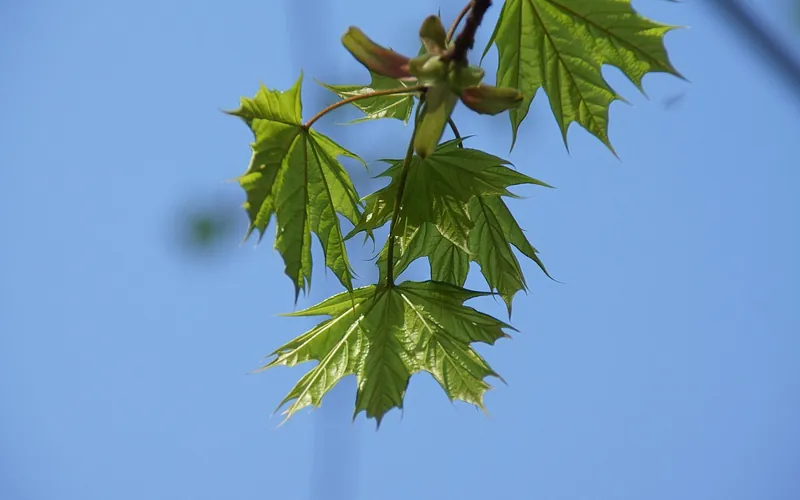
This part has nothing to do with whether you can eat the leaves, and everything to do with livestock. The Ontario agriculture ministry (OMAFA) reports that fresh red maple leaves do not cause disease but wilted leaves remain toxic for a few weeks or more. It gives the dose that causes hemolytic disease as 1.5 to 3 grams of leaves per kilogram of body weight, which works out to 0.7 to 1.5 kilograms for a 450-kilogram horse.
- Timing: the same page says the problem occurs from June through October, and that horses often die within 18 to 24 hours.
- Signs: dark red or brown urine, blue to brown gums, severe depression, and in some cases colic, fever and laminitis.
- Outcome: the same page reports that 19 of 32 horses (59 percent) died after eating wilted red maple leaves, and that death is due to lack of oxygen delivery from red blood cell breakdown and oxidation of hemoglobin to methemoglobin.
- Cause: the ASPCA lists tannins and gallic acid, metabolized to pyrogallol by intestinal bacteria, and says wilted leaves are the most toxic.
- Prevention: the Ontario page advises removing red maples near pastures, keeping fallen leaves out of paddocks, and keeping branches off manure piles.
If a horse may have eaten wilted red maple leaves, call a veterinarian right away. The ASPCA page also lists an animal poison control line at (888) 426-4435. After a storm or pruning, picking up fallen branches near a paddock is the practical step, because a pruned limb wilts quickly and wilted is the dangerous state.
Boxelder and Sycamore Maple Seeds: A Different Horse Risk
A second risk sits in the seeds, not the leaves. Pet Poison Helpline says boxelder seeds contain hypoglycin A, which is linked to a severe muscle disease in horses, with seeds falling generally between September and March. It reports that the disease can be fatal in up to 75 percent of affected horses. A New Zealand Veterinary Journal study detected hypoglycin A in seeds of both sycamore maple and boxelder.
The Pet Poison Helpline page does not name leaves as the problem. For people, Eat the Weeds also flags boxelder seeds as toxic, which is why our guide to eating maple seeds treats boxelder separately. For a look at maple against a similar-looking tree, see sycamore vs. maple.
How to Tell a Maple From a Look-Alike
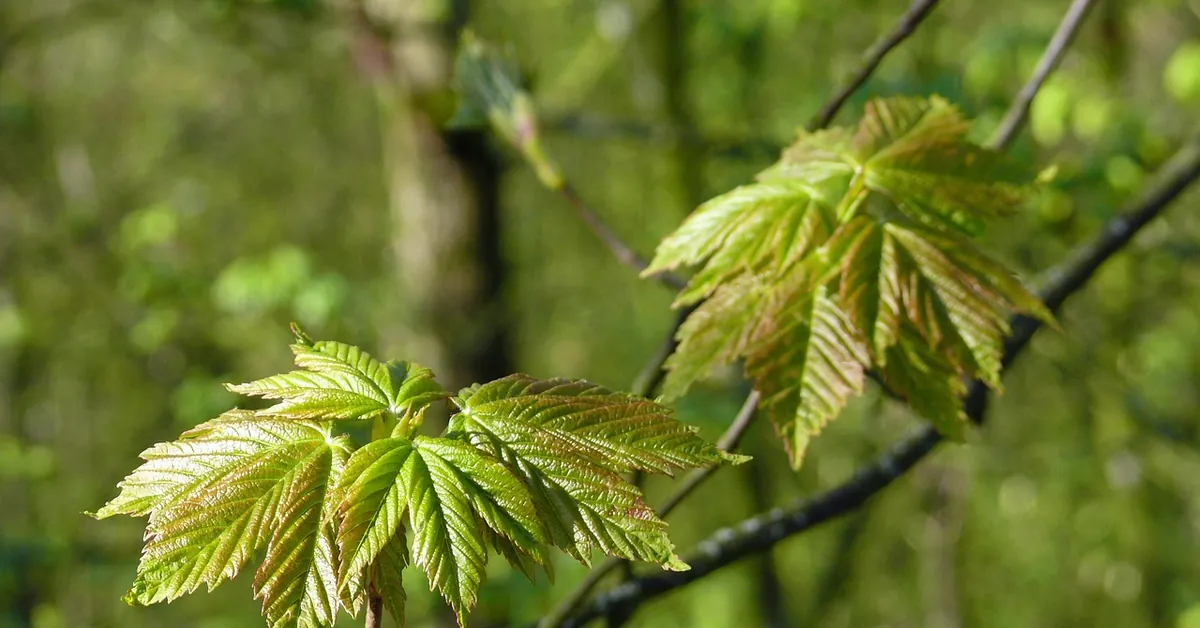
The reference we lean on here is NC State Extension, which describes most maples as having palmately lobed leaves arranged in opposite pairs, with winged fruits called samaras, and notes that exceptions exist. Opposite arrangement is the quickest first check: if the leaves are not in pairs on the twig, the NC State description does not fit a maple.
| Maple | Leaf, per the source | Source |
|---|---|---|
| Red maple | 3 to 5 principal triangular lobes, the lower two much smaller; irregularly and coarsely toothed; grayish underside | NC State Extension |
| Sugar maple | 5 lobes, 3 to 6 inches long and wide; dark green in summer | NC State Extension |
| Silver maple | Opposite and palmately lobed; 5 long, sharply pointed lobes with V-shaped sinuses; green above, silvery white below | Lake Forest College |
| Norway maple | Opposite, palmately veined, 5 to 7 lobes with long pointed teeth | Virginia Tech Dendrology |
| Boxelder | Opposite and pinnately compound, 3 to 5 leaflets, occasionally 7 | NC State Extension |
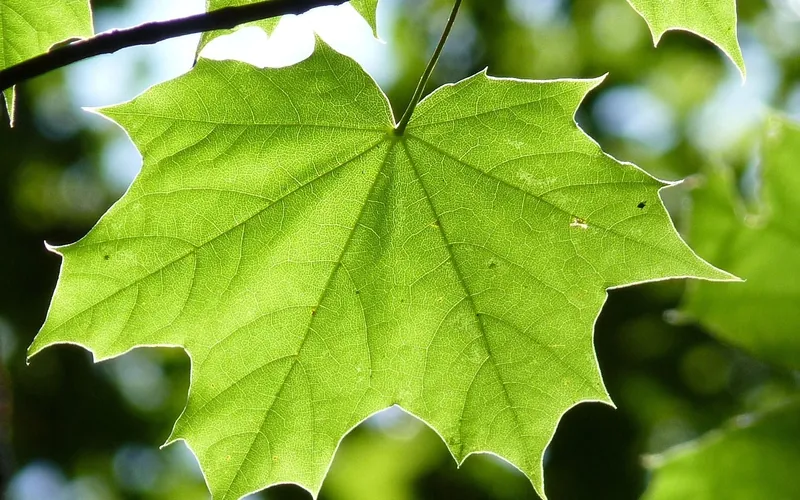
Boxelder deserves a second look because its compound leaves do not look like the classic maple hand. NC State Extension lists poison ivy among the plants boxelder is often confused with, and notes that boxelder often shows just 3 leaflets. That is why a leaflet count alone is never enough to decide.
For more on telling maples apart, see our guides on how to identify a maple tree, identifying red maple, hard vs. soft maple bark and how many kinds of maple there are. A tree-ID book helps, but it is one source, not a verdict.
Extension Safety Rules Before You Eat Any Wild Plant
These come from extension publications on wild foods in general, not from a maple-specific study. They are the reason this article keeps repeating “identify with certainty.”
- Be certain: Mississippi State University Extension says to be 100 percent certain you have identified a wild plant correctly and that it is not poisonous.
- Use more than one guide: the same publication recommends at least three plant guides with detailed descriptions, photographs and drawings.
- Know the edible parts: it warns that a plant being edible does not mean all its parts are, and that some plants need cooking to remove toxins.
- Avoid polluted ground: it advises against foraging near roadsides, power lines and industrial zones, where plants can absorb pollutants.
- Go slowly: UC Cooperative Extension advises starting with just a few bites of a new wild food and waiting 24 hours before eating more.
This page cannot identify the tree in your yard, and it is not medical or veterinary advice. If you are unsure of a tree, ask your local county extension office or an experienced forager, and for any suspected animal poisoning call a veterinarian. The same caution applies to other trees: our wild cherry identification and safety guide and black walnut guide show how species-level detail matters.
Other Maple Foods and the Woodworker Angle
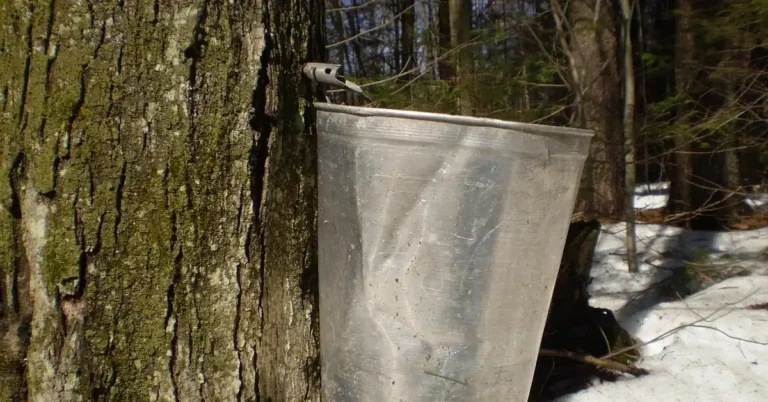
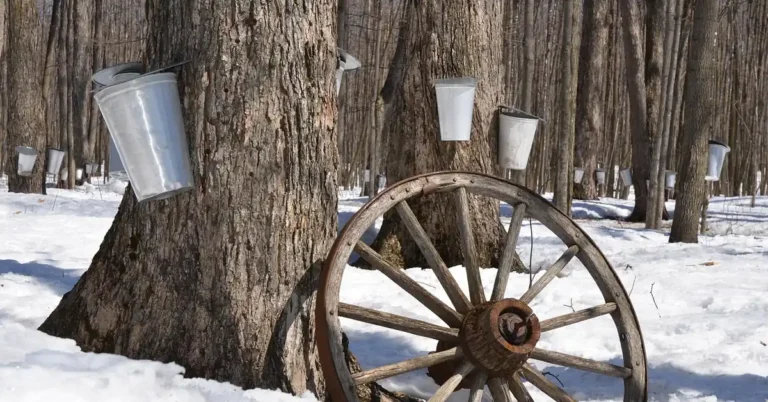
Leaves are the least famous maple food. NC State Extension notes that sugar maple can be tapped for syrup when it is about 40 years old, and that it takes about 32 gallons of sap to make one gallon of syrup. If syrup is your interest, see how to collect maple sap and how to cook it down.
In Minoh, Japan, Unseen Japan reports that maple leaves are preserved in salt for a full year before being fried in a sweet batter as momiji tempura. That is a salt-cured leaf, a very different preparation from a spring leaf in a salad, and a reminder that the process matters as much as the species.
If you came here because you own maples and work with wood, our guides to smoking with maple wood and whether maples are deciduous cover the tree from the woodpile side. Other tree-fact pages worth a look: are oak trees evergreen, is willow a hardwood and the maple leaf cycle.
Frequently Asked Questions
Are maple leaves edible?
Foraging references such as Foraging Texas and Eat the Weeds describe young maple leaves as edible, raw or cooked, in the first few weeks after they open. These are foraging references, not food-safety studies, so confirm the tree is a maple before eating anything.
Are red maple leaves poisonous?
Wilted red maple leaves are toxic to horses and can cause hemolytic anemia. Fresh leaves do not cause the disease, and the ASPCA lists red maple as non-toxic to dogs and cats. Keep wilted leaves and fallen branches out of any pasture.
Can I eat boxelder leaves?
The sources read for this article do not cover boxelder leaves as food. What they do cover is boxelder seeds, which contain hypoglycin A and are linked to a fatal muscle disease in horses. If you cannot confirm the species, do not eat it.
How can I tell a maple tree from a look-alike?
NC State Extension describes most maples as having palmately lobed leaves in opposite pairs and winged seeds called samaras. Exceptions exist, such as boxelder with compound leaves, so use a field guide or ask a local extension office to confirm.
Is it safe to eat a wild plant if I am fairly sure what it is?
No. Mississippi State University Extension says to be 100 percent certain of the identification before eating any wild plant. When you are not sure, leave it out.
Bottom Line
Foraging references say young maple leaves are edible, but they are not tested food-safety sources, and mature leaves are not covered. The firmer, better-documented hazards are for horses: wilted red maple leaves, and boxelder and sycamore maple seeds. If you cannot confirm the tree with a field guide and a local expert, leave it alone.
Sponsored / affiliate links. As an Amazon Associate I earn from qualifying purchases. I may earn additional commission from eligible campaigns.