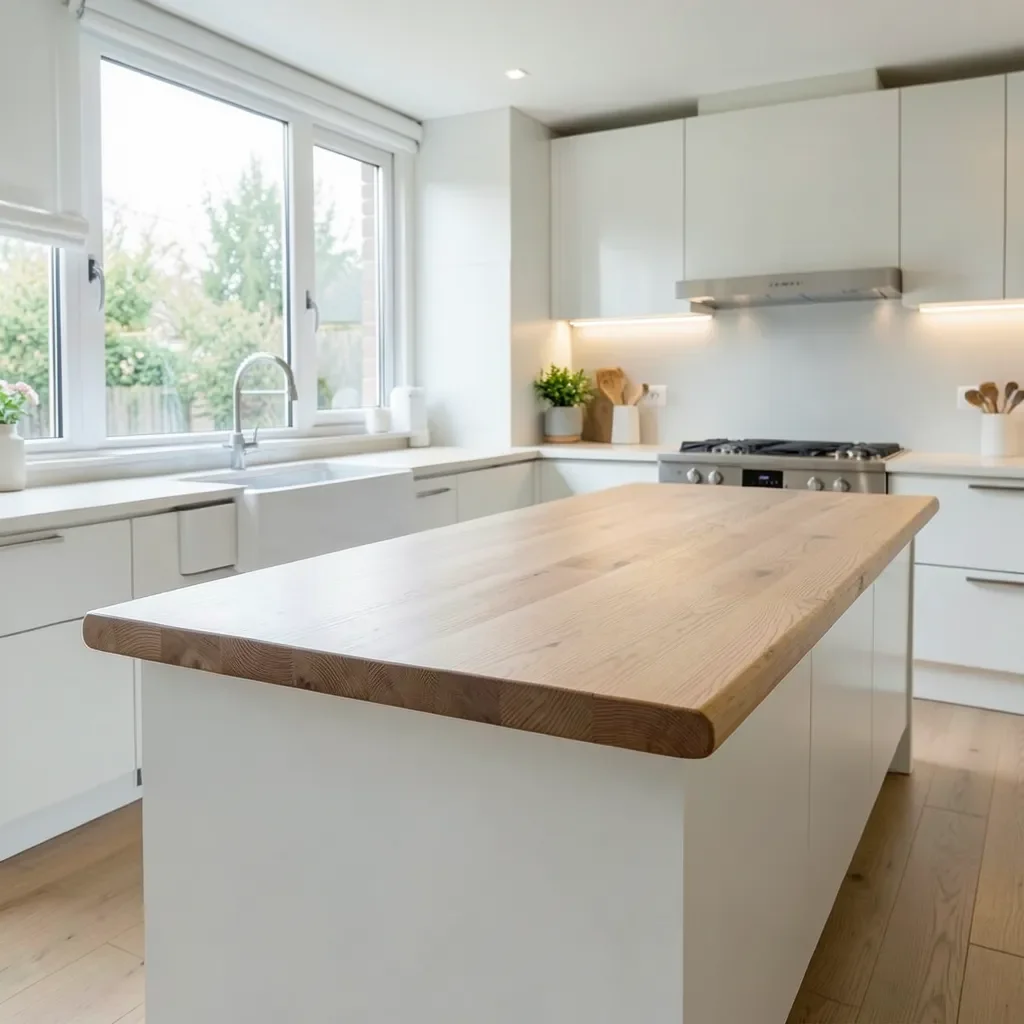
Wood Countertop Edge Profiles: 7 Options and How to Pick
A wood countertop edge is either eased, square, bullnose, beveled, ogee, cove-and-bead, or a waterfall/drop edge — over 40 stock variations exist, but nearly all of them fall into one of these seven families. The catch: most butcher block is only 1.25 to 1.5 inches thick, and a decorative profile like a full bullnose or ogee needs more depth than that to look substantial, so it often requires a built-up strip laminated underneath. This guide covers what each profile actually looks like, which ones need that extra step, and how to match one to your kitchen’s style.
What You Need to Shape a Wood Countertop Edge
Best Edge-Profile Router Bit Set
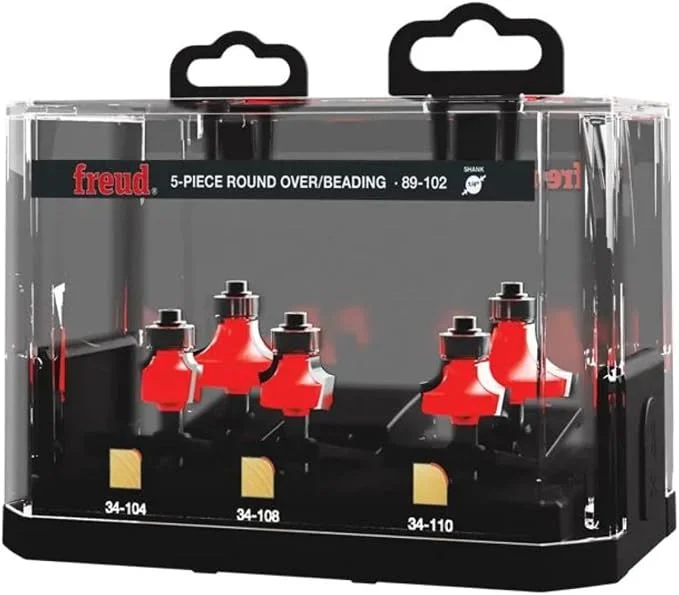 |
Freud 5-Piece Round Over/Beading Bit Set – $139.97 Cuts the eased and bullnose profiles this guide covers, plus converts to a beading bit with the included bearing for a cove-and-bead style edge.
|
If you’re cutting your own profile rather than buying a pre-shaped slab, a router with the right bit does most of this work. A round-over bit gives you an eased or full bullnose edge depending on the radius; a chamfer bit gives you a clean beveled edge. You’ll also want 120- and 220-grit sandpaper to smooth the cut before finishing, and a food-safe mineral oil or butcher-block conditioner for the final seal — regular furniture oil and polyurethane aren’t rated for food contact.
Common Wood Countertop Edge Profiles
Seven profiles cover the vast majority of wood countertops you’ll see:
- Square edge: A crisp 90-degree corner, sometimes lightly sanded. Keeps the countertop at full visible thickness — the look most associated with butcher block.
- Eased edge: A square edge with just the sharpness knocked off using a small round-over bit (typically 1/8 inch). Subtle enough that most people don’t notice it’s there.
- Bullnose edge: A full rounded-over edge, either half-round (touching top and bottom) or a smaller radius. Removes sharp corners entirely, which matters in kitchens with young kids.
- Beveled/chamfered edge: A flat angled cut, usually 22 or 45 degrees, instead of a curve. Reads as more modern and geometric than a rounded profile.
- Ogee edge: An S-curve profile — a concave arch flowing into a convex curve. The most traditional and ornate of the common profiles.
- Cove-and-bead edge: A concave groove (the cove) paired with a small rounded bead detail. Common on furniture-style and farmhouse kitchen counters.
- Waterfall/drop edge: The countertop material continues down the side of the cabinet or island in one continuous piece, with the “edge” essentially being a mitered vertical seam rather than a profile cut into the top surface.
Which Edges Need a Built-Up Strip
This is the part most edge-profile guides skip. A full bullnose or ogee cut into 1.25 or 1.5-inch butcher block looks thin and undersized — those profiles were designed for the 2 to 3-inch-thick slabs common in stone and older solid-wood counters. To get the right proportions, fabricators laminate a strip of matching wood to the underside of the front edge before cutting the profile, effectively building the edge out to 2-plus inches while the rest of the countertop stays at its original thickness. Square, eased, and beveled edges don’t have this problem — they look correct at standard butcher-block thickness with no extra lamination step.
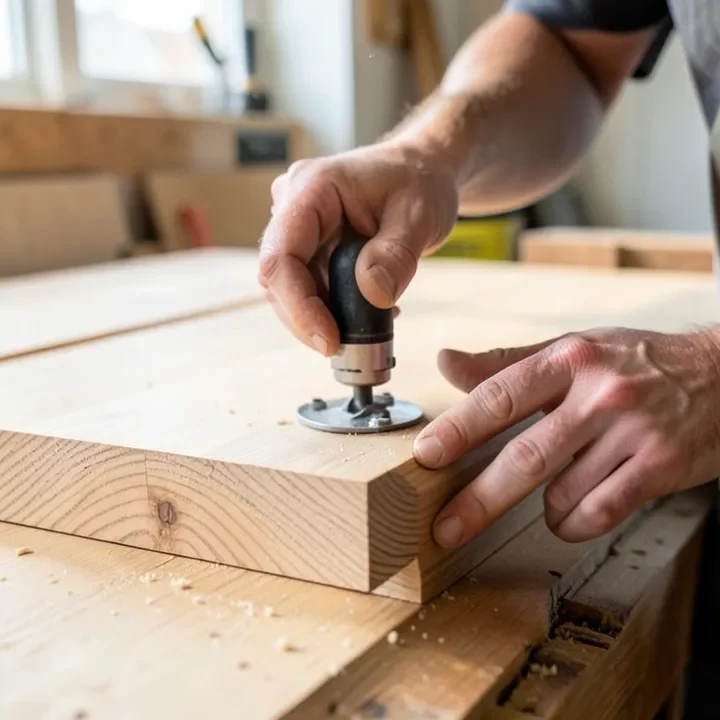
If you’re shaping the edge yourself, it’s much easier to glue up and clamp the built-up strip before you rout the profile, not after — routing a fully assembled but not-yet-flush glue line tends to telegraph the seam. If you don’t own a router, our guide to rounding wood edges without a router covers hand-tool alternatives for a simpler eased profile.
Choosing an Edge Profile by Kitchen Style
Modern and minimalist kitchens generally pair better with a square, eased, or beveled edge — the straight lines keep the countertop reading as clean and geometric, and a waterfall edge in particular is almost exclusively a modern design choice. Traditional and farmhouse kitchens tend toward an ogee or cove-and-bead edge, since the added curvature reads as more ornate and matches furniture-style cabinetry. A bullnose edge sits in the middle and works in almost any style — it’s also the practical choice for a kitchen island edge or a counter with a lot of foot traffic nearby, since there’s no sharp corner to catch a hip or a child’s head height.
Mixing materials changes the calculation too. A wood edge against a stone or laminate field (a wood-topped island in an otherwise stone-countertop kitchen, for example) usually looks best with a simpler profile — square or eased — so the wood reads as an intentional accent rather than competing with the stone’s own edge detail nearby.
Maintaining and Resealing a Wood Countertop Edge
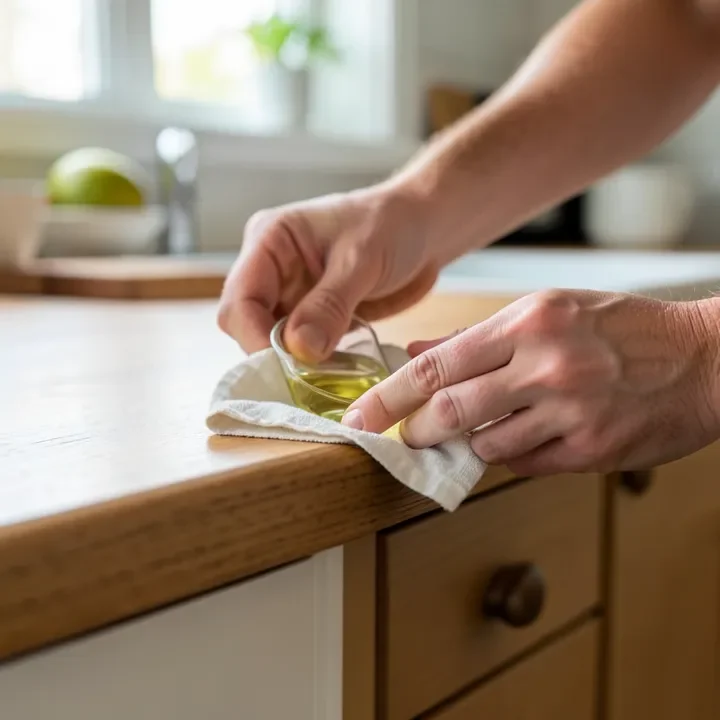
The edge takes more abuse than the flat field of the countertop — it’s where hands, hips, and dish towels make contact constantly, and any curved or angled profile has more exposed end grain than a flat surface does. Wipe it down with a mild soap and water solution and dry immediately, the same as the rest of the countertop. End grain absorbs moisture faster than the face grain on top, so on an oiled or waxed finish, the edge is usually the first spot to need reconditioning — check it every few weeks rather than waiting for the whole counter to look dull. For the full sealing process, see our guide to how to seal a wood countertop, and our broader wood countertop care guide for day-to-day maintenance.
Mistakes to Avoid When Choosing or Cutting an Edge Profile
- Picking a decorative profile without checking thickness: An ogee or full bullnose on standard 1.5-inch stock looks undersized unless you add a built-up strip first.
- Using a non-food-safe finish: Standard polyurethane and many stains aren’t rated for direct food contact; use a food-safe mineral oil or butcher-block conditioner, especially on the edge where hands and food make the most contact.
- Routing before sanding the blank flat: Any twist or unevenness in the board gets cut directly into the profile, producing a wavy edge line that’s hard to fix after the fact.
- Choosing a sharp bullnose or square edge for a high-traffic corner: A rounded profile is genuinely safer around a kitchen island corner where people and kids pass close by.
- Skipping a test cut: Router bit depth and speed settings vary by wood species — test the exact profile on a scrap of the same wood before committing to the actual countertop.
Frequently Asked Questions About Wood Countertop Edges
What Are the Benefits of a Wood Countertop Edge?
A well-chosen edge profile adds a decorative finishing touch, softens or eliminates sharp corners for safety, and protects the exposed end grain from moisture and impact damage better than a raw, unshaped edge would.
How Do I Maintain and Clean a Wood Countertop Edge?
Wipe with a damp cloth and mild soap, then dry immediately, since end grain on the edge absorbs moisture faster than the flat top surface. Recondition with a food-safe mineral oil or butcher-block conditioner every few weeks on an oiled finish.
Can a Wood Countertop Edge Be Repaired if Damaged?
Minor scratches, dents, and water marks can usually be sanded out and refinished on-site. Deeper gouges or a chipped decorative profile like an ogee or bullnose typically need to be re-routed or, in severe cases, the edge strip replaced.
Does an Ogee or Bullnose Edge Need a Built-Up Strip?
Usually, yes. Standard butcher block runs 1.25 to 1.5 inches thick, and a full bullnose or ogee profile needs closer to 2 inches of material to look proportional, so a matching strip is typically laminated to the underside before the profile is cut.
Are Wood Countertop Edges Suitable for All Kitchen Designs?
Most profiles work across styles, but simpler edges (square, eased, beveled) tend to suit modern kitchens, while ogee and cove-and-bead read as more traditional. A bullnose edge is the most versatile option across styles.
Sponsored / affiliate links. As an Amazon Associate I earn from qualifying purchases. I may earn additional commission from eligible campaigns.