Angled Finish Nailer Vs Straight Finish Nailer: Key Differences
Choosing the right tool for your woodworking projects can feel overwhelming, especially when you’re faced with options like an angled finish nailer versus a straight finish nailer. Both are popular choices among professionals and DIY enthusiasts, but which one is right for you?
This decision can significantly affect the quality and ease of your project. Imagine achieving seamless finishes without the frustration of trial and error. We’ll break down the key differences and benefits of each nailer, so you can make an informed choice that suits your specific needs.
Dive in to discover how the right tool can transform your woodworking experience from ordinary to extraordinary.

Credit: www.youtube.com
Design And Structure
An angled finish nailer has a slanted nose. This helps reach tight corners. It’s often larger and heavier. The design is meant for tricky spots. It’s not for small hands or kids.
A straight finish nailer has a straight nose. It is usually smaller and lighter. Easier to hold. It’s good for big open areas. It may not reach tight spaces well.
Angled nailers can weigh more. They might be harder to carry. Straight nailers are usually lighter. They can be easier to handle. Size and weight matter for long jobs.
Choose based on your needs. Bigger jobs may need angled nailers. Smaller or quick jobs may need straight nailers. Comfort is important. Weight affects how long you can work.
Performance And Efficiency
The angled finish nailer can reach tight corners easily. It offers great control. The straight nailer is better for flat surfaces. Both tools provide precise nailing. But, angled nailer fits into tricky spots. Straight nailer is simple and direct. Each has its own uses.
Speed matters when working fast. Angled nailers can be quicker in complex areas. Power is needed for tough materials. Both nailers pack good power. Straight nailers work well on large flat areas. Angled ones are fast in small spaces. Choose based on need.
Versatility And Application
Angled finish nailers are great for tight spaces. They can reach corners easily. Straight finish nailers work well on flat surfaces. They are simple to use. Both nailers have their own strengths. Choosing the right one is important.
Angled nailers are ideal for crown molding. They fit well in narrow spots. Straight nailers are perfect for baseboards. They give a neat finish. Each nailer suits different tasks. Knowing your project helps in choosing wisely.
Angled nailers are great with hardwood. They have strong power. Straight nailers work well with softwood. They are gentle but effective. Selecting the right nailer based on material is crucial. This ensures the best results.

Credit: www.pinterest.com
Ease Of Use
Angled finish nailers are easier in tight spaces. Their design helps to reach corners. Straight finish nailers are bulkier. They can be tricky in small areas. Angled nailers are lighter. This makes them easy to handle. Both tools need a steady hand. But the angled nailer offers more control.
Loading an angled nailer is straightforward. The magazine is simple to access. Straight nailers take more time to load. They have a different magazine style. Maintenance for both is important. Keep them clean for smooth use. Check for jammed nails often. This keeps them working well.
Cost And Availability
Angled nailers are often more expensive than straight nailers. They can cost $150 to $300 depending on the brand. Straight nailers are usually cheaper, ranging from $100 to $200. Some brands offer discounts during sales. It’s good to compare prices.
Many stores sell angled and straight nailers. Home improvement shops like Lowe’s and Home Depot have them. Online sites like Amazon also offer many options. Sometimes stores have sales or special offers. Local hardware shops may have fewer choices. It’s wise to check different places for the best deal.
Credit: www.homedepot.com
Frequently Asked Questions
What Is Better, An Angled Or Straight Finish Nailer?
An angled finish nailer offers better maneuverability in tight spaces. A straight finish nailer is ideal for straightforward projects. Choose based on your project needs.
What Do You Use Straight Finish Nails For?
Straight finish nails are used for trim work, moldings, cabinetry, and other interior applications. They offer a smooth, clean finish and are ideal for projects requiring precision. Their slender design minimizes wood splitting, making them perfect for delicate tasks.
Why Are Finish Nails Angled?
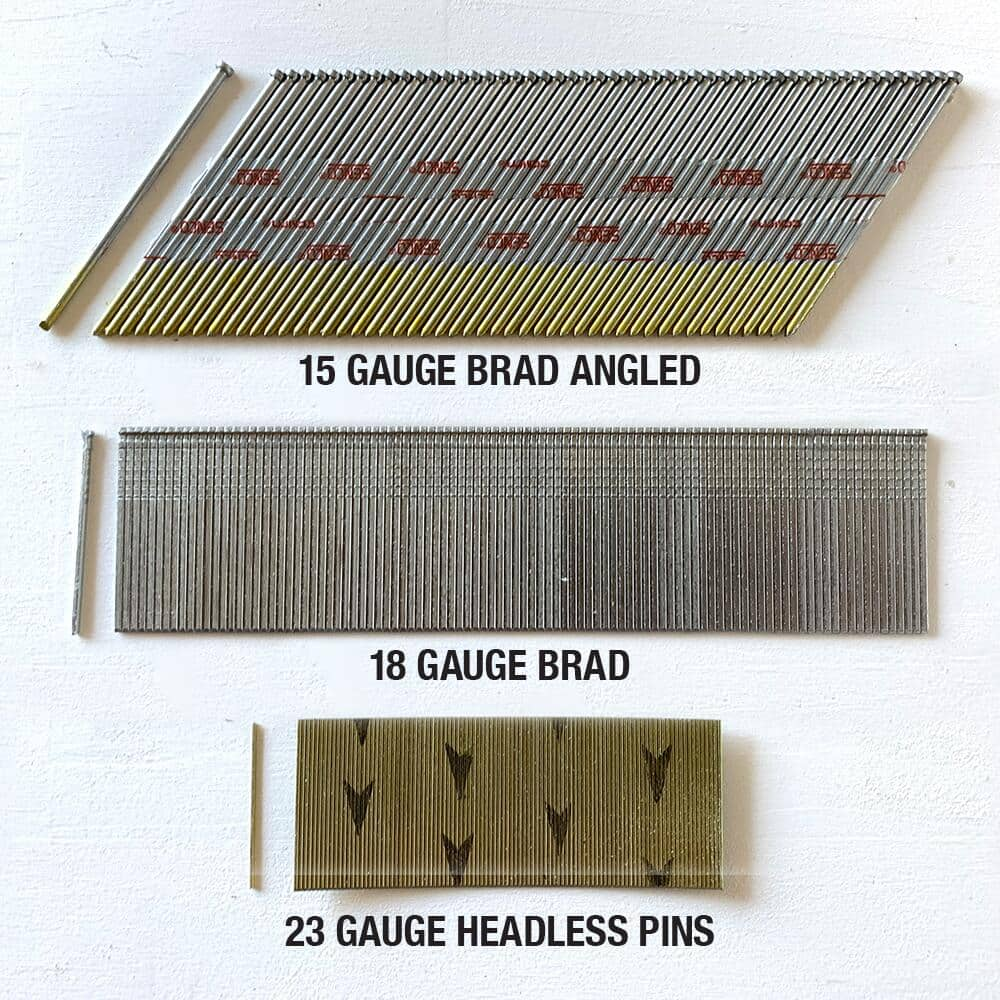
Finish nails are angled to improve grip and hold in wood. Angling helps prevent splitting and increases stability. This technique ensures secure fastening, especially in tight spaces, enhancing durability and appearance. It allows for precise placement in construction and carpentry projects, contributing to a polished and professional finish.
What Is A 16 Gauge Angled Finish Nailer Used For?
A 16 gauge angled finish nailer is ideal for trim work, crown molding, and baseboards. It provides strong, precise fastening for wood projects. Its angled design allows easy access to tight corners, enhancing efficiency in carpentry tasks. Perfect for professional and DIY home improvement projects.
Conclusion
Choosing between an angled and straight finish nailer depends on your project needs. Angled nailers offer better access in tight spots. Straight nailers deliver a traditional finish. Consider your workspace and the type of finish you desire. Both nailers serve specific purposes effectively.
Understand your tools before starting any project. This ensures better results and smoother workflow. Each nailer has strengths and weaknesses. Evaluate your priorities carefully. Make an informed decision based on your requirements. Your choice impacts the final look and ease of completion.
Select wisely for the best outcome. Happy nailing!