Are Butcher Block Countertops Expensive?
Thinking about new kitchen countertops can bring up a lot of questions. One that pops up a lot, especially for folks new to kitchen renovations, is Are Butcher Block Countertops Expensive? It can seem like a tricky question because there are so many options and prices can really change.
But don’t worry, we’re going to break it all down simply so you can figure out what works best for your kitchen and your wallet. We’ll show you the real costs involved.
Understanding Butcher Block Countertop Costs
Many people wonder Are Butcher Block Countertops Expensive? when they’re picturing a beautiful, natural wood surface in their kitchen. The price of butcher block countertops isn’t a single number; it depends on many things.
Wood type, thickness, and where you buy them all play a big role. We’ll look at why these factors matter and what you can expect to pay.
Types of Wood and Their Impact on Price
Different woods have different price tags. Some woods are harder and more durable, which often means they cost more. Others are softer and might be more budget-friendly but can scratch or dent more easily.
Knowing the common wood types will help you understand the cost.
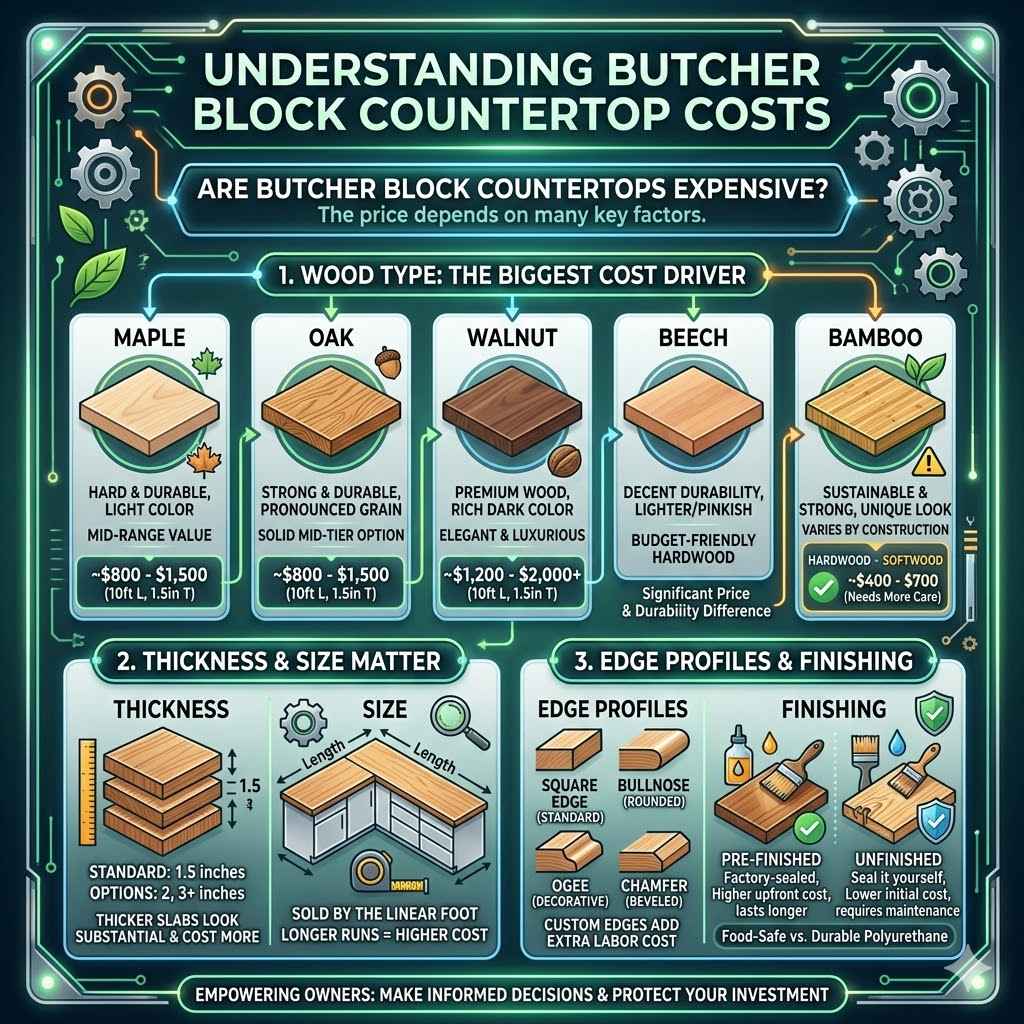
- Maple: Maple is a very popular choice for butcher block. It’s hard, durable, and has a nice, light color. Its consistent grain also makes it look very clean. Because it’s so widely available and well-liked, it’s often a mid-range option in terms of price. You get good value for its durability and looks.
- Oak: Oak is another strong contender. It’s also quite hard and can withstand a lot of kitchen use. Oak has a more pronounced grain pattern than maple, which some people love for its rustic charm. It’s typically priced similarly to maple, making it a solid, mid-tier choice.
- Walnut: Walnut is a premium wood for countertops. It’s known for its beautiful rich, dark color and elegant grain. Walnut is a bit softer than maple or oak but still durable enough for most kitchen tasks. Because it’s a more luxurious wood, walnut usually comes with a higher price tag.
- Beech: Beech wood is a good option if you’re looking for something a little more affordable. It’s still a hardwood, offering decent durability. Its color is usually a bit lighter and can have a slightly pinkish hue. It’s a great way to get the butcher block look without the highest cost.
- Bamboo: While not technically a hardwood, bamboo is a very popular and sustainable option. It’s known for its strength and unique look. Bamboo countertops can sometimes be priced similarly to oak or maple, depending on the construction and finish.
The cost difference between a soft wood like pine and a hard wood like maple can be significant. For example, a 10-foot long, 1.5-inch thick maple butcher block countertop might cost around $800 to $1,500. In contrast, a similar size pine countertop could be as low as $400 to $700, but it would require more care.
Walnut would likely be at the higher end, potentially $1,200 to $2,000 or more for the same size.
Thickness and Size Matter
Countertop thickness affects both the look and the price. Thicker slabs tend to look more substantial and can be more durable, but they also cost more per linear foot. Standard butcher block countertops are often 1.5 inches thick.
However, you can find them in 2 inches, 3 inches, or even thicker.
The length of the countertop you need is also a direct factor in the total cost. Most butcher block is sold by the linear foot. So, a longer run of countertop will naturally cost more than a shorter one.
This is true for any material, but it’s easy to overlook when planning.
Edge Profiles and Finishing
The edge of your countertop can also add to the cost. Simple square edges are usually standard and included in the base price. However, if you want decorative edges like a bullnose, ogee, or chamfer, this will likely be an additional charge.
These custom edge profiles require more labor and specialized tools.
The finish you choose is also important. Some butcher block comes unfinished, allowing you to seal it yourself. Others come pre-finished with oil or a protective coating.
If you opt for a pre-finished product, the price will be higher. The type of finish also matters. Food-safe mineral oil is common but requires regular reapplication.
More durable polyurethane finishes last longer but might not be suitable for direct food preparation.
Comparing Butcher Block Prices to Other Materials
To really answer Are Butcher Block Countertops Expensive?, it’s helpful to see how they stack up against other popular countertop materials. This comparison gives you a clearer picture of where butcher block fits in the market.
Butcher Block vs. Laminate
Laminate countertops are generally the most budget-friendly option available. They are made from particleboard or MDF with a printed decorative layer and a protective plastic coating. They can mimic the look of wood, stone, or other materials at a low cost.
- Cost: Laminate countertops typically range from $20 to $50 per square foot installed.
- Durability: Laminate is not very durable. It can scratch, chip, and burn easily. Water damage can cause it to swell and delaminate. It cannot be refinished.
- Appearance: While laminate can look good initially, it often appears less premium than natural materials. The edges can be prone to chipping.
- Butcher Block Comparison: Butcher block countertops, while more expensive than laminate, offer a natural, warm aesthetic and can be refinished if damaged. Basic maple or oak butcher block can range from $50 to $100 per square foot installed, making it about two to four times the cost of laminate.
A 30-square-foot kitchen with laminate countertops might cost between $600 and $1,500 installed. The same kitchen with mid-range butcher block countertops could cost between $1,500 and $3,000 installed. This shows that while butcher block is a bigger investment upfront, it offers greater longevity and repairability.
Butcher Block vs. Granite
Granite is a natural stone known for its beauty and durability. It comes in a wide variety of colors and patterns. Granite is a very popular choice for kitchens and bathrooms.
- Cost: Installed granite countertops can range from $50 to $200 per square foot, with exotic slabs being even more.
- Durability: Granite is extremely hard and scratch-resistant. It’s also heat-resistant, though it’s still wise to use trivets. Granite is porous and requires sealing to prevent stains.
- Appearance: Granite offers a unique, high-end look. Each slab is different, making your countertops truly one-of-a-kind.
- Butcher Block Comparison: Butcher block countertops are generally less expensive than granite. A mid-range granite slab can easily cost as much as or more than a premium butcher block. For instance, common granite might be $75-$150 per square foot installed, while high-end walnut butcher block could be in a similar range. Basic maple or oak butcher block is often more affordable than most granite options.
A 30-square-foot kitchen with basic granite might cost $2,250 to $4,500 installed. The same kitchen with premium walnut butcher block could be $3,000 to $6,000 installed. This highlights that while butcher block can reach similar price points to lower-end granite, it offers a different aesthetic and maintenance profile.
Butcher Block vs. Quartz
Quartz countertops are engineered stone products made from crushed quartz crystals mixed with resins and pigments. They are known for their consistency, durability, and low maintenance.
- Cost: Installed quartz countertops typically range from $75 to $150 per square foot, with some high-end brands costing more.
- Durability: Quartz is very durable, non-porous, and resistant to scratches, stains, and heat. It does not require sealing.
- Appearance: Quartz offers a consistent look, with a wide range of colors and patterns available, from solid colors to those mimicking natural stone.
- Butcher Block Comparison: The cost of butcher block and quartz can overlap significantly. High-quality butcher block, especially exotic hardwoods, can be as expensive as mid-range quartz. However, common butcher block woods like maple or oak are often less expensive than most quartz options.
A 30-square-foot kitchen with standard quartz could cost $2,250 to $4,500 installed. A similar area with premium butcher block might cost $3,000 to $6,000. This shows that while quartz often carries a higher average price, very nice butcher block can compete on cost, offering a natural alternative.
Butcher Block vs. Solid Wood (Non-Butcher Block)
When we talk about butcher block, we mean wood slabs constructed from multiple pieces glued together to create a solid, thick surface. Other solid wood countertops might be made from wider planks or have different construction methods.
- Cost: The cost can vary greatly. Some plank-style solid wood countertops made from less expensive woods might be cheaper than butcher block. However, custom-designed solid wood countertops using premium woods could be more expensive.
- Durability: Butcher block construction, with its end-grain or edge-grain patterns, is designed for durability, especially for cutting. Other solid wood countertops might be more prone to warping or showing wear if not constructed properly.
- Appearance: Both offer a warm, natural look. Butcher block often has a more uniform appearance due to the gluing of smaller pieces. Plank-style wood countertops will show wider grain patterns and natural variations.
- Butcher Block Comparison: Generally, standard butcher block offers a good balance of durability and cost compared to many other solid wood countertop styles. If you’re looking for the highest level of wear resistance for a cutting surface, butcher block is often engineered for that.
Factors Affecting Butcher Block Countertop Price
Beyond the wood type and size, several other elements influence the final cost. Understanding these can help you get a more accurate quote and budget effectively.
Installation Costs
Are Butcher Block Countertops Expensive? often depends heavily on whether you install them yourself or hire professionals. Installation is a significant part of the total price.
- DIY Installation: If you are comfortable with basic carpentry skills, you might be able to install butcher block yourself. This involves measuring, cutting, fitting, and sealing. The cost here is mainly for tools and finishing supplies. This can save you hundreds, if not thousands, of dollars.
- Professional Installation: Hiring a professional installer will add to the overall cost. Installers charge for their time, expertise, and any specialized equipment they need. This can range from $300 to $1,000 or more, depending on the complexity of the installation and your location.
For a typical kitchen, professional installation can add about 15-25% to the material cost. It’s often worth it to ensure a perfect fit and finish, especially if you have complex cabinet layouts or need cutouts for sinks and cooktops.
Edge Grain vs. End Grain Construction
Butcher block countertops are constructed in different ways, affecting their appearance and price.
- Edge Grain: This is the most common and generally the most affordable type of butcher block. Strips of wood are glued together along their long edges. This creates a linear pattern that looks very clean and is quite durable. It’s excellent for general countertop use.
- End Grain: This is the most premium and expensive type. The wood blocks are oriented so that the ends are facing upwards. This construction is traditionally used for actual butcher blocks because it’s extremely durable and forgiving on knives, allowing them to glide between the wood fibers. It has a checkerboard appearance and is significantly more costly due to the complex manufacturing process.
A 10-foot length of 1.5-inch thick edge-grain maple might cost $800-$1,200. The same length in end-grain maple could easily be $1,500-$2,500 or more. This is a key reason why butcher block prices can vary so widely.
Sink and Appliance Cutouts
If your design includes a sink or cooktop that needs to be integrated into the countertop, this will add to the cost.
- Complexity of Cutouts: Simple undermount sink cutouts are usually standard. However, complex shapes, multiple cutouts, or cutouts for professional-grade appliances will increase the labor and precision required.
- Tooling: Special saws and routers are needed to make clean, precise cutouts. This adds to the installer’s cost or your DIY cost if you don’t have the right tools.
- Sealing: After cutouts are made, the exposed wood edges need to be meticulously sealed to prevent moisture damage. This extra step is crucial for longevity.
Expect to pay an additional $100-$300 per cutout for professional installation, depending on the complexity.
Customization and Special Features
Beyond standard shapes, any custom work will increase the price.
- Integrated Drainboards: Some people opt for a drainboard carved directly into the wood next to the sink. This is a skilled woodworking task that adds significant cost.
- Special Stains or Finishes: While butcher block often looks best with natural finishes, if you want a custom stain color, this can be an extra charge. Some premium food-safe finishes also cost more.
- Curved Edges or Unique Shapes: If your kitchen layout requires countertops with curved sections or non-standard shapes, this will increase fabrication time and cost.
These custom features can add anywhere from 10% to 50% or more to the base material cost.
Brand and Retailer Markups
Like many products, the brand name and where you purchase the butcher block can affect the price.
- Manufacturer Brand: Well-known brands often command higher prices due to perceived quality and reputation. However, lesser-known brands might offer similar quality at a lower cost.
- Retailer Markup: Big box stores, lumber yards, and specialty countertop fabricators all have different pricing structures. Online retailers might offer lower prices but can have higher shipping costs.
- Imported vs. Domestic: Wood sourced and manufactured domestically might be more expensive than imported options, depending on trade agreements and shipping costs.
It’s wise to shop around and get quotes from multiple sources to find the best deal. Sometimes, a local lumber yard can offer competitive pricing and expert advice.
Real-Life Examples and Cost Scenarios
To make the pricing more concrete, let’s look at a couple of scenarios. These examples help illustrate how different choices impact the final cost.
Scenario 1 A Budget-Conscious Kitchen
Imagine a small kitchen needing about 20 linear feet of countertop.
- Wood Choice: The homeowner chooses beech or a lower-grade maple for its affordability.
- Construction: They opt for standard edge-grain construction.
- Thickness: They select a 1.5-inch thickness.
- Finish: The countertops are purchased unfinished, and the homeowner plans to seal them with food-safe mineral oil themselves.
- Installation: The homeowner installs them as a DIY project.
Estimated Cost Breakdown:
| Item | Estimated Cost Range |
|---|---|
| 20 linear feet of Beech/Maple (unfinished) | $800 – $1,200 |
| Sealing Supplies (oil, rags, sandpaper) | $50 – $100 |
| Sink Cutout (DIY tools or rental) | $0 – $50 |
| Total Estimated Cost | $850 – $1,350 |
In this scenario, the answer to “Are Butcher Block Countertops Expensive?” is “no, they can be quite affordable” when making budget-friendly choices and doing the work yourself. The cost per square foot installed is around $42-$67, which is very competitive.
Scenario 2 A Mid-Range Kitchen Upgrade
Consider a medium-sized kitchen requiring about 30 linear feet of countertop.
- Wood Choice: The homeowner selects solid maple or oak for its balance of beauty and durability.
- Construction: They choose edge-grain construction.
- Thickness: They go for a thicker, 2-inch slab for a more substantial look.
- Finish: They purchase pre-finished countertops with a durable oil-based sealant.
- Installation: They hire a professional installer, including a cutout for a standard undermount sink.
Estimated Cost Breakdown:
| Item | Estimated Cost Range |
|---|---|
| 30 linear feet of Maple/Oak (2-inch thick, pre-finished) | $2,100 – $3,000 |
| Professional Installation | $600 – $1,200 |
| Undermount Sink Cutout | $100 – $200 |
| Total Estimated Cost | $2,800 – $4,400 |
Here, the installed cost per square foot is roughly $93-$147. This shows that Are Butcher Block Countertops Expensive? depends a lot on the choices made.
This price point is comparable to many mid-range granite or quartz options.
Scenario 3 A Premium Kitchen Transformation
For a large kitchen needing 40 linear feet of countertop.
- Wood Choice: The homeowner desires a luxurious look and chooses walnut.
- Construction: They opt for the premium end-grain construction for its unique look and ultimate durability.
- Thickness: They choose a thick 3-inch slab.
- Finish: The countertops are pre-finished with a high-quality, food-safe protective coating.
- Installation: Professional installation is included, with cutouts for a large farmhouse sink and a gas cooktop.
Estimated Cost Breakdown:
| Item | Estimated Cost Range |
|---|---|
| 40 linear feet of Walnut (3-inch thick, end-grain, pre-finished) | $7,000 – $12,000 |
| Professional Installation | $1,000 – $2,000 |
| Farmhouse Sink & Cooktop Cutouts | $400 – $800 |
| Total Estimated Cost | $8,400 – $14,800 |
In this high-end scenario, the installed cost per square foot is about $210-$370. This places premium butcher block in the same price range as high-end granite, marble, or premium quartz. So, when asking “Are Butcher Block Countertops Expensive?”, the answer is definitively yes for these luxury options, but they offer a unique natural beauty and feel.
Maintaining Your Butcher Block Countertops
The cost of butcher block countertops also involves their upkeep. Proper maintenance is key to their longevity and appearance, and can sometimes involve ongoing costs.
Sealing and Oiling
This is the most crucial step in maintaining butcher block.
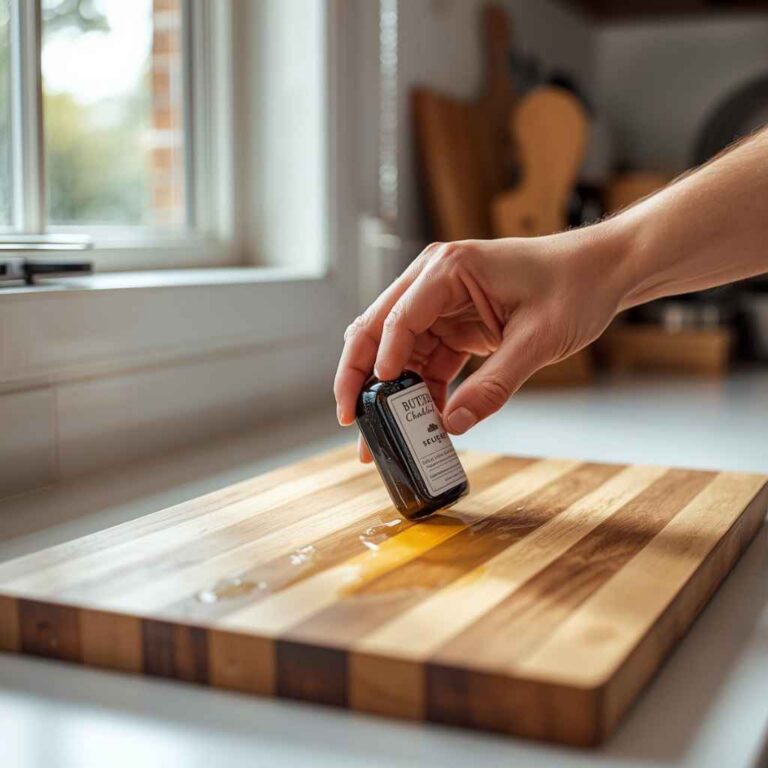
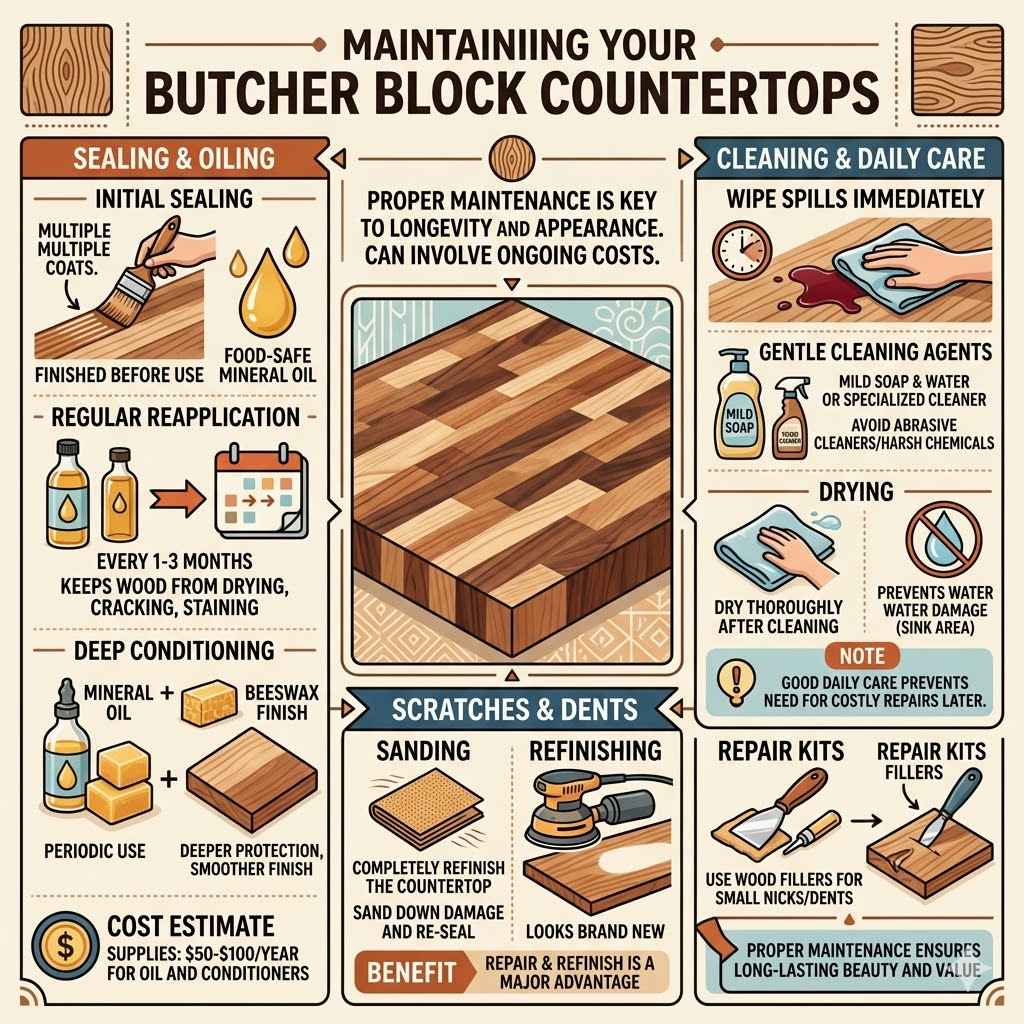
- Initial Sealing: Unfinished butcher block needs to be sealed thoroughly before use. This typically involves applying multiple coats of a food-safe mineral oil or a specialized countertop oil.
- Regular Reapplication: Even with durable finishes, butcher block needs regular re-oiling, usually every 1-3 months, depending on use and the type of finish. This keeps the wood from drying out, cracking, or staining.
- Deep Conditioning: Periodically, you might use a butcher block conditioner, which is often a blend of mineral oil and beeswax. This provides deeper protection and a smoother finish.
The cost of sealing supplies is relatively low, usually $50-$100 per year for oil and conditioners.
Cleaning and Daily Care
Daily cleaning is straightforward but requires attention.
- Wipe Spills Immediately: Wood is porous, so spills, especially colored liquids like wine or juice, should be wiped up right away to prevent staining.
- Gentle Cleaning Agents: Use a mild soap and water or a specialized wood cleaner. Avoid abrasive cleaners or harsh chemicals that can strip the finish or damage the wood.
- Drying: Always dry the countertop thoroughly after cleaning to prevent water damage, especially around the sink area.
Good daily care prevents the need for more intensive, costly repairs later on.
Dealing with Scratches and Dents
Butcher block, especially softer woods or those used for cutting, can get scratches and dents.
- Sanding: Minor scratches can often be sanded out. You can do this yourself with fine-grit sandpaper, working in the direction of the wood grain.
- Refinishing: Over time, you can completely refinish your butcher block countertop. This involves sanding down the surface to remove damage and then re-sealing it. This can make old countertops look brand new.
- Repair Kits: For small nicks or dents, you can sometimes use wood fillers or specialized repair kits.
The ability to repair and refinish is a major advantage of butcher block, adding to its long-term value and reducing the need for premature replacement.
Frequently Asked Questions
Question: Are Butcher Block Countertops Expensive Compared to Laminate?
Answer: Yes, butcher block countertops are generally more expensive than laminate countertops. Laminate is the most budget-friendly option, while butcher block offers natural wood beauty and durability at a higher price point.
Question: Can Butcher Block Countertops Be a Budget Option?
Answer: Yes, butcher block can be a budget-friendly option if you choose less expensive woods like beech or pine, opt for thinner slabs, buy unfinished and do the installation yourself, and perform regular maintenance.
Question: Are End Grain Butcher Block Countertops More Expensive?
Answer: Yes, end grain butcher block construction is significantly more expensive than edge grain due to its complex manufacturing process, unique pattern, and superior durability. It is considered a premium option.
Question: How Much Does Installation Add to the Cost of Butcher Block?
Answer: Professional installation for butcher block countertops can add anywhere from $300 to $1,000 or more, often representing 15-25% of the material cost, depending on the complexity of the job and your location.
Question: Is Butcher Block More Expensive Than Granite?
Answer: Basic to mid-range butcher block is typically less expensive than most granite options. However, premium butcher block woods and construction can be priced comparably to mid-range granite.
Summary
So, Are Butcher Block Countertops Expensive? The answer is it truly depends on your choices. From budget-friendly woods like beech to luxurious walnut, and from simple edge grain to intricate end grain, prices vary widely.
You can find affordable butcher block by opting for DIY installation and simpler finishes, or invest in high-end options that rival premium materials like granite or quartz. With proper care, they offer lasting beauty and value.