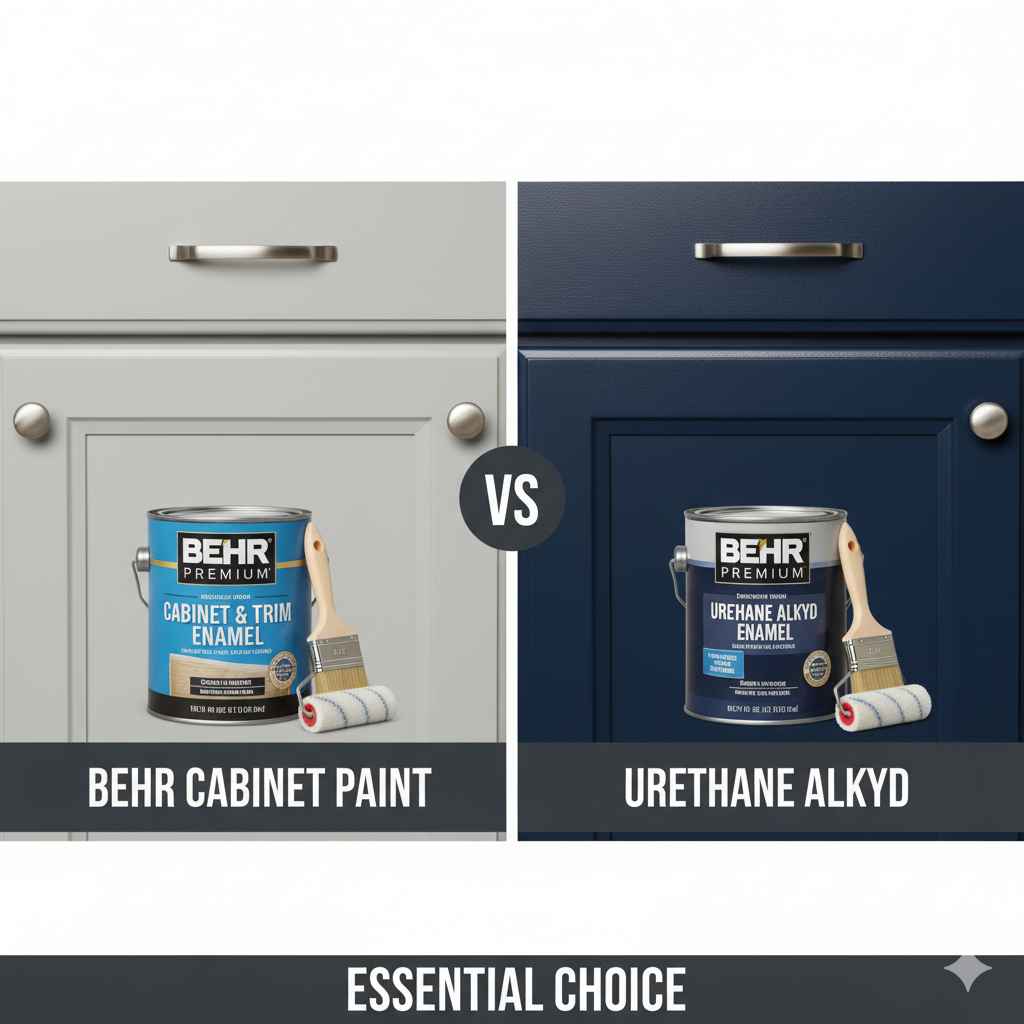
Behr Cabinet Paint vs Urethane Alkyd: Essential Choice
Choosing the right paint is crucial for cabinet projects. Behr Cabinet Paint offers convenience and good results for DIYers, especially for interior cabinets. Urethane Alkyd Enamel provides superior durability and a harder, glass-like finish, ideal for high-traffic or demanding environments but can be trickier to work with. Understanding their differences will help you achieve the cabinet finish you desire.
When you’re ready to transform your kitchen or bathroom cabinets, one of the biggest decisions you’ll face is what kind of paint to use. It might seem straightforward, but the type of paint you select makes a huge difference in how your cabinets will look, how they’ll hold up over time, and how easy the project will be. You’ve probably seen plenty of options at the hardware store, and names like “Behr Cabinet Paint” and “Urethane Alkyd Enamel” likely pop up.
Many home renovators find choosing between these types of paints a bit confusing. You want a finish that’s beautiful, of course, but also one that can withstand daily use. Will a standard cabinet paint be enough, or do you need something tougher? Don’t worry, this is a common question, and finding the right answer will set you up for success.
In this guide, we’ll break down Behr Cabinet Paint and Urethane Alkyd Enamel, comparing their strengths and weaknesses. We’ll cover what they are, who they’re best for, and what you can expect. By the end, you’ll have a clear understanding of which paint is the essential choice for your cabinet project, ensuring a durable and gorgeous finish you’ll love for years to come. Let’s get started on making those cabinets shine!
What is Behr Cabinet Paint?
Behr is a well-known brand in the paint industry, and much of their success comes from offering user-friendly products for a variety of home improvement tasks. Their dedicated “Cabinet & Trim” paints are formulated with a few key goals in mind: ease of application, good adhesion, and a smooth, durable finish suitable for cabinetry.
Typically, Behr Cabinet Paints are water-based acrylic or hybrid formulas. This means they offer a good balance of performance and practicality. They are designed to level out nicely, which helps minimize brush strokes and roller marks – a significant plus for beginners. They also clean up easily with soap and water, which is always a welcome feature for DIY projects.
These paints are engineered to provide a harder, more durable finish than standard interior wall paints, making them a step up for surfaces that get touched frequently, like cabinet doors and drawer fronts. They come in a variety of sheens, from satin to semi-gloss, allowing you to choose the look that best suits your style and the room’s environment.
What is Urethane Alkyd Enamel?
Urethane Alkyd Enamel is a different beast altogether, offering a higher level of durability and a distinct set of properties. As the name suggests, it’s a hybrid paint combining the best qualities of traditional oil-based alkyd paints with the strength and flexibility of urethane.
Traditionally, oil-based paints offered excellent hardness and a smooth finish, but they were known for their strong fumes, long drying times, and difficult cleanup (requiring mineral spirits). Water-based paints, on the other hand, were easier to use and clean but often lacked the robust durability of oil.
Urethane Alkyd Enamels bridge this gap. They are formulated to provide the exceptional hardness, mar resistance, and a beautiful, glass-like sheen that you’d expect from a premium enamel, but often with improved application and faster drying times compared to pure alkyds. They are typically latex or water-based, making cleanup much simpler. The urethane additive enhances the paint film, making it more resistant to moisture, chemicals, and everyday wear and tear. For this reason, they are often recommended for high-traffic areas or surfaces where extreme durability is paramount.
Key Differences: Behr Cabinet Paint vs. Urethane Alkyd Enamel
When you’re deciding between these two types of paint, understanding their core differences will help you make the best choice for your project. It’s not just about the brand name; it’s about the underlying technology and intended use.
Here’s a comparison of the key aspects:
Durability and Hardness
Behr Cabinet Paint: Offers good durability and a harder finish than standard interior paint, making it suitable for most cabinet applications. It’s designed to resist scuffs and scratches in typical home environments.
Urethane Alkyd Enamel: Provides superior durability and hardness. The urethane offers enhanced resistance to chipping, cracking, chemicals, and moisture. It creates a very tough, almost plastic-like surface that stands up exceptionally well to abrasion and frequent cleaning.
Finish and Sheen
Behr Cabinet Paint: Available in various sheens (e.g., satin, semi-gloss) that offer a smooth, attractive finish. Water-based formulas tend to have a slightly softer sheen compared to the high-gloss potential of alkyds.
Urethane Alkyd Enamel: Known for its ability to achieve a very smooth, hard, and often high-gloss or semi-gloss finish that looks very similar to a professional lacquer or professional enamel finish. It can produce a very sleek, almost glass-like surface.
Application and Ease of Use
Behr Cabinet Paint: Generally very easy to apply, with good leveling properties that minimize brush marks. Cleanup is simple with soap and water. Drying times are usually moderate.
Urethane Alkyd Enamel: Can be slightly more challenging to apply than standard water-based paints. While water-cleanup formulas exist, they might require specific application techniques to achieve the best results without brush marks or drips. Drying times can vary, but they are generally faster than traditional oil-based alkyds. Some urethane alkyds may still require mineral spirits for cleanup depending on the specific formulation.
Odor and VOCs
Behr Cabinet Paint: Water-based formulas typically have low VOC (Volatile Organic Compounds) and minimal odor, making them more pleasant to work with indoors.
Urethane Alkyd Enamel: Depending on the specific product, some urethane alkyds can have a stronger odor and higher VOC content than standard latex paints, though many modern formulations have improved significantly in this regard. Always check the product label and ensure good ventilation.
Cost
Behr Cabinet Paint: Tends to be moderately priced, offering good value for a dedicated cabinet paint.
Urethane Alkyd Enamel: Often priced higher due to the specialized additives and superior performance they offer.
When to Choose Behr Cabinet Paint
Behr Cabinet Paint is an excellent choice for many DIY projects, especially if you’re looking for a balance of performance, ease of use, and affordability. Here’s when it might be your perfect pick:
For Simpler, Less Demanding Cabinets: If you’re painting kitchen cabinets in a low-traffic home, bathroom cabinets that don’t see heavy moisture, or furniture pieces that don’t require extreme resilience, Behr Cabinet Paint will likely suffice.
When Ease of Application is Key: For beginners or those who want the painting process to be as straightforward as possible, Behr’s formulation is user-friendly. Its good leveling properties mean you’re less likely to end up with noticeable brush strokes, and easy soap-and-water cleanup is a big plus.
Budget-Conscious Projects: If you’re working with a budget, Behr Cabinet Paint offers a significant upgrade in durability and finish over standard interior paint without the premium price tag of some specialized enamels.
When Low Odor and VOCs are a Priority: If you or someone in your household is sensitive to paint fumes, or if you want to minimize your exposure to VOCs, a water-based Behr Cabinet Paint is a great option that allows you to paint in a more comfortable environment.
For a Quick Refresh: If you’re looking for a noticeable improvement and don’t need a rock-hard, professional-grade finish that can withstand very harsh conditions, Behr Cabinet Paint can provide a beautiful, updated look relatively quickly.
When to Choose Urethane Alkyd Enamel
Urethane Alkyd Enamel is the stronger contender when you need exceptional performance and long-lasting durability. Consider this type of paint if:
Maximum Durability is Essential: For heavily used kitchen cabinets, high-traffic bathroom vanities, or even exterior applications (if specifically formulated for exterior use), urethane alkyds provide a finish that can withstand constant wear, impacts, and abrasion better than many other paint types. The https://www.sherwin-williams.com/homeowners/inspiration/types-of-paint provides excellent context on paint properties.
Resistance to Moisture and Chemicals is Needed: If your cabinets are exposed to grease, cleaning chemicals, or consistent moisture (e.g., around sinks or stoves), the urethane additive in these enamels offers superior protection against staining and damage.
You Desire a Very Smooth, “Professional” Look: Urethane alkyds typically dry to an exceptionally smooth, hard, and often glossy surface that mimics the look of high-end spray finishes. If a flawless, glass-like sheen is your goal, this is the way to go.
Longevity is Your Top Priority: When you want your cabinet paint job to last as long as possible with minimal touch-ups or repainting, the enhanced toughness of urethane alkyds makes them a wise investment.
You Don’t Mind a Slightly More Involved Process: While many urethane alkyds are water-based, a premium finish might sometimes require a bit more care in application, priming, and drying than a standard acrylic. If you’re comfortable with that, the results are worth it.
Comparing Performance: A Table of Key Features
To help you visualize the differences, here’s a table that breaks down the performance and characteristics of Behr Cabinet Paint versus Urethane Alkyd Enamel:
| Feature | Behr Cabinet Paint | Urethane Alkyd Enamel |
|---|---|---|
| Durability | Good; resistant to scuffs and scratches in normal use. | Excellent; superior resistance to impact, abrasion, chipping, and cracking. |
| Hardness (Finish) | Harder than standard interior paint, but softer than urethane alkyd. | Very hard, glass-like finish. |
| Resistance (Moisture/Chemicals) | Good in typical indoor conditions. | Excellent; highly resistant to moisture, grease, and common household chemicals. |
| Application Ease | High; easy to apply, good leveling, minimal brush marks. | Moderate to High; requires careful application, but modern formulas are user-friendly. |
| Cleanup | Easy; soap and water. | Easy; typically soap and water for water-based formulas; mineral spirits may be needed for some traditional types. |
| Odor/VOCs | Low odor, low VOCs (water-based). | Varies; modern formulas are often low VOC, but some can have stronger odors than standard latex. |
| Sheen Options | Satin, semi-gloss, gloss. | Typically semi-gloss, gloss, or high-gloss for maximum smoothness and protection. |
| Best Use Cases | Everyday cabinets, furniture, DIY projects where ease of use is a priority. | High-traffic kitchens, bathrooms, high-wear furniture, projects requiring maximum durability and a premium finish. |
| Price Point | Mid-range. | Higher than standard cabinet paint. |
The Painting Process: Tips for Both Types
No matter which paint you choose, a successful cabinet painting project hinges on proper preparation and technique. Here’s a general roadmap that applies to both Behr Cabinet Paint and Urethane Alkyd Enamel.
Step 1: Gather Your Supplies
You’ll need a few key items:
Paint: Your chosen Behr Cabinet Paint or Urethane Alkyd Enamel.
Primer: A high-quality primer is essential for adhesion and a smooth finish. Look for one compatible with your chosen paint type.
Sanding Supplies: Sandpaper (120-220 grit), sanding sponges, and a sanding block or orbital sander. Refer to https://www.sandingpaper.com/how-to-sand-wood for more on sanding techniques.
Cleaning Supplies: Degreaser (like TSP substitute or a good kitchen cleaner), clean rags, water, and a bucket.
Applicators: High-quality synthetic bristle brushes (for cutting in and details), small foam rollers or mohair rollers (for flat surfaces), and a paint tray.
Protective Gear: Gloves, safety glasses, and a dust mask.
Painter’s Tape: For masking off areas you don’t want to paint.
Drop Cloths: To protect your floors and surrounding areas.
Screwdriver or Wrench: To remove cabinet hardware.
Step 2: Prepare Your Workspace
Ventilation: Ensure the area is well-ventilated. Open windows or use fans, especially if using a product with stronger fumes.
Protect Surfaces: Lay down drop cloths and use painter’s tape to protect countertops, floors, and any adjacent walls or appliances.
Remove Hardware: Carefully remove all hinges, knobs, and pulls from your cabinet doors and drawers. Keep them organized so you can easily reattach them.
Step 3: Clean Your Cabinets Thoroughly
This is arguably the most critical step for paint adhesion and longevity.
Degrease: Kitchen cabinets, especially, can have a buildup of grease and grime. Use a degreaser (like a TSP substitute, which is safer than TSP) and scrub all surfaces.
Rinse and Dry: Thoroughly rinse the cabinets with clean water to remove any degreaser residue. Let them dry completely.
Step 4: Sand for Adhesion
Light Sanding: Lightly sand all surfaces that will be painted. A 120-grit sandpaper is usually sufficient for most surfaces. The goal is to create a slightly “toothy” texture for the primer to grip onto, not to remove the existing finish. For a more scuffed finish, you might use coarser grit and then scuff it down with finer grit.
Clean Up Dust: After sanding, thoroughly wipe down all surfaces with a tack cloth or a slightly damp rag to remove all sanding dust.
Step 5: Prime the Cabinets
Apply Primer: Apply one or two thin, even coats of a high-quality primer suitable for cabinets. A good primer will block stains, improve adhesion, and provide a uniform base color.
Dry Time: Allow the primer to dry completely according to the manufacturer’s instructions.
Optional: Light Sanding: For an ultra-smooth finish, you can very lightly sand the dried primer with 220-grit sandpaper and wipe clean with a tack cloth before painting.
Step 6: Apply Your Chosen Paint
Stir the Paint: Thoroughly stir your Behr Cabinet Paint or Urethane Alkyd Enamel. Avoid shaking as this can introduce air bubbles.
Apply Thin Coats: Apply the paint in thin, even coats. It’s better to apply two or three thin coats than one thick coat, which can lead to drips and an uneven finish.
Doors and Drawers: Lay them flat on sawhorses if possible. Use a high-quality roller for the main surfaces and a brush for edges and details.
Cabinet Boxes: Use a roller for the large flat areas and a brush for corners and edges.
Drying Time: Allow each coat to dry thoroughly between applications. Follow the manufacturer’s recommended recoat times. This is crucial for both types of paint to cure properly and achieve their maximum hardness. For urethane alkyds, ensure you respect these drying times very carefully.
Multiple Coats: Most projects will require at least two coats of paint, and sometimes three for optimal coverage and durability.
Step 7: Reassemble and Cure
Reattach Hardware: Once the final coat of paint is dry to the touch and you’re ready to put things back together, reattach your hardware.
Curing Time: Be aware that paint doesn’t reach its full hardness immediately. It can take several days to weeks for the paint to fully cure. During this time, be gentle with your newly painted cabinets to avoid scratching or damaging the finish.
FAQs about Behr Cabinet Paint vs. Urethane Alkyd Enamel
Here are answers to some common questions beginner woodworkers and DIYers have about choosing between these paint types.
Q1: Can I use regular Behr interior paint on my cabinets?
A1: While you can* technically paint cabinets with regular interior paint, it’s not recommended for longevity. Standard interior paints aren’t formulated for the wear and tear cabinets endure, which includes constant touching, potential moisture, and cleaning. Behr Cabinet Paint or dedicated trim & door paints are specifically formulated to be more durable.