Biesemeyer Table Saw Fence: Fit, Features, and What to Know Before Buying
A Biesemeyer table saw fence is the T-square rip-fence system originally engineered by Biesemeyer Manufacturing. Delta Power Tools now owns the design and sells it under both the “Biesemeyer” and “Delta T3” names — which is the first thing most buying guides skip, and the reason searches for “biesemeyer fence system” and “Delta T3 fence” often turn up the exact same hardware.
The second thing worth knowing before you spend $300–$400 on one: current listings specify exact compatible saws (certain Unisaw and cabinet-saw platforms) rather than “fits any table saw,” and a handful of recent buyers report the fence body now uses a thinner plywood core than the original birch-faced design. Neither point shows up in most older reviews of this fence — both matter if you’re trying to decide whether to buy new, buy used, or fit an aftermarket alternative instead.
Current Biesemeyer/Delta T3 Fence Options
Closest Match to the Original Biesemeyer
 |
Delta Power Tools 78-919BT2 Biesemeyer Fence – $398.99 This is the fence sold directly under the Biesemeyer name today, built around the original 3-point locking, T-square design covered later in this guide.
|
Compare more rip-fence options
 Same T-square mechanism, sold as Delta’s own T3 line — $309.99, Amazon’s Choice Check Price |
 57″ rip capacity for wide sheet goods — $440.99, all-aluminum body instead of plywood Check Price |
 Lowest-priced T-square option here — $299.00, a fair budget swap if exact Biesemeyer fitment doesn’t matter to you Check Price |
Key Features Of Biesemeyer Fences
The Biesemeyer table saw fence’s reputation comes down to three design choices that haven’t really changed since the original:
T-square Design
The fence head rides on the front rail like the head of a carpenter’s T-square, so it stays parallel to the blade without a rear rail doing any of the work. That’s what makes the 3-point lock possible in the first place.
Rip Capacity By Rail Length
Rip capacity is set by which rail set you buy (52″, 30″, 36″, 50″+ options exist across the Biesemeyer/T3 line), not by an adjustable telescoping rail — so check the rail length listed on a specific product before assuming it matches your saw’s table width.
Durability And Stability
The steel front rail and tube-style fence body are what give this fence its long service life; the plywood/laminate face is the one component worth inspecting closely on arrival, per the QC note above.
Compatibility And Installation
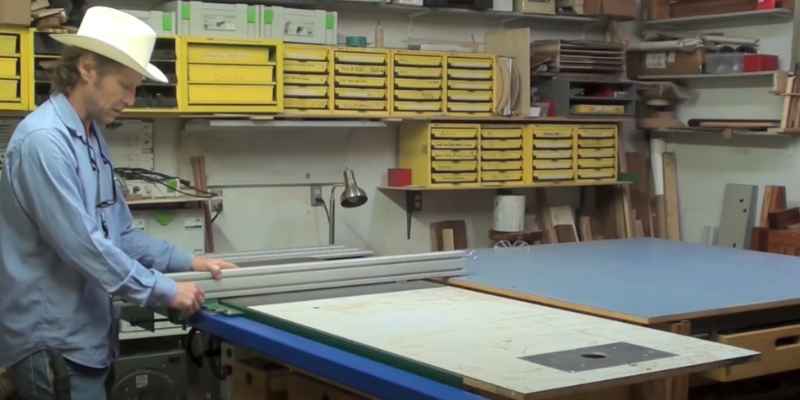
Unlike older claims that this fence “fits any table saw,” current Biesemeyer and Delta T3 listings name specific compatible models — for example, the 78-919BT2 above is listed for the 36-L352, 36-L552, and 36-L552LVC Type 2 Unisaws specifically. If your saw isn’t a Delta/Rockwell Unisaw, check the rail-length and mounting-hole spacing on the listing against your own saw’s table before ordering, or plan on drilling new mounting holes in the rail (a common workaround, but one that voids the “bolt-on” simplicity that’s the whole selling point).
Step-by-step Installation Process
Once you’ve confirmed fitment, installation is genuinely straightforward:
- Gather a drill, screwdriver, measuring tape, level, and wrench.
- Remove the existing fence and rails if you have one.
- Measure the distance between where the front and back rails will mount to confirm the new rails will sit square to the blade.
- Align the front rail with the edge of the table and mark the screw hole locations.
- Drill pilot holes at the marked locations.
- Bolt the front rail to the table.
- Slide the fence head onto the front rail and confirm it locks smoothly.
- Set a level across the fence body and adjust the rear rail until it reads level.
- Bolt the rear rail down once level.
- Check parallel-to-blade alignment front and back — a table saw alignment gauge gives a real thousandths-of-an-inch reading instead of relying on a tape measure at both ends.
- Make a few test rip cuts on scrap before trusting it on a real project.
Benefits Of Using A Biesemeyer-style Fence
Once correctly installed, the T-square design pays off in three concrete ways rather than vague “precision” marketing language:
Consistent, Repeatable Rip Width
Because the fence head locks at both the front rail and the fence body itself (the 3-point lock), it doesn’t creep out of parallel the way a single-point-lock fence can after repeated use.
Reduced Kickback Risk
A fence that stays parallel to the blade is one of the biggest kickback-prevention factors on a table saw — a fence that’s even slightly out of parallel can pinch the workpiece against the blade.
Fast Rail-to-rail Adjustments
Sliding the fence head along the front rail and locking it takes a couple of seconds, versus fully unlocking and repositioning a fence with a less rigid rail system.
How It Compares To Other Rip Fences
The three alternatives in the comparison table above cover the realistic trade-offs: the Delta T3 is the same mechanism at a lower price if you don’t need the Biesemeyer name specifically, the Shop Fox W1716 trades the plywood face for an all-aluminum body and a wider 57″ rip capacity, and the Shop Fox W1410 is the cheapest T-square-style option if exact original fitment isn’t a priority. None of the three requires you to accept the thinner-plywood QC concern noted above, since only the Delta-branded units use that fence-body material.
Maintenance And Care Tips
A little regular maintenance keeps the fence’s accuracy from drifting over time.
For step-by-step squaring tolerances and real accessory upgrades (extension rails, router table wings), see our Biesemeyer fence upgrade guide.
Regular Cleaning Procedures
- Unplug the saw before cleaning.
- Wipe the fence rail and body with a soft, lint-free cloth.
- For stuck-on residue, dampen the cloth slightly with mild soapy water — avoid harsh solvents that can dull the finish.
- Clear sawdust from the rail channel and locking mechanism with a brush or compressed air.
- Dry everything fully to prevent rust on the rail.
Checking Alignment And Calibration
- Remove any material or accessories from the fence.
- Hold a precision square against the fence face and the blade to confirm they’re parallel; adjust if they aren’t.
- Measure the fence-to-blade distance at the front and back of the blade — they should match within a few thousandths.
- Make a test rip on scrap and check the cut for taper, which signals a parallel problem rather than a locking problem.
Frequently Asked Questions For Biesemeyer Table Saw Fences
What Is A Biesemeyer Table Saw Fence?
A Biesemeyer table saw fence is a T-square-style rip fence originally made by Biesemeyer Manufacturing and now sold by Delta Power Tools under both the Biesemeyer and Delta T3 names. It uses a 3-point locking system so the fence stays parallel to the blade for consistent, accurate rip cuts.
What Are The Key Features Of Biesemeyer Table Saw Fences?
The T-square head design, a 3-point locking mechanism, and rail lengths sized to specific saws are the core features. Rip capacity depends on which rail set you buy rather than a single adjustable rail.
Is The Original Biesemeyer Fence Still Sold, Or Is It Now A Delta Product?
Delta Power Tools now owns the Biesemeyer design and sells it both under the Biesemeyer name and as the Delta T3 fence system. The mechanism is the same; the main practical difference buyers report is the fence-body material on some current units.
How Do Biesemeyer Table Saw Fences Improve Woodworking?
By staying parallel to the blade through every cut, this style of fence reduces taper errors and kickback risk while letting you reposition and lock the fence in seconds rather than fully re-measuring each time.
Bottom Line
A Biesemeyer/Delta T3 fence is still one of the more dependable T-square rip fences you can bolt to a compatible saw, as long as you confirm your saw model against the listing first and go in aware of the fence-body material question rather than assuming it matches the original spec.
Sponsored / affiliate links. As an Amazon Associate I earn from qualifying purchases. I may earn additional commission from eligible campaigns.