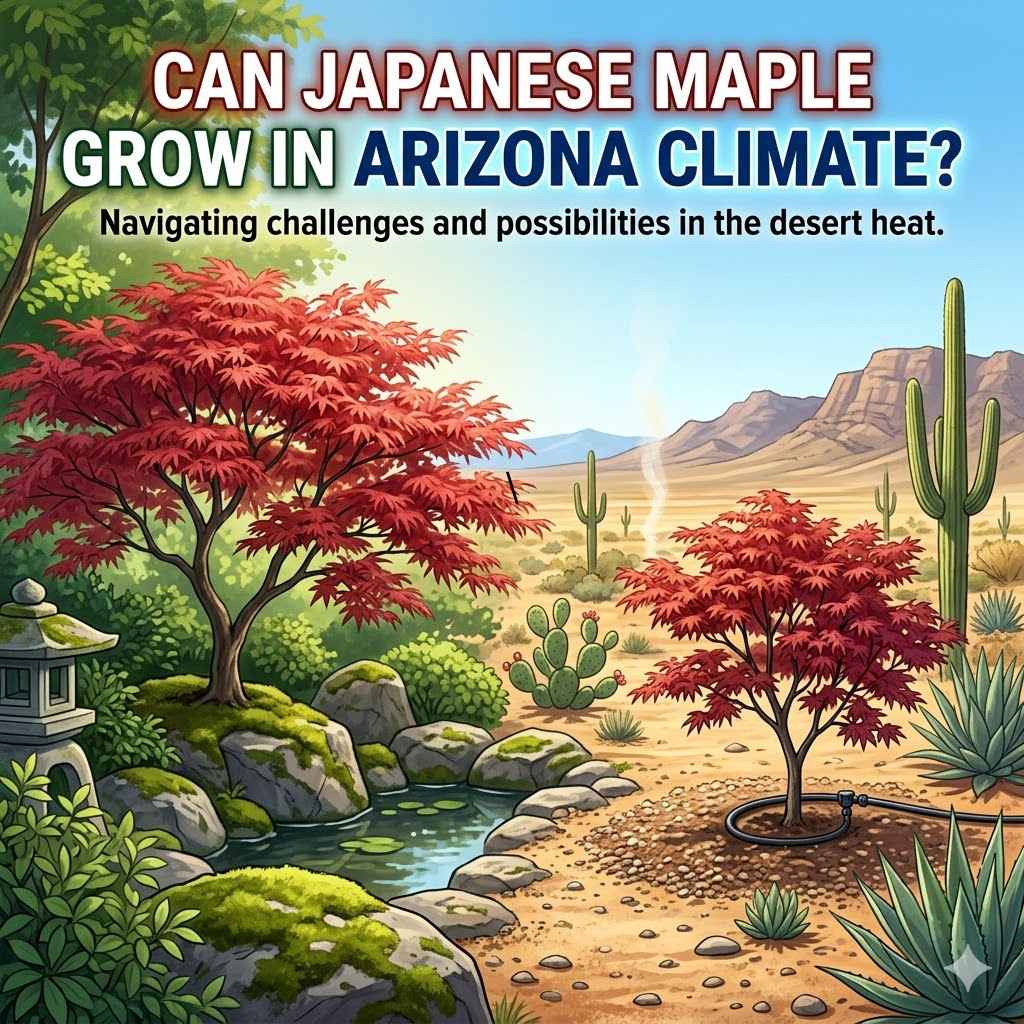
Can Japanese Maple Grow in Arizona Climate?
Many people wonder if a delicate Japanese maple can survive the harsh Arizona heat. It’s a common question, especially for gardeners new to the desert. The intense sun and dry air seem like the opposite of what these beautiful trees need.
But don’t worry, with the right care and a little know-how, you can enjoy a stunning Japanese maple even in Arizona. We’ll walk you through simple steps to make it happen, covering everything you need to know to help your tree thrive.
Can Japanese Maple Grow in Arizona Climate Successfully
It might sound surprising, but yes, Japanese maple trees can grow in Arizona’s climate with careful planning and specific techniques. The primary challenges are the intense desert sun, extreme temperatures, and very dry air. These conditions differ greatly from the temperate, humid climates where Japanese maples typically flourish in their native Asia. Beginners often face difficulties because they might not account for these extreme environmental factors, leading to leaf scorch, wilting, or overall poor health for the tree.
However, by understanding the unique needs of these trees in a desert setting and implementing targeted strategies, gardeners can overcome these obstacles. This section will explore the foundational elements required to ensure your Japanese maple not only survives but thrives in Arizona’s unique environment. We’ll discuss why this is a frequent concern and how we can simplify the process for you.
Understanding the Arizona Climate for Japanese Maples
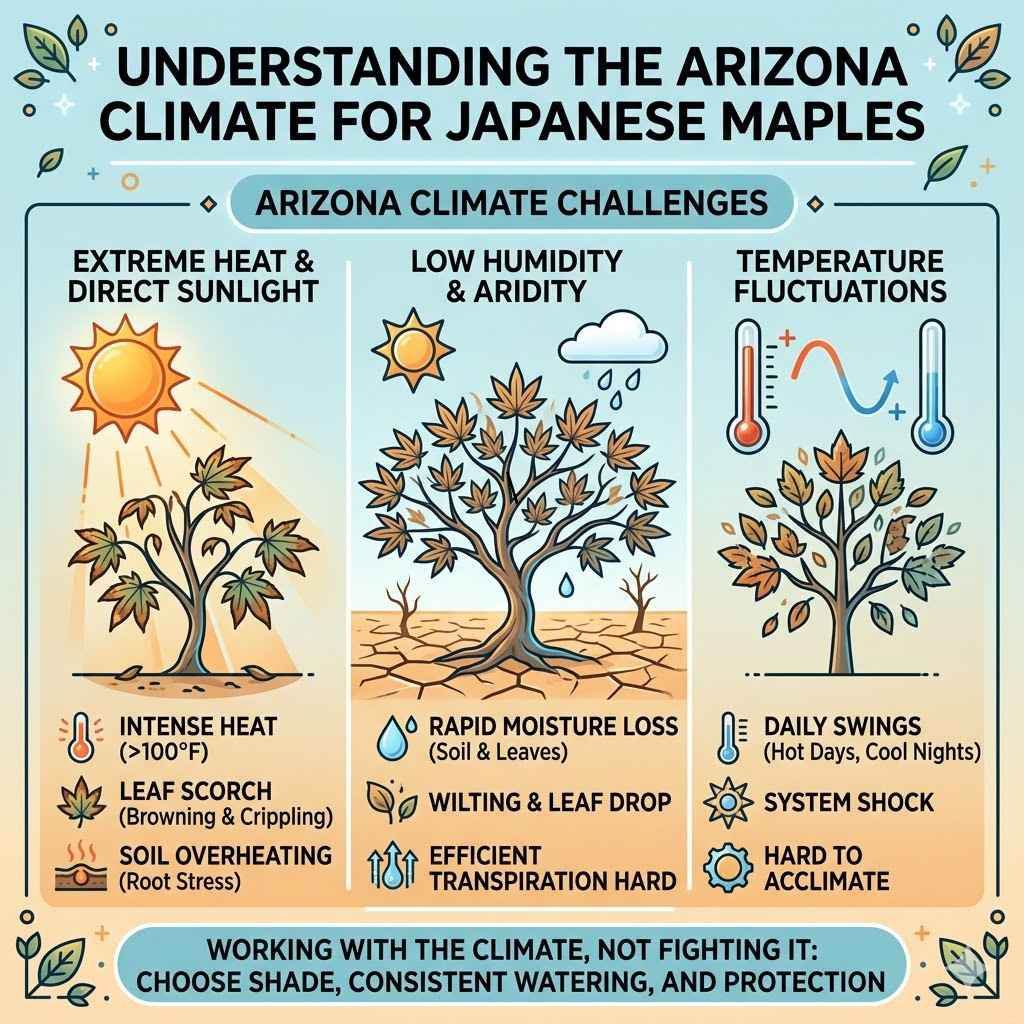
The Arizona climate presents a unique set of challenges for plants that originate from cooler, more humid regions. We’re talking about intense heat, often soaring well above 100 degrees Fahrenheit for extended periods during the summer. The humidity levels are typically very low, contributing to rapid water loss from both the soil and the tree’s foliage.
Sunlight intensity is another major factor; the sun in Arizona is powerful and direct, especially during the peak summer months, which can easily scorch the delicate leaves of a Japanese maple. Furthermore, Arizona often experiences drastic temperature fluctuations between day and night, which can stress plants. Understanding these conditions is the first step in successfully growing a Japanese maple here. It’s not about fighting the climate, but working with it.
Extreme Heat and Direct Sunlight
Japanese maples generally prefer dappled shade or partial sun, especially in the hottest part of the day. Direct, unfiltered Arizona sun, particularly during summer afternoons, can be devastating. It causes the leaves to dry out quickly, turning brown and crispy around the edges, a phenomenon known as leaf scorch.
This is more than just an aesthetic issue; it signifies significant stress on the tree. The intensity of the sun also heats up the soil, which can damage the root system. In Arizona, the sun’s UV rays are also much stronger. Without adequate protection, young trees are especially vulnerable to this relentless solar exposure.
Low Humidity and Aridity
The naturally low humidity in Arizona means that moisture evaporates very quickly from the soil and the tree’s leaves. Japanese maples, with their often thin and delicate foliage, are susceptible to this rapid moisture loss. This can lead to wilting, leaf drop, and reduced vigor. The dry air also makes it harder for the tree to transpire efficiently, which is the process by which plants take up water and nutrients.
In such an arid environment, maintaining consistent soil moisture is critical, as any drying out period can have severe consequences for the tree’s health. This is compounded by the fact that the desert air can feel almost “thirsty.”
Temperature Fluctuations
Arizona can experience significant swings in temperature, both daily and seasonally. While Japanese maples appreciate cooler temperatures, extreme heat followed by sharp drops can shock the system. The desert has hot days and surprisingly cool nights, especially in higher elevations.
During the summer, daytime temperatures can be extremely high, and while nights cool down, they may not offer enough relief for a tree accustomed to more moderate climates. This constant back-and-forth can make it difficult for the tree to acclimate and maintain its normal growth patterns, potentially leading to stress-related issues.
Selecting the Right Japanese Maple Variety for Arizona
Not all Japanese maple varieties are created equal when it comes to resilience in challenging climates. Some cultivars are naturally more heat-tolerant or have foliage that is slightly more resistant to scorching than others. It’s crucial to choose a variety that has a better chance of success in Arizona’s arid and hot environment.
This decision will significantly impact the tree’s overall health and how much effort is required to keep it looking its best. Focusing on varieties known for their hardiness can make a substantial difference in your gardening experience.
Heat-Tolerant Cultivars
When selecting a Japanese maple for Arizona, look for cultivars that have demonstrated a greater tolerance for heat. Some varieties, particularly those with thicker or more deeply lobed leaves, tend to fare better. For instance, cultivars like Acer palmatum ‘Bloodgood’ are often cited for their relative hardiness. Another good option might be ‘Emperor I’, which is known for its upright growth and good heat tolerance compared to some weeping varieties.
Researching specific cultivars and their performance in similar hot, dry climates can guide your choice. Many nurseries that specialize in desert-friendly plants may have recommendations.
Acer palmatum ‘Bloodgood’
This cultivar is a popular choice because it is known for its deep red foliage and its ability to withstand more sun than many other red Japanese maples. Its leaves tend to be a bit thicker, offering some natural protection against scorching. It also exhibits good cold hardiness, which is less of a concern in most of Arizona but indicates general resilience. Many gardeners find ‘Bloodgood’ to be a reliable performer when given proper care in hotter climates.
Acer palmatum ‘Emperor I’
Often compared to ‘Bloodgood’, ‘Emperor I’ is another excellent choice. It is considered slightly more heat tolerant and can handle more direct sun once established. Its foliage emerges bright red in spring and deepens to a rich crimson in summer, retaining its color better than some other red varieties. It has a more upright growth habit, making it a great specimen tree.
Acer palmatum ‘Crimson Queen’ (weeping variety)
While weeping varieties are often more delicate, ‘Crimson Queen’ is sometimes recommended for its slightly more robust nature among the laceleaf types. Its finely dissected, crimson leaves can provide a beautiful cascading effect. However, this type will still require significant protection from the harshest sun and heat. Its delicate appearance requires attentive care.
Consider Leaf Structure and Color
The structure and color of a Japanese maple’s leaves can offer clues to its heat tolerance. Varieties with lace-like, finely dissected leaves (often called laceleaf maples) tend to be more delicate and prone to burning. Their thinner leaves lose moisture more rapidly. In contrast, cultivars with broader or thicker leaves, or those with darker foliage, may possess a slightly higher tolerance.
For example, green-leafed varieties might be a bit tougher than some of the vibrant red or variegated types, although this is not a hard and fast rule. The intensity of the color can sometimes indicate greater pigment content, which might offer some protection from UV rays.
The Crucial Role of Planting Location in Arizona
Where you plant your Japanese maple in Arizona is arguably the most critical factor for its survival and well-being. Mimicking its native shady forest floor environment as closely as possible within the desert landscape is key.
This means providing protection from the most intense sun and wind, which are constant threats. Strategic placement can make the difference between a thriving tree and one that struggles year after year. It’s about choosing a spot that offers a microclimate of sorts, buffering the tree from the harshest elements of the Arizona environment.
Morning Sun Afternoon Shade is Ideal
The absolute best scenario for a Japanese maple in Arizona is a location that receives gentle morning sun but is completely shaded during the intense afternoon heat. This could be on the east side of your home or a building, where the rising sun is less harsh and the structure can provide shade from midday onwards.
Alternatively, planting it under the canopy of a larger, established tree that provides filtered light or shade during the afternoon hours is also highly beneficial. This mimics its natural habitat where it often grows under the protection of larger trees.
East-facing locations
Planting on the east side of a house or wall is a common and effective strategy. The morning sun is softer and lasts for a shorter duration compared to the intense afternoon sun. As the sun climbs higher and becomes more powerful, the building or wall will cast a shadow, protecting the maple from the most damaging rays during the hottest part of the day. This is a simple way to engineer a favorable microclimate.
Under larger trees
If you have mature trees in your yard, particularly deciduous ones that provide shade in summer but allow some sun in winter, consider planting your Japanese maple beneath them. The canopy of these larger trees can filter the sunlight and provide a cooler, more humid environment around your maple. Ensure there is still enough air circulation to prevent fungal issues.
Protection from Wind and Extreme Temperatures
Strong desert winds can desiccate the leaves and branches, causing further stress and damage. It’s important to plant your Japanese maple in a location that offers some protection from prevailing winds.
This could be a sheltered courtyard, a spot behind a wall, or near a windbreak hedge. Additionally, consider how the area might trap heat. Paved surfaces like concrete or dark mulch can radiate heat, making the microclimate hotter. Choosing a spot with good air circulation but also some shelter is a delicate balance.
Watering and Soil Management for Arizona Japanese Maples
Proper watering and soil management are paramount for any plant in Arizona, and Japanese maples are no exception, perhaps even more so given their origins. The goal is to provide consistent moisture without waterlogging the roots, which can lead to fungal diseases, especially in warmer climates. The soil needs to retain some moisture but also drain well to prevent root rot. Understanding the specific needs of your tree in this arid environment is vital for its long-term health.
Deep and Infrequent Watering
The best watering strategy for a Japanese maple in Arizona is deep and infrequent. This encourages the roots to grow deeper into the soil, making the tree more resilient to drought. Instead of light, frequent sprinklings, water thoroughly until the soil is moist several feet down. Allow the top inch or two of soil to dry out between waterings. The frequency will depend on the weather, the soil type, and the size of the tree. During extreme heat waves, you might need to water more often, but always check the soil moisture first.
Check soil moisture
Always check the soil moisture before watering. Stick your finger about two inches into the soil. If it feels dry, it’s time to water. If it feels moist, wait a day or two and check again. This simple test prevents overwatering, which can be as harmful as underwatering.
Watering deeply
When you water, do so slowly and deeply. Use a hose with a gentle flow or a watering can. Aim to saturate the entire root ball and the surrounding soil. This encourages roots to grow downwards in search of water, making the tree more drought-tolerant.
Seasonal adjustments
Watering needs change throughout the year. During the hot, dry summer months, you’ll need to water more frequently. In cooler seasons, especially during periods of rain or when temperatures are moderate, reduce watering. Dormant trees require much less water.
Importance of Mulching
Mulching is essential for Japanese maples in Arizona. A layer of organic mulch, such as wood chips, shredded bark, or compost, applied around the base of the tree (but not touching the trunk) offers several benefits. It helps to retain soil moisture by reducing evaporation, keeps the soil temperature cooler, and suppresses weed growth that can compete for water and nutrients. Mulch also breaks down over time, enriching the soil. Aim for a 2-3 inch layer.
Moisture retention
Mulch acts like a blanket, reducing the amount of water that evaporates from the soil surface. This is incredibly important in the dry Arizona climate where water is a precious resource. It keeps the soil consistently moist for longer periods between waterings.
Temperature regulation
The soil beneath a layer of mulch stays cooler. This protects the Japanese maple’s sensitive root system from the extreme heat that can build up in exposed soil, especially under the intense desert sun. It creates a more stable environment for root growth.
Weed suppression
Weeds compete with your Japanese maple for water, nutrients, and sunlight. A good layer of mulch effectively smothers many common weeds, reducing the need for manual weeding and saving valuable resources for your tree.
Soil Amendment and Drainage
Japanese maples prefer well-draining, slightly acidic to neutral soil. In Arizona, many soils are alkaline and can be heavy clay. Improving drainage is critical. Amending the soil with organic matter, such as compost or peat moss, can help improve both structure and drainage. When planting, it’s often recommended to amend only the planting hole to create a better environment for the roots to establish themselves and then gradually transition to the native soil. Avoid soils that hold too much water.
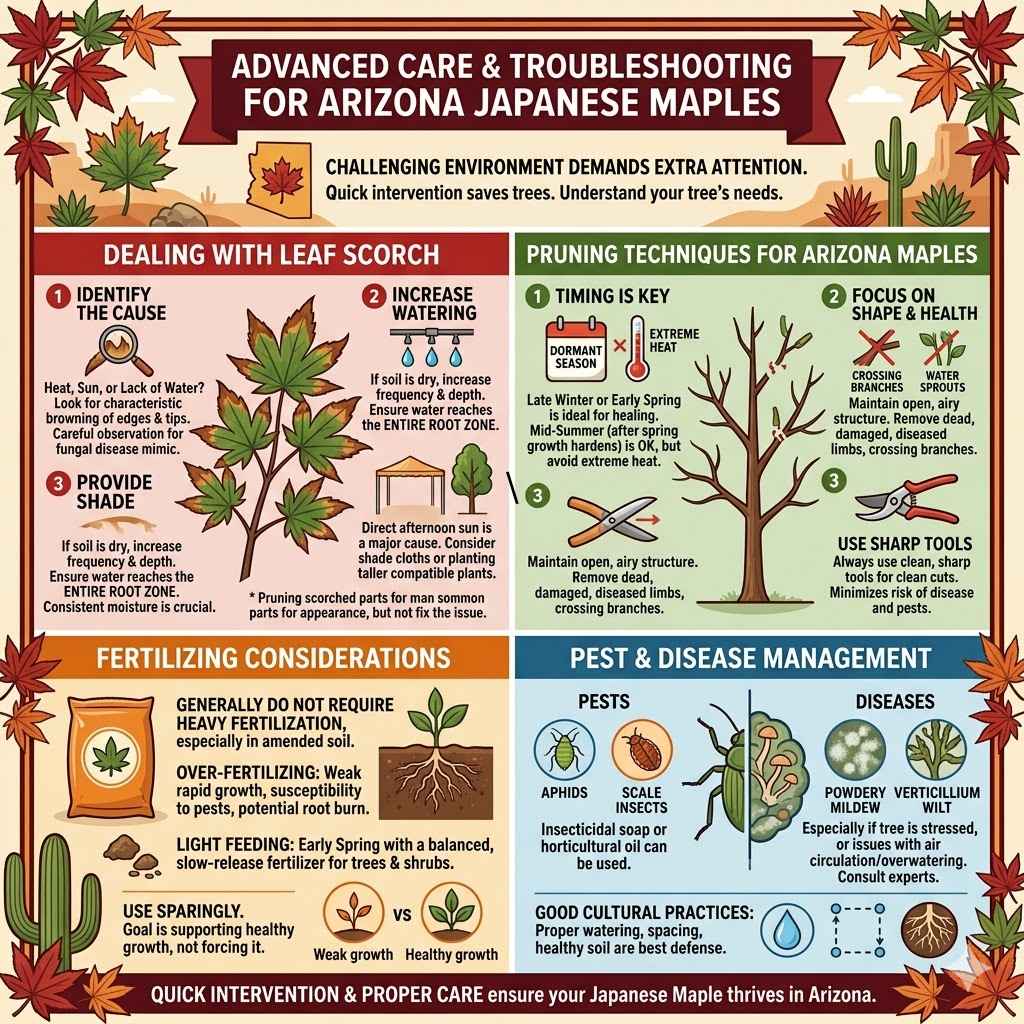
Advanced Care and Troubleshooting for Arizona Japanese Maples
Even with the best preparation, you might encounter issues. Knowing how to troubleshoot and provide advanced care can save your Japanese maple. These trees can be sensitive, and quick intervention is often necessary when problems arise. This is where a deeper understanding of their needs in a challenging environment really pays off. We’ll cover common issues and provide solutions.
Dealing with Leaf Scorch
Leaf scorch is probably the most common problem for Japanese maples in hot climates. It appears as brown, crispy edges or tips on the leaves. This is usually a sign of insufficient water, too much direct sun, or both. If you notice scorching, first check your watering schedule and ensure you are watering deeply. Consider if the tree is receiving too much direct afternoon sun and if more shade can be provided. Pruning off the scorched parts of the leaves can improve appearance but won’t fix the underlying issue. Ensure good air circulation around the tree, as stagnant hot air can worsen scorching.
Identify the cause
The first step is to determine if the issue is indeed leaf scorch due to heat, sun, or lack of water. Look for the characteristic browning of leaf edges and tips. Other issues like fungal diseases can sometimes mimic scorch, so careful observation is key.
Increase watering
If the soil is dry, increase watering frequency and depth. Make sure the water is reaching the entire root zone. Consistent moisture is crucial, especially during hot periods.
Provide shade
If the tree is in direct afternoon sun, consider ways to offer more shade. This might involve temporary shade cloths during the hottest months or planting taller, compatible plants nearby to cast shade.
Pruning Techniques for Arizona Maples
Pruning Japanese maples is primarily for shaping and removing dead or damaged branches. In Arizona, it’s best to prune sparingly and at the right times. Avoid heavy pruning during the hottest summer months, as this can stress the tree. The best time for pruning is typically in late winter or early spring before new growth begins, or in mid-summer after the spring growth spurt has hardened off. Removing dead or diseased branches promptly is always recommended.
Timing is key
The ideal time to prune most Japanese maples is during their dormant season, late winter or early spring. This allows the tree to heal quickly as growth resumes. Summer pruning can be done to manage size or remove errant branches, but avoid doing it during extreme heat.
Focus on shape and health
Pruning is mainly for aesthetic purposes and to maintain the tree’s health. Remove any crossing branches, water sprouts, or dead, damaged, or diseased limbs. Aim for an open, airy structure to allow for good air circulation, which helps prevent fungal issues.
Use sharp tools
Always use clean, sharp pruning tools to make clean cuts that heal quickly. This minimizes the risk of introducing diseases or pests.
Fertilizing Considerations
Japanese maples generally do not require heavy fertilization, especially if planted in amended soil. Over-fertilizing can lead to weak, rapid growth that is more susceptible to pests and diseases, and it can even burn the roots. If your tree appears to be lacking vigor, a light feeding in early spring with a balanced, slow-release fertilizer designed for trees and shrubs might be beneficial. Use it sparingly, following the package instructions carefully. The goal is to support healthy growth, not to force it.
Pest and Disease Management
While less common in the dry Arizona climate, Japanese maples can still be susceptible to certain pests and diseases. Aphids and scale insects can sometimes be an issue. Fungal diseases like powdery mildew or verticillium wilt can occur, especially if the tree is stressed or if there are issues with air circulation or overwatering.
Good cultural practices, such as proper watering, adequate spacing, and healthy soil, are the best defense. If pests are spotted, insecticidal soap or horticultural oil can often be used. For diseases, consult with local gardening experts for appropriate treatments.
Frequently Asked Questions
Question: Do Japanese maples need full sun in Arizona?
Answer: No, Japanese maples in Arizona absolutely do not need full sun. They thrive best in locations that provide morning sun and afternoon shade to protect them from the intense desert heat and direct sunlight.
Question: How often should I water a Japanese maple in Arizona?
Answer: You should water your Japanese maple deeply and infrequently, allowing the top inch or two of soil to dry out between waterings. The exact frequency depends on the weather, soil type, and tree size, but checking soil moisture is key.
Question: What kind of soil is best for Japanese maples in Arizona?
Answer: Japanese maples prefer well-draining soil. In Arizona, it’s beneficial to amend the soil with organic matter like compost to improve drainage and retain some moisture without becoming waterlogged.
Question: Can I plant a Japanese maple in a pot in Arizona?
Answer: Yes, you can plant a Japanese maple in a pot in Arizona, but it requires extra care. Ensure the pot is large enough, use well-draining potting mix, and place it in a location that offers protection from the harsh sun and wind. Pots can dry out quickly.
Question: Will my Japanese maple lose its leaves in winter in Arizona?
Answer: Yes, most Japanese maples are deciduous and will lose their leaves in winter, regardless of the climate. This is a natural part of their dormancy cycle. They will regrow their leaves in spring.
Summary
Growing a Japanese maple in Arizona is possible with careful planning. Choose heat-tolerant varieties and find a spot with morning sun and afternoon shade. Protect it from harsh winds and water deeply but infrequently. Mulching is vital for retaining moisture and keeping roots cool. By providing these specific conditions, your Japanese maple can bring beauty to your desert landscape.